

Disclaimer:All information in this newsletter is not intended for investment decisions / purposes. Mnt Goat is not a financial analyst, planner, banker, attorney or associated in any role with giving out professional investment advice.
ABOUT THE NEWSLETTER:

April 30, 2026 Mnt Goat News Brief
Guten Tag everyone:
The RV saga continues with the election cycle. There were meetings to decide on the new nominee scheduled for Sunday, Monday, then Wednesday, then the weekend passed. Well, well wouldn’t you know it last night, Monday night’s meeting delivered a new nominee, yes someone outside of al-Sudani or al-Maliki. Will he work out? Who is he? Please join me today as we explore a sequential stream of news articles to see what is next and if the train is going to get back on track…. choo…choo…
GIVE A GIFT TO MNT GOAT
I decided to allow everyone to give a Free-will GIFT to Mnt Goat on PayPal if you so desire. Here is the link below. Please show your appreciation for all the hard work I do.

I recommend $15-$20 dollars a month or whatever you can afford. Do you realize I write up to eight (8) Newsletters every month. This is like a second job to me. The only way I know that people are reading and appreciating all the FACTUAL news I bring is through their appreciation. If I do not receive equal appreciation for all the hard work I do, I will simply end the Newsletter and save myself endless hours at the computer. You do want to get paid for your job, don’t you? What makes my job any different? Tell me….. I am tired of this RV saga just as you are.
Let’s all try to chip in!

____________________________________
Luke 6:38
“Give, and it will be given to you. A good measure, pressed down, shaken together and running over, will be poured into your lap. For with the measure you use, it will be measured to you.”
STATUS OF THE RV
Another month bites the dust and we are moving on to May already and still no RV. I want to bring your attention once again to all these stupid intel guru idiots who told you that the RV was imminent and going to happened last weekend or the weekend before and before that, etc. etc. They told you these things without any real proof only gossip, rumors, opinions, speculation and their bullshit.
For today’s news I want to first clarify the dollars we are hearing that were held back from Iraq. I am hearing all kinds of nonsense about these dollars from your favorite intel gurus. So, first let me state we all should know by now that Iraq de-dollarized years ago and continues to do so. They even now mandate the use of dinars to buy cars and homes any large purchases. Other items too can only be paid in dinars and that is the law. So why do people think, by the U.S. holding back the $500 million dollars of monthly to Iraq, this action is going to destroy the Iraqi economy? I have no clue. Folks, this is AID to Iraq. It does not come out of the DFI fund in NYC from oil revenues. If is free money to Iraq. Remember just years ago, the US used to fly planes full of pallets of freshly printed $100 dollar bills to Iraq in the tune of $2 billion per month. Yes, folks you read it right, $2 billion per month. This amount was cut down under the Trump administration to only a half billion and probably soon should be cut off altogether. I think he would have cut it out entirely had it not been a ‘carrot’ left to bait them with, which has recently held true.
In conjunction with these dollars, I also want to point out the parallel market is the abuser of ‘any’ dollars inside Iraq. Any dollars now in Iraq should be used exclusively for tourists, students or those leaving for medical reasons to go outside of Iraq not stay in Iraq, get it? Most travel to the U.S.
There is still the CBI official rate of the dinar at 1320 dinars per dollar. This rate reflects the fact that the dinar is still solely pegged to the dollar. It is a peg to a stronger currency for a reason. This creates stability and allows Iraq to purchase the necessary goods as imports as they convert the dinars to dollars through the correspondent banks. These banks control the dollars electronically and are heavily monitored and audited. These banks are major banks located outside Iraq or inside Iraq. But certainly, the ‘dollar auction window’ days are over of turning over paper dollars to merchants by the banks, who in return pay importers themselves. In reality almost 25% of these dollars went to Iran with falsified paperwork at the auction window. Folks this is all in the past so update your thinking! Again, Iraq has de-dollarized their economy.
Then there are still lingering black marketeers who make millions off of the dollars as they illegal operate a ‘parallel market’ selling what dollars they can get their hands on to susceptible people willing to pay for them. They are the ones that raise the rate of the dinar to figures like 1420, 1550 etc. etc. Get it? This is not the legitimate CBI rate changing.
What do these people do with these illegal dollars then? They use them to purchase illegal goods and smuggle them into Iraq or still launder the dollars to Iran. But there are few dollars going to Iran these days and the high rate depicts this. Scarcity causes supply demands and supply demands cause rates to go up. Get it?
Also remember that the ‘correspondent’ banks now handle dollar transfers to sellers of imported goods to Iraq electronically so they bypass the black market. Of course, the black marketeers are going to complain when they can’t get dollars. What the hell do you think they are going to say when they are losing millions every day? But these millions are not really theirs to lose. They are profiteering. Get it?
Many of the Iranian-backed politicians run these black market operations and also publish these nasty, negative articles anytime they can’t get the dollars they need to run their illegal operations. What are their operations? Like I said, it is still to smuggle dollars somehow to Iran or pay the militias or terrorist organizations operating in Iraq.
There are no more dollar auctions. These auctions stopped almost four (4) years ago. Get it? Some were even thinking they were auctioning off dinars, which is how we buy our dinars from the recipients of these auctions outside Iraq. Simply not true! How foolish! Where the hell have you been Mr intel guru? So, when I hear these RV intel gurus talking like it’s still a decade ago, it gives me chills up my back at just how ignorant and uninformed they are. But they are bringing the RV news to you? Folks, this is an ongoing saga. You can’t just pop into the news when you feel like it. You must keep up with it if you truly want a timeframe to see where this investment is going.
These idiot intel guru idiots come on and pretend to know so much. Go ahead and query using ‘dinar updates’ in YouTube or google it and see all the nonsense that pops up. Read the captions on these sites. See just how foolish all these authors are and how they are baiting you into their sites with lies. They want you clicks so they get paid. They then spread rumors and stupid ideas in our RV investor community. They give investors a false sense of HOPE of what is really happening in Iraq all out of ignorance. It was TNT Tony that started all this hype and made the RV an everyday game show. He sensationalized it. Then others realized they too could make money off it, even if they didn’t know a thing about it. Yes, they simply put a few pages out on the internet or do a broadcast or pod. They copy other’s garbage and make it sound creditable, even if they haven’t a clue of what the hell they are saying to their audience. But there are a few exceptions and I applaud these people.
I want to call out one site especially that I listened to recently on YouTube. It’s called “Iraqi Dinar Guru News Highlights”. Please, please, please stay away from this site. Stop clicking on it to pay her to keep spreading her virus of lies. Make sure you tell others too about this fake information.
All the author does is repeat collected parts of information from other intel gurus. There is no research or contacts from Iraq. I even heard parts of my ‘RV Update’ section of my Newsletter on her site. I hope she is reading this Newsletter today as I am sure she is. Thus, she only spreads idiot guru nonsense like a virus that contaminates people’s minds. Yes, there are some tid-bits of information that might be creditable but that’s my point. She just reports on everything not knowing the difference. She can’t know because she does no research. Get it? She emphasizes info that sounds good and will hype you up, even if it’s all garbage. For the most part the woman that runs the site knows absolutely nothing about what is happening is Iraq and just repeats all the garbage intel she collects from other idiots. Really folks, what good is this information? Even if you ‘feel good’ for a day, it still does not bring you any closer to reality and truly understanding what is happening in Iraq. Sad to say but with sites like this one, this is how many people get confused, discouraged and sell their dinar. This of course is a travesty.
________________________________________
So, as we flow into May this week, I wanted to bring you some more news about what just happened to end the deadlock about the election saga. After five and a half months of delay do you think Iraq has a sound system of electing their prime minister? Oh… what is taking the RV so long you say?
Should something change in the future? Also, I want to point out again that the process they use today doe not serve the citizens. At the end, the average citizen has very little to say who is the next prime minister. There are many issues with the existing process and it begins with the number of parties involved that spread or distribute the popular votes so that not any one party can take the majority simply by the popular voting process. The Iranians made sure this was in place and take advantage of it as they then horse trade votes and decide for themselves, rather than the citizens, what is going to be the largest block. Yes, a block of parties taking their popular votes and combining them into a block of votes. It is a sly way of undermining the people’s choice for representation. Even the new Iraq constitution does not specifically spell out how to determine the largest block and this too is a flaw and needs more clarification.
I enjoyed watching the Kurds dictate the slowing down of the process of the nominee of Nouri al-Malki as they simply held up the process by now announcing their candidate for the presidency. They insisted until Maliki was out. This was a true symbolic move on their part of true democracy at work. Kudos to the Kurds!
But then the Iranian Shiites continued to want someone in the office of prime minister that they can use as their puppet and refused to let go of Maliki. Since he was the only candidate that was mailable and compliant to Iranian wishes. It was not until they exceeded the constitutional deadline that things changed. Now their power over the selection of the nominee was diminishing less and less each day. They had to finally nominate someone acceptable to everyone, even if he/she was not in full compliance with the Iranian wishes, (so we all think at this point). This is how they got to Prime Minister-designate Ali Al-Zaydi. They did this too with al-Sudani in 2022 election cycle and he proved not to be so compliant to their wishes, thus they couldn’t use him again for a second term and discarded him. Heck… he was making too much progress in Iraq. He was getting Iraq very close to the level of stability needed for the currency reformation back to a nominal value, back on FOREX and finally out of the sanction mode. The question now is will Al-Zaydi also betray the Iranian led majority block and instead look out for the Iraqi people and continue al-Sudani’s work? I believe this may be the case and so we wait and watch. I am not a fortune teller…lol..lol..lol.. 😊
________________________________________
😊 If we peek at the article titled “WASHINGTON ANNOUNCES ITS SOLIDARITY WITH IRAQ AND SUPPORTS AL-ZAIDI’S EFFORTS TO FORM A GOVERNMENT” the United States Mission in Iraq expressed its best wishes to Prime Minister-designate Ali al-Zaydi in his mission to form a government capable of meeting the aspirations of the Iraqi people and achieving a brighter and more peaceful future.
The Coordination Framework announced in a statement the selection of Ali al-Zaydi as the official candidate of the Coordination Framework bloc, being the largest bloc in the House of Representatives, to assume the position of Prime Minister and form the next Iraqi government.
________________________________________
😊 In another article titled “IT BRINGS BENEFITS TO BOTH AMERICANS AND IRAQIS. WASHINGTON IS OPTIMISTIC ABOUT AL-ZAIDI BECOMING PRIME MINISTER: WE WANT A SOVEREIGN IRAQ” we read more about the US stance on al-Zaydi. I wish they could get his name correct. I am seeing so many variations of his name. Anyhow… the US Embassy in Iraq expressed its support on Tuesday, April 29, 2026, for Prime Minister-designate Ali al-Zubaidi in his efforts to form a new government, stressing its aspiration to enhance security, preserve Iraq’s sovereignty, and achieve a partnership that serves the interests of both countries. It’s all good so far and let’ see what happens next.
________________________________________
So, isal- Zaydi goiing to pacify Iranian wishes in Iraq as the prime minister. We see in the article titled “ALI AL-ZAIDI RECEIVES AN AMERICAN CERTIFICATE “AND DID NOT SEND DOLLARS TO THE REVOLUTIONARY GUARD”. “A report in Asharq Al-Awsat newspaper on Wednesday (April 29, 2026) stated that an independent investigation conducted by the American law firm K2 Integrity found no credible evidence linking Iraqi Prime Minister-designate Ali al-Zaidi to financial activities connected to the Iranian Revolutionary Guard.” The report emphasized that the restrictions previously imposed on him were due to reputational risks and not to proven involvement in money laundering operations, at a time when his appointment is facing internal and external political scrutiny amidst the complexities of the financial landscape and relations between Baghdad, Washington, and Tehran. I believe the true test will be the disposition of the PMF and how he will handle this issue. Remember this is an item on the list of five (5) issues given to me by my contact in the CBI that need to be resolved prior to any reinstatement, per the U.S. envoy and Treasury Department.
________________________________________
Oh… but here it comes, real heavy and fast, the true test of loyalty of al-Zaydi to Iraq or Iran. Come’ on Zaydi, the U.S. is not going to let you ride the fence on this issue of the PMF militias inside Iraq. You will have to take a side to be successful with Donald Trump backing Iraq and his future plan for Iraq.
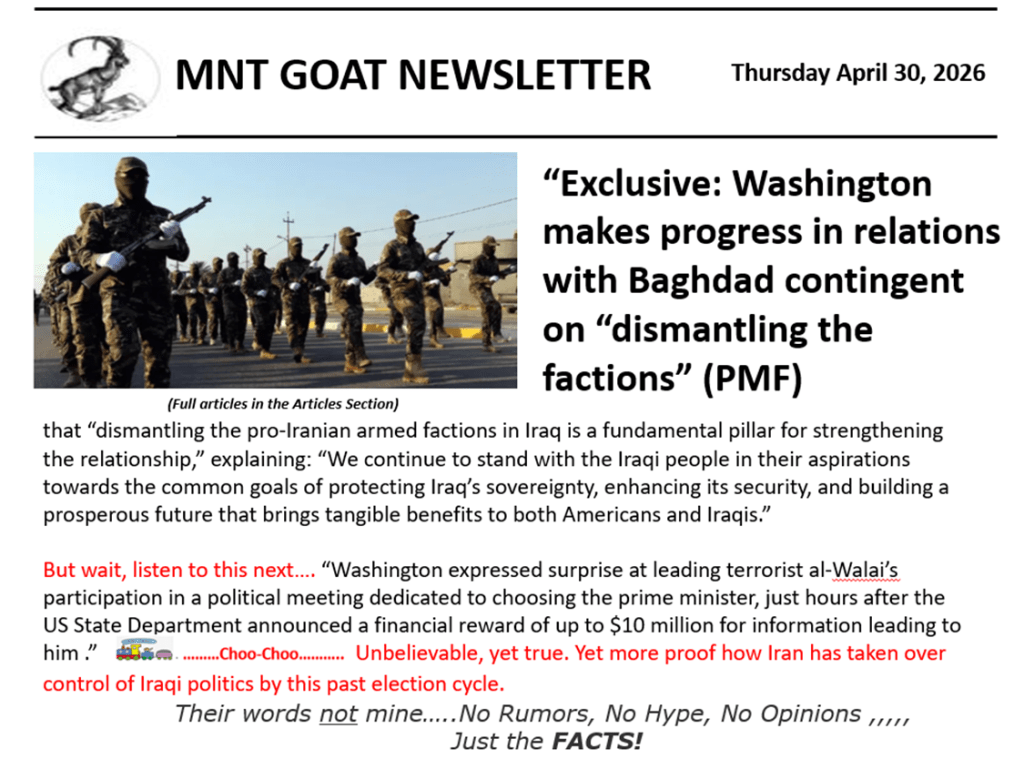
😊 We see some news about this subject matter in the article titled “WASHINGTON MAKES PROGRESS IN RELATIONS WITH BAGHDAD CONTINGENT ON “DISMANTLING THE FACTIONS”. A spokesman for the US State Department confirmed on Wednesday that dismantling Iraqi factions is a “key pillar” for making progress in bilateral relations between Baghdad and Washington. What is it that you don’t understand about this statement? Is seems VERY clear to me Washington wants Iran out of Iraq.
The spokesman told Shafaq News Agency, “The US administration was very clear in its vision of what is required to achieve progress in bilateral relations between Washington and Baghdad.” He added that “dismantling the pro-Iranian armed factions in Iraq is a fundamental pillar for strengthening the relationship,” explaining: “We continue to stand with the Iraqi people in their aspirations towards the common goals of protecting Iraq’s sovereignty, enhancing its security, and building a prosperous future that brings tangible benefits to both Americans and Iraqis.“
Did you read that last sentence? What does the article mean by “tangible benefits to both Americans and Iraqis“? I believe it means that there is a much broader plan for Iraq that meets our eyes and is planned by the Trump administration but first it needs assurances of stability and security from Iranian influences, yes it’s called ‘sovereignty’. The emphasis is away from Iranian puppetry as a proxy Iranian state. Seems the U.S. is being VERY clear on this issue right from the start and so no misunderstanding of where it stands, if it is to support al-Zaydi’s government.
Just so you know it is worth noting that the US State Department announced last Friday, through the Rewards for Justice program of the Diplomatic Security Service, a reward of up to $10 million for information about Hashim Finyan Rahim al-Saraji, also known as Abu Ala al-Walai, the leader of the Sayyid al-Shuhada Brigades in Iraq . Go figure why president Trump wants these PMF militia out of Iraq?
The United States had designated Kataib Sayyid al-Shuhada and its leader, al-Sarraj, as Specially Designated Global Terrorists in November 2023, before later listing the group as a Foreign Terrorist Organization in September 2025 .
Right now this is one of those WOW! WOW! WOW! moments! 😊 Let’s break this down:
If al-Zaydi takes the appropriate steps toward dismantling the PMF, and any terrorist groups operating in Iraq, then parliament passes the Oil and Gas Law (which they already told us is a priority in this new parliament) we could be into some smooth sailing towards the reinstatement process to move ahead.
Remember I am being told the CBI is ready to move on the Project to Delete the Zeros and believes these five issues must be handled first that I talked in detail to you about in my 9/16/26 Newsletter. Please do reference it again if you forgot. We could be VERY close to resolving all these issues. Remember it may take time to break up the PMF but not impossible to do with the proper support being what is now going on in Iran.
The issue with the US blockade in the Straight of Hourmuz could also being great news for the Iraqi Development Road project too as it may may emphasize and accelerate the project ahead more quickly as we are being told it could serve as another passage of goods to bypass the blockage and used as shipping lanes to Turkey and Europe now over land instead of water. Remember the port of Faw and remember also the Customs and Tariff fees collected…. just saying….
________________________________________
Check out this article titled “THE ALGERIAN EXPLAINS THE SCENARIO FOR CHOOSING AL-ZAYDI FOR THE POSITION OF PRIME MINISTER”. This article explains an opinion as to the mechanisms and scenario behind the selection of Ali al-Zaidi for the position of Prime Minister. He says “There is a trend towards independent figures, especially since the religious authority has closed its doors to politicians. Therefore, an independent candidate avoids the quota system and partisanship.” But what about a trend not to be connected to Iran? He added, “The unanimous agreement on al-Zaydi was followed 60 minutes later by his appointment as Prime Minister by the President of the Republic. This confirms that there is a democratic process in Iraq to address the errors and the agreed-upon criteria.” I do not for a second believe for one second there is a democratic process in place. The citizens had very little input to selecting the new prime minister.
Talk about lack of democracy and I will. Read the last paragraph and what is said in it and I quote – “He explained that “the selection was made after an agreement between the teams of Maliki and Sudani and those who joined them.” There words not mine! So, where are the average citizens in this process? Seems they were left out and they don’t care a bit about it. Democracy? I think not! Seems to me Maliki and Sudani selected the next prime minister not the people.
________________________________________
This next article really gets my goat. It is titled “A MOVE TO APPOINT 3 VICE PRESIDENTS, WITH MALIKI AT THE FOREFRONT.” Oh boy,,,,, here we go again! What is it when they don’t understand about the words ‘NO to Maliki’ by the US? I said it many times that the only way Maliki is going to make concessions is if he has some sort of position in the next government. This is how he survives. So, all the rhetoric in this article is meaningless as he already made a deal and will be one of the new vice presidents. Get it?
Hashim al-Haboubi, a leader in the National Accord Movement, revealed on Wednesday a serious political move to reinstate the position of Vice President of the Republic and appoint three individuals to these posts. He indicated that the Speaker of Parliament alluded to this move publicly during his speech at the presidential swearing-in ceremony.
__________________________________________
This next article is titled “AL-ZAYDI RECEIVES SUPPORT FROM AL-MALIKI AND ASSURANCES FROM AL-AMIRI, AL-HAKIM, AND AL-KHAZALI“. In it are they supporting Al-Zaydi because they know he will support Iranian wishes? To me this is not so good if true unless they only supporting Al-Zaydi because he promises them positions in his cabinet as a last resort. Of course, they all want the vice president position. The Shiites are allowed one of them and Maliki will get it…. watch.)
__________________________________________
😊 So, I know al-Zaydi was just handed the prime minister position so what are the next steps. In the next couple articles we see him meeting with the Finance Committee and then Ali al-Alaq to discuss the financial situation of Iraq. You can go read the full articles and they are titled “TAIF SAMI GIVES AL-ZAYDI A FULL PICTURE OF IRAQ’S FINANCIAL REALITY AND SALARIES” and “AFTER MEETING TAIF SAMI AND AL-ALAQ OPENS THE CENTRAL BANK’S BOOKS TO AL-ZAYDI… AND IRAQ’S FINANCIAL SITUATION”
In one day and in two consecutive meetings, Prime Minister-designate Ali Faleh al-Zaydi clearly outlined his economic priorities. First, Finance Minister Taif Sami came to him to brief him on the financial situation and the files of revenues and salaries. Then, Central Bank Governor Ali Mohsen al-Alaq came to him to discuss monetary policy and strengthening economic stability, on Thursday (April 30, 2026). I like these moves as it shows us Zaydi is rolling up his sleeves and getting right to work. Let’s see what the next couple weeks brings us and if he supports the Project to Delete the Zeros and the Reinstatement.
__________________________________________
What else is in the news?
Meanwhile when all this election drama is happening these past months Iraq was still moving ahead with the reforms behind the scenes. Just because the news channels were mostly concentrated on the election does not mean everything else stands still. In another article today titled “LAUNCH OF THE “MERCHANT PLATFORM” IN IRAQ: A DIGITAL STEP TO SUPPORT THE ECONOMY AND DIVERSIFY TRADE.” I really like this news today as it is showing us yet another giant step that Iraq could make and wants to make. But as the article ends with a note about this desire vs reality and I quote – “He concluded by saying: “The (Trader Platform) represents a serious test of Iraq’s ability to translate its economic ambitions into tangible reality. It will either be a gateway to a modern economy, or it will remain just a promising project added to the list of incomplete opportunities.”
What exactly is this Merchant Platform and why is it so important?
I can sum up the important in one word – DIVERSIFICATION. No, this is not a stock trading platform and has nothing to do with the Iraqi Stock Exchange (ISX). So, on Thursday 4/30 the Prime Minister’s economic advisor, Mazhar Muhammad Saleh, “confirmed that the electronic merchant platform represents a real test of Iraq’s ability to turn economic ambition into reality, while noting that Iraq is witnessing a remarkable expansion in its trade partnerships.”
Let’s not forget about the ‘rentier’ economy and the goal of expanding the economy to get off of the petro-dollar as the sole source of revenues for Iraq. Just four years ago Iraq was at about 95% of revenues derived from oil. By 2026 we read that this was down to about 85%. Folks this was significant progress. Remember that these diversified sources don’t replace the oil revenues but add to the total revenue pool. This additional revenue if handled correctly can give Iraq enormous leverage against fluctuating oil prices, which I assure you will come again. This creates STABILITY. Get it? This is what the IMF and the CBI are looking for.
We know Iraq has come a long way in this direction of diversification but also has a long way to go. Do they stop at 85%? I do not believe they will and if they follow their plan, they will topple the oil revenues and oil will just be a percentage of their total revenue stream. In the future they will gauge revenue streams not by the oil but by global trade and tourism.
In the article Saleh said in a press statement and I quote – “that in a step (the new Merchant Platform) reflects a serious trend towards modernizing the economic structure, Iraq announced the launch of the electronic (Trader Platform or Merchant Platform) and the activation of automation procedures, within a strategic path aimed at facilitating trade and enhancing our country’s integration into the regional and international economy.” I like the sound of that….
He explained that launching the Merchant Platform “indicates a qualitative shift in the philosophy of managing the economy, from the traditional pattern based on complexity and bureaucracy, to a more efficient digital model that keeps pace with the requirements of modern market systems.”
He added, “This step coincides with positive economic indicators, as Iraq continued to record growth in the volume of its foreign trade, which exceeded $65 billion, with a remarkable trade surplus driven by the rise in oil exports in the past few years. This performance also contributed to strengthening Iraq’s position among Arab and global economies, reflecting promising potential if it is properly invested.”
Saleh also goes on to say “This trend is reinforced by the (Development Road) project, which is expected to transform the country into a strategic hub for transport and trade, linking the Gulf, Turkey, and Europe.”
Okay so how much longer is the Iraqi dinar going to stay at 1/6 of a penny? Enough said…. It’s about time we got some really good news!
_______________________________________________
SUMMARY
So, I hope I broke through the ice on some thick skulls with clarity when it comes to managing the dollars in Iraq. We must all be responsible in what we say to our audiences. We must take the time to follow and learn ourselves before we speek and don’t go off half cocked because of some heading on an article, yes I mean all you intel gurus out there. It takes a lot of work to put together this Newsletter twice weekly. Yes, I have to keep preferring back to my old notes and past articles to put is all together and make the correct connections. It is hard work but the end result is the FACTS not rumors or opinions. In doing all this since about 2006, I can see a VERY bright future between Iraq and the U.S. as sort of partners. There is still work to be done and so no one should go off half-cocked thinking the RV is going to happen tomorrow now that the prime minister is seated. Then again, we should not be looking at years either.
Let’s all stay focused on the TRUTH for a beginning, then have enough patience to wait for it. The CBI has told me many times that when they are ready to conduct the Project to Delete the Zeros they will let us know as we will see many articles telling the citizens of the changes coming. AS we witnessed in recent videos on the news again inside Iraq they are educating the people again and keeping them informed of the progress of removing the zeros.
We don’t have to lie, speculate or second guess. Get it? I have to tell you that prior to the election in November 2025 the CBI was poised to redenominate and then the plan called for in January a move to FOREX. The holdup was the election, and after over two months of deadlock, they just decided there was not the needed stability to do it. Nouri al-Maliki as their nominee really gave a bad taste for all involved including getting the US to sign off on the move. Remember that al-Maliki is the one who stopping the reinstatement in 2013. Why would the CBI want to go through this again with him? They also told me that the conflict with Iran, Israel and the U.S. played a major role in postponement of the decision too.
I know, I know many of you are saying there always going to be something to stop it. Hopefully Iraq can get the Iranian factions and the PMF dealt with, we will get the needed laws in place for the oil and gas. Also let 2026-2027 bring about remarkable progress in the Development Road Project and the use of the Merchant Platform.
________________________________________________
Let’s keep our prayers going. I believe we are closer than ever for the dinar to get reinstated. But first things first. By now everyone should be fully aware of these events that caused delays in the currency reform process. This is not rocket science to understand.
Again, please remember that I spend a lot of time putting together these Newsletters for you not me. I already know this stuff. This is for you! I am trying to give you HOPE that this investment is real and is going to happen. Please consider helping out and show me you care for all that I do for you. 😊
What do you think will happen next? (Leave a comment)
______________________________

________________________________________
Their words not mine…..No Rumors, No Hype, No Opinions ,,,,,
Just the FACTS!

These prophecies are more important now more than ever. They give us the strength, perseverance and hope that a better time is coming and that God’s Hand is at work behind the scenes. If you just take a second even to look around you at these past three election cycles, how can you deny that God is at work? Are you sleeping or what?
It is amazing and there is no other way that these events could have happened the way they turned out. But there is more to come, much, much more, I assure you! Now that God has his biblical David re-elected, we need to pay attention to what He does next.
NOTE: These prophecies just keep getting better and better, giving us HOPE of a brighter future. But the real reason why I listen to them is that we can actually see what God says He will do is taking place right in front of our noses. It is a confirmation to me that God is real and is still with us forever just as in biblical times.
Prophetic Words from the prophets: Julie Green
“The Annihilation of the Secret Societies Control Over this Nation”
You can go to the 18:12 mark to watch the video. From April 24th.

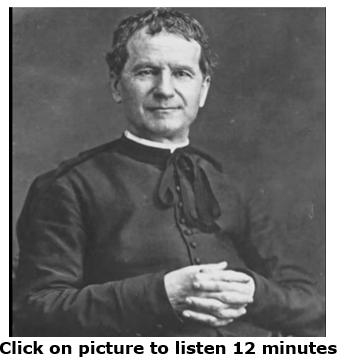
Fr. DON BOSCO EXPOSED THE DARK SECRET BEHIND ISLAM
— And the Truth the World Forgot about the so-called Muslim religion. Fr.Don Bosco, also known as John Bosco, was an Italian Catholic priest and educator, born on August 16, 1815. He founded the Salesian Society in 1859 to help disadvantaged youth, particularly boys, through education and community service. His teachings emphasized lovekindness, and the importance of education for young people, making him a beloved figure in Catholicism and a patron saint of youth. Don Bosco was canonized in 1934.
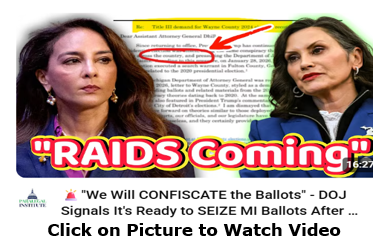
“We Will CONFISCATE the Ballots” – DOJ SIGNALS IT’S READY TO SEIZE MI BALLOTS AFTER STATE REFUSAL
They did this in GA and they will do it in MI, then move on to any other state that refuses to turn them over.
Again, I must reference the prophets and what God tells us through them is going to happen. He told us that the 2020 and 2024 election fraud would be exposed and the elections would be overturned. But isn’t it already too late? I don’t see what difference overturning the elections at this point would make, besides cleaning up the voter rolls and making future elections cleaner. I know, if this isn’t enough? So, we witnessed already Georgia audited now going into Michigan. We see the corruption allegations mainly in the key electoral states of Wisconsin, Michigan, Pennsylvania, Nevada, Arizona, Georgia and North Carolina. Go figure…
I suppose maybe God knows something I don’t and so let’s watch what else comes out of this Federal auditing of the voter process. By the way this auditing is way overdue. Perhaps some indictments for voter fraud will also come out of all this?
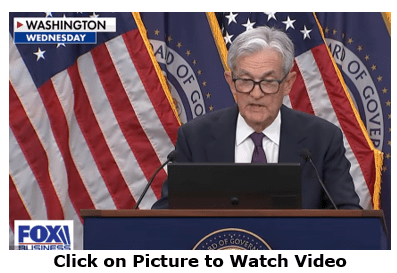
A FUTURE ‘SPY’ IN THE FEDERAL RESERVE?
The question is does he have the legal right to just chose to stay on as the governor?
Will this be challenged in court? Remember the ‘Fed’ (or Federal Reserve) is not the U.S. Federal Government but a private enterprise banking cartel that contracts with the U.S.
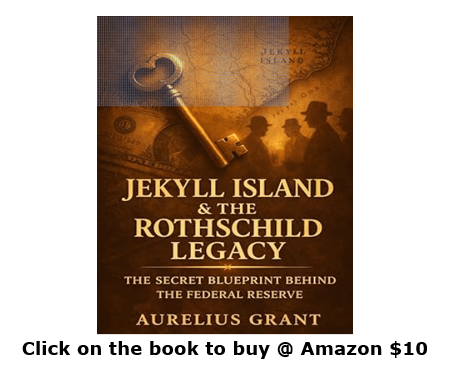
If you read the book “Jekyll Island and The Rothschild Legacy” you will quickly see the problem, and why the Federal Reserve has to go. Why Powell has to go!
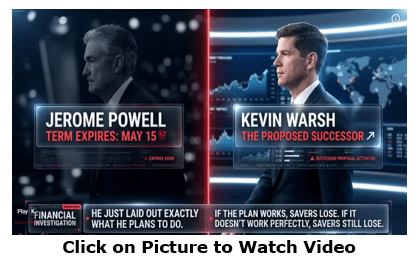
TRUMP’S NEW FED CHAIR IS IN. THE OLD RULES ARE GONE. THIS IS WHAT
CAN HAPPEN
The proposed new Fed chair Kevin Warsh has a plan to pay off the $30 trillion dollars plus national debt. He will replace Jerome Powell who’s term expires on May 15th.
How does this all fit into prophecy?
THE NEW FED CHAIR’S PLAN TO QUIETLY CANCEL YOUR MORTGAGE

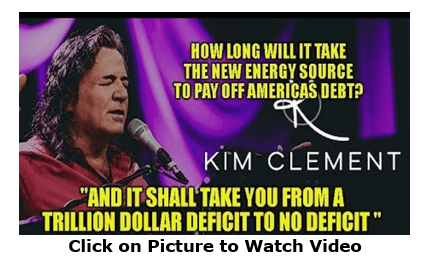
PROPHETIC WORDS ABOUT PAYING OFF THE ENTIRE NATIONAL DEBT OF TRILLIONS (the giant of debt)
Oh folks, this one goes very deep! I wanted to bring this prophecy today because perhaps we are about to witness this prophecy of freedom from debt being fulfilled. I am talking about both personal debt and the national U.S. debt.
This next changeover in May of the Fed chairman is just the beginning (see the video above). The prophecy says a young man with an amazing plan will do it. Is Kevin Warsh that young man spoken of? These are exciting times as we watch what happens next. Surely, we all can see now that this is the time for many of these decade-long Kim Clement prophecies about debt to be fulfilled. Yes, we are finally going to experience many of these marvels. Yes, we will see it in our lifetime. God’s hand is working today.
But let’s now get hung-up on just one item in the plan of getting to ‘debt free’. For God also tells us it is our choice to be debt free. Many have just ignored these prophecies and think they are foolish. They have very little faith. Do they even believe God is real?
I believe when the time comes God is going to use many of these items the prophets have been talking about for the last decade i.e. gold, silver, currencies, energy sources, etc. to be used as instruments to bring about this wealth transfer. We as individuals and politicians must be positioned and thus poised to take advantage of them when the time comes.
There will be no shiny chariots drawn by angels full of gold coming from heaven to us. Get it? This is not what God intends. We must believe and thus we must act. This is how it is going to work. God also has sent his word through his prophets to tell us so we can be in a position ourselves when the time comes. The time is here and the harvest is coming shortly and we can see it now all around us if we only pay attention.
I keep hearing through the prophets about on or around the 4th of July and the 250th anniversary of the U.S. I firmly believe this timeframe is very significant. I can not tell you with certainty what will happen other then I believe God has chosen this timeframe for a reason. The year 2026 we are being told is a time of ‘positioning’. Did you hear me I said ‘positioning’. This means getting ready for the harvest but you can’t harvest if you don’t plant. Enough said….
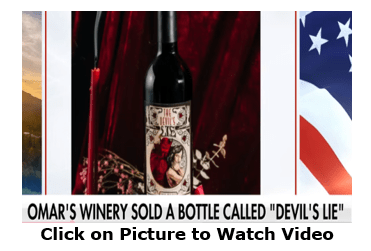
FOLKS, THEY ARE PUTTING IT RIGHT IN OUR FACES! BUT CAN YOU SEE IT?
Are you awake enough to see it? This is so obvious with even them putting this on the label on the bottle one has to say, is this even real…. well it is. Why is she still even in Congress? Why are both husband and wife not in prison? Enough is enough, is enough already….
WHAT PLANET DOES OBAMA LIVE ON?
Barack Obama’s ‘disgusting’ response to White House dinner shooting.
‘NOBODY’S BUYING IT’
This DOESN’T make sense. The wheels of justice have to move a bit faster….don’t you think? This is beyond bizarre lies already to ridiculousness.
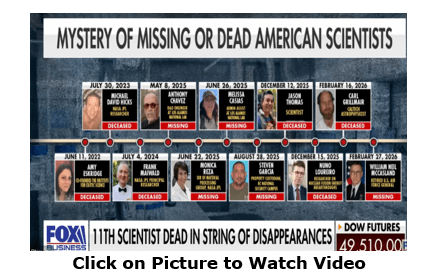
DOES THIS SEEM WEIRD TO YOU..EVEN JUST A LITTLE?
US TIGHTENS IRAN BLOCKADE
The blockage “nothing in” – “nothing out” policy, can it finally break Iran?
DO THEY THINK WE ARE STUPID? MAYBE WE ARE!
WHAT THEY DON’T WANT YOU TO HEAR ABOUT HAMAS & RADICAL ISLAM.
They are hiding the TRUTH from Americans on what the real cause of the Iranian war is all about. The nuclear stuff is just a weapon they pose to use to kill us. They are afraid that if they did tell the entire TRUTH it would gain too much popular support for the US and Israeli efforts to deal with Islam inside America, in the Middle East and the rest of the world. Yes, the rest of the world, especially Europe is also in denial and they too are already paying the price for ignorance and nonaction.
There are too many similarities to WW2, the Nazi movement and the refusal to believe that this is really happening.
LET’S CONTINUE ABOUT THE ISLAMIC THREAT.
How the hatred for the Christians and Jew evolved. It is time for the members of the Islamic cult (not religion) to realize they have been lied to.

HOW FAR SHOULD A COUNTRY GO TO SACRIFICE ITS NATIONAL IDENTITY AND VALUES JUST TO SATISFY A RELIGIOUS WHEN ITS CULT-LIKE ACTIVITIES CLASH?
Are you listening America?
Don’t be fooled by pressures for freedom of religion as it applies to radical Muslims.
Don’t be fooled that this is just a clash of cultures, it is much, much more that that.
Rather this is clash of ideology being used by the socialist communists to gain control over all developed countries. They are just using the Islamic movement to do it, only Islam is too dumb to see it and thinks they will be in control later. Hey… didn’t the globalists try this same ideology with Adolf Hitler only to be met with resistance by the free world once declared he was going to be the ‘supreme leader’ and not let the globalist have the spoils of war.


I have created a brand-new “Post RV Workshop” page in the blog. I included my own personal tips on investing post-RV and also organizing and protecting your estate. Here is the LINK. Going forward I will only post new and exciting information and opportunities here on the Latest Newsletter as they come along. Later I will transfer it to the ‘Post RV Workshop’ page in subsequent Newsletters for your future reference.
Just so you know I absolutely DO NOT adhere to high-risk investments where you can lose it all in a flash. Look at it this way – you are going to have all this money from your dinar exchange. Then why blow it! Most of us investors waited decades for this RV to happen and so why would you even think about pissing is all away in some high-risk gamble of an investment. Yes, there are going to be scammers out there but let’s talk about legitimate investment opportunities only. These scammers can suck you dry and there is not a damned thing you can do about it.
Go to a legitimate wealth manager associated with your bank. Let the licensed experts advise you. Please, please stay away from idiots like MarkZ, TNT Tony, Bruce (on the Big Stupid Call), etc. , etc. Go to professionals. It doesn’t mean you have to follow everything they advise you but it’s a great start. Remember they too are selling investment products and get commissions.
Nothing new to report today. Please see the blog section on the other great news on this subject matter here LINK.

WASHINGTON ANNOUNCES ITS SOLIDARITY WITH IRAQ AND SUPPORTS AL-ZAIDI’S EFFORTS TO FORM A GOVERNMENT.
The United States Mission in Iraq expressed its best wishes to Prime Minister-designate Ali al-Zaidi in his mission to form a government capable of meeting the aspirations of the Iraqi people and achieving a brighter and more peaceful future.
In a statement, the mission affirmed Washington’s solidarity with the Iraqi people in their pursuit of common goals, foremost among them preserving the country’s sovereignty, enhancing security to eliminate terrorism, and building a prosperous economy that brings tangible benefits to both the Iraqi and American sides.
The Coordination Framework announced in a statement the selection of Ali al-Zidi as the official candidate of the Coordination Framework bloc, being the largest bloc in the House of Representatives, to assume the position of Prime Minister and form the next Iraqi government.
This came during a crucial meeting held by the leaders of the framework at the Government Palace in Baghdad on Monday, where the name of Al-Zaydi was agreed upon after studying the list of candidates and choosing the person whose specifications match the requirements of the current stage and its challenges.
****************************************************************************************
IT BRINGS BENEFITS TO BOTH AMERICANS AND IRAQIS. WASHINGTON IS OPTIMISTIC ABOUT AL-ZAIDI BECOMING PRIME MINISTER: WE WANT A SOVEREIGN IRAQ.
The US Embassy in Iraq expressed its support on Tuesday, April 29, 2026, for Prime Minister-designate Ali al-Zubaidi in his efforts to form a new government, stressing its aspiration to enhance security, preserve Iraq’s sovereignty, and achieve a partnership that serves the interests of both countries. US President Donald Trump had previously opposed the nomination of Nouri al-Maliki by the Coordination Framework forces for the premiership, which prompted them to put forward an alternative candidate, Ali al-Zidi.
This was in the context of a broader US trend of not supporting figures or forces accused of undermining the internal balance or of being close to Iran. Washington also focuses its positions on pushing for governments that are described as more independent and limit the influence of armed factions linked to Tehran. : “The US The US Embassy in Iraq said in a statement received by Mission in Iraq expresses its best wishes to Prime Minister-designate Ali al-Zaidi in his efforts to form a government capable of fulfilling the aspirations of all Iraqis to support a brighter and more peaceful future.” The statement continued, “We declare our solidarity with the Iraqi people as they strive to achieve the common goals of preserving Iraq’s sovereignty, enhancing security to defeat terrorism, and building a prosperous future that delivers tangible benefits to both Americans and Iraqis.”
*********************************************************************************************
ALI AL-ZAIDI RECEIVES AN AMERICAN CERTIFICATE “AND DID NOT SEND DOLLARS TO THE REVOLUTIONARY GUARD”
A report in Asharq Al-Awsat newspaper on Wednesday (April 29, 2026) stated that an independent investigation conducted by the American law firm K2 Integrity found no credible evidence linking Iraqi Prime Minister-designate Ali al-Zaidi to financial activities connected to the Iranian Revolutionary Guard.
The report emphasized that the restrictions previously imposed on him were due to reputational risks and not to proven involvement in money laundering operations, at a time when his appointment is facing internal and external political scrutiny amidst the complexities of the financial landscape and relations between Baghdad, Washington, and Tehran.
The US Embassy in Iraq expressed its support on Wednesday, April 29, 2026, for Prime Minister-designate Ali al-Zubaidi in his efforts to form a new government, stressing its aspiration to enhance security, preserve Iraq’s sovereignty, and achieve a partnership that serves the interests of both countries.
US President Donald Trump had previously opposed the nomination of Nouri alMaliki by the Coordination Framework forces for the premiership, which prompted them to put forward an alternative candidate, Ali al-Zidi. This was in the context of a broader US trend of not supporting figures or forces accused of undermining the internal balance or of being close to Iran. Washington also focuses its positions on pushing for governments that are described as more independent and limit the influence of armed factions linked to Tehran.
An American law firm said that a recent independent investigation it conducted showed no evidence linking Iraqi Prime Minister-designate Ali al-Zaidi to financial activities connected to Iran’s Revolutionary Guard, stressing that the restrictions imposed on him in 2024 were due to “reputational risks,” not“proven involvement in money laundering.” This clarification comes at a time when al-Zidi’s sudden appointment to form a government in Baghdad, succeeding Mohammed Shia al-Sudani, is facing political scrutiny regarding his background, after a bank he owns was included in restrictions imposed by the Central Bank of Iraq on dollar transactions, as part of what was then described as a “campaign to combat illicit financial flows.”
An American law firm said that a recent independent investigation it conducted showed no evidence linking Iraqi Prime Minister-designate Ali al-Zaidi to financial activities connected to Iran’s Revolutionary Guard, stressing that the restrictions imposed on him in 2024 were due to “reputational risks,” not“ proven involvement in money laundering.”
This clarification comes at a time when al-Zidi’s sudden appointment to form a government in Baghdad, succeeding Mohammed Shia al-Sudani, is facing political scrutiny regarding his background, after a bank he owns was included in restrictions imposed by the Central Bank of Iraq on dollar transactions, as part of what was then described as a “campaign to combat illicit financial flows.” Representatives of K2 Integrity, who asked not to be identified because they were not authorized to speak to the press, said that an independent investigation by the firm found “no credible evidence” linking al-Zaydi or Bank of the South to the Quds Force, and did not detect any direct financial flows from the bank to regional entities classified as high risk.
One of the representatives explained to Asharq Al-Awsat that the ban recommended by the US Treasury Department and the Federal Reserve in New York on the Bank of the South was limited to dealing in US dollars, and was driven by risks related to the bank’s reputation and ownership, and not because of proven violations related to money laundering or financing of entities linked to Iran. Al-Zaidi, a businessman who owns companies with his brother and partners, including “Al-Awais,”“Al-Janoub,” and “Dijlah Channel,” is a mysterious figure in the political scene. His appointment came amid public American rejection that led to the exclusion of Nouri al-Maliki from the race, while it was reported that an unannounced rejection also excluded al-Sudani.
Restrictions on Iran
In February 2024, Iraq imposed restrictions on eight local banks, including the South Islamic Bank, preventing them from accessing dollars through the central bank’s window. This move was part of a US-led effort to curb money transfers to Iran. A Treasury Department spokesman at the time said the measures were aimed at”protecting the Iraqi financial system from misuse,”referring to concerns about the use of the U.S. currency in illegral activities. This case highlights the ongoing challenge Baghdad faces in balancing its relations with both the United States and Iran, given its heavy reliance on the US dollar, with Iraq receiving approximately $10 billion in cash annually from the Federal Reserve, according to official estimates.
The US Embassy in Baghdad welcomed al-Zaidi’s appointment, affirming its support for efforts to form a government that”reflects the aspirations of the Iraqi people” this comes after months of political deadlock and pressure from the Trump administration, which threatened to cut off aid to Iraq if Maliki returned to power.
Al-Zaydi faces a 30-day deadline to form his government, amid sharp divisions within the “coordination framework,” and at a time when regional tensions have been escalating since the military strikes on Iran in February 2016, and the subsequent targeting of US interests in Iraq by armed groups.
********************************************************************************************
WASHINGTON MAKES PROGRESS IN RELATIONS WITH BAGHDAD CONTINGENT ON “DISMANTLING THE FACTIONS”
A spokesman for the US State Department confirmed on Wednesday that dismantling Iraqi factions is a “key pillar” for making progress in bilateral relations between Baghdad and Washington.
The spokesman told Shafaq News Agency, “The US administration was very clear in its vision of what is required to achieve progress in bilateral relations between Washington and Baghdad.”
He added that “dismantling the pro-Iranian armed factions in Iraq is a fundamental pillar for strengthening the relationship,” explaining: “We continue to stand with the Iraqi people in their aspirations towards the common goals of protecting Iraq’s sovereignty, enhancing its security, and building a prosperous future that brings tangible benefits to both Americans and Iraqis.”
Regarding the financial reward for information about the Secretary-General of Kataib Sayyid al-Shuhada, Hashim Fenian Rahim al-Saraji, known as “Abu Ala al-Walai,” the spokesman explained that the “Rewards for Justice” program issued the reward offer for al-Walai due to his involvement in targeting operations that affected diplomatic and military facilities belonging to the United States.
Informed political sources revealed last Monday that a number of leaders of the Coordination Framework had received messages from the United States expressing its strong displeasure with the participation of the Secretary-General of the Sayyid al-Shuhada Brigades, Abu Ala al-Walai, in the last meeting of the Coordination Framework.
The sources told Shafaq News Agency that “Washington expressed surprise at al-Walai’s participation in a political meeting dedicated to choosing the prime minister, just hours after the US State Department announced a financial reward of up to $10 million for information leading to him .”
She added that “the American message was strongly worded, and included an emphasis that the continued coordination framework’s disregard for the nature of the existing relationship and partnership with Washington may push the American administration to conduct a comprehensive reassessment of the bilateral relationship at various levels, particularly in the security and economic aspects.”
The sources indicated that “the American side hinted at the possibility of not engaging or dealing positively with any new Iraqi government, in the event that the leaders of the factions continue to play a major role among the influential forces in shaping its features or directing its political decisions.”
It is noted that the Coordination Framework nominated Ali al-Zaidi on Monday evening to form the new government, and President Nizar Amidi tasked him with forming it.
It is worth noting that the US State Department announced last Friday, through the Rewards for Justice program of the Diplomatic Security Service, a reward of up to $10 million for information about Hashim Finyan Rahim al-Saraji, also known as Abu Ala al-Walai, the leader of the Sayyid al-Shuhada Brigades in Iraq .
The United States had designated Kataib Sayyid al-Shuhada and its leader, al-Sarraj, as Specially Designated Global Terrorists in November 2023, before later listing the group as a Foreign Terrorist Organization in September 2025 .
*********************************************************************************************
THE ALGERIAN EXPLAINS THE SCENARIO FOR CHOOSING AL-ZIDI FOR THE POSITION OF PRIME MINISTER
Abdul Rahman al-Jazaeri, head of the political body of the National Tribal Movement, explained the mechanisms and scenario behind the selection of Ali al-Zaidi for the position of Prime Minister.
Al-Jazaeri told Al-Maalouma, “There is a trend towards independent figures, especially since the religious authority has closed its doors to politicians. Therefore, an independent candidate avoids the quota system and partisanship.”
He added, “The unanimous agreement on al-Zaidi was followed 60 minutes later by his appointment as Prime Minister by the President of the Republic. This confirms that there is a democratic process in Iraq to address the errors and the agreed-upon criteria.”
He explained that “the selection was made after an agreement between the teams of Maliki and Sudani and those who joined them. The selection was made according to an agreement concluded 48 hours prior, after postponing the framework meeting and agreeing on al-Zaidi with all the specifications of the coordinating framework, regardless of the points held by each party and bloc.”
******************************************************************************************
A MOVE TO APPOINT 3 VICE PRESIDENTS, WITH MALIKI AT THE FOREFRONT.
(Mnt Goat: Oh boy,,,,, here we go again…. ! What is it when they don’t understand the words ‘NO Maliki’ by the US? )
Hashim al-Haboubi, a leader in the National Accord Movement, revealed on Wednesday a serious political move to reinstate the position of Vice President of the Republic and appoint three individuals to these posts. He indicated that the Speaker of Parliament alluded to this move publicly during his speech at the presidential swearing-in ceremony.
Al-Haboubi told Al-Maalomah News Agency, “Current information and leaks confirm the intention to appoint three Vice Presidents, with Nouri al-Maliki, leader of the State of Law Coalition, at the forefront. The other two positions will be allocated to the Sunni component and the Kurdistan Democratic Party.”
He added, “Reviving these positions comes at a time when the duties of the President of the Republic are viewed as largely ceremonial. However, recruiting three Vice Presidents will cost the state treasury enormous sums of money and impose additional burdens.”
Al-Haboubi explained that “the Speaker of Parliament clearly indicated this move during the presidential swearing-in ceremony, which confirms the existence of prior political agreements in this regard.”
*********************************************************************************************
AL-ZAYDI RECEIVES SUPPORT FROM AL-MALIKI AND ASSURANCES FROM AL-AMIRI, AL-HAKIM, AND AL-KHAZALI
(Mnt Goat: Are they supporting Al-Zaydi because they know he will support Iranian wishes? To me this is not so good news then unless they only support Al-Zaydi because he promises them positions in his cabinet as a last resort. Of course, they all want the vice president position. The Shiites are allowed one of them.)
Prime Minister-designate Ali al-Zidi intensified his meetings with leaders of the Coordination Framework on Wednesday, as part of consultations to form the new government, amid calls to expedite the formation of a national cabinet capable of facing challenges and enhancing stability.
Al-Zaydi met with Hadi al-Amiri, Secretary-General of the Badr Organization, where they discussed the latest political developments and efforts to form a new government, as well as the most pressing challenges. Al-Amiri stressed the need to form a national government that meets the needs of the citizens and strengthens stability.
The head of the State of Law Coalition, Nouri al-Maliki, also received al-Zaydi and discussed with him the situation in the country and the region, emphasizing the importance of unifying the efforts of national forces and working in a spirit of cooperation and partnership to form a government capable of consolidating Iraq’s unity and preserving its sovereignty. Al-Maliki expressed his support for al-Zaydi in his efforts to form a government that serves the public interest and enhances security and stability.
In another meeting, the head of the National State Forces Alliance, Ammar al-Hakim, received the prime minister-designate, stressing the importance of the government formation reflecting the will of the Iraqi people in all its diversity and components.
Al-Hakim stressed the need to empower competent individuals in ministries (including of course himself), and to cooperate with the House of Representatives and the Supreme Judicial Council in enacting laws, while emphasizing the importance of completing the service and economic projects initiated by the previous government.
He also called for openness to the regional and international environment, setting priorities, foremost among them the financial and economic challenge, as well as diversifying sources of income and oil export outlets, reforming the banking sector and attracting foreign investments.
On the security front, Al-Hakim stressed the need to maintain security stability, support security agencies, and enhance intelligence efforts to prevent the return of terrorism.
Al-Zaydi also met today with the Secretary-General of the Asa’ib Ahl al-Haq movement, Qais al-Khazali, where the two sides discussed developments in the country and stressed the need to exert maximum efforts to form a national government capable of facing current challenges and providing services to citizens.
Al-Zaydi also met today with the head of the Supreme Islamic Council of Iraq, Humam Hamoudi, and discussed with him ways to expedite the formation of a new national government that meets the aspirations of citizens to enhance services and consolidate stability throughout Iraq, according to a statement issued by his office.
The coordinating framework had agreed, on Tuesday evening, to grant al-Zaydi the freedom to choose his cabinet, (oh… how nice of them) after he announced his nomination for the premiership on Monday evening, following the withdrawal of Mohammed Shia al-Sudani and Nouri al-Maliki from the race for the position.
********************************************************************************************
IRAQI OIL MINISTRY LAUNCHES FIRST PHASE OF BIN OMAR GAS INVESTMENT WITH A CAPACITY OF 80 MILLION CUBIC FEET PER DAY
The Ministry of Oil inaugurated on Wednesday the first phase of the accelerated Bin Omar gas investment project in the Nahr Bin Omar field, in a move aimed at enhancing associated gas investment and supporting the energy system in Iraq.
In this regard, the Undersecretary of the Ministry of Oil for Gas Affairs, Izzat Saber Ismail, said in a speech he delivered during the ceremony that the project was completed in record time, as work started in the first week of this month and was completed before its end, thanks to the continuous efforts made by the technical and engineering staff around the clock.
(Mnt Goat: On time? OH.. that’s a first….lol..lol..lol.. 😊)
He stressed that “the gas sector enjoys exceptional attention from the government and the Ministry of Oil, as it represents a fundamental pillar in supporting the national economy and enhancing energy security,” indicating that “the ministry is working to achieve optimal investment in gas, whether associated or free, in a way that contributes to reducing waste and maximizing revenues.”
The Undersecretary explained that “the project includes extending a pipeline with a length of (5) kilometers and a diameter of (20) inches, to connect the gas system, with an initial investment capacity ranging between (70 – 80) million standard cubic feet per day.”
He added that the project will contribute to supplying between (55-65) million standard cubic feet per day of dry gas to feed power plants, and producing between (500-600) tons per day of liquefied gas to meet the needs of the local market, as well as producing about (1800) barrels per day of condensates, which will support national revenues.
*********************************************************************************************
PRIME MINISTER-DESIGNATE ALI AL-ZAIDI DISCUSSES THE FINANCIAL SITUATION AND MONETARY POLICY WITH CENTRAL BANK GOVERNOR ALI AL-ALAQ
Prime Minister-designate Ali Faleh al-Zaidi and Central Bank Governor Ali Mohsen al-Alaq stressed on Thursday the importance of maintaining economic stability.
A statement from his media office, received by “Al-Eqtisad News,” stated that “the Prime Minister-designate met with the Governor of the Central Bank, Ali Mohsen Al-Alaq, to discuss the financial situation in the country and monetary policy in light of the current circumstances and challenges.”
He noted that “the meeting emphasized the importance of maintaining economic stability and strengthening the Central Bank’s procedures to achieve sustainable development in Iraq.“
***********************************************************************************
AFTER MEETING TAIF SAM AL-ALAQ OPENS THE CENTRAL BANK’S BOOKS TO AL-ZIDI… AND IRAQ’S FINANCIAL SITUATION
In one day and in two consecutive meetings, Prime Minister-designate Ali Faleh al-Zaidi clearly outlined his economic priorities.
First, Finance Minister Taif Sami came to him to brief him on the financial situation and the files of revenues and salaries.
Then, Central Bank Governor Ali Mohsen al-Alaq came to him to discuss monetary policy and strengthening economic stability, on Thursday (April 30, 2026).
The Prime Minister’s Media Office stated in a statement received by that “Prime Minister-designate Mr. Ali Faleh Al-Zaidi met today, Thursday, with the Governor of the Central Bank, Mr. Ali Mohsen Al-Alaq.” The meeting witnessed “a discussion of the financial situation in the country and monetary policy in light of the current circumstances and challenges, where the importance of maintaining economic stability and strengthening the Central Bank’s procedures was emphasized, in order to achieve sustainable development in Iraq.
*********************************************************************************************
TAIF SAMI GIVES AL-ZAIDI A FULL PICTURE OF IRAQ’S FINANCIAL REALITY AND SALARIES
IN THEIR FIRST MEETING
2026-04-30 | 11:07
Baghdad
Prime Minister-designate Ali al-Zidi met today, Thursday (April 30, 2026), with Finance Minister Taif Sami for their first meeting, to discuss the financial situation in Iraq, as well as the issues of financial revenues and salaries. The media office of Al-Zaidi stated in a statement, which was followed by , that“Prime Minister-designate Ali Falih Al-Zaidi met today, Thursday with Finance Minister Ms. Taif Sami.” According to the statement, the meeting included a review of the financial situation in Iraq, including financial revenues and the salary file, as well as a discussion of the challenges facing the financial situation under the current circumstances, and the importance of continuing to work on maximizing and diversifying financial resources.
According to the statement, the meeting included a review of the financial situation in Iraq, including financial revenues and the salary file, as well as a discussion of the challenges facing the financial situation under the current circumstances, and the importance of continuing to work on maximizing and diversifying financial resources.
*********************************************************************************************
LAUNCH OF THE “MERCHANT PLATFORM” IN IRAQ: A DIGITAL STEP TO SUPPORT THE ECONOMY AND DIVERSIFY TRADE.
The Prime Minister’s economic advisor, Mazhar Muhammad Saleh, confirmed on Thursday that the electronic merchant platform represents a real test of Iraq’s ability to turn economic ambition into reality, while noting that Iraq is witnessing a remarkable expansion in its trade partnerships.
Saleh said in a press statement that “in a step that reflects a serious trend towards modernizing the economic structure, Iraq announced the launch of the electronic (Trader Platform) and the activation of automation procedures, within a strategic path aimed at facilitating trade and enhancing our country’s integration into the regional and international economy.”
He explained that “(the Merchant Platform) does not merely represent administrative development and high-level governance in transparency, accountability and participation, but rather indicates a qualitative shift in the philosophy of managing the economy, from the traditional pattern based on complexity and bureaucracy, to a more efficient digital model that keeps pace with the requirements of modern market systems that are explicitly stipulated in the constitution.”
He pointed out that “the electronic platform (the merchant platform) is a pivotal tool for empowering the private sector and advancing it institutionally, as it provides an integrated electronic environment for issuing import and export licenses, adopting the (one-stop shop) system for registering companies, in addition to providing banking facilities and loans that support commercial activities, which would reduce time and costs, stimulate investment, open the door to a wider segment of entrepreneurs and improve market climate standards in accordance with the global requirements of the World Trade Organization, the World Bank and other international partners.”
He added, “This step coincides with positive economic indicators, as Iraq continued to record growth in the volume of its foreign trade, which exceeded $65 billion, with a remarkable trade surplus driven by the rise in oil exports in the past few years. This performance also contributed to strengthening Iraq’s position among Arab and global economies, reflecting promising potential if it is properly invested.”
He pointed out that “the real challenge lies not in the size of the numbers, but rather in their nature, as exports still depend almost entirely on oil, which makes the economy vulnerable to the fluctuations of global markets. This is where the importance of the ‘Trader Platform’ comes in as a means to support the diversification of the economy, by facilitating non-oil trade and encouraging local production.”
On the regional relations front, Saleh affirmed that “Iraq is witnessing a remarkable expansion in its trade partnerships, whether with Arab countries or neighboring countries, indicating the restoration of its role as an active economic center. This trend is reinforced by the (Development Road) project, which is expected to transform the country into a strategic hub for transport and trade, linking the Gulf, Turkey, and Europe.” He explained that “the relevant official bodies are committed to the success of these projects with precision and to ensuring their actual implementation, providing a stable legal and regulatory environment, in addition to combating bureaucracy and removing obstacles to any real economic reform.”
He pointed out that “digital transformation in the trade sector is not a luxury option, but an inevitable necessity in a world that is rapidly moving towards a digital economy. If this step is properly invested, Iraq has a real opportunity to move from a rentier economy to a diversified economy that is more sustainable and competitive.”
He concluded by saying: “The (Trader Platform) represents a serious test of Iraq’s ability to translate its economic ambitions into tangible reality. It will either be a gateway to a modern economy, or it will remain just a promising project added to the list of incomplete opportunities.”
*********************************************************************************************
Their words not mine…..No Rumors, No Hype, No Opinions ,,,,,
Just the FACTS!
Disclaimer: All information in this newsletter is not intended for investment decisions / purposes. Mnt Goat is not a financial analyst, planner, banker, attorney or associated in any role with giving out professional investment advice.
Auf Wiedersehen
Much love to ya all,
Mnt Goat
*********************************************************************************************




 LATEST MNT GOAT NEWSLETTER
Leave a reply to ashleypikes Cancel reply