


Disclaimer: All information in this newsletter is not intended for investment decisions / purposes. Mnt Goat is not a financial analyst, planner, banker, attorney or associated in any role with giving out professional investment advice.
ABOUT THE NEWSLETTER:

August 11, 2026 Mnt Goat News Brief
Guten Tag everyone:
Today’s news it is certain now that Iraqi banks have entered a dangerous liquidity crisis. What will the Central Bank due to remedy the situation? What is the ONLY solution that can resolve this crisis? Can you say- remove-the-zeros!
GIVE A GIFT TO MNT GOAT
I decided to allow everyone to give a Free-will GIFT to Mnt Goat on PayPal if you so desire. Here is the link below. Please show your appreciation for all the hard work I do.

I recommend $15-$20 dollars a month or whatever you can afford. Do you realize I write up to eight (8) Newsletters every month. This is like a second job to me. The only way I know that people are reading and appreciating all the FACTUAL news I bring is through their appreciation. If I do not receive equal appreciation for all the hard work I do, I will simply end the Newsletter and save myself endless hours at the computer. You do want to get paid for your job, don’t you? What makes my job any different? Tell me….. I am tired of this RV saga just as you are.
Let’s all try to chip in!

____________________________________
Galatians 5:13
“For you were called to freedom, brothers. Only do not use your freedom as an opportunity for the flesh, but through love serve one another.”
STATUS OF THE RV
As we move to the mid-August timeframe, it is a new month. Have you already helped out with the Newsletter? The Latest Mnt Goat Newsletter will only be published if my viewers support it. If you have not yet shown you appreciation, please try to help out for this month. We are already down to one Newsletter a week due to non-participation by the majority of viewers.
Remember that I don’t need to publish anything for anyone. I do this because I care about the public and because I don’t agree with the bizarre, stupid stuff that is going on to wrongly promote this Iraqi dinar investment as a three-ring circus. Yes, there are many idiots making a lot of money off their nonsense, yet, I bring FACTUAL and HONEST news and I can hardly afford to do it any longer. Can you help?
____________________________________
There is lots of news for this period of reporting. Hang on to your seat as this is going to be a very long one today. Get your cup of coffee or tea, sit back, relax and slowly read every bit of it to get exactly what is being said today.

I will try to connect the pieces from the articles and a conversation with my CBI contact for you and how they relate to what we all want – the RV. The pressure to conduct the Project to Delete the Zeros is enormous. I will explain.
We have heard and still continue to hear news about the stashes of currency outside the banking system in Iraq and how this is creating a liquidity crisis. This is cash that can be used elsewhere in the economy, such as to pay salaries, loans, etc.
A recent article titled “CURRENCY PRINTING IS KNOCKING ON IRAQ’S DOOR… WARNINGS OF AN ECONOMIC CATASTROPHE” explains the extent of the crisis. I quote from it. –
Al-Mada newspaper revealed in a report followed by Al-Mustaqilla, “the escalation of the financial liquidity crisis in Iraq, after the Parliamentary Finance Committee proposed the option of resorting to printing currency to secure employee salaries and avoid a financial crisis that some MPs described as potentially leading to a “revolt of hungry stomachs”, at a time when economists warn that this option may open the door to a dangerous wave of inflation if it is not accompanied by a real increase in production.
This recent article is the main issue for today’s Newsletter. Will it get us the RV? Let’s keep this issue in our minds as we read the rest of the news.
_____________________________
In today’s news once again a ‘jackass’ economists comes forward to suggest a remedy to resolve the situation of this crisis. Why do I call him a ‘jackass’. I am trying to make everyone realize that many in Iraq don’t yet even have a handle of what is causing the hording of the currency and so if you can’t understand the problem fully, then how can you resolve it?
Let’s first take a peek at the latest advised solution by Former MP Abbas Sarout, who claims the solution is to build confidence in the citizens and a need to reconsider the strategy for attracting funds to the banking system. It is titled “80% OF MONEY IS OUTSIDE BANKS… FORMER MP CALLS FOR A NEW STRATEGY TO ATTRACT HOARDED FUNDS”. Oh yes…. I have to laugh at how many times we have read articles just like this one. So why am I laughing? 😊
I am laughing sarcastically, of course, since we all know this to be true but this is not a solution only another statement of the problem. Yes, Saroout, how do we get these funds back into the banks?
In yet another article titled “MP PROPOSES DIGITAL DINAR TO FIX IRAQ’S CASH SHORTAGE” we get yet another smartie claiming he too has a proposal to get this cash into the banks. Oh..really?
MP Saad al-Awadi, deputy head of the National Approach parliamentary bloc, proposed on Friday “a plan to secure salary payments for state employees and retirees through a “digital dinar” and end Iraq’s ongoing cash crisis. In a statement, al-Awadi said the initiative represents “a comprehensive economic plan to address the liquidity crisis and ensure stable salary disbursement through the launch of a digital Iraqi dinar,” easing access to financial entitlements for employees without requiring paper cash transactions.”
I took these articles and others (as you will see) and talked about them with my CBI contact over the weekend. So, today I wanted to bring you what we discussed.
This is a summary of what was said:
My CBI contact told me to institute a digital dinar you will need some sort of digital wallets. To have a digital wallet platform you will need electricity 24/7 which Iraq does not yet have and won’t have probably for another couple years. Can the liquidity crisis wait that long? Yes, Apple I- phones have just been selected as a preferred technology in Iraq as we just learned and they will probably consider Apple Wallets at some point too.
Next, she said, salaries are already electronically deposited in the banks by the CBI. So, there is no need to find solutions to getting the money into the banks since it was already there. The problem is keeping it there.
This last statement was not a revelation to me as I remembered the mandatory electronic deposits from an article years ago and that parts of Kurdistan was the only obstacle to fully implementing it. The Kurds always seem to run last in many of these efforts.
I then asked how does all this cash get stashed then, meaning outside the banking system?
She then said that there are economists and MPs who simply can’t address the issue because they don’t understand the problem, So, this too is at the heart of the crisis. It is not the problem in getting the money into the banks but rather the problem is in keeping it in the banks. She asked if I remembered that in order to receive their salaries the citizens must now have a bank account and the CBI electronically deposits their salaries and retirements money into the accounts. This is similar in the west when social security checks are deposited electronically each month to citizens. It is automatic and reoccurring and this is the format the IMF wanted Iraq to implement as part of its past consultation sessions. Do you remember these sessions.
Ok, I said I get it!
Next, she elaborated that the problem stems in getting the money out of the bank, once in it. She said they limit the ATMs to a daily limit, so this is not an issue.
I said I hear all about the Point of Sale and electronic purchases. Doesn’t this help keep money in the banks? She said yes, but many shops are remote and don’t have electricity 24/7 to complete such purchases so they revert to cash. Cash is still a necessity in the marketplace.
Then my contact when on to describe what is really happening. It is not complicated once you understand the nature of how people think. This is why most simply do not get it or understand it.
This is at the heart of the REAL problem she explained:
Most of the money stashed has been in the lower denominations 200, 250 and 1000 bills, which is also why the CBI has to keep printing more and more of these lower denominations. It’s not large amounts of stolen funds or funds stolen converted in to physical assets that’s the ongoing problem here. But rather these are the denominations they have to keep printing and are increasing the money supply each time they do it. They are not printing the larger notes, except to replace those that are damaged. How many articles on these printing of the lower denoms already must we all read, she said. Why is the CBI not addressing it properly, I asked?
She then went on to say this is why they keep telling us there is shortage in the lower denominations over the past decades. This is nothing new. In 2004 the CBI issued coins to help but this was not successful.
Oh… I get it now, I said, they have gotten these lower denoms stashed in response from ‘making change’ from the higher notes (5k, 10k, 25k and 50k) when shopping.
Yes, she said that’s right.
She then said, they just take them home and stash them. I compared this taking lose change from my pocket when I get home and placing it in a can. They are getting ‘short changed’ because the merchant does not have enough change in the lower denoms to make proper change for the purchase of the item, thus they are paying more. This is a source of inflation too. She said it is not really anymore so much a confidence issue of the banks but an educational and logistical issue.
But it goes beyond education even. She said let me explain:
This is NOT an issue of not trusting in the banks but a ‘logistical’ issue on the part of the CBI. It was able to swap out the older Saddam Hussen lower denominations notes back in 2004 and so the process will be the reverse. We read an article all about this not too long ago, remember? It explains clearly why the deletion of the zeros is so important. She said it will also null and void any very large stashes of dinars outside the banking system once the turn-in date has expired. This will fight corruption.
My contact then went on to give a solution and said this is the ONLY solution that will work and the longer they procrastinate in implementing it the larger the problem will manifest.
But here’s the clincher, she said. They (CBI, IMF, World Bank, US Treasury) all know that once the currency is converted back to all lower denominations it must be followed by a revaluation. With the revaluation the currency must come back online (FOREX). The real nominal value must be recognized they call this the REER. She suspects that the powers controlling this are going to use the Iraqi dinar for other purposes too and so the REER rate must be very high. They are trying to secure this new rate with the economy. But here is the dilemma, Dr Shabibi told us way back in 2012 the dinar could withstand up to a market $16 rate on FOREX. If this was true back in 2012 then why is it still at 1/6 of a penny in 2026?
She said simply that the CBI needs to convert/swap these large 3 zero notes to the newer lower denominations and issue coins and get on with it. I can’t believe they are still holding this up so long. There must be something very powerful behind it all. She said she has been in multiple meetings in the past and they know the real issue and also the realistic solution to it. They are not idiots, they see the problem. These 3 zeros notes were meant to be a temporary solution to prevent hyperinflation that began in 1990 and then got much worst during the sanctions and then from the 2003 post war. Anti-inflationary measures are key to a sound economy. Hyperinflation is now knocking at their door as a result of not swapping out these notes back earlier. It is causing and always has caused logistical issues within the marketplace. The issue now is time. Time is no longer on our side, she said. Over time this problem will be manifested to the point that now it is a crisis since it has not been addressed properly. Corruption in the government has held up the deletion project for over a decade. She said she only hopes that the new prime minister Al-Zaidi can correct the corruption to the extent necessary.
She commented, that instead of preventing inflation, now they are causing it by delaying this project any longer. If they continue to print more and more of these lower denominations (250, 500, 1000) this process will keep increasing the monetary mass, a dangerous path they seem to have taken. This will cause massive inflation something these larger notes were supposed to avoid. She said they keep denying the real problem and dwell on the symptoms and do not address the heart of the real cause. Here are typical articles showing us this. They are the same old rhetoric we have been hearing for years. They are titled:
“REMOVING ZEROS TO WITHDRAW LOOTED FUNDS AND ADDRESS SALARY ISSUES… EXPERTS WARN AGAINST A “MAKEOVER”
“REFORMING THE DINAR BEGINS WITH THE ECONOMY, NOT THE BANKNOTES… WARNINGS ABOUT THE COST OF CURRENCY CHANGE”
Everyone should take the time to read these two articles today. I ask you then, after reading them, do they address the real issues or are they just giving us the same old, same old once again?
In both of these articles, she said for instance, they talk about the need “to avoid treating the proposal to change the national currency as a purely technical or monetary measure, explaining that this issue reflects the depth of the structural crisis that the economy is suffering from, and cannot be a substitute for the required financial, monetary and economic reforms.”
“that changing the currency is not a solution in itself, but rather a mirror that reflects the state of the economy, warning against confusing the treatment of symptoms with the treatment of the causes of the problem.”
This last part of the statement in the articles I totally agree with, she said. Yes, financial, monetary and economic reforms are required but have been underway for decades now, heightening during the last four years, but when do we address the inflationary part that is going to cause a major crisis if not solved soon.
How many structural reforms before we go ahead with the project do we need? She said to once again remember that Dr. Shabibi was going to delete the zeros way back in 2012-2013 and yet almost none of these reforms were in place. So, when is enough? She made reference to the petro-dollar and the expectation or goal of getting to 45-55% of revenues outside of the oil revenues is ridiculous and she feels this is also not a fair assessment of the state of the Iraqi economy. I felt her frustration for the first time in many years. Something was really making her angry.
She went on to say that again many MPs are calling for a change in the exchange rate as a solution to the problem but this again will only be inflationary as it will rise prices. We also recently read an article on a proposed solution to only drop one zero. She said this was a ridiculous proposal by someone who clearly does not understand the problem or what comes next.
Today the 250 note is worth about 2 cents USD, the 500 note about 5 cents USD and the 1000 note about 90 cents USD. I also reminded my contact that the 250, 500 and 1000 notes will remain as notes in circulation after the swap out of currency and so I asked if this does impact anything. She said this still applies and could be a part of the reason why they are hording them. Could it be the citizens are holding on to these notes because they are special? At a $4 new rate the 250 will be worth $1,000, the 500 worth $2,000 and the 1000 worth $4,000.
I then made reference to a couple articles in my Mnt Goat archives titled “IN LIGHT OF THE LIQUIDITY CRISIS… WHY DOESN’T IRAQ RESORT TO PRINTING MORE CURRENCY?” This is from February 11, 2015. I included in today’s Newsletter. I read them on the call to her. It hit home today as the crisis of liquidity is real and worsening. They did not do anything about it then but talk about it and it’s been over many years already of printing more and more of these lower notes.
Then yet another from my archives titled “AN IMMINENT PROCESS TO CHANGE THE SKIN OF THE IRAQI DINAR.. REMOVING ZEROS WILL REVEAL THE EXTENT OF CURRENCY MANIPULATION”. This one goes back even further to September 24, 2024. What are they waiting for I asked her?
She then reminded me that CBI also has a plan but they need a buy-in from all entities such as the World Bank, the IMF and the US Treasury to implement it. They will not allow it until certain security issues are addressed namely the militia and factions. This plan is basically the Dr Shabibi plan of 2011 and is still on the table that also will include the reinstatement of the currency for trading. She told me there are actually only two main obstacles – the need the Oil and Gas law to become law and the issue of the Iranian militia and factions inside Iraq disarmed. The coalition considered that whoever engages in this behavior is committing a crime of threatening the security of the country, and will be among the outlaws who must be fought, in accordance with the articles of the constitution that prohibit the use of weapons outside the will of the state, or the formation of any armed organization outside the official armed forces.
(Mnt Goat:: it’s about time they follow their new constitution! Too bad it was the U.S. that has to come in and force it on them.)
_________________________________
What else is in the news?
UPDATE: On disarming the militias and factions
In today’s news we learn a some more information as the process of disarming the militias is underway. There are couple important article. The first one is titled “WHAT HAPPENS TO IRAQ’S ARMED FACTIONS AFTER SEPTEMBER 30?”
Any armed activity conducted outside state authority after September 30, 2026, will be prosecuted under Iraq’s anti-terrorism law, the State Administration Coalition (SAC) stated on Wednesday, describing parties that threaten national security as outlaws who must be confronted.
The coalition, which brings together the country’s main Shiite, Sunni and Kurdish blocs, linked the position to its commitment to placing all weapons under exclusive state control, and expressed support for restricting arms to the state under a ministerial program that parliament has approved and that is now in force as law.
The other article is titled “CHANGING THE UNIFORMS, RANKS, AND INSIGNIA OF THE POPULAR MOBILIZATION FORCES… TRANSFERS AND RETIREMENTS BY LOTTERY AND 5 DECISIONS BEFORE BAGHDAD”. Informed sources told Network 964 that Prime Minister Ali al-Zaidi’s committee for weapons control is engaged in extensive discussions addressing five key issues. Please go read these key issues to help resolving this militia issue in Iraq. This is happening now not months or years away. We can see the urgency as the end of September is arriving soon.
There are also a number of other articles in the Articles Section related to this effort to disarm the militias. You can read them as I will not explain each in much detail. They are as follows:
😊“IN ITS REGULAR MEETING HOSTED BY PRESIDENT AL-ZAYDI, THE STATE ADMINISTRATION DECLARED THAT THOSE CARRYING WEAPONS OUTSIDE THE FRAMEWORK OF THE STATE WILL BE TREATED AS OUTLAWS.”
On Wednesday evening, August 5, 2026, Prime Minister Ali Faleh al-Zaidi hosted the thirty-seventh periodic meeting of the State Administration Coalition.
The attendees affirmed their support for efforts to maintain security and stability and to restrict weapons to the state in accordance with the ministerial program that was voted on by the House of Representatives and became an effective law, and to prevent the use of Iraqi lands as a launching pad for attacks on neighboring countries or to drag Iraq into conflicts that do not serve the interests of its people, considering those who engage in behavior that threatens the security of the country as outlaws who must be fought in accordance with the articles of the constitution that prohibit the use of weapons outside the will of the state or the formation of any armed organization outside the official armed forces.
The attendees condemned the attacks on Iraqi armed forces units that resulted in the killing of a number of its members, calling for adherence to the deadline set for the confiscation of weapons, which ends on September 30, 2026.
😊“IRAQ DECLARES “WAR” ON ARMED GROUPS OUTSIDE THE STATE”
Its’ finally happening! 😊 On Wednesday evening, the State Administration Coalition declared that entities engaging in behavior that threatens the country’s security outside the framework of official institutions are “outlaws and must be fought,” and warned that any armed activity after September 30, 2026, will be subject to the provisions of the Counter-Terrorism Law.
“FACTIONAL WEAPONS OR “COLLAPSE”: AL-ZAYDI’S GOVERNMENT FACES AN IMPOSSIBLE EQUATION”
The Italian ” Special Eurasia ” report highlighted Iraq’s transformation into a central arena for regional conflict, and painted a very pessimistic picture of the future of the Iraqi government under American pressure and Iranian influence.
The report, translated by Shafaq News Agency, concluded that Baghdad is experiencing a state of political and security paralysis between Washington’s demands to disarm the factions, and the Iranian influence that is deeply rooted within Iraqi political, security and economic institutions.
The Italian report considered Prime Minister Ali al-Zaidi’s demand to disarm the factions to be a strategic dilemma, because the government “does not have the military capability or sufficient political influence to carry this out without causing a widespread internal crisis.”
I absolutely do not agree with the author of this article. We are witnessing the disarmament effort in daily reports coming from Iraq. No one said this was going to be easy.
“EXCLUSIVE: FACTIONS SET FOUR CONDITIONS FOR FREEZING THEIR RESPONSE TO SAUDI ARABIA”
An informed source revealed on Thursday that the armed factions have “temporarily” frozen their decision to respond to Saudi Arabia, and have put forward their demands, which include an official apology and compensation from Saudi Arabia, otherwise they will proceed with a response. The source told Shafaq News Agency that “the factions that threatened to respond to the Saudi bombing that targeted a number of Popular Mobilization Forces headquarters in some provinces have frozen their decision to respond, and have made its implementation or non-implementation contingent on the extent of Saudi Arabia’s response to the event.”
What the article does not tell you is that the factions uncontrollably targeted Saudi Arabia with a missile attack. Why did they do this in light of the sensitivity of the occupation inside Iraq. They did it in support of Iran and attacked US friends in the region. There was no justification for Iran’s attack other than craziness. These radicals are dark and evil people. This incident just proves once again why they must be removed from Iraq. They just reinforced their own demise.
__________________________________
Kudos to Iraq:
I want to show you that even though we are reading daily articles about all the issues with the final formation of the new government and the disarming of the factions, there is still other good work being completed in the background that deserves to be noted. These are all signs of what is to come. Here are a couple nice awards given to Iraq for these efforts in the banking reforms.
“GLOBAL FINANCE AWARDS AN IRAQI BANK A GLOBAL PRIZE IN RECOGNITION OF ITS PERFORMANCE”
The National Bank of Iraq announced on Monday that it had won the “Best Bank in Iraq for 2026” award, granted by the international magazine “Global Finance”, as part of its annual Best Bank Awards 2026 , which honors the most distinguished banking institutions worldwide. All I can say is WOW! WOW! WOW! and where is the RV?
😊“IRAQ REGAINS ITS SEAT AT THE WORLD TABLE… BAGHDAD IS ADVANCING IN ARAB DIPLOMACY AND INTERNATIONAL PARTNERSHIPS”
In a new indication of the expanding Iraqi presence abroad, Iraq ranked 12th in the Arab world and 94th globally in a ranking that measures the level of diplomacy and the ability of countries to build international relations and partnerships, according to data from the American magazine “U.S. News & World Report” .
Iraq has moved up in the rankings, ahead of Lebanon, which came in 13th place in the Arab world and 96th globally, while the UAE topped the list of Arab countries, ranking 28th globally, followed by Kuwait, Qatar, Saudi Arabia and Bahrain.
In the Arab world, Egypt came in sixth place, followed by Tunisia, Morocco, Oman, Jordan and Algeria, while Iraq continued to be among the Arab countries most open and capable of building international partnerships. The ranking does not measure only military strength or the size of the economy, but focuses on international relations, openness, partnerships, and diplomatic presence and influence, which are indicators that reflect a country’s ability to operate in the international arena and build a network of relationships that extends beyond its borders.
This last paragraph is WOW! WOW! WOW! again…. 😊 😊 😊
What is the value of the currencies in these other countries mentioned above?
____________________________________
SUMMARY
You have to ask why these two articles in today’s news about deleting the zeros? This was a question that began my most recent conversation with my CBI contact over the weekend. If you haven’t noticed this question was also at the center of my ‘Status Of The RV’ today. I only hope that everyone appreciates the efforts I take to bring you the latest and most accurate, honest news about this investment in the dinar.
The FACTS speak for themselves. Iraq will have to do something in the VERY near future to resolve this liquidity crisis before it turns into an inflation crisis, which could get out of hand real quick. They cannot continue to print more currency. I have never heard my CBI contact talk in such urgency before. In fact, is appeared to be an attitude of disgust and was almost angry at the establishment for not taking action up to this time. Over the months we have read article after article on solutions to the crisis of liquidity. Most of these solutions are certainly on the table, as any solution might be, but are they really feasible due to other factors. What will happen we don’t know for sure but what we do know is something has to resolve this liquidity issue before this get to a crisis mode.
So, you see the CBI is stuck between a rock and a hard place. It will have to decide which option will resolve these banking issues, yet which one will give them the least fallback.
Can they get the disarmament of the factions and militias completed in time? Why is parliament not taking up the Oil and Gas Law in their sessions, as they told us was such a high priority? So, here we go yet again. In a recent article titled “THE KURDISTAN REGION IS DEMANDING 14.1% OF THE FEDERAL BUDGET.”
Channel 8 has obtained information indicating that the Kurdistan Regional Government has begun preparations for the 2027 budget and is seeking to increase the Kurdistan Region’s share from 12.6% to 14.1%.
Shame, shame on parliament for not passing the Oil and Gas Law by now. So, here we go again. More disputes on the proceeds from the oil. More boycotting of parliament? Who gets what and how much? If parliament had passed the new law there would not be a dispute as it would be clear. I know, I know the new census just came out and it appears Kurdistan deserves this new amount. But now they will have to fight for it as before.
This new is a very good example of what economic expert Ziad Al-Hashemi said on Tuesday in his August 4, 2026, article. See above article titled “AN ECONOMIST SAYS IRAQ HAS ENTERED A PHASE OF “PAYING THE PRICE” AS A RESULT OF ACCUMULATED MISMANAGEMENT AND CORRUPTION – URGENT”
The Kurdistan Region is demanding 14.1% of the federal budget based on the new population census.
The 2027 budget will include promotions and the hiring of 100,000 people. (these salaries could be private sector hiring off the govt payrolls, if they had gotten the economy going over the last 20 years.)
_______________________________________________
Let’s keep our prayers alive. There is a deep spiritual dimension at work today bringing about this reset. I believe we are closer than ever for the dinar to get reinstated. But first things first. Part of the mess in the US must be cleaned up too. Then certain laws in Iraq must be passed. Certainly, reviving the economy to at least 45%-50% non-oil revenues could make a huge difference for Iraq and the IMF. Let’s also let the Abraham Accords take effect as more Arab countries join in. By now everyone should be fully aware of these events that caused delays in the currency reform process. This is not rocket science to understand. We are not in control over these obstacles. We need to STOP spreading rumors and over speculating.
What do you think will happen next? (Leave a comment)
______________________________

________________________________________
Their words not mine…..No Rumors, No Hype, No Opinions ,,,,,
Just the FACTS!

These prophecies are an important tool we have to lead us on our path. They are more important now than ever. They give us the strength, perseverance and hope that a better time is coming and that God’s Hand is at work behind the scenes. If you just take a second even to look around you at these past three election cycles, how can you deny that God is at work? Are you sleeping or what?
It is amazing and there is no other way that these events could have happened the way they turned out. But there is more to come, much, much more, I assure you! Now that God has his biblical David re-elected, we need to pay attention to what He does next.
NOTE: These prophecies just keep getting better and better, giving us HOPE of a brighter future. But the real reason why I listen to them is that we can actually see what God says He will do is taking place right in front of our noses. It is a confirmation to me that God is real and is still with us forever just as in biblical times.
Prophetic Words from the prophets: Julie Green
“You Will See A Complete RED Wave For The 2026 Midterms”
Go to 12:54 mark for prophecy. From July 19th. “Get Prepared Something Big Is Coming”

“The Side Of The Left Is At War With Each Other“
Go to the 13:16 mark on the video. Given on July 25th, first one.

“A Political Storm Is Upon Your Enemies And It Will Wipe Them All Out”
Go to 14:13 mark for prophecy. From July 25th second one.
Trump is about to use a trump card on the establishment.

“More Countries Are Willing To Help Expose And Destroy The Deep State”
Go to 12:43 mark for prophecy. From July 26th.
The money is drying out for the deep state to support the illegal migrants. They can’t keep their promises to take care of them, if they came here. The immigration scam to destroy our countries is over as more and more are being deported.

PERSPECTIVES ON THE IRAQI DINAR PROPHECIES

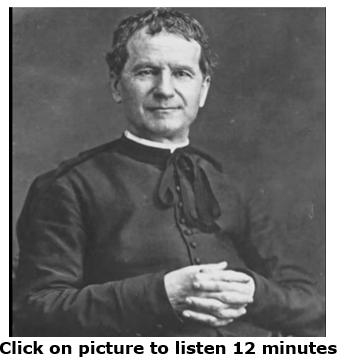
Fr. DON BOSCO EXPOSED THE DARK SECRET BEHIND ISLAM
I keep this one out here to view. Everyone should take the time to watch it. It will awaken you about the Muslim so-called religion (or should we call it for it is — a ‘cult‘.)
— And the truth the world forgot about the so-called Muslim religion.
Fr.Don Bosco, also known as John Bosco, was an Italian Catholic priest and educator, born on August 16, 1815. He founded the Salesian Society in 1859 to help disadvantaged youth, particularly boys, through education and community service. His teachings emphasized lovekindness, and the importance of education for young people, making him a beloved figure in Catholicism and a patron saint of youth. Don Bosco was canonized in 1934.
FAUCI MADE 4 MISTAKES WHILE PLEADING 5TH’
If the federal government does not get him there are many states that can prosecute him outside of the so-called autopen pardon by Biden.

FAUCI HIT WITH SUBPOENAS FROM MULTIPLE STATES
The TRUTH will be told somehow, yes one way or the other. Either through testimony or jail time. I don’t believe he is going to get away with decades of deception and lying about this biological warfare he has been waging on the planet. People have had enough of this and there must be accountability for your actions.

FAUCI AND HIS COUNTERPARTS GOE MUCH DEEPER THAN JUST THE COVID VIRUS
The Fauci Story You Never Heard and is unveiled today– Dr. Jan Halper-Hayes.
Oh boy are you in for an awakening…..

IT’S SATURDAY AUG 8TH, THE SAVE ACT IS SUDDENLY MOVING AGAIN…..its not over until its over….
6 Democrats Just Voted With republicans.

DR. FAUCI HELD IN CONTEMPT OF SENATE, WHAT NEXT?
It’s official’: DOJ receives Fauci contempt referral after Senate Committee vote.

DEMOCRAT PARTY STRATEGY: CREATE CHAOS GOING INTO MIDTERMS

POLITICAL BATTLE IS TEARING THROUGH THE DEMOCRATIC PARTY
CHILLING WARNING ABOUT DEMOCRAT SOCIALISM
The takeover of the Democrat party.
Remember the U.S. is a ‘Constitutional Republic’ not a democracy. I know, I know the democrats keep screaming about saving our democracy, but we conservatives are all about saving our republic not the democracy, which they want desperately to make us. But the U.S. is not a democracy. This so-called democracy the democrats scream for would eliminates the constitution (the law of the land) and makes the majority the law, which we all know they rig. At the same time they rig the elections, which is our ‘democratic’ principles of electing our leaders. So, you can’t have it both ways.
We only use democratic principles to select our leaders who will in return promise to uphold the constitution ( the law of the land for 250 years now) and protect us from all invasions of foreigners who seek to destroy our way of life. It is our Supreme Court that is set up to ensure any laws enacted by any body of the government is adhering to the constitution. Yes, they now tell us they also want to abolish the supreme court. Oh… this has gone too far already.

HISTORIC LOWE & FARAGE PACT?
Can they save the UK together? The pact is just on the table. Not yet confirmed.

NOT COMPATIBLE WITH WESTERN WORLD VALUES
When the Berqa becomes a smirka! What the hell !!!! ☹
Did it ever occur to someone that some cultures are just not meant to co-exist?
Finally, an outward pushback from Australians on these uncontrolled global migration mandates. Why is this so bad for our culture? Again, I will say that we have not yet exposed fully and publicly, and with the needed emphasis, the organization causing these immigrants to come to our countries in the first place. How did this occur? Who is funding them? Who are the politicians going along with these ‘volunteer’ mandates from the United Nations. We need to cut the head off the snake.
Is the United Nations the head of the snake?
I’ve showed you today in the news what the UK is doing and now this part is Australia. What did the prophecies tell us was going to happen about these globalist policies? God told this movement to stop and reverse it will begin first in the U.S. and then move outward to the other countries. These prophecies are being fulfilled as I write this Newsletter today.
The future is ours for the taking but we must first grasp the severity of what is actually going on and who is behind it all. What is this conspiracy to ruin our countries and why?

SENATE EXAMINES ALLEGED MUSLIM BROTHERHOOD NETWORK IN AMERICA
We must all remember that this ‘war on terrorism’ started in 2001 is still in place and has not yet ended.
I am very glad to say that any followers of the Jesus Christ that I follow, do not steal massive amounts of money from forced proxy governments and other wise, then go around blowing up people in the name of ‘Alla’, if they don’t cooperate. Oh…. you are a peaceful Muslim religion, really?
Okay, so if that is the case, and you say it is, then if you truly are a peaceful Muslim religion and don’t go along with these extremists, then it is your responsibility to clean up your so-called religion and put these extremists in their place. Why do we, the western Christian and Jewish cultures now have to do all your dirty work for you. You should do it, publicly denounce these radical groups, and prove to us you are actually a peaceful religion and not just a radical cult in disguise as a religion.
I hope all you Muslims get this message today. I am not spreading hatred of Muslims but if what you believe is truly a good religion you must prove it. You must confront those radical Muslims and fight your own battle with them. Why does the western cultured world have to do your dirty work for you?


I have created a brand-new “Post RV Workshop” page in the blog. I included my own personal tips on investing post-RV and also organizing and protecting your estate. Here is the LINK. Going forward I will only post new and exciting information and opportunities here on the Latest Newsletter as they come along. Later I will transfer it to the ‘Post RV Workshop’ page in subsequent Newsletters for your future reference.
Just so you know I absolutely DO NOT adhere to high-risk investments where I can lose it all in a flash. Look at it this way – you are going to have all this money from your dinar exchange. Then why blow it! Most of us investors waited decades for this RV to happen and so why would you even think about pissing is all away in some high-risk gamble of an investment. Yes, there are going to be scammers out there but let’s talk about legitimate investment opportunities only. These scammers can suck you dry and there is not a damned thing you can do about it.
Go to a legitimate wealth manager associated with your bank. Let the licensed experts advise you. Please, please stay away from idiots like MarkZ, TNT Tony, Bruce (on the Big Stupid Call), etc. , etc. Go to professionals. It doesn’t mean you have to follow everything they advise you but it’s a great start. Remember they too are selling investment products and get commissions.

IRAQ REGAINS ITS SEAT AT THE WORLD TABLE… BAGHDAD IS ADVANCING IN ARAB DIPLOMACY AND INTERNATIONAL PARTNERSHIPS
In a new indication of the expanding Iraqi presence abroad, Iraq ranked 12th in the Arab world and 94th globally in a ranking that measures the level of diplomacy and the ability of countries to build international relations and partnerships, according to data from the American magazine “U.S. News & World Report” .
Iraq has moved up in the rankings, ahead of Lebanon, which came in 13th place in the Arab world and 96th globally, while the UAE topped the list of Arab countries, ranking 28th globally, followed by Kuwait, Qatar, Saudi Arabia and Bahrain.
In the Arab world, Egypt came in sixth place, followed by Tunisia, Morocco, Oman, Jordan and Algeria, while Iraq continued to be among the Arab countries most open and capable of building international partnerships.
The ranking does not measure only military strength or the size of the economy, but focuses on international relations, openness, partnerships, and diplomatic presence and influence, which are indicators that reflect a country’s ability to operate in the international arena and build a network of relationships that extends beyond its borders.
******************************************************************************************
AL-MOUSSAWI CRITICIZES RESORTING TO AMERICAN COMPANIES, SAYING IT WILL TIE THE IRAQI ECONOMY TO THE UNITED STATES.
Political analyst Haider al-Moussawi criticized the Iraqi government’s reliance on American companies in various sectors, despite the Iraqi people’s lack of trust and negative experiences with these companies. He pointed out that relying on American companies will tie the Iraqi economy to the United States.
Al-Moussawi told Al-Maalouma, “American companies, whether in the economic or security sectors, have a bad history in Iraq, especially since the people do not trust their work, and they have been involved in the bloodshed of Iraqis in recent years.”
He added, “Granting confidence to American companies to operate again in Iraq raises many questions among the people about why other countries were not chosen to diversify the economy and investment sources.”
He explained that “linking all Iraqi sectors and agreements to American companies will be tantamount to tying the economy to the United States,” noting that “Iraq has had an unsuccessful experience with American companies, which leads to a lack of trust in them.”
**************************************************************************************
IRAN: OUR RELATIONS WITH IRAQ ARE AT THEIR BEST, AND COOPERATION INCLUDES THE ECONOMY, SECURITY, AND BORDERS.
(Mnt Goat: I have never heard of such bullshit. You see when you know the truth you can spot lies a mile away.)
Iranian Foreign Minister Abbas Araqchi affirmed on Monday that relations between Iran and Iraq are at their best, noting the close cooperation between the two countries in the political, economic, security and border fields.
During his visit to Iraq to participate in the Arbaeen pilgrimage of Imam Hussein (peace be upon him), Araqchi said that the Arbaeen pilgrimage represents a major maneuver that reflects the unity of the Iraqi and Iranian peoples and the depth of the religious and ideological ties between them.
He added that the recent visit of the Iraqi Prime Minister to Tehran witnessed fruitful discussions, stressing that joint cooperation includes coordinating political positions, economic and trade files, securing borders and regulating movement across them, as well as developing joint transit routes.
***********************************************************************************
CURRENCY PRINTING IS KNOCKING ON IRAQ’S DOOR… WARNINGS OF AN ECONOMIC CATASTROPHE
Al-Mada newspaper revealed in a report followed by “Al-Mustaqilla”, the escalation of the financial liquidity crisis in Iraq, after the Parliamentary Finance Committee proposed the option of resorting to printing currency to secure employee salaries and avoid a financial crisis that some MPs described as potentially leading to a “revolt of hungry stomachs”, at a time when economists warn that this option may open the door to a dangerous wave of inflation if it is not accompanied by a real increase in production.
According to the report, Jamal Kojar, a member of the parliamentary finance committee, said that printing currency has become one of the options being considered to overcome the current liquidity crisis, despite the awareness of the economic risks involved. He explained that the government is facing a time gap due to the delay in receiving oil revenues, which are received two or three months after the sales.
Kujer explained that the options available to the government have become limited, noting the difficulty of relying on recovering funds from corruption cases within a short period, as well as the fact that increasing non-oil revenues or activating other resources requires a long time.
He explained that the halt or decline in export activity as a result of security and regional developments has directly affected revenues, noting that Iraq is now facing difficulty in maintaining normal export levels, which has led to significant pressure on government liquidity.
The report indicated that the Finance Committee believes the government faces difficult choices between using part of the cash reserve or taking exceptional measures to provide the necessary funds for operational expenses, primarily employee salaries.
In contrast, economic experts warned of the dangers of printing money without real economic growth, stressing that the problem facing Iraq is not financial bankruptcy, but rather mismanagement of resources and excessive reliance on oil as a primary source of revenue.
Economic expert Jalil Al-Lami said that Iraq possesses significant financial resources, including foreign reserves, gold reserves, and a huge oil wealth, but the problem lies in the structure of the economy, which relies heavily on oil in contrast to weak non-oil revenues and high operational spending.
Al-Lami warned that issuing large quantities of currency without increasing production will lead to higher inflation, a decline in the purchasing power of the dinar, and an increase in demand for the dollar, which may be reflected in the prices of goods and local markets.
He pointed out that the experiences of countries such as Zimbabwe and Venezuela have shown the danger of resorting to printing money as a solution to financial crises, stressing that this measure could turn from an attempt to address a temporary crisis into a cause of a deeper economic crisis.
Economists have suggested other alternatives, including domestic borrowing through government bonds, reprioritizing spending, strengthening tax and customs revenue collection, increasing oil exports, and activating the private sector.
The controversy over printing currency comes at a time when the Iraqi economy is facing increasing pressure due to its heavy reliance on oil revenues and the ballooning wage bill and operating expenses, amid warnings that continuing to address crises temporarily without structural reforms could exacerbate financial challenges in the coming period.
*****************************************************************************************
80% OF MONEY IS OUTSIDE BANKS… FORMER MP CALLS FOR A NEW STRATEGY TO ATTRACT HOARDED FUNDS
Former MP Abbas Sarout confirmed on Thursday that 80% of Iraqi money is hoarded in homes, away from banks, noting the need to reconsider the strategy for attracting funds to the banking system.
Sarout explained to Al-Maalouma that “Iraq is suffering from a liquidity crisis that has begun to affect salary distribution, given that 80% of the money is hoarded outside banks. This requires serious attention to adopt a strategy that creates incentives to encourage citizens from all walks of life to deposit their money in banks and adopt electronic payment methods, a strategy used in most countries worldwide.”
He added that “this mechanism ensures the government’s ability to distribute salaries, grant loans and advances, and conduct financial transactions,” pointing out that “the majority of financial transactions in Iraq still rely on traditional methods, and this has many drawbacks.”
He stressed “the necessity of citizens having confidence to deposit their money in banks, as this will create balance, sustain the flow of funds, and foster greater flexibility, particularly in ensuring the financial capacity to meet obligations.”
*****************************************************************************************
THE CURRENCY ISSUED IN IRAQ ROSE TO 113.6 TRILLION DINARS BY THE END OF LAST MAY
The currency issued in Iraq recorded an increase to reach more than 113 trillion dinars by the end of May 2026, coinciding with the continued rise in cash circulating outside banks, according to official data from the Central Bank of Iraq. Dailynews reports
Data seen by Shafaq News Agency showed that the currency issued amounted to 113.560 trillion dinars at the end of May, compared to 112.896 trillion dinars at the end of April, and 99.799 trillion dinars at the end of 2025.
The net currency in circulation outside banks also rose to 106.812 trillion dinars, compared to 104.542 trillion dinars at the end of April, and 92.560 trillion dinars at the end of 2025.
In contrast, the currency held by banks decreased to 6.748 trillion dinars by the end of May, after reaching 8.354 trillion dinars at the end of April, while it recorded 7.239 trillion dinars at the end of 2025.
For his part, economist Mohammed Al-Hassani told Shafaq News Agency that the increase in the issued currency means that the Central Bank has injected a larger amount of cash, noting that the most important thing is how this cash mass is distributed within the economic cycle.
He added that the continued concentration of the majority of currency outside banks, compared to the decline in cash held within them, reflects the continued reliance of individuals and companies on keeping money in cash rather than depositing it in the banking system, which limits the ability of banks to expand lending and boost economic activity.
**************************************************************************************
COULD RAISING THE DOLLAR EXCHANGE RATE BE A WAY TO SECURE SALARIES?
(Mnt Goat: I know, I know, it can get confusing. When they talk about raising the exchange rate of the dollar they are talking about dollars per dinar. So to raise it is a devaluation of the dinar not a revaluation. For example: 1320 to 1450 dinars per dollar has been proposed. Please keep in mind when you read these articles like this one)
The Iraqi political scene has recently witnessed a surge in discussions about the financial crisis facing the government, coinciding with delays in salary payments in some institutions, declining oil revenues, and a widening gap between revenues and operational expenses, particularly the salaries of employees and retirees. Officials have acknowledged the existence of financial pressures and limited liquidity, as the government seeks internal solutions to secure salaries.
Amid these circumstances, news and analyses have begun circulating in political and economic circles suggesting the government might resort to raising the exchange rate of the US dollar against the Iraqi dinar as a means of bolstering revenues denominated in dinars, especially since most of the state’s revenues come in dollars from oil exports and are then converted to dinars when funding the budget. However, to date, there has been no official announcement or decision confirming the government’s intention to raise the dollar exchange rate, and what is being discussed remains within the realm of media analysis and speculation, not declared policy.
Experts believe that any adjustment to the exchange rate might provide the public treasury with greater revenues in dinars, but it could also lead to higher prices for imported goods, increased inflation rates, and a decline in citizens’ purchasing power, making this option a highly costly economic and social measure. The current crisis once again reveals the extent to which the Iraqi economy relies on oil as its primary source of revenue. This makes public finances highly vulnerable to any drop in oil prices or decline in exports.
Therefore, the real solution lies not only in changing the exchange rate but also in reforming the economic structure, diversifying income sources, rationalizing spending, combating waste and corruption, and boosting investment and local production. Ultimately, the Iraqi citizen remains the weakest link in any financial crisis, awaiting sustainable solutions that guarantee the regular payment of salaries while simultaneously preserving the value of the dinar and price stability, avoiding measures that could increase the burden on Iraqi families. May God protect Iraq and the Iraqi people from the corrupt and the hypocrites.
********************************************************************************************
AN ECONOMIST SAYS IRAQ HAS ENTERED A PHASE OF “PAYING THE PRICE” AS A RESULT OF ACCUMULATED MISMANAGEMENT AND CORRUPTION – URGENT
Economic expert Ziad Al-Hashemi said on Tuesday (August 4, 2026) that Iraq has entered a phase of “paying the price” for what he described as the accumulation of failures, corruption and mismanagement over more than twenty years, considering that the current crisis is the result of the policies of successive governments, in addition to the responsibility of political parties, parliament and oversight institutions.
Al-Hashemi said, in a statement followed by “Baghdad Today”, that financial and administrative losses and failures have accumulated during the past years without real treatment, accusing political forces of being preoccupied with “dividing the spoils”, while the regulatory and legislative bodies were unable or negligent in performing their role in accountability and reform.
He added that, in his view, the responsibility is not limited to governments, but extends to the parliament that approved large budgets, the political forces that dealt with the state according to the logic of power-sharing, as well as regulatory institutions, elites, media and the public, some of whom he said contributed, to varying degrees, to the continuation of the existing approach.
Al-Hashemi pointed out that Iraq is not facing a temporary liquidity crisis, but rather is going through the repercussions of what he described as an economic and political system that relied on quotas, corruption and buying loyalties, considering that the reform opportunities that were available during the years of financial abundance were not invested in building a diversified economy that is more capable of facing crises.
He warned that continuing to address the crisis through borrowing or postponing payments, without implementing structural reforms, could prolong the economic challenges, stressing that the cost of this would be borne by the citizens.
Economic and political experts offer differing views on the causes of the crisis and ways to address it, amid repeated calls for the implementation of financial and economic reforms, diversification of income sources, and a reduction in dependence on oil.
(Mnt Goat: I could not have said it any better than Al-Hashemi. I think he is spot on.)
*******************************************************************************
80% OF MONEY IS OUTSIDE BANKS… FORMER MP CALLS FOR A NEW STRATEGY TO ATTRACT HOARDED FUNDS
Former MP Abbas Sarout confirmed on Thursday that 80% of Iraqi money is hoarded in homes, away from banks, noting the need to reconsider the strategy for attracting funds to the banking system.
Sarout explained to Al-Maalouma that “Iraq is suffering from a liquidity crisis that has begun to affect salary distribution, given that 80% of the money is hoarded outside banks. This requires serious attention to adopt a strategy that creates incentives to encourage citizens from all walks of life to deposit their money in banks and adopt electronic payment methods, a strategy used in most countries worldwide.”
He added that “this mechanism ensures the government’s ability to distribute salaries, grant loans and advances, and conduct financial transactions,” pointing out that “the majority of financial transactions in Iraq still rely on traditional methods, and this has many drawbacks.”
He stressed “the necessity of citizens having confidence to deposit their money in banks, as this will create balance, sustain the flow of funds, and foster greater flexibility, particularly in ensuring the financial capacity to meet obligations.” MiddleEast news
(Mnt Goat: I got an idea….what about making the dinar higher then the dollar and then introduce the newer lower denominations. This would collect all of these three zero notes. Once turned in, mandate they get deposited into the banks to swap out, then allow only so much a month to withdraw using ATMs so it stays in the banks. Oh… what a brilliant idea…lol…lol..lol.. 😊 )
***********************************************************************************
MP PROPOSES DIGITAL DINAR TO FIX IRAQ’S CASH SHORTAGE
MP Saad al-Awadi, deputy head of the National Approach parliamentary bloc, proposed on Friday a plan to secure salary payments for state employees and retirees through a “digital dinar” and end Iraq’s ongoing cash crisis.
In a statement, al-Awadi said the initiative represents “a comprehensive economic plan to address the liquidity crisis and ensure stable salary disbursement through the launch of a digital Iraqi dinar,” easing access to financial entitlements for employees without requiring paper cash transactions.
The plan aims directly to shield employees from the effects of salary delays and liquidity bottlenecks at banks and disbursement outlets, he explained, by depositing salaries as encrypted, protected digital currency into designated financial wallets, allowing citizens to immediately use their salaries for purchases and electronic payments without waiting for cash to become available.
(Mnt Goat: This was the topic with my CBI contact last week. We talked about this article. This is what she told me. This news is nothing new. There are obstacles to this. To do these digital wallets you will need electricity 24/7 which they do not yet have. Yes, Apple I phones have just been selected as the preferred technology that can be used for Apple Wallets.
First, salaries are supposed to be already electronically deposited in the banks by the CBI. How many articles did we read about this. So this is not the problem getting the money into the banks. The problem is keeping it there.
Citizens have to have a bank account already.
Second, the problem stems in getting the money out of the bank, once in it. They limit the ATMs to so much a day, so this also is not the issue so much. They need to prevent the money from getting out of the banks, once in it.
This is the REAL Problem:
Most of the money stashed has been in the lower denominations 200, 250 and 1000 bills, which is also why they have to keep printing more lower denominations, get it? How many articles on this already?
This is why they keep telling us there is shortage in the lower denominations, get it? They have gotten these lower denoms stashed in response from change from the higher notes (5k, 10k, 25k and 50k) when shopping. Then they just take them home and stash them. The citizens figure when they have enough of these lower denoms they can shop and now worry about getting ripped off because the merchant does not have enough change of the lower denoms to make proper change for the purpose.
This is NOT an issue of not trusting in the banks but a ‘logistical’ issue on the part of the CBI. We read an article all about this not too long ago, remember?
SOLUTION
They need to convert these 3 zero notes to the newer lower denominations and coins and get on with it. I can’t believe for a second they don’t see the problem and solution to it just as I described. They are not totally moronic, or are they? These 3 zeros notes were meant to be a temporary solution to prevent hyper inflation that began in the 1990 war and then go much worst in from the 2003 war. Instead of preventing, now they are going to cause inflation of they continue to print them and keep increasing the monetary mass on the path they seem to have taken.)
“The current cash bottleneck does not stem from a lack of resources but from paper currency being withheld and hoarded outside the banking system at record rates,” al-Awadi stressed, adding that reliance on a central bank-issued digital dinar would eliminate salary delays, reduce the operational costs of printing and transporting cash, and protect citizens’ purchasing power without resorting to domestic borrowing policies.
(Mnt Goat: they keep describing the effect not the cause. Their solutions just skate around what really needs to be done.)
His proposed roadmap also includes requiring service and commercial sectors to accept digital transactions, along with incentive packages and government guarantees to restore confidence in the banking sector.
Al-Awadi called on the government, the Central Bank, and the relevant parliamentary committees to hold an urgent joint session to establish the legislative and technical frameworks needed to implement the project.
Iraq still lacks official digital payment platforms or electronic trading systems, and globally circulated cryptocurrencies, most notably Bitcoin, the most widely used, remain unadopted in practice for buying, selling, and cash transactions in the country.
********************************************************************************
THE MINISTRY OF FINANCE IS CONSIDERING THREE OPTIONS TO OVERCOME THE EMPLOYEE SALARY CRISIS.
Former member of the parliamentary finance committee, Sherwan Mirza, revealed on Monday that the Ministry of Finance has begun studying three scenarios to get out of the liquidity crisis, foremost among them being external borrowing, printing currency, or recovering the cash mass, which amounts to about 90 billion dollars.
Mirza explained to Al-Maalomah News Agency that “the government, represented by the Ministry of Finance, is trying to address the financial problem through several scenarios, foremost among them being the move towards external borrowing, as well as recovering the cash mass held by citizens and companies, which is estimated at $90 billion, and also finding alternatives for exporting Iraqi oil.”
The former representative for Sulaimaniyah Governorate in the Kurdistan Region called on the government to bolster and prioritize non-oil revenues during this period as part of overcoming the current economic crisis.
********************************************************************************
DOES THE INCREASED MONEY SUPPLY THREATEN THE STABILITY OF THE IRAQI ECONOMY? AL-ZAYDI’S ADVISOR EXPLAINS.
The Prime Minister’s financial and economic advisor, Mazhar Muhammad Salih, revealed on Wednesday the impact of increased currency issuance in Iraq on economic and financial stability.
Salih stated in a press interview, which was reviewed by the Video News Agency, that “currency issuance in Iraq witnessed a significant increase during the first five months of 2026, reaching approximately 113.560 trillion dinars by the end of May, an increase of 13.761 trillion dinars, or 13.8%, compared to the end of 2025.”
He added that “this development occurred amidst an exceptional financial crisis that accompanied the decline in oil exports as a result of the repercussions of the Strait of Hormuz crisis and war, with Iraqi exports falling to approximately 15% of their usual levels before gradually improving to reach about 30% of those levels.”
Saleh explained that “the increase in the money supply should not be viewed in isolation from the circumstances that produced it. It was not the result of monetary expansion aimed at stimulating demand or financing regular spending, but rather a response to the government’s need to provide the necessary liquidity to cover salaries and basic expenditures in light of the sharp decline in oil revenues.”
He pointed out that “the majority of these needs were financed through the expansion of domestic public debt by issuing treasury bills, which were subscribed to by government banks before being rediscounted at the central bank. This provided the necessary liquidity to finance public spending, and as a result, the central bank now holds more than 60% of government debt instruments within its investment portfolio.”
Saleh continued, saying, “While this development reflects an expansion in the money supply, its risk assessment should be based on monetary stability indicators, not solely on the size of the money supply. In monetary policy literature, the foreign exchange reserve coverage ratio is considered one of the most important indicators of the strength of the monetary position. International practices indicate that a coverage ratio of at least 75% is an indicator of the efficiency of foreign reserves in supporting price and exchange rate stability and enhancing confidence in the national currency.”
The government advisor also noted that “this ratio, according to available data, remains in place, and the annual inflation rate has remained stable at around 4.5%. This indicates that the increase in the money supply has not yet translated into widespread inflationary pressures, reflecting the continued ability of monetary policy to absorb the effects of monetary expansion and maintain monetary stability.”
He added, “However, the continuation of this course for an extended period may entail increasing risks, as the repeated reliance on monetizing public debt through the central bank could lead to inflationary pressures in the future, or to a decline in the level of foreign exchange reserve coverage if oil revenues do not recover sufficiently.”
According to Saleh, the success of monetary policy in the next phase will depend, in coordination with fiscal policy, on its ability to maintain adequate foreign reserves, limit the continued expansion of monetary financing of the deficit, and rebuild the balance between public revenues and government spending as oil conditions improve.
Saleh concluded by saying that “the current increase in monetary issuance does not, in itself, represent an indication of a serious monetary or financial imbalance, but rather reflects an exceptional response to a temporary external financial shock. The final judgment on the soundness of this course remains linked to the sustainability of foreign reserves, continued control over inflation, and the government’s success in reducing reliance on monetary financing of the deficit as oil revenues recover. Therefore, the main challenge facing monetary policy does not lie in the size of monetary issuance itself, but rather in maintaining the efficiency of covering the money supply with foreign reserves and sustaining monetary stability in close coordination with fiscal policy.”
********************************************************************************
REMOVING ZEROS TO WITHDRAW LOOTED FUNDS AND ADDRESS SALARY ISSUES… EXPERTS WARN AGAINST A “MAKEOVER”.
Economic and financial experts are discussing proposals to solve the liquidity crisis and salary delays plaguing Iraq, most notably changing the currency and removing zeros from the Iraqi dinar, or introducing additional denominations that correspond to the noticeable expansion in the size of the circulating money supply.
However, they agree on one point that confirms that these measures in economic equations are merely cosmetic solutions, “more like makeup,” that may treat the symptoms but not the causes of the problem. They warn that the large looted fortunes often do not remain in the form of local currency that can be traced, but rather have been converted into real estate, foreign assets, and accounts in safe financial havens, and are therefore immune to the government’s internal measures.
Financial expert Nabil Al-Abadi calls for the need to avoid treating the proposal to change the national currency as a purely technical or monetary measure, explaining that this issue reflects the depth of the structural crisis that the economy is suffering from, and cannot be a substitute for the required financial, monetary and economic reforms.
He adds in a statement to the official newspaper, which was followed by Network 964 , that changing the currency is not a solution in itself, but rather a mirror reflecting the state of the economy, warning against confusing the treatment of symptoms with the treatment of the causes of the problem.
Al-Abadi explains that removing zeros, as the most widely discussed scenario, essentially represents a reorganization of monetary units and a simplification of arithmetic and accounting operations, without necessarily meaning an increase in the citizen’s purchasing power or a rise in the real value of the currency. He points out that changing the currency cannot be dealt with as a tool to recover looted funds, but may turn into a double-edged sword in some contexts if it is not managed within a comprehensive reform system.
He warns that large looted fortunes often do not remain in traceable local cash, or have long since migrated to real estate, foreign assets and accounts in safe financial havens, indicating that their transformation makes them largely immune to any internal monetary measures.
He continues: “The biggest challenge in such measures is managing the transitional phase, especially with regard to psychological expectations in the market and the possibility of some traders and speculators exploiting the transition period to raise prices under various pretexts, which may lead to inflationary pressures and dissipate the expected administrative benefits of the process of removing zeros. He stressed that the success of any step in this direction requires the existence of solid monetary and economic stability before its implementation, and not considering it as a means to achieve that stability.”
He emphasizes that the essence of a currency’s strength is not related to its form or the number of zeros it contains, but rather to the strength of the institutions and the economy upon which it is based.
Al-Abadi makes any project to change the currency contingent on genuine financial reform that reduces chronic imbalances in the general budget, along with strengthening the independence of the Central Bank and ensuring its ability to manage monetary policy away from financial pressures, as well as building a productive economy capable of diversifying sources of income and generating foreign currency, explaining that a strong currency is a reflection of a strong economy and not its creator.
He concludes that addressing economic imbalances requires moving from superficial solutions to fundamental reforms that include public finance, the banking sector, production and investment, and diversifying revenue sources, noting that changing the currency without reforming these issues could turn into a costly and confusing procedure for the citizen and the market, without addressing the root of the economic problem.
Economic researcher Imad Al-Muhammadawi considers the proposal to change the currency or issue a new currency denomination to withdraw illicit funds from circulation a theoretically positive proposal, noting that it is insufficient to reduce corruption or compensate for the shortage of liquidity.
Al-Muhammadi explains that, from an economic standpoint, the problem is not the form of the currency, but rather how to convince those who possess large sums of money to disclose their source when exchanging it. He points out that if the currency is changed without strict banking and tax auditing procedures, those with illicit funds can exchange it like the rest of the citizens, and thus the main purpose of the project is lost.
He adds that there is no consensus with the proposal, for several reasons, foremost among them the hesitation that the procedure will turn into a tool for freezing legitimate funds if the specified and explained mechanisms for proving the source of funds are not followed, as well as the possibility of exploiting some loopholes by corruption networks to circumvent the change before it begins, accompanied by its impact on the monetary system of citizens, if it is done suddenly, not to mention the cost and complexities of currency replacement.
Turning these proposals into effective tools depends on them being accompanied by a system that requires large sums to be deposited in banks, their sources to be verified and linked to banking and tax data, with a time period granted for replacement, and serious work to uncover the source of the funds.
He points out that changing the currency, identifying illicit funds, and exchanging banknotes will not solve the crises unless it is accompanied by a regulatory system capable of uncovering the source of the funds and prosecuting their owners. He adds that it could be an opportunity to regulate monetary masses and bring funds circulating outside the banking system into the formal financial system by establishing clear and transparent rules.
He points out that the lack of consensus on the proposal does not mean its rejection, but rather requires the establishment of legal, banking and regulatory guarantees, and an integrated system to detect those who manipulate public funds and the corrupt, and to know the source of the funds before granting it legitimacy, stressing that if the conditions are met, the project will gain its importance and the purpose for which it was created.
********************************************************************************************
REFORMING THE DINAR BEGINS WITH THE ECONOMY, NOT THE BANKNOTES… WARNINGS ABOUT THE COST OF CURRENCY CHANGE
Experts warn that any change to the Iraqi currency without reforming the budget, the banking sector, and diversifying revenue sources could turn into a costly and confusing measure, stressing that the strength of the dinar is linked to the strength of the economy and the institutions on which the currency is based.
Financial and economic experts are discussing a number of proposals aimed at strengthening economic reform and modernizing the state’s financial and monetary structure, and at raising the efficiency of economic performance and developing monetary policy tools, including putting forward ideas and proposals related to restructuring the Iraqi currency and removing zeros from the Iraqi dinar, while others have proposed issuing new currency denominations that are compatible with current economic changes and the noticeable expansion in the size of the circulating money supply.
The proposals from experts and economic stakeholders came in the wake of the liquidity crisis the government is suffering from, which has caused delays in the distribution of salaries to public sector employees and affected the implementation of a number of projects, prompting the Minister of Finance to request that the House of Representatives host him in order to explain the repercussions of the financial crisis.
STRUCTURAL CRISIS
Financial expert Dr. Nabil Al-Abadi called for the need to avoid treating the proposal to change the national currency as a purely technical or monetary measure, explaining that this issue reflects the depth of the structural crisis that the economy is suffering from, and cannot be a substitute for the required financial, monetary and economic reforms.
Al-Abadi said that changing the currency is not a solution in itself, but rather a mirror that reflects the state of the economy, warning against confusing the treatment of symptoms with the treatment of the causes of the problem.
PURCHASING POWER
Al-Abadi explained that removing zeros, as the most widely discussed scenario, essentially represents a reorganization of monetary units and a simplification of arithmetic and accounting operations, without necessarily meaning an increase in the citizen’s purchasing power or a rise in the real value of the currency. He pointed out that changing the currency cannot be dealt with as a tool to recover looted funds, but may turn into a double-edged sword in some contexts if it is not managed within a comprehensive reform system.
The financial expert warned that large looted fortunes often do not remain in traceable local cash, or have long since migrated to real estate, foreign assets and accounts in safe financial havens, indicating that their transformation makes them largely immune to any internal monetary measures.
MANAGING THE TRANSITION PHASE
He added that the biggest challenge in such measures is managing the transitional phase, especially with regard to psychological expectations in the market and the possibility of some traders and speculators exploiting the transition period to raise prices under various pretexts, which may lead to inflationary pressures and dissipate the expected administrative benefits of the process of removing zeros, stressing that the success of any step in this direction requires the existence of solid monetary and economic stability before its implementation, and not considering it as a means to achieve that stability.
He stressed that the essence of a currency’s strength is not related to its form or the number of zeros it has, but rather to the strength of the institutions and the economy on which it is based.
CHRONIC DISORDERS
Al-Abadi made any project to change the currency contingent on genuine financial reform that would reduce chronic imbalances in the general budget, along with strengthening the independence of the central bank and ensuring its ability to manage monetary policy away from financial pressures, as well as building a productive economy capable of diversifying sources of income and generating foreign currency.
He explained that a strong currency is a result of a strong economy, not its creator. He concluded that addressing economic imbalances requires moving from superficial solutions to fundamental reforms encompassing public finances, the banking sector, production and investment, and diversifying revenue sources. He added that changing the currency without reforming these areas could become a costly and confusing measure for citizens and the market, without addressing the root of the economic problem.
ISSUANCE OF CURRENCY DENOMINATIONS
For his part, economic researcher Imad Al-Muhammadawi considered the proposal to change the currency or issue a new currency denomination to withdraw illicit funds from circulation a theoretically positive proposal, noting that it is insufficient to reduce corruption or compensate for the shortage of liquidity.
Al-Muhammadi explained that from an economic standpoint , the problem is not the form of the currency, but rather how to convince those who possess large sums of money to disclose their source when exchanging it. He indicated that if the currency is changed without strict banking and tax auditing procedures, those with illicit funds can exchange it like the rest of the citizens, and thus the main purpose of the project is lost.
He added that there is no consensus with the proposal, for several reasons, foremost among them the hesitation that the procedure will turn into a tool for freezing legitimate funds if the specified and explained mechanisms for proving the source of funds are not followed, as well as the possibility of exploiting some loopholes by corruption networks to circumvent the change before it begins, accompanied by its impact on the monetary system of citizens, if it is done suddenly, in addition to the cost and complexities of currency replacement.
The transformation of these proposals into effective tools depends on their being accompanied by a system that requires large sums to be deposited in banks, their sources to be verified and linked to banking and tax data, with a time period granted for replacement, and serious work to uncover the source of the funds.
************************************************************************************
IRAQ: BETWEEN OIL WEALTH AND A LACK OF ECONOMIC VISION
Iraq possesses one of the world’s largest oil reserves, yet its economy continues to fluctuate and decline whenever oil prices fall or export volumes decrease. This paradox reveals that the problem lies not in the size of the wealth, but in how it is managed. The country remains dependent on oil as its primary source of revenue, accounting for approximately 90% of treasury receipts, while other productive sectors remain largely dormant.
In 2022, with the surge in oil prices, Iraq generated revenues exceeding $115 billion, among the highest in its modern history. This period could have been a springboard for building a diversified economy, but most of these funds went to operational expenses and salaries, while real investment remained limited. Following the decline in oil prices and export volumes, revenues fell again, and the economy returned to the same cycle, as the state had failed to develop alternative sources of income to protect it from the volatility of the global market.
Iraq today exports almost all of its crude oil, but in return, it imports thousands of goods that could be produced locally, from foodstuffs and electrical appliances to medicines, spare parts, building materials, and various manufactured products. This means that billions of dollars leave the country annually instead of being invested in factories, jobs, and domestic investment.
This is not the Iraq we knew in the past. It used to have an industrial and agricultural base capable of producing and exporting many products, but it has lost a large part of this capacity over the past decades, until importing has become the easier option, and production the more difficult one.
One of the most glaring examples of resource mismanagement is the associated gas sector. While Iraq flares large quantities of associated gas during oil extraction, it continues to import gas to fuel its power plants. If this gas were utilized domestically, it could power the plants, reduce the import bill, and establish petrochemical and fertilizer industries, as well as other gas-based projects. This would generate additional revenue and create thousands of jobs for engineers, technicians, and laborers.
Furthermore, restarting idle government factories and opening the door for the private sector to establish modern plants will give the Iraqi economy a real opportunity to recover. Instead of importing spare parts for cars and machinery, a large portion of these could be manufactured within Iraq. And instead of importing many medicines and medical supplies, national pharmaceutical companies could be supported to produce them locally according to international standards. Every product manufactured in Iraq means hard currency remaining within the country, a new company, new jobs, and industrial expertise that accumulates year after year.
No economic revival is possible without addressing the electricity crisis, as it is the backbone of any industry, agriculture, or investment. No factory can operate without a stable electricity supply, and no investor will risk their capital in an energy-poor environment.
Therefore, Iraq needs an integrated national vision in the energy sector, starting with investing in local gas to operate existing power plants, then expanding solar energy projects, not just importing solar panels, but establishing Iraqi factories to produce and assemble them locally, which would create a new industrial sector, provide thousands of job opportunities, and reduce the cost of projects in the future.
In the long term, Iraq could consider establishing a peaceful nuclear energy program for electricity generation, in accordance with international standards and under the supervision of the International Atomic Energy Agency. Peaceful nuclear reactors have become an important energy source in many countries and could form part of a future electricity mix for decades to come.
Building a strong economy is not achieved by increasing taxes or continuous borrowing, but rather by building a national industry, modern agriculture, stable energy, real investment in natural resources, encouraging the private sector, and fighting administrative and financial corruption that has drained billions of dollars and hindered the implementation of projects.
Iraq does not need to discover new wealth; it already possesses resources both above and below ground. What it needs is a courageous political and economic decision that will transform the country from an economy dependent on selling crude oil to one that produces, manufactures, and exports. When flared gas is converted into energy, closed factories into production lines, imports into domestic industries, and electricity becomes a source of stability rather than a constant crisis, only then can Iraq move towards a strong economy that guarantees the dignity of its citizens and the independence of its national decision-making, and transforms its resources into a source of development rather than a cause of perpetual crises.
*************************************************************************************
THE KURDISTAN REGION IS DEMANDING 14.1% OF THE FEDERAL BUDGET.
(Mnt Goat: Shame, shame on parliament for not passing the Oil and Gas Law. So, here we go again. More disputes on the proceeds from the oil. Who gets what and how much. This is a perfect example of what economic expert Ziad Al-Hashemi said on Tuesday August 4, 2026, article. See above article titled “AN ECONOMIST SAYS IRAQ HAS ENTERED A PHASE OF “PAYING THE PRICE” AS A RESULT OF ACCUMULATED MISMANAGEMENT AND CORRUPTION – URGENT”)
Channel 8 has obtained information indicating that the Kurdistan Regional Government has begun preparations for the 2027 budget and is seeking to increase the Kurdistan Region’s share from 12.6% to 14.1%.
- The Kurdistan Region is demanding 14.1% of the federal budget based on the new population census.
- The 2027 budget will include promotions and the hiring of 100,000 people. (these salaries could be private sector hiring off the govt payrolls, if they had gotten the economy going over the last 20 years.)
- The Kurdistan Region’s requirements for salaries, investment, and oil expenditures amount to 25 trillion dinars.
- Ministries have been instructed to submit reports on their expenditure and revenue estimates by the end of this week.
This step, based on the general population census data, is not limited to salaries, but also includes promotions that have been pending since 2016, as well as spending by oil companies and development projects in the provinces. A technical delegation is scheduled to visit Baghdad next month to confirm these demands.
- The Ministries of Finance and Planning in the Kurdistan Region:
- The call to increase the Kurdistan Region’s share of the Iraqi general budget to 14.1%.
- The aim is to appoint 100,000 employees, including 81,000 contract workers and teachers who will be made permanent staff.
The federal government and the budget proposal
Iraq is preparing its 2027 budget with a new classification of revenues and expenditures that differs from what it was in previous years.
Although the Kurdistan Region’s budget has not been fully disbursed since 2014, Baghdad will only set a general classification of data for the coming year; in return, the Kurdistan Regional Government insists on the need to review government and provincial expenditures and provide the Kurdistan Region’s provinces with their share of the development and investment budget.
The financial allocations for promoting civil servants are estimated at 1 trillion and 150 billion dinars. Annual salary expenditures in the budget are set at 14 trillion dinars. The Kurdistan Region’s total share is 25 trillion dinars, including investments, oil revenues (petrodollars), and oil company expenditures.
**************************************************************************************
AL-ZAYDI DIRECTS THE ADOPTION OF PRE-AUDIT PROCEDURES FOR CONTRACTS AND THE DETECTION OF LOOPHOLES BEFORE THEY TURN INTO CORRUPTION.
Prime Minister Ali Faleh al-Zaidi directed on Tuesday the adoption of a pre-audit mechanism before signing contracts, while also calling for the identification of loopholes before they escalate into corruption cases.
The Prime Minister’s office stated in a press release received by the Information Agency that “al-Zaidi, during a meeting with the Federal Board of Supreme Audit and the Integrity Commission, directed the adoption of the principle of pre-audit for contracts before their signing, as a preventative measure aimed at addressing problems before they occur, because it represents a safeguard for institutions.”
According to the statement, al-Zaidi emphasized that “responsibility requires hard work, achievement, and fulfilling duties to the fullest extent,” stressing “the necessity for everyone to bear their legal and national responsibilities.”
He called on the Federal Board of Supreme Audit and the Integrity Commission to “act as the eyes of the state in discovering loopholes and addressing them before they develop into problems or corruption cases.”
In this regard, he directed the formation of a specialized team from the Federal Board of Supreme Audit to conduct pre-audit reviews of contracts within a period not exceeding ten working days. He also directed the establishment of ceilings and values for contracts subject to this type of review, ensuring both speed of execution and efficiency of oversight.
He emphasized the necessity for government contracts to be legally and technically sound and based on fair and reasonable prices. He explained that inflated costs are among the most prominent avenues for corruption, requiring a firm response while guaranteeing the implementation of projects according to the specifications and quality stipulated in the contracts.
He called for the consolidation of a preventative mindset in oversight work, alongside the traditional oversight role, affirming that the Federal Board of Supreme Audit and the Integrity Commission represent the state’s shield in protecting public funds and guaranteeing citizens’ rights—a national and ethical responsibility.
He emphasized “the importance of keeping the Federal Board of Supreme Audit free from any political considerations or quotas, and that the criteria of competence, integrity, professionalism, and impartiality should be the foundation of its work,” reiterating “the government’s commitment to providing all forms of support to the Board and the Integrity Commission to enable them to perform their duties efficiently and independently.”
********************************************************************************************
FACTIONAL WEAPONS OR “COLLAPSE”: AL-ZAYDI’S GOVERNMENT FACES AN IMPOSSIBLE EQUATION
The Italian ” Special Eurasia ” report highlighted Iraq’s transformation into a central arena for regional conflict, and painted a very pessimistic picture of the future of the Iraqi government under American pressure and Iranian influence.
The report, translated by Shafaq News Agency, concluded that Baghdad is experiencing a state of political and security paralysis between Washington’s demands to disarm the factions, and the Iranian influence that is deeply rooted within Iraqi political, security and economic institutions.
The Italian report considered Prime Minister Ali al-Zaidi’s demand to disarm the factions to be a strategic dilemma, because the government “does not have the military capability or sufficient political influence to carry this out without causing a widespread internal crisis.”
He pointed out that Washington has a financial pressure card through the American financial system and Iraqi accounts, while Tehran has countercards represented by the Strait of Hormuz and gas and electricity supplies.
He warned that Baghdad’s full compliance with US pressure could prompt Iran to use economic and energy tools to pressure the government, while rejecting US demands could lead to harsher sanctions or financial restrictions.
The report went on to say that attempting to disarm the factions by force could lead to a split in the military establishment, paralysis of parliament, and the fall of the government, due to the connection of some groups to political and economic networks within the state.
According to the Italian report, Iran is using Iraq as a strategic depth and an arena to absorb military pressures, and it may prefer a weak or paralyzed Iraqi government to one that is completely aligned with Washington.
He warned that cutting off US financial flows entirely could backfire, as it might push Iraq towards expanding non-dollar trade and relying more on the Iranian economy.
In conclusion, the report suggested that “if a diplomatic settlement is not reached,” the al-Zaidi government would face “the risks of political collapse, escalating internal conflict, and economic isolation” before the end of the year.
******************************************************************************************
IRAQ DECLARES “WAR” ON ARMED GROUPS OUTSIDE THE STATE
On Wednesday evening, the State Administration Coalition declared that entities engaging in behavior that threatens the country’s security outside the framework of official institutions are “outlaws and must be fought,” and warned that any armed activity after September 30, 2026, will be subject to the provisions of the Counter-Terrorism Law.
This came during the 37th periodic meeting of the coalition, which was held at the Government Palace in the presence of the President of the Republic, the Prime Minister, the Speaker of Parliament, the President of the Supreme Judicial Council, and the President of the Kurdistan Region, Nechirvan Barzani, along with the leaders of the forces affiliated with the coalition.
The State Administration Coalition was established on September 25, 2022, as a political umbrella that brought together the Coordination Framework, the Kurdistan Democratic Party, the Patriotic Union of Kurdistan, the Sovereignty and Determination Alliances, and the Babylon Movement.
The coalition paved the way for the formation of the government headed by Mohammed Shia al-Sudani in October of the same year, before it turned into a coordinating framework for the forces participating in running the country, holding periodic meetings to discuss political, security and economic issues and to follow up on the implementation of agreements and the government program.
The coalition said in a statement received by Shafaq News Agency that the meeting discussed the political, security, economic and service conditions in the country, in addition to regional developments and their repercussions on Iraq.
During the meeting, the Prime Minister reviewed efforts to enhance security and stability, improve services, and implement the ministerial program, as well as government measures to address economic and financial challenges, stressing that the interests of citizens are at the forefront of priorities.
The attendees affirmed their support for efforts to maintain security and stability and to restrict weapons to the state in accordance with the ministerial program that was voted on by the House of Representatives and became an effective law, and to prevent the use of Iraqi lands as a launching pad for attacks on neighboring countries or to drag Iraq into conflicts that do not serve the interests of its people, considering those who engage in behavior that threatens the security of the country as outlaws who must be fought in accordance with the articles of the constitution that prohibit the use of weapons outside the will of the state or the formation of any armed organization outside the official armed forces.
The attendees condemned the attacks on Iraqi armed forces units that resulted in the killing of a number of its members, calling for adherence to the deadline set for the confiscation of weapons, which ends on September 30, 2026.
The statement added that any armed activity outside the framework of the state after this date “will be dealt with in accordance with the counter-terrorism law.”
On the economic front, the meeting discussed the measures necessary to ensure the continuity of essential services and projects, diversify oil export outlets, enhance non-oil revenues, and combat waste, smuggling, and corruption.
The coalition affirmed Iraq’s support for efforts to promote calm and dialogue, and rejected the use of force in settling disputes, expressing Baghdad’s readiness to play a role in bringing together the views of the parties to regional conflicts in a way that preserves the security of the region and common interests.
The meeting also discussed developments in neighboring countries and ways to enhance border security, combat terrorism, drugs and organized crime, and develop Iraq’s foreign relations on the basis of mutual interests, respect for sovereignty and non-interference in internal affairs.
At the conclusion of the meeting, the State Administration Coalition called for expediting the formation of the government and sending the government program to the House of Representatives for discussion and approval.
*******************************************************************************************
IN ITS REGULAR MEETING HOSTED BY PRESIDENT AL-ZAYDI, THE STATE ADMINISTRATION DECLARED THAT THOSE CARRYING WEAPONS OUTSIDE THE FRAMEWORK OF THE STATE WILL BE TREATED AS OUTLAWS.
On Wednesday evening, August 5, 2026, Prime Minister Ali Faleh al-Zaidi hosted the thirty-seventh periodic meeting of the State Administration Coalition, in the presence of the President of the Republic, the Speaker of Parliament, the President of the Supreme Judicial Council, the President of the Kurdistan Region of Iraq, and the leaders of the coalition from the Iraqi national forces, where the overall political, security, economic and service conditions in the country were discussed, as well as regional developments and their repercussions on Iraq.
At the start of the meeting, the Prime Minister reviewed the efforts to enhance security and stability, improve services, implement the ministerial program, and address economic and financial challenges, stressing that the government places the protection of citizens’ interests at the forefront of its priorities.
The State Administration Coalition affirmed its support for continuing efforts to maintain security and stability, and efforts aimed at restricting weapons to the state in accordance with the ministerial program voted on by the House of Representatives, which became an effective law, and preventing the use of Iraqi lands as a launching pad for attacks on neighboring countries or dragging Iraq into conflicts that do not serve the interests of its people.
The coalition considered that whoever engages in this behavior is committing a crime of threatening the security of the country, and will be among the outlaws who must be fought, in accordance with the articles of the constitution that prohibit the use of weapons outside the will of the state, or the formation of any armed organization outside the official armed forces.
(Mnt Goat:: it’s about time they follow their new constitution! Too bad it was the U.S. that has to come in and force it on them.)
While the attendees condemned the attacks on Iraqi armed forces units and the martyrdom of a number of its members, they called for adherence to the timelines for the steps to restrict weapons after September 30, 2026, after which any armed behavior outside the framework of the state will be dealt with according to the anti-terrorism law.
The meeting also discussed the economic and financial situation, and the need to take measures to ensure the continuity of basic services and projects, diversify oil export outlets, enhance non-oil revenues, and combat waste, smuggling, and corruption.
On the regional level, the meeting affirmed Iraq’s support for efforts to promote calm and dialogue in the region, its rejection of the use of force in settling disputes, and its readiness to play a positive role in bringing together the viewpoints of the conflicting parties, in a way that contributes to preserving regional security and protecting common interests.
The participants also discussed developments in neighboring countries, and stressed the importance of strengthening border security, combating terrorism, drugs and organized crime, and developing Iraq’s relations with neighboring, regional and international countries on the basis of mutual interests, respect for sovereignty and non-interference in internal affairs.
At the conclusion of the meeting, the coalition called for expediting the formation of the government and sending the government program to the House of Representatives for discussion and approval.
*******************************************************************************************
WHAT HAPPENS TO IRAQ’S ARMED FACTIONS AFTER SEPTEMBER 30?
Any armed activity conducted outside state authority after September 30, 2026, will be prosecuted under Iraq’s anti-terrorism law, the State Administration Coalition (SAC) stated on Wednesday, describing parties that threaten national security as outlaws who must be confronted.
The coalition, which brings together the country’s main Shiite, Sunni and Kurdish blocs, linked the position to its commitment to placing all weapons under exclusive state control, and expressed support for restricting arms to the state under a ministerial program that parliament has approved and that is now in force as law.
The September 30 date corresponds to a government timetable to bring all arms under state control, a process that coincides with the scheduled end of the US-led Global Coalition mission in Iraq. Iranian-backed factions, many of them formally part of the Popular Mobilization Forces (PMF), an umbrella of predominantly Shiite armed groups, are the principal focus of that effort.
What The Anti-Terrorism Law Defines
Iraq’s Counter-Terrorism Act, Law No. 13 of 2005, defines terrorism as any criminal act committed by an individual or an organized group that targets people, or official or unofficial institutions, and that damages public or private property with the aim of undermining security, stability or national unity, spreading terror among the population, or fomenting chaos for terrorist ends. The law was promulgated by the Presidency Council under the Law of Administration for the State of Iraq during the Transitional Period, the framework that governed the country at the time.
Article 2 enumerates the acts the law classifies as terrorism. They include violence or threats intended to spread terror or endanger lives; deliberate sabotage or seizure of public buildings, state institutions and public facilities; organizing or leading an armed terrorist group; and using violence to provoke sectarian strife or civil war by arming, inciting, or financing others.
The same article covers armed attacks on the army, police and security services; armed attacks on embassies, diplomatic premises and foreign or international organizations operating in Iraq; the use of explosive, incendiary, chemical, biological or radioactive materials to kill or to spread terror; and abduction or unlawful detention for political, sectarian, national, religious or material ends.
A separate provision classifies certain acts as crimes against state security, among them attempts to overthrow the constitutional system by force, armed confrontation with state forces, and instigating armed insurrection.
Penalties
Under Article 4, anyone who commits, as a primary perpetrator or accomplice, any of the terrorist acts set out in the law is subject to the death penalty. The same penalty applies to anyone who incites, plans, finances or enables such acts. Anyone who intentionally conceals a terrorist act or harbors a person who has committed one is subject to life imprisonment.
The law exempts from punishment anyone who alerts the authorities before a crime is discovered or during its planning, where the information helps arrest the perpetrators or prevent the act, and it provides a reduced, custodial sentence for those who cooperate afterward in a way that leads to other participants’ arrest. Funds and materials linked to an offense are confiscated, and offenses under the law are classified as ordinary crimes of moral turpitude.
The government’s timetable to place all weapons under state control runs to September 30, after which SAC said armed activity outside state authority will be handled under the anti-terrorism law.
**********************************************************************************
CHANGING THE UNIFORMS, RANKS, AND INSIGNIA OF THE POPULAR MOBILIZATION FORCES… TRANSFERS AND RETIREMENTS BY LOTTERY AND 5 DECISIONS BEFORE BAGHDAD
Informed sources told Network 964 that Prime Minister Ali al-Zaidi’s committee for weapons control is engaged in extensive discussions addressing five key issues:
1.changing the Popular Mobilization Forces’ uniform and providing them with new clothing, insignia, and ranks to give them a different “visual identity”;
2.retiring older members of the Popular Mobilization Forces and integrating army officers into their ranks;
3.redefining the security tasks of the Popular Mobilization Forces and their deployment map; and
4.redistributing fighters among brigades and governorates by entering personnel data into a system similar to an electronic lottery,
5.transferring them between new brigades so that the old brigades do not remain in one human mass, and then a real link can be established with the leadership of the armed forces, not with the leadership of the formations that emerged during the war against ISIS.
According to the sources, the head of the Badr Organization, Hadi al-Amiri, who plays a major role in calming tensions between the government and the factions (and who commands more than 20 brigades in the Popular Mobilization Forces), held a meeting with a number of brigade commanders. During the meeting, they discussed developments related to the next phase and the nature of the changes that could affect the work of the formations.
A new visual identity:
On another front, the meetings, according to sources, discussed the possibility of formulating a new visual identity for the Popular Mobilization Forces in the next phase, including uniforms, badges, general appearance, and naming, within a framework intended to move from the image of formations that emerged during the war to an official security institution with a clear structure and a single military reference.
Crowd algorithm
A security source said that “one of the most prominent proposals is to redistribute field fighters among brigades and formations, instead of keeping individuals within cohesive human groups that were formed during the years of the war on ISIS, and which still follow well-known political and religious leaders, with the aim of building more integrated formations that are less connected to the previous leadership, while keeping employees and administrators within their career paths according to the needs of the new institution.”
The sources say that “the idea under study is based on entering the data of field fighters into an electronic system, and then conducting a new distribution according to criteria determined by the institution, including the governorates, the numerical need, and the nature of the tasks, which allows for the restructuring of the brigades in a different way from the current map, and at the same time limits the fighters remaining within closed groups linked to one leader or one region.”
She adds that “the discussion is not only about the fighters, but extends to the form of leadership itself, as the inclusion of officers from the military establishment within the structure of the Popular Mobilization Forces was discussed intensively and clearly, and the expansion of the presence of military specialties in the command centers, which may gradually change the nature of brigade management and the mechanisms for issuing orders and deployment.”
According to the sources, “among the proposals is the preparation of a new structure for ranks and leadership positions, and the reassessment of the ages of affiliates, with those who have exceeded the age or the required conditions being referred to retirement according to legal mechanisms, in exchange for opening the way for new generations of officers and affiliates.”
**********************************************************************************
EXCLUSIVE: FACTIONS SET FOUR CONDITIONS FOR FREEZING THEIR RESPONSE TO SAUDI ARABI
An informed source revealed on Thursday that the armed factions have “temporarily” frozen their decision to respond to Saudi Arabia, and have put forward their demands, which include an official apology and compensation from Saudi Arabia, otherwise they will proceed with a response.
The source told Shafaq News Agency that “the factions that threatened to respond to the Saudi bombing that targeted a number of Popular Mobilization Forces headquarters in some provinces have frozen their decision to respond, and have made its implementation or non-implementation contingent on the extent of Saudi Arabia’s response to the event.”
He added that “the demands of the factions include Saudi Arabia acknowledging that it made a mistake in the bombing and paying financial compensation to the families of the victims, in addition to granting compensation for the damages inflicted on public property, and calming the Saudi media discourse against the factions in general, otherwise the factions will respond.”
This afternoon, the Security Media Cell announced on Thursday that it had raised the security readiness and combat preparedness in Iraq.
The cell said in a statement received by Shafaq News Agency: “Under the direction of the Commander-in-Chief of the Armed Forces, it was decided to raise the level of security readiness and combat preparedness of the security and military forces, including the implementation of training exercises and troop movements.”
She added, “This is within the framework of maintaining the high level of readiness of all security forces formations and enhancing their ability to perform their duties, which contributes to consolidating security and stability and protecting citizens and public interests.”
Regarding the position of the factions and their conditions, political researcher Ghaleb Al-Daami believes that “there is an Iraqi-Saudi rapprochement, and a genuine desire between the two countries to improve political, economic and security relations, including that Iraq should control weapons and not allow them to be directed against any Arab country.”
Al-Daami continues, during his interview with Shafaq News Agency, that “the conditions of the factions are not governmental, but rather they are from parties outside the state system and have no relation to the political system, and therefore they are not acceptable, because such matters are resolved only through the state, and Iraq has economic relations and common interests with Saudi Arabia in addition to oil and energy files, which the Prime Minister will discuss with Saudi officials during his upcoming visit.”
Prior to the official statement, a security source told Shafaq News Agency that orders had been issued by senior leaders to raise the level of readiness among the various branches of the security and military forces throughout Iraq.
The source said the orders included cancelling the leave of commanders and officers and keeping them on high alert. She added that the precautionary measures coincide with the end of a deadline set by armed factions for the Iraqi government to take a position on Saudi Arabia, as well as preparations to carry out new arrests of those accused in corruption cases.
According to the sources, raising the level of preparedness is also linked to the decision taken by the State Administration Coalition regarding restricting weapons to official institutions and ending the activity of armed factions by September 30.
On Wednesday evening, the State Administration Coalition declared that entities engaging in behavior that threatens the country’s security outside the framework of official institutions are “outlaws and must be fought,” warning that any armed activity after September 30, 2026, will be subject to the provisions of the Counter-Terrorism Law.
On July 29, groups calling themselves the “Iraqi Resistance” announced that they had given the Iraqi government a deadline, ending this Thursday, to take action against Saudi Arabia, following accusations that it had targeted headquarters belonging to armed factions, threatening to retaliate if Baghdad did not take a stand.
************************************************************************************
GLOBAL FINANCE AWARDS AN IRAQI BANK A GLOBAL PRIZE IN RECOGNITION OF ITS PERFORMANCE
The National Bank of Iraq announced on Monday that it had won the “Best Bank in Iraq for 2026” award, granted by the international magazine “Global Finance”, as part of its annual Best Bank Awards 2026 , which honors the most distinguished banking institutions worldwide.
************************************************************************************
IN LIGHT OF THE LIQUIDITY CRISIS… WHY DOESN’T IRAQ RESORT TO PRINTING MORE CURRENCY?
(From February 11, 2025)
Iraq is facing increasing challenges due to the scarcity of cash liquidity, which negatively affects the markets and daily financial transactions. While some are looking for quick solutions to overcome this crisis, the option of printing more local currency remains controversial, given the serious economic repercussions that may result from it.
The Iraqi government faces challenges in managing cash liquidity in dinars, as it suffers from a chronic shortage of this currency, which affects its ability to meet its financial obligations to pay employee salaries, repay debts, and finance projects.
Since the 1990s, and specifically during the period of the economic blockade, Iraq has witnessed hyperinflation in its national currency (the dinar). This situation prompted the ruling regime at the time to take the decision to print the currency locally.
After 2003, the previously circulating currency was disposed of, new denominations with updated designs were issued, and the exchange rate of the Iraqi dinar was fixed against the US dollar based on a decision by the then civil governor of Iraq, Paul Bremer, who in turn announced the details of the new currency and its official exchange rate.
Iraq currently has a range of paper denominations that cater to various daily transactions, starting from small denominations such as 250, 500 and 1,000 dinars, all the way to larger denominations such as 5,000, 10,000, 25,000 and even 50,000 dinars that are used in major transactions.
Where is the Iraqi currency printed?
On January 19, 2025, the Central Bank of Iraq revealed new security features on circulating banknotes, with the aim of reducing counterfeiting and protecting the national currency.
According to economic observers, the Central Bank has included these signs in the new banknotes to raise awareness among the public, companies and banks alike.
A source in the Central Bank of Iraq spoke about details related to the process of printing Iraqi banknotes, indicating that “the currency was previously printed in Switzerland, but the printing is currently done at the British Institute in London,” which is considered one of the most prominent institutions specialized in printing currencies globally.
In an interview with Al-Jabal platform, the source explained that “Iraqi banknotes are manufactured according to high-quality specifications, aiming to prevent their rapid damage and ensure their ability to withstand daily use for long periods, through the use of modern materials and technologies that increase their lifespan.”
According to the same source, “the cost of printing one banknote ranges between 4 and 5 US cents, a cost that includes the use of the latest security technologies to prevent counterfeiting,such as watermarks, optically variable inks, and security threads.
In contrast, the Central Bank confirms that currency printing operations are subject to strict standards to ensure their quality and durability. The design of banknotes is also updated from time to time according to technical and security needs, to ensure the currency is protected from counterfeiting and improve its technological properties.
An option on the government’s table
In addition, Mazhar Mohammed Saleh, the economic advisor to the Iraqi Prime Minister, says, “Financing the deficit in the general budget through the issuance of cash is a cautious approach, but it remains a possible option in light of the availability of high foreign reserves, capable of covering the money supply of the national currency by no less than 75%.”
Saleh added, during his interview with the “Al-Jabal” platform, that “resorting to this method is temporary and periodic, as 40% to 50% of the issued cash is directed towards internal transactions, not just external transactions, which makes it an available option when needed, provided that the coverage rate remains high according to the mentioned standards.”
Saleh continues his talk by saying: “The monetary policy in Iraq is proceeding according to balanced standards with the fiscal policy, and is consistent with the cycle of oil assets. In the event that oil prices fall to low levels, it is possible to resort to financing the deficit by borrowing from banks and deducting the borrowings from the monetary issuance authority, provided that the coverage equation is maintained until the end of the cycle of falling prices.”
Saleh points out that “the decline in oil prices to below their real value in energy markets is not unusual, and it happens sometimes, which requires dealing with it through balanced monetary and financial mechanisms to ensure the stability of the national economy.”
It is noteworthy that the Central Bank of Iraq issued, in 2018, a second edition of banknotes in denominations (25,000, 10,000, 1,000, 500, 250).
The Central Bank also previously added some technical and technological updates to the 2003 issue for all types of local currency, except for the (50) dinar category, which was withdrawn from circulation in 2015, while at the end of 2015 it issued the (50,000) dinar category to complete the current series in circulation.
Pros and cons of printing
In this regard, financial expert Jalil Al-Lami said, during his interview with Al-Jabal platform, that “the issue of printing local currency is one of the most sensitive economic policies, given its direct impact on the financial and economic stability in the country.”
Iraq, according to Lami, sometimes faces cash liquidity crises due to economic and political challenges. Technically, it can resort to printing currency to cover the deficit, but this does not depend only on technical capacity, but is subject to complex economic determinants such as the level of foreign exchange reserves, the monetary policy of the Central Bank of Iraq, and general economic stability.
Al-Lami added that “the Central Bank of Iraq, as the only body authorized to issue the currency, adheres to strict standards to ensure that it does not harm the national economy,” warning against “unstudied monetary expansion, which could lead to dire economic consequences.
Regarding the positives of printing currency, Al-Lami reviewed some of the potential positives of printing currency, including providing quick cash liquidity, which helps finance salaries and projects and pay urgent obligations, in addition to supporting the economy in crises such as wars or epidemics, in addition to stimulating local demand by increasing the money supply.
Regarding the negatives of printing currency, Al-Lami believes that it may lead to hyperinflation, as when currency is issued without real economic cover, it leads to an uncontrolled rise in prices, in addition to a loss of confidence in the national currency, in addition to the deterioration of the exchange rate as a result of the increase in the money supply without sufficient economic support, and the gap between wages and prices may widen.
Al-Lami suggested a number of sustainable solutions that could help Iraq confront liquidity crises without resorting to printing currency, including “reforming the tax system by improving tax collection and reducing tax evasion to increase government revenues and diversify sources of income, in addition to internal and external borrowing and reducing unnecessary expenses.”
Other proposals, according to Al-Lami, include “enhancing foreign investment and reforming the financial and banking sector.”
The former governor of the Central Bank, Mustafa Makhif, announced in 2022 that “the bank is working on completing a new denomination worth 20,000 dinars based on a study and comparative research with neighboring countries, and is working on completing the shape of the note and it will be announced in the coming days.”
At the time, he also spoke about the “issue of deleting zeros from the local currency,” and stressed that “the process of deleting zeros from the currency requires enacting a law and making some amendments.”
Numbers and statistics
The Iraqi government decided to change the exchange rate of the Iraqi dinar against the US dollar in 2020, as the price was adjusted from 1,182 dinars per dollar to 1,450 dinars per dollar.
This decision sparked widespread popular discontent, especially after the prices of food and all commodities in the markets witnessed a significant increase, and this change was confirmed in the federal budget approved by the Iraqi Council of Representatives on March 31, 2021.
Data from economist Nabil Al-Tamimi indicate that printing any currency clearly contributes to increasing inflation, as the increase in the volume of cash in circulation leads to an increase in prices. Therefore, countries are keen to avoid printing money to cover the deficit in their budgets except in limited and studied proportions, through which they try to achieve a balance between the volume of cash circulation and economic activity, i.e. the gross domestic product, which is known as natural inflation.
Al-Tamimi continued, in his interview with Al-Jabal platform, saying: “In some cases, monetary authorities may resort to withdrawing part of the cash and drying up the markets to control inflation, despite the economic slowdown that may result from that.”
According to Al-Tamimi, “Increasing the volume of printing leads to an increase in demand for hard currency, especially in countries that depend on importing goods and services, such as Iraq. The more local currency in circulation in dinars, the higher consumer spending, and most of this spending goes to imported goods and services that are paid for in foreign currency, which leads to an increase in demand for the dollar.”
In a free market, Tamimi said, “this could lead to fluctuations in the exchange rate, but if the central bank intervenes through a currency auction, the daily sales volume will increase to maintain monetary stability.” Data indicates that the Iraqi central bank’s dollar sales have reached about $300 million a day, compared with about $180 million a day in previous years.
He added, “The Central Bank of Iraq relies on its foreign currency reserves on government revenues from oil sales, which change according to the fluctuations of the oil market, as the reserve ranges between 50 and 100 billion dollars. To ensure monetary stability, the Central Bank’s accounts must be based on the minimum reserve, i.e. 50 billion dollars, to cover imports and control local demand for hard currency at approximately this level.”
Al-Tamimi concluded his speech by saying, “The period from 2003 to 2019 witnessed a relatively balanced monetary policy regarding printing currency, as the total issued currency during this period amounted to about 55 trillion dinars. However, the monetary policy during 2020 and 2021 led to clear inflation, with the volume of issued currency doubling to more than 100 trillion dinars. This was reflected in a significant increase in prices, as the inflation rate reached about 15%.”
Many years ago, the Director of Issuance at the Central Bank, Ihsan Al-Yasiri, said, “The Central Bank of Iraq prints a thousand 25,000-dinar notes in the most reliable international companies at a cost of less than $60,” noting that “the bank will not spend a large amount of cash to print the new banknotes, because their cost is low.”
(Yes, so you just heard it “the bank will not spend a large amount of cash to print the new banknotes, because their cost is low.” So no more excuses as to why you can’t do the Project to Delete the zeros due to a high cost of printing the new lower denominations, which we know are partly already printed anyhow.)
****************************************************************************************
AN IMMINENT PROCESS TO CHANGE THE SKIN OF THE IRAQI DINAR.. REMOVING ZEROS WILL REVEAL THE EXTENT OF CURRENCY MANIPULATION
September 24, 2024
(Here we go again. Another article outlining yet another opinion from an economists. Do they even know the entire plan and process to get the reinstatement of the IQD and the necessity of conducting the swap out?)
Government advisor: It must be preceded by political and economic stability.
There has been talk once again about the possibility of removing zeros from the local currency, as the government is studying a bold option of changing the Iraqi dinar to its skin. Although this step carries promises of simplifying financial transactions, it raises concerns about its effects on the economy and citizens, especially in light of the inflation that the markets have been witnessing for a long time .
During the current month, the Governor of the Central Bank of Iraq, Ali Mohsen Al-Alaq, revealed new information regarding the project to delete zeros in Iraq, indicating that “the project is undergoing continuous review and study, taking into consideration the existence of an issued currency volume that has exceeded 100 trillion dinars, after it was 6 trillion in 2004. ”
Many countries take the step of removing zeros from their currency to revalue their national currency , and facilitate financial transactions by removing a certain number of zeros from the nominal value of the currency, making it appear less inflationary and more stable .
60 countries experience
“Removing zeros from the local currency is a process that has taken place in more than 60 countries over the past years,” said Mazhar Mohammed Saleh, the Prime Minister’s financial advisor. “This step comes after economic inflation occurs in countries, and therefore they resort to deleting zeros in order to keep up with prices in the markets,” he explained.
In an interview with Al-Jabal, Saleh continued, saying, “The abundance of zeros has doubled the monetary value of the currency now,” adding, “Political and economic stability must be achieved before resorting to deleting zeros.”
(Really, “must be achieved”? Hasn’t Iraq already achieved the necessary stability on all fronts? Parliamentary Finance Committee member MP Jamal Kojer, said in an interview with “Al-Sabah” followed by “Al-Eqtisad News”, downplayed concerns about the decline in oil prices on the economic reality, stressing that Iraq’s financial and economic conditions are good, and that revenues exceed the size of concerns resulting from the possibility of a decline in global oil prices. Go read the entire article below titled “PARLIAMENTARY FINANCE: IRAQ IS EXPERIENCING GOOD AND STABLE ECONOMIC CONDITIONS”. These economists need to start changing their perception of Iraq’s reality.)
According to Saleh, the process of deleting zeros will facilitate the financial trading process, in addition to facilitating the calculations, and will not affect the value of the currency and all goods in the market, pointing out that this process will also allow the issue of trading small currencies in the markets, which supports the poor class of society .
The Iraqi Council of Ministers (February 7, 2023) approved the decision of the Board of Directors of the Central Bank to adjust the exchange rate of the dollar against the dinar, equivalent to 1,300 dinars per dollar, after it was 1,480 dinars per dollar, which, according to observers, caused a significant decline in the value of the Iraqi dinar in the markets .
What about the value of the dinar?
In this regard, financial expert Mahmoud Dagher told Al-Jabal, “There is a high committee formed within the Central Bank that is continuing discussions and studying the deletion of zeros from the local currency of Iraq,” indicating that “the numbers on the currency have become very large, which is the main reason behind this process.”
Dagher, a candidate for a senior position at the Central Bank, added, “The most prominent positive aspect of removing zeros from the currency is strengthening the psychological aspect of the currency by reducing the volume of transactions,” adding, “Removing zeros does not change the value of the money nor does it affect the volume of demand and the monetary mass.”
” Iraq currently has a currency issue exceeding 100 trillion dinars,” said Dagher, who pointed out that “there is a negative point resulting from this process, which is the large financial costs to cover this process, and therefore the committee needs to study all economic aspects before making the final decision.”
According to Dagher, changing the currency will lead to the Central Bank controlling the amount of cash liquidity outside the banking system and knowing the amount of currency available, stressing that this process will work to uncover manipulation, financial theft, and other things .
According to the circulated data, the foreign reserves of the Central Bank of Iraq cover 83.62% of the broad money supply, which is enough to cover the cost of imports for 15 months, while the global standard rate is 20 %.
EXPECTED EFFECTS
According to the specialists’ view, the process of deleting zeros from the Iraqi local currency has many positives, as well as negatives, which can be summarized as follows :
The positives include: First: Simplifying calculations, as removing zeros will contribute to simplifying calculations and facilitating dealing with money .
Second: Improving the image of the currency, as deleting zeros may give the impression that the Iraqi currency has become more stable and stronger .
Third: Attracting investments, as this process may encourage investors to invest their money in the Iraqi economy .
As for the negatives:
First: High costs, as implementing this project requires large costs to change banknotes and coins, and update electronic payment systems .
Second: Temporary confusion, as citizens may face some confusion in the first period after implementing the decision .
Third: The reform is not sufficient, as deleting zeros is only one of many measures necessary to achieve economic stability .
Steps to strengthen the dinar
In this regard, Drid Al-Shaker Al-Anzi, an economic expert, told Al-Jabal, “The Central Bank’s attempts to improve the reality of the local currency are many, but they always come to no avail.”
The Central Bank owns about $115 billion, 140 tons of gold, in addition to $43 billion in central treasury bonds, and $36 billion accumulated in savings at the Federal Reserve deposited in (JP Morgan), but they “did not and will not affect the strength of the Iraqi currency,” according to the economic expert .
(I have to ask why not? Still 1/6 of a penny? What is going on here?)
Al-Anzi believes that “linking the Iraqi currency’s evaluation completely to the dollar through negotiations with the US Federal Reserve will allow for improving the strength of the Iraqi dinar,” stressing that this step will make the Iraqi dinar “stronger than the Jordanian dinar . ”
Al-Anzi points out that “the step of deleting zeros is not useful in improving the value of the Iraqi dinar compared to the countries of the region,” considering that “it is a step that will only change digital transactions and has no positive value .”
(Al-Anzi forgets that if you revalue the currency and reinstate it, you must redenominate as there is no other choice. He does not understand the entire picture. He is only thinking about inside Iraq and not the entire process.)
*******************************************************************************************
Their words not mine…..No Rumors, No Hype, No Opinions ,,,,,
Just the FACTS!
Disclaimer: All information in this newsletter is not intended for investment decisions / purposes. Mnt Goat is not a financial analyst, planner, banker, attorney or associated in any role with giving out professional investment advice.
Auf Wiedersehen
Much love to ya all,
Mnt Goat


One thought on “August 11, 2026 Edition Latest Mnt Goat Newsletter”
Comments are closed.