
Latest Mnt Goat Newsletter

Disclaimer: All information in this newsletter is not intended for investment decisions / purposes. Mnt Goat is not a financial analyst, planner, banker, attorney or associated in any role with giving out professional investment advice.

ABOUT THE NEWSLETTER:

July 14, 2026 Mnt Goat News Brief

Guten Tag everyone:

Today’s news is amazing as Iraq may be starting it’s final journey on the road to success. Yes, the success we all have been waiting for. Let’s go very deep into this visit of the new prime minister to Washington this week and see what this is really all about.

GIVE A GIFT TO MNT GOAT

I decided to allow everyone to give a Free-will GIFT to Mnt Goat on PayPal if you so desire. Here is the link below. Please show your appreciation for all the hard work I do.

I recommend $15-$20 dollars a month or whatever you can afford. Do you realize I write up to eight (8) Newsletters every month. This is like a second job to me. The only way I know that people are reading and appreciating all the FACTUAL news I bring is through their appreciation. If I do not receive equal appreciation for all the hard work I do, I will simply end the Newsletter and save myself endless hours at the computer. You do want to get paid for your job, don’t you? What makes my job any different? Tell me….. I am tired of this RV saga just as you are.

 Let’s all try to chip in!

____________________________________

1 Corinthians 13:3

Charity is rooted in love: In, love is described as the greatest gift, surpassing even material giving. Without love, giving is meaningless” 

STATUS OF THE RV

It is a new month and we are halfway though it already. Can you believe it? Where is this summer going? I can see many just ‘occasionally’ pop into my blog. Have you decided to help out to keep the blog alive? Do you appreciate all that I do?

The Latest Mnt Goat Newsletter will only be published if my viewers support it. If you have not yet already shown your appreciation for the month, please try to help out. We are already down to one Newsletter a week due to non-participation by many of the viewers. I have to give a Heart-Felt Thank You for all those that have helped out for July.

Remember that I don’t need to publish anything for anyone. I do this because I care about the public and because I don’t t agree with all the stupid, bizarre stuff that is going on to wrongly promote this Iraqi dinar investment. is this a three-ring circus or what? Can’t anybody think anymore? Yes, there are many idiots making a lot of money off their nonsense, yes total nonsense, yet I bring FACTUAL and HONEST news, and I can hardly afford to do it. Does this make any sense? It is all up to you!

I will say no more…… PLEASE HELP OUT!

_____________________________________________

I wanted to come today to say that Iraq is at the very cusp of some major changes that are revolutionary in nature for Iraq. Yes, yes, yes we have heard this before but today I am going to show you this time it is different. Remember it has been over two (2) decades already since the 2003 invasion and thirteen (13) years since the first try to reinstate the dinar back to FOREX by Dr Shabibi.

What are these changes? Can we count on them to get us the RV?

Folks, there are so many take-aways from today’s Newsletter. It truly shocks me how some comment on my blog about doing just a monthly Newsletter. Really? Is this what you really want? Then how would you truly understand what is going on and if you don’t understand the path then how can you even know when to expect the RV? I feel it’s very important to do a twice weekly Newsletter but I need support to do them. Oh…. I get it now; you only want a date and a rate? But this is not what my blog is all about, sorry! I have told these kinds of readers many times that this blog then is not for you. Go tie into these other idiotic sites like TNT, Bruce, Frank26 or many of these YouTube bullshit sites. Yes, they are full of hype, over speculation and lies. Is this for you?

So, these changes we will talk about today will affect everything about Iraq including but not limited to the Iranian occupation of Iraq, the economy, the security forces and the stability of Iraq and the region as a whole. I firmly believe we may finally see some REAL progress and changes for Iraq in the coming period that will directly lead us to the RV and Reinstatement. But we will have to get through it to get to it.

I will also add that these coming changes are dependent on what happens from this trip by the new prime minister al-Zaidi of Iraq to Washington. This is why the trip this week is like no other by no other prime minister. Get it? Will Al-Zaidi get what he wants from Washington and will Washington get what it wants from Iraq?  Seriously, do I have to go over again what both parties want from each other? But there is recent news anyhow in today’s set of articles that explain it all. So, I will try to shortcut the news for you and bring out highlights but remember there is much more in the article themselves. I will leave it to you to go read them in detail in the Articles Section of the Newsletter.

  • “ALI AL-ZAIDI ARRIVES IN WASHINGTON TO MEET TRUMP”

Prime Minister Ali al-Zubaidi arrived in Washington, D.C., on Monday (July 13, 2026), accompanied by a high-level delegation, to meet with U.S. President Donald Trump

  • “AMERICAN NEWSPAPER: IRAQ AGREED TO BLOCK DOLLARS FROM REACHING IRAN AND FACTIONS IN ORDER TO RESUME CURRENCY SHIPMENTS.”

The Wall Street Journal reported Wednesday evening that Iraq has agreed to new controls aimed at preventing the flow of dollars to Iran and its militia allies, in exchange for the Trump administration lifting a four-month suspension on shipments of US currency to Baghdad, according to what it quoted from US and Iraqi officials. I take from this article that the US wants to get off the sole peg to the US dollar but can’t until the entire process is completed and back on FOREX. So the push to do this is going ahead.

  • “VISIT TO WASHINGTON: AN ECONOMIC GAMBLE TO BOOST INVESTMENT”

“All eyes are now on the visit of Prime Minister Ali al-Zubaidi to the American capital, Washington, amid expectations that it will be an important step in strengthening economic relations between Iraq and the United States, and opening new horizons for foreign investments, especially in vital sectors that are relied upon to diversify the national economy and reduce dependence on oil revenues.

The visit also represents an important milestone in the course of Iraqi-American relations, as it holds opportunities to enhance political, economic, and security cooperation, in addition to raising national and humanitarian issues of concern to the various components of the Iraqi people.

that Iraq possesses an important geographical location and great wealth that qualifies it to be an economic and strategic center in the region, expressing his hope that the visit will contribute to supporting security and stability and opening up broader horizons for economic and investment cooperation.”

  • “AL-ZAIDI FACES A TEST FROM THE “BIG PLAYERS”… WILL HIS CAMPAIGN CONVINCE WASHINGTON?”

All eyes are on Prime Minister Ali al-Zaidi’s upcoming visit to Washington, amid American anticipation of the seriousness of his government in implementing fundamental reforms, foremost among them combating corruption and restricting weapons to the state. 

While the administration of US President Donald Trump describes these issues as a benchmark for continued support for Baghdad, observers believe that al-Zaidi faces a crucial test to prove his ability to move from launching campaigns to pursuing the “big fish” and achieving tangible results,

serious questions remain about al-Zaidi’s ability to implement the commitments outlined in the understandings reached between the two sides in what has become known as the “June Agreement. Pay attention to this June Agreement as we will be hearing much more about it in the near futuer.

She stressed that “American support for the Iraqi government is not open-ended or unconditional,” noting that “the American administration informed Baghdad, through its envoy Tom Barrack, of three main issues that represent a criterion for the continuation of this support”:

1.the first priority is to restrict weapons to the state and end the phenomenon of weapons outside the framework of official institutions;

2.the second priority focuses on combating corruption, which Washington views as the main gateway to most of the crises that Iraq suffers from;

3.the third file relates to stopping the smuggling of hard currency and closing the channels that drain the Iraqi financial reserve.

These three issues have reinstatement written all over them. Can you say RV?

Didn’t we just witness a recent campaign launched by the government against a number of those accused of corruption? This represents an important step. See my 07/07/26 Newsletter.  But it is said in the news today this may not be enough as it still needs greater evidence and results,” 

Remember that this campaign and the resulting arrests were made just before al-Zaidi left for Washington. Was he just doing this out of pressure or was he sincere to really wanting to clean up corruption in Iraq? The other question is will these measures be sufficient enough to convince the US administration and Congress that Baghdad has indeed begun a serious battle against corruption.

All we need to do is look at president Trump’s campaign against corruption in his own country and we can clearly see his determination to end the deep state where ever and whenever it is affecting in the world, including Iraq. But this goes deeper that just cleaning out corruption on the surface. There are underlying reasons why the corruption must end. So, let’s look deeper and take a dive into this article. Seems Al-Zaidi really has no other choice than to clean up Iraq. Remember it also has a ‘deep state’ taste all over it and like in the US they are not going to just role over and give up. There is going to be a fight in Iraq as we see it playing out in the US too with the democrat party and the rhino clowns of the republican party.

Oh…. we can see yet another reason too and the author notes that “obtaining funding from the World Bank and major financial institutions will be more difficult without American political cover, which gives Al-Zaidi’s visit to Washington an importance that goes beyond its diplomatic dimension .”

He added that “the government will be required to show more decisive steps in the files of combating corruption and disarmament, because these two files will remain the basic standard for evaluating its performance during the next stage .”

  • “AL-ZAIDI FACES A TEST FROM THE “BIG PLAYERS”… WASHINGTON AWAITS PROOF OF SERIOUSNESS IN THE CORRUPTION AND WEAPONS FILES.”

Approximately $300 billion has been smuggled out of Iraq. WOW!!!!!!!!! ☹☹☹

 Before Prime Minister Ali al-Zaidi arrived in Washington in mid-July, Baghdad found itself facing a sensitive political test: the funeral of former Iranian Supreme Leader Ayatollah Ali Khamenei and several members of his family in Iraq. What the heck? In Iraq a funeral for the supreme leader of Iran?

This event of the funeral ceremony could hurt the credibility of al-Zaidi in disposing of Iranian influence in Iraq. Why in hell did he allow it? “What was he thinking?

The event, which was supposed to be a religious ceremony, quickly transformed into a political issue where the interests of Baghdad, Tehran, and Washington intersected, becoming one of the first hurdles before the anticipated meeting between al-Zaidi and US President Donald Trump. Yes, so close to Al-Zaidi’s visit. Was this intentionally done to provoke the US?

  • THE US REPRESENTATIVE IN IRAQ: THE TRUMP ADMINISTRATION SUPPORTS AL-ZAIDI TO “COLLECT WEAPONS” COMPLETELY AND QUICKLY.”

“The acting US ambassador to Iraq, Joshua Harris, confirmed that the US administration supports the government of Ali al-Zaidi’s vision for “monopolizing weapons,” and stressed that it looks forward to its “full implementation.”

Joshua Harris, the acting US ambassador to Baghdad, said in statements followed by “Ultra Iraq” that the US administration “believes that achieving full sovereignty for Iraq requires disarming all armed groups outside the authority of the state.”

Harris added that “their presence (the armed groups and factions) contradicts the aspirations of Iraqis for stability and peace.”

Oh… gee golly, did Harris just say “their presence (the armed groups and factions) contradicts the aspirations of Iraqis for stability and peace?”

So, I hope that you will begin to see now, after today’s news, what was meant by Dr Shabibi and Ali Al‑Alaq when they told us Iraq needed STABILITY and SECURITY in Iraq in order to conduct the Project to Delete the Zeros?

Eventually the newest director of the CBI, Dr. Nizar Nasser Hussein, will have to give us an update on the project to delete the zeros and where it stands. I am told by my CBI contact this is coming very soon to the citizens. I will report on it in my blog just as soon as I get it.  

But you might think why is this, as they are only going to change out the currency to the lower denominations? But remember to do this they will need to get a higher rate to the dinar as at 1/6 of a penny the lower denominations would be worthless and it would take truckloads of dinar just to buy groceries. It would do the economy no good. There is also the necessity to finish the electronic reforms up north in Kurdistan region prior. 

So, this is not correct thinking and you are dead wrong as all my readers should know by now that the plan developed by Dr Shabibi (then the director of the CBI) along with the IMF is to also follow through shortly afterwards with the reinstatement to FOREX with a revalued rate and to repeg the dinar from the sole peg of the US dollar. We can be assured the new rate has to be at least $3.22 or greater. We are now seeing on the screens a pending rate of close to $5. This rate will NOT advance to FOREX trading until the OFAC sanctions are lifted on the IQD.

  • “AN AMERICAN PERSPECTIVE: AL-ZAYDI INVOKES THE “GODFATHER” TO DISMANTLE THE DEEP STATE IN IRAQ.”

 An American report likened Iraqi Prime Minister Ali Faleh al-Zaidi’s anti-corruption campaign to what is known as “Michael Corleone’s moment” in the movie “The Godfather,” questioning whether the ongoing measures represent the beginning of dismantling the entire corruption system, or whether they will be limited to eliminating political opponents.

  • “MORE THAN JUST PROTOCOL: RADICAL SHIFTS DRIVE AL-ZAIDI’S VISIT TO WASHINGTON THIS MONTH!”

Iraq stands at a new crossroads in the corridors of international diplomacy. Visits by heads of state are often dismissed as routine protocol procedures filled with forced smiles, but Iraqi Prime Minister Ali Zaidi’s visit to Washington in mid-July breaks this mold.

Folks, this is their words not mine. Read the above paragraph again. What does it say? It says and I quote “Visits by heads of state are often dismissed as routine protocol procedures filled with forced smiles, but Iraqi Prime Minister Ali Zaidi’s visit to Washington in mid-July breaks this mold”. So this is why I am telling you this visit and maybe even future visits too may NOT be just routine but working with Washington to lay out and incorporate Trump’s plan for Iraq and how Iraq can assist the US as a major player in getting it done, and at the same time moving it ahead too. Do you think they will need the RV and Reinstatement to move ahead, to execute Trump’s plan (Dr Shabibi’s plan)?

In the aftermath of the “Iran 2026 War” and the fragility of the “Islamabad Memorandum,” Zaidi carries not merely investment requests, but a “sovereignty first” doctrine. It is a bold attempt to transform Iraq from a regional arena of attrition into a “vital hub” that neither Washington nor the global economy can ignore.

First: Hunting the “Big Fish” – When bullets and money speak,
al-Zaidi’s journey didn’t begin in Washington, but rather in the streets of Baghdad on the still night of the 28th of last month. That night, counterterrorism forces shattered the status quo with swift raids targeting bastions of nepotism. This wasn’t a political “show,” but the first wave of the “50 Whales” list identified by the Supreme Sovereign Council for Integrity.

The operation resulted in the arrest of 47 high-ranking officials, including parliamentarians and governors, and the seizure of large sums of cash hidden in private safes.  

Second: The “OPEC Surprise” – Iraq brandishes its surplus weapon in a high-stakes geopolitical poker game. Al-Zaidi holds a card that could redraw the global energy map: the threat to suspend Iraq’s membership in OPEC. This is not merely a threat to increase production; it is a carefully crafted pressure tactic to extract US recognition of the “Joint Energy and Development Fund.”  WOW! WOW! WOW! 😊 😊 😊

Third: “Securing the Future” – Iraq as a Global Reserve Hub.
After the 2026 war exposed the vulnerability of the Strait of Hormuz, al-Zaidi proposes Iraq as a “global reserve hub” for energy, representing a geopolitical “insurance policy” for the West.

The race here is not only economic but also a race against time, as Turkey is pushing for a new agreement for the Nord Stream pipeline by a deadline this month. Through the “Development Road” and the Nord Stream pipelines, al-Zaidi seeks to create a reliable overland alternative, offering the United States three strategic advantages including 1)neutralizing the Strait’s vulnerability;   2)the return of the giants: providing security and political guarantees for American energy companies to return to work in Iraq; 3)lasting stability: transforming Iraq from a “corridor of wars” into a “lifeline” connecting the Gulf to Europe by land. This has the Abraham Accords written all over  it. Is this not the basis for Trump’s plan to transform the middle east into a peaceful, productive region. So what is standing in the way? Could it be the constant terror of the terrorists factions?

Fourth: The Technological Fortress – Sovereignty via Starlink and Blockchain.
Al-Zaidi understands that digitally compromised sovereignty is illusory. Therefore, his visit to Washington transcends traditional arms deals, reaching into the realm of “digital sovereignty.” The move towards Starlink and American cloud providers is not merely a technological luxury, but an attempt to decouple from regional fiber optic networks vulnerable to hacking and political blackmail.

Fifth: The “Hard Stop” Date – The Moment of Truth on September 30.

The date of September 30 remains the shadow over all discussions; it is the date of the “Hard Stop” for all armed activities outside the authority of the state. Al-Zaidi is going to Washington to forge a unique bilateral security agreement: advanced air and intelligence support, without an “army on the ground.”

  • “WARNINGS AGAINST CROSSING RED LINES DURING AL-ZAIDI’S VISIT TO WASHINGTON: “IRAQ IS NOT AN AMERICAN STATE.”

 All I can add to this article is to say “It’s not an Iranian state either”. Iran has already crossed the RED line.” So why not criticize them instead. Why always pick on the US for trying to fix the situation and help Iraqi sovereignty? Where has this gotten Iraq? Why not try something different under Trump. There is much, much more to offer than terrorism and corruption as from Iran. Oh…. maybe this is what Al-Zaidi is doing. 😊 I know it is hard to break all ties to Iran as they are also huge trading partners too, but the people of Iraq have to wake up to the fact that their own relatives are in jeopardy too in Iran as the Islamic Jehad is in control not a sovereign, peaceful, democratic government. Has it been too long already that they can even remember what Iran was like prior to the early 1970’s and before when Iran was a free nation not under the rule of Islamic terrorists? I know it is hard as generations have grown up already only knowing the rule of Iran’s fists from the revolution takeover of 1979. Do we want this to happen in our countries too?

______________________________________________

😊 In the news today, see article titled “ONE EYE ON TRUMP… AND THE OTHER ON 7 FACTIONS THAT COULD IGNITE THE NIGHT IN BAGHDAD!” we find that al-Zaidi is now in the US this week and his team is meeting with the various departments of Trump’s cabinet. All we can do it wait and pray this visit is successful and finally advances this revolution. Oh… but this trip  is not a popular one for Iran as they don’t want to leave Iraq and they know this is a major part of the trip. Al-Zaidi goes to Washington seeking investment, but armed groups reject him.

 “Baghdad is watching with concern the possibility of Iraqi factions becoming embroiled in a new round of confrontation between Washington and Tehran, through attacks on American sites and bases in the Gulf and the wider region. Meanwhile, Prime Minister Ali Mohsen al-Ahmad was en route to Washington to meet with US President Donald Trump for the first time since assuming office in mid-May. The trip carries with it the files of investment, energy, and corruption, but above all, it carries the most sensitive issue in Iraq: the weapons of armed groups and the future of Iranian influence.”

Last month, authorities arrested dozens of members of parliament and officials on corruption charges that surfaced after the arrest of Adnan al-Jumaili, the deputy oil minister.

Despite government claims of progress in the disarmament process, prominent factions, including Kataib Hezbollah, continue to refuse to surrender their arsenals.

Informed sources say that some groups have handed over older or limited quantities of weapons, while keeping their core ballistic missile capabilities outside any settlement.
This means that the state has not yet achieved a monopoly on force, and that any regional escalation could quickly plunge Iraq back into the cycle of violence.

Even the large funeral procession for the former Iranian Supreme Leader in Baghdad was interpreted in Washington as a reminder that Iran still wields considerable influence within Iraq, according to analysts.

____________________________________________

SUMMARY

I want to caution many on a lot of the negativity now about this investment. We must remember we haven’t waited 23 years to sell our dinar now and a couple more things.

First, we don’t control the reinstatement.

Second, we all should know by now that the Iraqi dinar is being artificially suppressed and its real value, if it were to be restated to FOREX today, would be/should be much higher than 1/6 of a penny. So, why have they not yet reinstated it?

Third, by now you have to be a moron or an idiot not to understand that there are elements that do not want Iraq to flourish. Instead it has become a situation of massive corruption in many directions that is sucking the life out of Iraq.

Forth, we must follow the news from Iraq and if we do we can see that a new Iraq is on the horizon. No, not decades or years from now. So, we have to wait a bit longer but the inevitable will happen and it has to happen.

There are many more reasons for withholding the return of the IQD to FOREX. If you have been in this investment, even for a few years, you have witnessed the corruption and now in today’s news we see it again. We see a huge surge of arrests under the new prime minister al-Zaidi and much of the stolen funds that are to be repatriated. But what is behind all this?

These are mostly Iraqi government officials that could not be previously touched. Will they now finally go after Nouri al-Maliki and his gang? There are many others too. How about this other gang of Iranian thugs making up the Coordination Framework? Is the so-called largest block even being determined by the real intent of the new Iraq constitution? Have they been doing elections all wrong all this time? These are all issues coming to the forefront.

The recent efforts in Iraq to combat this corruption are stemming from the efforts of the newest envoy to Iraq, Tom Barrack (economic hitman) working in tandem with the new prime minister. I believe what it really taking shape in Iraq is a major wakeup call with a multi-faceted approach where the proverbial ‘hammer’ of Washington is telling Iraq enough is enough and this has been going on way too long already with Iran.

I believe also this is all part of the Washington takedown of the Iranian regime as you can’t disconnect what Iran has been doing to Iraq. It is too bad many of the Iraqis can’t see it or do they see it and are afraid to do anything about due to the Iranian militias and factions working inside Iraq? This recent funeral procession with the body of the dead Mojtaba Khamenei paraded thru the streets shows us everything of what is going on. If I were al-Zaidi I would have prohibited this show. Would the US take its dead politicians to other countries for them to morn over? What is going on here? See article titled “QANI: THE FUNERAL PROCESSION OF THE SUPREME LEADER IN IRAQ WILL MAKE OUR PEOPLE’S GRIP STRONGER IN THE FACE OF AMERICAN MACHINATIONS.”

This one really, really gets my goat and is shocking to me!!!!!

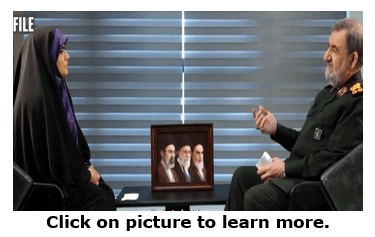
The commander of the Quds Force in Iran’s Islamic Revolutionary Guard Corps, Esmail Qaani, commented on the funeral of Iranian Supreme Leader Ali Khamenei in Iraq.
Qaani stated that “the funeral of the leader and the extensive preparations made by Iraq for this historic event demonstrate the depth of the ties between our two nations.”

Yes, they make martyrs out of these extremist terrorist leaders that have killed hundred of thousands, upset the middle east, bombed Israel and rape and pillage their proxy states. These are martyrs? Martyrs for what cause? Is it instability, raping, murdering and stealing? Is this what they represent? It certainly is not any values or morals of my God.

The Islamic Jahad is a satanic-like cult. These are a bunch of brainwashed evil bastards! Sorry for my French…. lol..lol..lol.. First we see them are going after the Jews and they told us the Christians are next.

So, this tells us the level of efforts that Iran will make to try to enforce their close ties between their ‘beloved puppet-proxy state’ of Iraq. Of course, Iran loves Iraq as Iraq supported it through the sanctions with trillions of US dollars putting its own nation under jeopardy and at risk. But why? What kind of leaders had been running Iraq to do such a thing? When will the Iraqi people wake up and break off these kind of ties with Iran.   

Working together with clarity and expertise from Washington Iraq through al-Zaidi are the Iraqi judiciary and the GOI to clean it up. Yes, the ultimatum has been given to Iraq from Washington. The US does have leverage and holds all the cards when it comes to Iraq. There are no more chances. Iraq has already recently tasted a bit of what it would be like to be back in sanctions, only perhaps next time even more severe. Yes, the US does mean business under President Trump. Iraq has been a proxy funneling money to Iran in detriment to the forward movement of real progress in Iraq. Iran is like a leach to any nation it infiltrates. That is all proxy countries mean to them and Iraq is learning this concept the hard way.  

Remember this slide from one of my former past presentations?

So, who do you think is actually winning this battle?

Who is outwitting who?

Who is laying in the coffin for the funeral procession?

This process of dismantling the Islamic Jehad may be slower than most want but the takedown of the Iranian regime is being methodically dismantled. To say it would take just a few weeks is of course a miscalculation. But I don’t think it will take years either, so don’t go off half-cocked.

We must not forget that Iran was once considered the Paris of the middle east, a progressive, peaceful nation. Then the revolution started in 1977 in Iran but this anti-Jew campaign by the Muslims against Isael had begun. Now it has moved also to other countries including any developed nation that does not support Muslims Brotherhood. It then becomes basically a war on the rest of the world. Is this what the so-called religion of Muslim is really all about? In my Political Section of the Newsletter we get a pretty good picture of the global attempt of this so-called excuse of a religion called Muslim.

_______________________________________________

Let’s keep our prayers alive. There is a deep spiritual dimension at work today bringing about this reset. I believe we are closer than ever for the dinar to get reinstated. But first things first. Part of the mess in the US must be cleaned up too. Then certain laws in Iraq must be passed. Certainly, reviving the economy to at least 45%-50% non-oil revenues could make a huge difference for Iraq and the IMF. Let’s also let the Abraham Accords take effect as more Arab countries join in. By now everyone should be fully aware of these events that caused delays in the currency reform process. This is not rocket science to understand. We are not in control over these obstacles. We need to STOP spreading rumors and over speculating.

What do you think will happen next? (Leave a comment)

Leave a comment

______________________________

________________________________________

Their words not mine…..No Rumors, No Hype, No Opinions ,,,,,

                                             Just the FACTS!
                                         

These prophecies are an important tool we have to lead us on our path. They are more important now than ever. They give us the strength, perseverance and hope that a better time is coming and that God’s Hand is at work behind the scenes. If you just take a second even to look around you at these past three election cycles, how can you deny that God is at work? Are you sleeping or what?

It is amazing and there is no other way that these events could have happened the way they turned out. But there is more to come, much, much more, I assure you! Now that God has his biblical David re-elected, we need to pay attention to what He does next.

NOTE: These prophecies just keep getting better and better, giving us HOPE of a brighter future. But the real reason why I listen to them is that we can actually see what God says He will do is taking place right in front of our noses. It is a confirmation to me that God is real and is still with us forever just as in biblical times.

Prophetic Words from the prophets:  Julie Green

“A Banking Collapse Is On The Horizon”

 Go to the 6:00 mark. from July 3rd.

 ___________________________________

“A Red Sea Moment Is Coming for the United States ”

Go to 5:19 mark for encouragement and 17:10 for prophecy.  From  July 5th.  

Some people are not going to make it to mid-terms. Some people would die or resign.

_______________________________________________

PERSPECTIVES ON THE IRAQI DINAR PROPHECIES


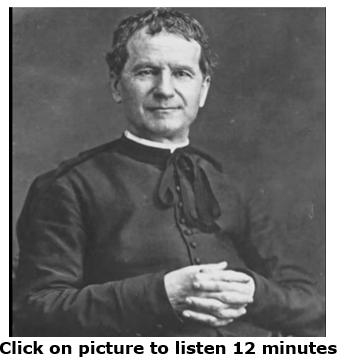
Fr. DON BOSCO EXPOSED THE DARK SECRET BEHIND ISLAM

I keep this one out here to view. Everyone should take the time to watch it. It will awaken you about the Muslim so-called religion (or should we call it for it is — a cult.)

— And the Truth the World Forgot about the so-called Muslim religion. Fr.Don Bosco, also known as John Bosco, was an Italian Catholic priest and educator, born on August 16, 1815. He founded the Salesian Society in 1859 to help disadvantaged youth,  particularly boys, through education and community service. His teachings emphasized lovekindness, and the importance of education for young people, making him a beloved figure in Catholicism and a patron saint of youth. Don Bosco was canonized in 1934.  

WHAT WE KNOW ABOUT SEN. LINDSEY GRAHAM’S DEATH

Please let’s stop all the rumors and conspiracy theories. He was 71 years old and could have very well just died from a heart attack. It happens everyday to lots of people. Let’s wait this one out and see what comes up as FACTUAL not Rumors!

DID THE MUSLIMS JUST CROSS A ‘RED LINE’ IN FRANCE?

This one makes me jump for joy as we are finally see a major player making a move against this Muslim movement takeover of our nations. No,, this is not just anti-Muslim but an invasion of our nations by the Islamic Brotherhood Jahad. Is the US now experiencing the same as in France? Hasn’t the US seen Muslims seeded in government positions too. i.e. Ilhan Omar and Rashida Tlaib. When will the US also take serious actions to close down this invasion?

What does the Muslim Brotherhood really want? A must watch for everyone to understand what the Muslims are really up to in our countries. What can we do about it?

Using the backdoor again…. No, not that backdoor…lol..lol..lol..

WILL THE US ALLOW A GLOBAL TRIBUNAL STAFFED BY UNELECTED GLOBALIST TO GOVERN IT?

Folks, this is really, really scary stuff! I thank God every day we have the right people in power running our government today!

THE MAR-A-LAGO LEGACY

HOW DOES ISRAEL SEES THROUGH 80 METERS OF SOLID ROCK?

I have created a brand-new “Post RV Workshop” page in the blog. I included my own personal tips on investing post-RV and also organizing and protecting your estate. Here is the LINK. Going forward I will only post new and exciting information and opportunities here on the Latest Newsletter as they come along. Later I will transfer it to the ‘Post RV Workshop’ page in subsequent Newsletters for your future reference.

Just so you know I absolutely DO NOT adhere to high-risk investments where I can lose it all in a flash. Look at it this way – you are going to have all this money from your dinar exchange. Then why blow it! Most of us investors waited decades for this RV to happen and so why would you even think about pissing is all away in some high-risk gamble of an investment. Yes, there are going to be scammers out there but let’s talk about legitimate investment opportunities only. These scammers can suck you dry and there is not a damned thing you can do about it.

Go to a legitimate wealth manager associated with your bank. Let the licensed experts advise you. Please, please stay away from idiots like MarkZ, TNT Tony, Bruce (on the Big Stupid Call), etc. , etc. Go to professionals. It doesn’t mean you have to follow everything they advise you but it’s a great start. Remember they too are selling investment products and get commissions.

PRESSURE MOUNTS TO FINALIZE THE CABINET; PARLIAMENT URGES BLOCS TO SETTLE ON NOMINEES, VOTE IMMINENT.

  MP Abbas Al-Maliki stressed that the delay in completing the cabinet does not serve the political process, calling on political blocs to expedite the resolution of this issue and send the names of the remaining ministers to the House of Representatives in preparation for voting on them.

Al-Maliki said that the continued delay in completing the government formation is affecting the government’s work and hindering the implementation of its program, noting that the House of Representatives informed the political blocs of the need to agree on the candidates and send their names to be presented to Parliament.

He added that political activity between the various forces is still ongoing with the aim of reaching understandings regarding the vacant ministries, noting that there are intensive contacts and consultations to accomplish this entitlement.

Al-Maliki explained that there is a trend to resolve the issue of completing the ministerial cabinet during the upcoming sessions of the House of Representatives, which will contribute to completing the government formation and ending one of the most prominent outstanding political issues.

********************************************************************************************

ALI AL-ZAIDI ARRIVES IN WASHINGTON TO MEET TRUMP

Prime Minister Ali al-Zubaidi arrived in Washington, D.C., on Monday (July 13, 2026), accompanied by a high-level delegation, to meet with U.S. President Donald Trump. According to the government spokesman, the visit’s discussions will focus on important issues, most notably the development of economic and investment relations.

The so-called “Islamic Resistance in Iraq” announced on Sunday (July 12, 2026) its rejection of Iraqi Prime Minister Ali al-Zaidi’s visit to Washington, considering that it comes at a time that coincides with the continuation of the war in the region. It called on the government to end the American military presence and warned against concluding agreements, memoranda of understanding, or economic contracts that it described as mortgaging the country’s resources or strengthening what it called “American hegemony,” stressing that any treaties or agreements must be presented to the House of Representatives for ratification.

Before heading to Washington, the State Administration Coalition held a meeting yesterday, Sunday (July 12, 2026), to discuss preparations and objectives related to Prime Minister Ali Faleh al-Zaidi’s trip to the United States. The coalition renewed its support for the government and judiciary’s efforts in combating corruption, stressed the importance of proceeding with the state’s monopoly on weapons, and called for prioritizing dialogue and understanding and rejecting wars and escalation, while affirming Iraq’s readiness to play a unifying role that contributes to strengthening the common interests of the countries of the region.

*********************************************************************************************

AN AMERICAN PERSPECTIVE: AL-ZAYDI INVOKES THE “GODFATHER” TO DISMANTLE THE DEEP STATE IN IRAQ.

 An American report likened Iraqi Prime Minister Ali Faleh al-Zaidi’s anti-corruption campaign to what is known as “Michael Corleone’s moment” in the movie “The Godfather,” questioning whether the ongoing measures represent the beginning of dismantling the entire corruption system, or whether they will be limited to eliminating political opponents.

The Quincy Institute, in its report entitled “The Iraqi Prime Minister Embraces His Inner Michael Corleone,” translated by Shafaq News Agency, recalled the cinematic scene, which it described as one of the most convincing scenes in cinema about power and consolidating control, and how a new system is forged by destroying the old one.

More than half a century after the film “The Godfather,” the report argued that Iraq is experiencing its own Godfather moment, explaining that since taking office last May, al-Zaidi has launched an unprecedented campaign targeting figures in various aspects of the political and administrative establishment, including investigations into billions of dollars of money suspected of being misused, and has reached deep into the networks of officials, bureaucrats, and political actors who have benefited from Iraq’s patronage and quota system.

According to the report, external powers largely supported Operation Dawn Charge, with US officials and segments of the international community viewing it as a sign that Baghdad may finally have decided to confront the corruption that has undermined governance for two decades. The report also notes that China, one of Iraq’s largest economic partners, has reasons to welcome greater institutional stability.

The report continued that even former Prime Minister Nouri al-Maliki, who has long been associated with the political system that emerged after 2003, praised al-Zaidi’s campaign against “those who squandered the money of the Iraqi people,” while the leader of the Shiite national movement, Muqtada al-Sadr, expressed his support for the “heroic reform campaign,” as he put it.

After describing what al-Zaidi did as a major political victory for him, the report noted that his supporters described the campaign against corruption as the great national battle, compared to the war against ISIS, with the leader of the Services Alliance, Shibl al-Zaidi, describing “the war on corruption as no less important or dangerous than the fight against terrorism.”

While the report addressed the rise of the corruption system in Iraq after the 2003 invasion, and its transformation into a complex patronage system fueled by billions of US dollars allocated for reconstruction, it quoted Abu Bakr Jamai, a researcher at the American College of the Mediterranean based in Morocco, as saying that “corruption comes from the absence of law enforcement,” adding that corruption, in this context, supports the erosion of the rule of law.

The report stated that more than a decade ago, anti-government and anti-party protests erupted, including in the capital Baghdad, Basra, Najaf, Karbala and Hilla, driven by corruption, lack of electricity, unemployment and poor public services. It added that the protests challenged the assumption that Shiites would automatically support Shiite political elites, but that shared religious identity proved insufficient when citizens were facing temperatures of up to 50 degrees Celsius, without constant electricity or basic services.

According to the report, for then-Prime Minister Haider al-Abadi, these protests represented a major embarrassment, especially since ISIS boasted about providing services such as electricity in the city of Mosul, while al-Abadi responded by launching a series of anti-corruption initiatives, including the establishment of a High Commission for Combating Corruption.

However, the report noted that these measures were seen as cosmetic reforms that added another layer of bureaucracy without addressing the deep-rooted structural problems.

According to the report, al-Zaydi’s approach is markedly different, indicating that he appears ready to meet the challenge of reforming a political system that rewards Iraqi politicians with positions because of their ethnic and sectarian backgrounds.

The report continued that while al-Zaidi’s government targeted its political rivals, it also faced pressure from “Baghdad’s banker,” namely US Special Envoy Tom Barrack, who the report noted also faced accusations in the United States, but considered Barrack to be the model of the US mediator for power who understands where financial influence lies.

The report recalled the famous American bank robber Willie Sutton’s saying, when asked why he robbed banks, “Because that’s where the money is.”

According to the American Institute’s report, there is no doubt that international intelligence and financial monitoring mechanisms played a role in uncovering illicit financial networks in Iraq, as it is difficult to move piles of US dollars without leaving a trace, and it is possible that the US Treasury Department and financial tracking systems contributed to identifying suspicious transactions.

However, the report considered that the biggest challenge facing al-Zaydi is that corruption is embedded in the structure of the state itself, and that Iraq’s system is similar to the sectarian power-sharing system in Lebanon, explaining that this model was designed to prevent a recurrence of conflict by ensuring representation, but it has largely failed to achieve effective governance.

The report concluded by saying that ultimately, the question facing Iraq is whether al-Zaidi will become a Michael Corleone, a leader who consolidates his power by eliminating his rivals while leaving his allies untouched, or whether he will be a leader willing to challenge the entire system, including those at the top.

*********************************************************************************************

AL-ZAIDI HEADS TO WASHINGTON CARRYING FILES ON THE ECONOMY AND WEAPONS IN A PIVOTAL VISIT TO THE WHITE HOUSE

All eyes are on the upcoming visit of Iraqi Prime Minister Ali al-Zaidi to the White House next week, in one of the most significant milestones in Iraqi-American relations in recent years.

This visit comes amid increasing pressure on Baghdad to address the issue of armed factions, coinciding with the Iraqi government’s efforts to expand economic and investment cooperation with the United States .

A report by Middle East Eye stated that “US President Donald Trump views Iraq from the perspective of economic and investment opportunities, while al-Zaidi seeks to capitalize on this trend to strengthen relations with Washington and gain the support of the US administration, which gives him more room to implement his government program, and at the forefront of his priorities is restricting weapons to the state and reorganizing Iraq’s regional relations .”

According to the report, “During his visit, Al-Zaidi will carry a package of economic agreements, including expanding the initial agreement with Chevron to develop one of the oil fields in Basra Governorate, in addition to increasing the investments of another American company in the Akaz gas field in Anbar Governorate .”

He added: “The visit’s agenda also includes the signing of an agreement to rehabilitate the Kirkuk-Banias pipeline, which connects Iraq to the Syrian coast, in a project that Washington sees as part of its plan to ensure the continued flow of energy supplies and reduce the impact of any disruptions in the Strait of Hormuz .”

He noted that “the US envoy to Syria and Iraq, Tom Barrack, is working to prepare initial understandings before al-Zaidi arrives in Washington, as part of a strategy aimed at expanding the presence of American companies and reducing Iranian economic influence within Iraq .”

The report noted that “the resumption by the United States of transferring Iraqi oil revenues deposited with the Federal Reserve in New York, days before the visit, has political dimensions that go beyond the financial aspect, and reflects Washington’s desire to open a new chapter of cooperation with Baghdad .”

He explained that “in contrast, the issue of armed factions will occupy a key position in the White House talks, as the US administration seeks to obtain clear Iraqi commitments regarding ending the influence of armed groups linked to Iran, and stopping attacks targeting US interests and the Gulf states .”

Al-Zaydi had given those factions until September 30 to hand over their weapons to the state, coinciding with the end of the international coalition’s mission in Iraq, but some of the main factions, including Kataib Hezbollah and Harakat al-Nujaba, still refuse to give up their weapons .

The report also addressed the anti-corruption campaign launched by the Iraqi government, considering that it “strengthened al-Zaidi’s position before the American administration, after it included prominent figures and officials, including those close to the previous government and figures associated with the Popular Mobilization Forces .”

The report concluded that “the success of the visit will not be measured by the number of economic agreements that will be signed, but rather by the ability of the Iraqi Prime Minister to convince Washington that his government is capable of implementing real reforms and making progress in the issue of restricting weapons to the state, while at the same time maintaining balance in Iraq’s regional relations.

*******************************************************************************************

WARNINGS AGAINST CROSSING RED LINES DURING AL-ZAIDI’S VISIT TO WASHINGTON: “IRAQ IS NOT AN AMERICAN STATE.”

 
(Mnt Goat: It’s not an Iranian state either. Iran has already crossed the RED line.)

Jassim Mohammed Jaafar, a leader in the State of Law Coalition, confirmed on Saturday that Prime Minister Ali al-Zaidi’s visit to the United States should be primarily diplomatic.

Jaafar told Al-Maalomah that “the coordination framework should play a role in sending advisors with political experience and high negotiating ability to support the Prime Minister in confronting American political influence.”

He added that “al-Zaydi does not possess sufficient political depth,” calling for “learning from past experiences, especially the experience of former Prime Minister Nouri al-Maliki and the negotiating team at the time, who succeeded in imposing Iraq’s vision and demands during negotiations with the American side.”

Jaafar pointed out that “there are constants that al-Zaydi must not transgress, whatever the circumstances,” noting that “Iraq is not an American state to have dictates imposed upon it.”

He explained that “Iraq shares a border with Iran that extends for more than a thousand kilometers, in addition to its borders with Turkey and Syria,” indicating that “the nature of relations with these countries represents a strategic issue that affects the future of generations, and Iraq should determine it according to its national interests and without any external dictates.”

Jaafar stressed the necessity for Iraq to “retain its sovereign decision-making and not have decisions imposed upon it from Washington,” emphasizing that any “agreement with the American side must take into account the political, economic, and social realities of Iraq and safeguard its national interests.”

*********************************************************************************************

THE WORLD BANK COMMENDS IRAQ’S STEPS IN MODERNIZING ITS PUBLIC BUDGET PREPARATION TOOLS.

On Tuesday, Deputy Minister of Finance Ali Karim met with a World Bank delegation headed by Samer Mata to discuss modernizing public financial management.

The Ministry of Finance stated in a press release received by the Video News Agency that the meeting reviewed the Ministry’s progress in transitioning from line-item budgeting to program and performance-based budgeting. This included preparing implementation documents and templates, and identifying requirements for developing systems, schedules, and electronic displays in the Budget and Accounting Departments. These improvements aim to support digital transformation and enhance oversight, governance, and the efficiency of public spending.

The statement added that the Ministry emphasizes the importance of the technical support provided by the World Bank in this process. It also stressed the need to form a specialized national team from within the Ministry to oversee implementation, train spending units, and ensure a gradual and effective transition to program and performance-based budgeting.

For its part, the World Bank delegation commended the Ministry of Finance’s steps in modernizing budget preparation tools and developing financial management systems. The delegation affirmed its readiness to provide the necessary technical expertise to support the project and establish more efficient and transparent modern financial practices.

*********************************************************************************************

MORE THAN JUST PROTOCOL: RADICAL SHIFTS DRIVE AL-ZAIDI’S VISIT TO WASHINGTON THIS MONTH!

Introduction: Iraq stands at a new crossroads in the corridors of international diplomacy. Visits by heads of state are often dismissed as routine protocol procedures filled with forced smiles, but Iraqi Prime Minister Ali Zaidi’s visit to Washington in mid-July breaks this mold. In the aftermath of the “Iran 2026 War” and the fragility of the “Islamabad Memorandum,” Zaidi carries not merely investment requests, but a “sovereignty first” doctrine. It is a bold attempt to transform Iraq from a regional arena of attrition into a “vital hub” that neither Washington nor the global economy can ignore.

First: Hunting the “Big Fish” – When bullets and money speak, al-Zaidi’s journey didn’t begin in Washington, but rather in the streets of Baghdad on the still night of the 28th of last month. That night, counterterrorism forces shattered the status quo with swift raids targeting bastions of nepotism. This wasn’t a political “show,” but the first wave of the “50 Whales” list identified by the Supreme Sovereign Council for Integrity.

The operation resulted in the arrest of 47 high-ranking officials, including parliamentarians and governors, and the seizure of large sums of cash hidden in private safes. For al-Zaydi, this move was domestic “political suicide,” but in Washington, it was a strategic “credit card”; it was the only message capable of persuading the US Treasury to lift restrictions on Iraqi banks and translate promises of integrity into concrete reality.

“Al-Zaidi’s categorical refusal of a $200 million bribe from an oil tycoon has become the ‘founding statement’ of his administration, and the moral cornerstone with which he confronts skeptics in the White House, declaring the end of the era of ‘money for silence’.”

Second: The “OPEC Surprise” – Iraq brandishes its surplus weapon
in a high-stakes geopolitical poker game. Al-Zaidi holds a card that could redraw the global energy map: the threat to suspend Iraq’s membership in OPEC. This is not merely a threat to increase production; it is a carefully crafted pressure tactic to extract US recognition of the “Joint Energy and Development Fund.”


By threatening to pump 7 million barrels per day, al-Zaidi presents Washington with two equally unpalatable options: either engage in supporting the Iraqi infrastructure fund on favorable terms, or face an oil flood that could destabilize energy prices and traditional oil alliances. Al-Zaidi is not asking for aid; he is trading the stability of the global market for funding for the “new Iraq.”

Third: “Securing the Future” – Iraq as a Global Reserve Hub.
After the 2026 war exposed the vulnerability of the Strait of Hormuz, al-Zaidi proposes Iraq as a “global reserve hub” for energy, representing a geopolitical “insurance policy” for the West. The race here is not only economic but also a race against time, as Turkey is pushing for a new agreement for the Nord Stream pipeline by a deadline this month.
Through the “Development Road” and the Nord Stream pipelines, al-Zaidi seeks to create a reliable overland alternative, offering the United States three strategic advantages:


Neutralizing the Strait’s vulnerability: ensuring the flow of oil away from regional maritime threats. The return of the giants: providing security and political guarantees for American energy companies to return to work within a unified legal framework between Baghdad and Erbil. Lasting stability: transforming Iraq from a “corridor of wars” into a “lifeline” connecting the Gulf to Europe by land.

Fourth: The Technological Fortress – Sovereignty via Starlink and Blockchain.
Al-Zaidi understands that digitally compromised sovereignty is illusory. Therefore, his visit to Washington transcends traditional arms deals, reaching into the realm of “digital sovereignty.” The move towards Starlink and American cloud providers is not merely a technological luxury, but an attempt to decouple from regional fiber optic networks vulnerable to hacking and political blackmail.


In this context, the KBR-Nebras agreements stand out as a cornerstone for building a “technological fortress.” By combining KBR’s infrastructure expertise with a blockchain-based “government contract gateway,” al-Zaidi aims to render corruption technologically impossible. Here, technology not only combats corruption through legal means, but also makes data and contract manipulation a matter of pure programming imagination.

Fifth: The “Hard Stop” Date – The Moment of Truth on September 30.


The date of September 30 remains the shadow over all discussions; it is the date of the “Hard Stop” for all armed activities outside the authority of the state. Al-Zaidi is going to Washington to forge a unique bilateral security agreement: advanced air and intelligence support, without an “army on the ground.”


This gamble represents a “moment of confrontation” with the militias. Without effective American intelligence cover, the withdrawal could be interpreted as a “retreat” that opens the door for the rearming of the factions. Al-Zaidi seeks to secure a technical and security commitment that guarantees the state remains the only force permitted to bear arms, transforming military support from a “combat presence” into a smart “intelligence partnership.”

Conclusion: Can technology outpace inertia?
Ali al-Zaidi’s trip to Washington is the most ambitious attempt yet to transform the Islamabad Memorandum from a fragile, war-imposed truce into a lasting geopolitical and economic reality. Al-Zaidi is betting that individual integrity, bolstered by digital immunity, can break the deadlock of past decades.


As he sits in the Oval Office, the philosophical question facing Iraq’s future remains: Can technology and sovereign vigilance outpace the inertia of a long history of corruption and weapons, or will the powerful find a way to circumvent even blockchain technology? Iraq’s next decade is being written now in Washington, in ink of oil, digital sovereignty, and unwavering resolve.

*********************************************************************************************

AL-ZAIDI FACES A TEST FROM THE “BIG PLAYERS”… WASHINGTON AWAITS PROOF OF SERIOUSNESS IN THE CORRUPTION AND WEAPONS FILES.

Approximately $300 billion has been smuggled out of Iraq.

 Before Prime Minister Ali al-Zaidi arrived in Washington in mid-July, Baghdad found itself facing a sensitive political test: the funeral of former Iranian Supreme Leader Ayatollah Ali Khamenei and several members of his family in Iraq.

(Mnt Goat: This event of the funeral ceremony could hurt the credibility of al-Zaidi in disposing of Iranian influence in Iraq. Why in hell did he allow it? “What was he thinking?)

The event, which was supposed to be a religious ceremony, quickly transformed into a political issue where the interests of Baghdad, Tehran, and Washington intersected, becoming one of the first hurdles before the anticipated meeting between al-Zaidi and US President Donald Trump.

Although the visit to the White House comes amid signs of improving relations between Baghdad and Washington, serious questions remain about al-Zaidi’s ability to implement the commitments outlined in the understandings reached between the two sides in what has become known as the “June Agreement.

Conversely, observers believe that the Prime Minister made significant progress toward the US administration in the past week, after launching a broad campaign to prosecute officials accused of corruption—a move seen as an attempt to demonstrate seriousness in fulfilling the pledges made to Washington.

Iranian pressure and Iraqi hesitation:
A well-informed political source revealed that approving the holding of Khamenei’s funeral procession in Iraq on Wednesday was not an easy decision within the government. It was preceded by hesitant discussions before the scales tipped under Iranian pressure, supported by positions from forces within the coordination framework and armed factions.

The source, a member of parliament from one of the major Shiite parties, told Al-Mada on condition of anonymity that “Al-Zaidi realizes this issue could put him in an embarrassing position with Trump during his upcoming visit to Washington.”

According to information circulating in political circles, the funeral program has undergone a significant change. Baghdad has been removed from the schedule of ceremonies, which were initially planned for the city of Kadhimiya. The visit will now be limited to Najaf and Karbala, with the possibility that Al-Zaidi will receive the body of the Supreme Leader at Najaf Airport.

Estimates suggest that a large funeral procession in the capital might have turned into anti-American demonstrations, punctuated by chants and slogans targeting the US president, similar to the scenes witnessed during funeral processions in Iran.
US President Donald Trump had expressed clear interest in the funeral processions that began earlier in the week in Iran.

In a press statement, commenting on the scenes showing thousands of participants weeping during the ceremonies, Trump said he was surprised by the scale of the public reaction, adding, “Maybe those were fake tears.”

Iranian Foreign Minister Abbas Araqchi arrived in Baghdad for his first visit since the end of the last war in the region, coinciding with the launch of what has become known as “Operation Dawn,” which targeted members of parliament and officials accused of corruption last week.

According to leaks following the visit, Araqchi discussed the details of the funeral processions with Iraqi officials, while initial reports indicated that Baghdad would be one of the main stops for the event.

However, the Iraqi committee responsible for organizing the pilgrimage quickly denied this information, before the outlines of the new program, limited to Najaf and Karbala, became clear.

Religious rituals, not political calculations.
In contrast, former diplomat Ghazi Faisal offers a different interpretation of the matter. He believes that Washington, including President Trump, understands that the funeral of the former Iranian Supreme Leader is not an official function of the Iraqi government, but rather falls within the realm of religious and sectarian rituals.
Faisal told Al-Mada, “Al-Zaidi is concerned with running the government, while Khamenei’s funeral is part of religious tradition.” He added that Baghdad’s approval of holding the funeral ceremonies in Najaf and Karbala “is simply a response to religious traditions followed with religious figures, officials, or even ordinary citizens.”


Faisal points out that Trump himself announced a week’s grace period for Iran to complete the funeral ceremonies, out of respect for the occasion, without exerting pressure related to the negotiations between the two sides.
He believes that what transpired represents a “temporary truce” to allow for the conclusion of the ceremonies before the resumption of negotiations between Washington and Tehran.

The former diplomat concludes that the United States, as a multi-religious and multicultural country, generally views religious and sectarian diversity, and its associated rituals, with respect. This makes it unlikely that the funeral ceremonies, in themselves, will turn into a crisis in official relations between Baghdad and Washington, unless they are accompanied by political messages or stances that transcend their religious dimension.

How is al-Zaidi viewed in Washington now?
Regarding al-Zaidi’s image in the United States, Kato Saadallah, a researcher specializing in American affairs, believes that Washington still grants al-Zaidi an important political opportunity, but at the same time links the continuation of this support to his ability to implement genuine reforms.

Saadallah tells Al-Mada that the Prime Minister’s visit comes at the invitation of US President Donald Trump and coincides with the celebrations of the 250th anniversary of the founding of the United States. He adds that Trump will be attending the NATO summit in Ankara beforehand and will meet with al-Zaidi upon his return to Washington.

He points out that Trump had previously declared his support for al-Zaidi and the current government, a stance that granted Baghdad significant political leeway. However, according to Saadallah, this support will not be open-ended or unconditional.

He adds that the US president, through his envoy Tom Barrack, informed the Iraqi government of a set of priorities that must be addressed if Baghdad wants to maintain American backing. Saadallah identifies three main priorities . The first is ending the proliferation of weapons outside state control and disbanding militias and armed factions, thereby restoring the state’s monopoly on the use of force. The second priority is combating corruption, which, according to the researcher, is the issue Trump focuses on more than any other, based on the conviction that corruption is the gateway through which all other Iraqi crises stem. The third priority is halting the smuggling of hard currency and closing the channels that drain Iraq’s financial reserves and fuel financial networks linked to foreign entities. Is “Operation Dawn” enough? Saadallah believes that the recent campaign launched by al-Zaidi against a number of those accused of corruption represents an important step, but it still requires further evidence.

The question arises: Will this campaign be enough for al-Zaidi to take to Washington to convince the US administration, Congress, and American institutions that he has truly begun the fight against corruption, or will it be interpreted as a belated measure that falls short of addressing the challenges?

He believes the answer to this question will largely determine the nature of the American stance toward the Iraqi government in the coming period.
Congress describes al-Zaidi’s actions as a “farce”!
Despite the initial American welcome of the recent moves, Saadallah points out that there are still influential voices within Congress who view what is happening in Baghdad with skepticism.

He cites the position of Congressman Joe Wilson, who criticized al-Zaidi’s campaign, describing it as a mere “farce,” considering it not to represent a genuine confrontation with the system of corruption.
Saadallah notes that Wilson went even further when he published the names of prominent political figures, saying that any serious campaign should start with the “big fish,” and in his tweet, he mentioned Nouri al-Maliki, Hadi al-Amiri, and Qais al-Khazali.

The Washington test: Saadallah believes that the task awaiting al-Zaidi in Washington will not be easy. If he merely presents the measures taken during the past week, he is unlikely to gain full American support.

However, if he succeeds in convincing the US administration that he will return to Baghdad to complete a broad campaign targeting high-ranking officials accused of corruption, in parallel with practical steps to consolidate weapons under state control, the chances of continued US support will increase significantly.
He adds that the visit comes at a highly sensitive economic time, as Iraq faces a financial crisis due to the halt in oil exports during the recent war with Iran, making Baghdad more reliant on loans and international financial support.

He emphasizes that obtaining funding from the World Bank or major financial institutions will be much more difficult without US political backing, which gives the visit an importance that transcends its diplomatic dimension.
Will the Syrian experience be repeated?
Saadallah suggests that the nature of US support will become clearer after the visit, questioning whether Trump will deal with al-Zaidi in the same way he dealt with Syrian President Ahmed al-Sharaa, by linking support to a series of conditions and procedures.

He adds that if US support is indeed conditional, Baghdad will be required to demonstrate more decisive steps in the areas of combating corruption and disarmament, as these two issues will remain the primary benchmark for judging the government’s performance.
Observers view the visit as the culmination of understandings reached between al-Zaidi and US envoy Tom Barrack during Barrack’s visit to Baghdad last month, which has become known politically as the “June Settlement.”
This settlement includes containing Iranian influence and creating a broader environment for US investment in Iraq.

Meanwhile, former diplomat and head of the Iraqi Center for Strategic Studies, Ghazi Faisal, believes that the real battle facing Ali al-Zaidi’s government is combating corruption. He asserts that the government has begun pursuing money laundering, smuggling, and corruption networks, particularly in the oil and electricity sectors, in addition to tracking financial networks in neighboring countries and Europe, involving more than 264 defendants and their assets.

Faisal points out that the World Bank has previously reported that more than $300 billion has been smuggled out of Iraq, suggesting that dismantling these networks and recovering the funds could take seven years or more due to their ties to foreign banks and companies, and the integration of some of the money into the economies of other countries. Faisal calls for a comprehensive audit of state institutions’ accounts by international auditing firms.

He concludes that Washington understands the complexities of combating corruption in Iraq, but will view any real progress on this issue as the most important card al-Zaidi can play at the White House, because the government’s success will be measured by the tangible results it achieves in fighting corruption and recovering funds, not merely by launching campaigns.

*********************************************************************************************

THE US REPRESENTATIVE IN IRAQ: THE TRUMP ADMINISTRATION SUPPORTS AL-ZAIDI TO “COLLECT WEAPONS” COMPLETELY AND QUICKLY.

The acting US ambassador to Iraq, Joshua Harris, confirmed that the US administration supports the government of Ali al-Zaidi’s vision for “monopolizing weapons,” and stressed that it looks forward to its “full implementation.”

Joshua Harris, the acting US ambassador to Baghdad, said in statements followed by “Ultra Iraq” that the US administration “believes that achieving full sovereignty for Iraq requires disarming all armed groups outside the authority of the state.”

Harris added that “their presence (the armed groups and factions) contradicts the aspirations of Iraqis for stability and peace,” stressing that the United States “supports the Iraqi government’s vision regarding the monopoly of weapons.” Harris affirmed that the US administration “looks forward to implementing the government’s vision for complete and rapid disarmament,” considering that “the continued activity of illegal armed groups undermines the chances of security and stability in Iraq and the region.”

********************************************************************************************

AL-ZAIDI FACES A TEST FROM THE “BIG PLAYERS”… WILL HIS CAMPAIGN CONVINCE WASHINGTON?

All eyes are on Prime Minister Ali al-Zaidi’s upcoming visit to Washington, amid American anticipation of the seriousness of his government in implementing fundamental reforms, foremost among them combating corruption and restricting weapons to the state. 

While the administration of US President Donald Trump describes these issues as a benchmark for continued support for Baghdad, observers believe that al-Zaidi faces a crucial test to prove his ability to move from launching campaigns to pursuing the “big fish” and achieving tangible results, according to Al-Mada newspaper .

The newspaper, in a report seen by Al-Sa’a Network, quoted its sources as saying that “Al-Zaydi realizes that the anti-corruption file will be one of the most sensitive files during his upcoming visit to Washington, and it may put him in an embarrassing position in front of US President Donald Trump if he does not bring with him clear indications of tangible progress .”

She added that “the funeral of the former Iranian leader is not part of the official work of the Iraqi government, but rather comes within the framework of religious and sectarian rituals,” stressing that “Al-Zaydi is concerned with managing the affairs of the government, while the funeral ceremonies fall within the religious traditions followed with religious or official figures, and that Baghdad’s approval to hold the ceremonies in Najaf and Karbala does not exceed this framework .”

She noted that “Trump gave Iran a week to complete the funeral ceremonies out of respect for the occasion, without exerting pressure related to the negotiations between Washington and Tehran,” considering that “what is happening represents a temporary truce before the resumption of the negotiating track between the two sides .”

She stated that “Washington is still giving al-Zaidi an important political opportunity, but it links the continuation of this support to his ability to implement real reforms,” ​​noting that “the Prime Minister’s visit comes at the invitation of Trump and coincides with the celebrations of the 250th anniversary of the founding of the United States, after the US President’s participation in the NATO summit in Ankara .”

She stressed that “American support for the Iraqi government is not open-ended or unconditional,” noting that “the American administration informed Baghdad, through its envoy Tom Barrack, of three main issues that represent a criterion for the continuation of this support .”

She explained that “the first priority is to restrict weapons to the state and end the phenomenon of weapons outside the framework of official institutions, while the second priority focuses on combating corruption, which Washington views as the main gateway to most of the crises that Iraq suffers from, and the third file relates to stopping the smuggling of hard currency and closing the channels that drain the Iraqi financial reserve .”

The report noted that “the recent campaign launched by the government against a number of those accused of corruption represents an important step, but it still needs greater evidence and results,” questioning whether “these measures will be sufficient to convince the US administration and Congress that Baghdad has indeed begun a serious battle against corruption, or whether they will be interpreted as belated measures that do not rise to the level of the challenges?”

He added that “merely presenting the measures taken in recent days may not be enough to gain full American conviction, while expanding the campaign to include the top corruption suspects, in parallel with practical steps to restrict weapons to the state, will enhance the chances of continued American support .”

He noted that “obtaining funding from the World Bank and major financial institutions will be more difficult without American political cover, which gives Al-Zaidi’s visit to Washington an importance that goes beyond its diplomatic dimension .”

He added that “the government will be required to show more decisive steps in the files of combating corruption and disarmament, because these two files will remain the basic standard for evaluating its performance during the next stage .”

He pointed out that “the government has begun pursuing money laundering, smuggling and corruption networks, especially in the oil and electricity sectors, in addition to tracking financial networks inside and outside Iraq that include more than 264 defendants, while the World Bank has previously spoken about the smuggling of more than $300 billion out of Iraq, which makes recovering the funds and dismantling these networks a process that may take years, and requires a comprehensive audit of the accounts of state institutions through international auditing firms .”

He added that “Washington is aware of the complexities of confronting corruption in Iraq, but it will view any real progress on this issue as the most important card that al-Zaidi can take to the White House, since the government’s success will be measured by the actual results in combating corruption and recovering funds, and not just by announcing campaigns or measures 

*********************************************************************************************

VISIT TO WASHINGTON: AN ECONOMIC GAMBLE TO BOOST INVESTMENT

  All eyes are on the upcoming visit of Prime Minister Ali al-Zubaidi to the American capital, Washington, amid expectations that it will be an important step in strengthening economic relations between Iraq and the United States, and opening new horizons for foreign investments, especially in vital sectors that are relied upon to diversify the national economy and reduce dependence on oil revenues.

The visit also represents an important milestone in the course of Iraqi-American relations, as it holds opportunities to enhance political, economic, and security cooperation, in addition to raising national and humanitarian issues of concern to the various components of the Iraqi people. This is confirmed by MP Khalid Sido, a member of the Parliamentary Security and Defense Committee, in an interview with Al-Sabah newspaper, where he indicated that Al-Zidi’s anticipated visit to Washington represents an important opportunity to strengthen relations between Iraq and the United States, expressing his hope that its results will reflect positively on stability and economic development in Iraq.

Sido stressed the importance of the visit carrying a humanitarian message that confirms the state’s concern for all its components, emphasizing the need to address outstanding humanitarian issues.

He pointed out that the success of the visit should be measured by the gains it achieves for Iraq through the establishment of a genuine partnership based on respect for Iraqi sovereignty and non-interference in internal affairs, while preserving the independence of national decision-making. Sido indicated that Iraq possesses an important geographical location and great wealth that qualifies it to be an economic and strategic center in the region, expressing his hope that the visit will contribute to supporting security and stability and opening up broader horizons for economic and investment cooperation, which will reflect positively on the citizens and the Iraqi economy.

Furthermore, economic experts believe that the success of the visit will not be measured solely by the number of agreements that may be signed, but rather by Iraq’s ability to convey a clear message to American investors and decision-makers that the country now possesses a more receptive environment for investments, and that it is moving towards building long-term economic partnerships that achieve common interests.

Professor of International Economics, Dr. Nawwar Al-Saadi, affirms that the most prominent economic message that the Iraqi delegation should carry is that Iraq is no longer looking for relations based on aid, but rather seeks sustainable investment partnerships based on mutual benefit.

 Al-Saadi points out that Iraq has promising opportunities in the energy, gas, petrochemical, infrastructure, digital transformation, agriculture and manufacturing sectors, which are areas capable of generating rewarding returns for investors.

Al-Saadi adds to “Al-Sabah” that enhancing investor confidence requires providing clear messages regarding the continuation of economic reforms, improving the business environment, simplifying administrative procedures, enhancing governance and transparency, as well as protecting investments and continuing efforts to combat corruption, stressing that capital seeks first stability and legal guarantees before seeking profits.

The spokesperson added that it is also necessary to highlight Iraq’s orientations towards diversifying sources of income and expanding the role of the private sector, which would allow American companies the opportunity to enter as a partner in the development process, and not just as an implementer of projects. He pointed out that presenting a clear investment map supported by implementation mechanisms and legal guarantees will enhance the international community’s confidence in the Iraqi economy and open the door to quality investments that contribute to technology transfer, job creation, and economic growth.

For his part, economic researcher Ahmed Al-Ansari affirms that the Prime Minister’s visit to Washington represents an important opportunity to strengthen the economic partnership between Iraq and the United States, explaining that its success may contribute to attracting American and foreign investments to the energy, electricity, industry, infrastructure and technology sectors.

Al-Ansari adds that reaching economic understandings and agreements and sending reassuring messages to investors will enhance confidence in the Iraqi economy and encourage international companies to enter the local market, but he stressed at the same time that achieving these gains remains dependent on Iraq’s ability to improve the investment environment, consolidate stability, and accelerate economic and administrative reforms, in order to ensure that agreements are transformed into real productive projects that support economic diversification and provide new job opportunities.

Experts agree that the upcoming visit represents an opportunity to enhance Iraq’s economic standing regionally and internationally. However, its success requires following up on the implementation of any understandings and agreements that may result from it, and transforming them into tangible projects that contribute to achieving economic development, raise the level of confidence in the national economy, and support the government’s direction towards building a more diversified and stable economy.

*******************************************************************************************

‘KEPPT’ APPOINTS J.P. MORGAN TO ARRANGE FINANCING OF ITS STRATEGIC US$1.6BN UREA PLANT IN IRAQ

 KAR Electrical Power Production Trading FZE (KEPPT)

London, July 07, 2026 (GLOBE NEWSWIRE) — KAR Electrical Power Plant Production Trading FZE (“KEPPT”) has engaged J.P. Morgan to arrange development financing for a landmark $1.6 billion urea plant in Basra, Iraq. The agreement marks a milestone for KEPPT and Iraq’s industrial and economic development. KEPPT will work with the bank to progress financing for the project in conjunction with several leading Export Credit Agencies.

The proposed KEPPT urea plant will be the second operating facility of its kind in Iraq, with planned annual production capacity of 1.15 million tonnes. Once operational, the plant is expected to reduce Iraq’s reliance on imported urea, ease price pressures in the domestic market, and support the country’s agricultural sector. Construction is scheduled to begin in 2027, with operations expected to commence in 2030. US Engineering group KBR Inc. has conducted the front-end engineering design study for the project.

The plant will use advanced equipment and technology to reduce environmental impact while producing a strategically critical infrastructure asset for Iraq. Beyond strengthening food security and agricultural productivity, the project aims to contribute significantly to local employment and stimulate economic growth in Basra.

Established in 2015, KEPPT is one of Iraq’s largest private investors, project developers and industrial operators. Led by CEO and Chairman Sheikh Mahmood Barznji, the company operates two major power plants in Basra and currently has more than 10 projects under development across agri-industrial, energy, power generation, transportation, banking and healthcare sectors. These projects represent more than $10 billion of investment in Iraq over the next five years.

Chairman Sheikh Mahmood Barznji commented, “We are delighted to welcome J.P. Morgan’s involvement in this landmark project, which represents an important vote of confidence in Iraq, in Basra, and in KEPPT’s long-term vision for the country. This urea plant has the potential to make a major contribution to Iraq’s future by strengthening our agricultural sector, reducing dependence on imports, creating local employment, and supporting broader economic diversification. We believe this project can become a model for major private-sector-led investment in Iraq and a catalyst for further international financing into strategically important national infrastructure.”

Laura Galvin, Global Head of Export and Agency Finance at J.P. Morgan, said, “We are pleased to be supporting KEPPT with what is one of the leading landmark infrastructure projects in Iraq. The KEPPT urea plant represents a significant opportunity to deliver long-term value for Iraq by developing new domestic production capacity, supporting food security and enabling greater institutional investor-led participation in critical infrastructure.”

*********************************************************************************************

KRG TO END CASH SALARY PAYMENTS AS BANKING TRANSITION TO CONCLUDE BY AUGUST

 2026-07-08 | 15:15

The Kurdistan Regional Government will fully shift public-sector salary payments to the banking system after Aug. 31, ending cash payroll distribution for employees and pensioners covered by the MyAccount program.

The MyAccount project said Aug. 31 is the final deadline for beneficiaries to collect their bank cards from the banks where they opened their accounts. After that date, salaries will no longer be paid in cash, and beneficiaries who have not received their cards were urged to visit their designated banks.

The latest official figures show 862,168 public-sector salary recipients have registered with MyAccount and collected their bank cards, or 96% of all beneficiaries.

Registration rates vary by governorate. Erbil has registered 379,204 beneficiaries, or 99% of eligible recipients, and Duhok 188,164, also 99%. Halabja has registered 15,886, or 93%, and Sulaymaniyah 278,913, or 92%.

The announcement marks the final step in the KRG’s rollout of MyAccount, a program launched in 2023 to replace cash salary payments with direct deposits into personal bank accounts.

In May, the KRG said nearly 800,000 public-sector beneficiaries were receiving their salaries through MyAccount. At the time, officials reported more than 900,000 registrations, more than 800,000 bank cards issued and over 600 ATMs installed across the Kurdistan Region. The government said the ATM network would keep expanding as more beneficiaries join.

The program lets beneficiaries access their salaries through bank branches, ATMs and electronic banking services instead of collecting cash through the government’s previous payroll system.

*********************************************************************************************

ONE EYE ON TRUMP… AND THE OTHER ON 7 FACTIONS THAT COULD IGNITE THE NIGHT IN BAGHDAD!

Al-Zaidi goes to Washington seeking investment, but armed groups reject him.

 
Baghdad is watching with concern the possibility of Iraqi factions becoming embroiled in a new round of confrontation between Washington and Tehran, through attacks on American sites and bases in the Gulf and the wider region.


Meanwhile, Prime Minister Ali Mohsen al-Ahmad was en route to Washington to meet with US President Donald Trump for the first time since assuming office in mid-May.
The trip carries with it the files of investment, energy, and corruption, but above all, it carries the most sensitive issue in Iraq: the weapons of armed groups and the future of Iranian influence.


Between the prime minister’s plane and the messages from the factions, Baghdad seems to be looking with one eye toward the White House, hoping for a new partnership, and with the other toward the missile stockpiles, fearing it will once again find itself at the heart of a proxy war.


Seven factions are under scrutiny, according to security and political sources who spoke to Al-Mada. Authorities have been monitoring the movements of a specific group of factions, numbering between seven and ten organizations, for several days. These groups are believed to be directly linked to the Iranian Revolutionary Guard.


Unannounced investigations are underway to determine whether some of these factions participated in attacks targeting American sites and bases in Bahrain, Kuwait, and Jordan.


While the information has not yet been confirmed, “the concern is sufficient,” according to one informed source. The sources do not rule out the involvement of these groups, which are now officially described in American circles as affiliated with the Iranian Revolutionary Guard, in broader attacks if Washington continues targeting Iranian sites.


According to these sources, “Every new American strike against Iran could push these factions to move from the observation phase to the engagement phase, which threatens to return Iraq to the heart of the regional confrontation.”


Yesterday, the US military announced the continuation of its strikes against “dozens of targets” in Iran, while the Iranian Revolutionary Guard announced targeting sites in Jordan, Bahrain, and Kuwait. Iraqi factions entered the regional war for the first time after the events of October 7, 2013. Iraq returned to intermittent ceasefires with US forces after suffering significant battlefield losses.


Al-Zaidi travels to Washington… and the factions reject the trip
. On the eve of the visit, the “Islamic Resistance” announced its initial rejection of the Prime Minister’s trip to the United States. Thus, it appeared that while al-Zaidi was heading to the White House, the factions were sending him a clear message: the partnership he seeks with Washington will not go unchallenged.


The armed groups considered the continued presence of US forces an “occupation” and reiterated their rejection of any broad economic partnership with Washington.
In a statement, the so-called “Islamic Resistance” in Iraq rejected the Iraqi government delegation’s trip to the United States at a time when “the American-Zionist war machine continues to commit massacres.”

It stated that the campaign to pursue corrupt officials does not grant the government a “blank check” for its other policies.
The “Islamic Resistance” reaffirmed its traditional position, considering the continued presence of US forces in Iraq an “occupation” and stating that one of the government’s priorities is to work towards ending it according to the announced timetable.

It also announced its rejection of expanding trade or signing contracts with Washington, warning against giving American companies an opportunity. “Exploiting Iraq’s resources.”

A heavy bag in the White House
As for al-Zaidi, he went to the American capital with a completely different vision.
In his article published in the Washington Post, the Prime Minister spoke of progress made in disarming a number of armed groups and integrating some of them into state institutions.

He said that his government, in less than 60 days, had made progress in disarming a large number of armed groups and had opened the door for integrating some of them into state institutions.


However, he also knows that the issue of weapons is only one of the weighty issues he carries with him to the White House. There is also Iranian influence, corruption, American investments, and the restructuring of the relationship between Baghdad and Washington after the end of the international coalition’s mission next September.

The Prime Minister considered that September 30, the date of the end of the coalition forces’ mission in Iraq, should mark the beginning of a new phase of ambitious partnership with the United States, not the end of the relationship between the two countries.


He said that his meeting with US President Donald Trump would focus on attracting American investments to Iraq and inviting major companies to contribute to developing infrastructure, the energy and industrial sectors, as well as technology and the digital economy.


An investment visit… or a trip to change the balance of power?
Al-Zaidi is accompanied by a delegation that includes ministers, officials, and businessmen.


He was accompanied by a large governmental, political, and economic delegation comprising 27 officials, including Foreign Minister Fuad Hussein, Finance Minister Faleh al-Sari, Oil Minister Basim Mohammed Khudair, Electricity Minister Ali Saadi Wahib, and Trade Minister Mustafa Nizar Jumaa.


The delegation also included the head of the Parliamentary Foreign Relations Committee, MP Amer al-Fayez, Central Bank Governor Nizar Nasser, and National Security Advisor Qasim al-Aboudi. According to sources close to the government, the delegation also included 32 businessmen, among them Issam al-Asadi, Khalil Buniya, Sardar al-Bayati, and Saad Issam al-Janabi.


Political circles believe that the Prime Minister is seeking unprecedented American support that would allow him to address files that, until recently, were considered taboo, whether related to corruption or the financing networks linked to factions.
In return, Washington makes no secret of its desire to see an Iraq less dependent on Tehran and more capable of monopolizing arms and decision-making.


In one aspect, al-Zaidi’s anti-corruption campaign at the end of June appeared to be an attempt to comply with US demands to cut off funding to the Iranian Revolutionary Guard, which Washington believes benefits from financial and commercial networks linked to some Iraqi factions.


At the same time, Baghdad needs new resources for its debt-ridden treasury, which explains its efforts to attract US investment and open the door to Gulf support, especially since al-Zaidi intends to visit Saudi Arabia after returning from Washington.
Last month, authorities arrested dozens of members of parliament and officials on corruption charges that surfaced after the arrest of Adnan al-Jumaili, the deputy oil minister.


Despite government claims of progress in the disarmament process, prominent factions, including Kataib Hezbollah, continue to refuse to surrender their arsenals.

Informed sources say that some groups have handed over older or limited quantities of weapons, while keeping their core ballistic missile capabilities outside any settlement.
This means that the state has not yet achieved a monopoly on force, and that any regional escalation could quickly plunge Iraq back into the cycle of violence.


Even the large funeral procession for the former Iranian Supreme Leader in Baghdad was interpreted in Washington as a reminder that Iran still wields considerable influence within Iraq, according to analysts.


The presence of weapons that do not recognize the state’s authority
is a significant factor. Former diplomat Ghazi Faisal believes that the political landscape in Iraq has entered a new phase. He tells Al-Mada that the recent “state administration” meeting, which included leaders of political forces, demonstrated a clear consensus on the priority of restricting weapons to the state, dismantling armed factions, and combating financial corruption.


He adds that the problem lies with the seven factions that US Secretary of State Marco Rubio described as “terrorist organizations,” which, in his estimation, are linked to the Iranian Revolutionary Guard and possess approximately 12 military bases, including Jurf al-Sakhr. He says that Jurf al-Sakhr houses factories for missiles and drones, as well as depots for heavy and light weapons, in addition to Revolutionary Guard advisors overseeing training, guidance, and coordination operations.


Faisal believes that the factions issuing statements in the name of the “Iraqi Islamic Resistance,” including Harakat al-Nujaba, Kataib Sayyid al-Shuhada, and Kataib Hezbollah, do not see themselves as part of the Iraqi state, but rather as part of a transnational ideological project led by Iran under the banner of “unity of the battlefields.”


He points out that the blows suffered by Iran and its allies in Gaza, Lebanon, and Yemen have not prompted these groups to reconsider their choices, because, as he describes it, they operate from ideological convictions that consider weapons a “divine mandate,” not merely a political tool open to negotiation.

He adds that the contradiction between the Iraqi state project and the project of these organizations will persist as long as the latter do not recognize the state’s monopoly on the use of force and align themselves with the doctrine of “Guardianship of the Islamic Jurist” and a regional project that transcends Iraq’s borders.


Faisal concludes that Iraq and the region will remain vulnerable to new rounds of tension and confrontation unless a radical transformation occurs in the structure and ideas of these groups, because, in his view, the conflict is not only about weapons, but about two opposing projects of state, authority, and political identity.

*********************************************************************************************

AMERICAN NEWSPAPER: IRAQ AGREED TO BLOCK DOLLARS FROM REACHING IRAN AND FACTIONS IN ORDER TO RESUME CURRENCY SHIPMENTS.

The Wall Street Journal reported Wednesday evening that Iraq has agreed to new controls aimed at preventing the flow of dollars to Iran and its militia allies, in exchange for the Trump administration lifting a four-month suspension on shipments of US currency to Baghdad, according to what it quoted from US and Iraqi officials.

According to the newspaper report , which was followed by Shafaq News Agency, the US Treasury Department had stopped delivering banknotes in late February with the start of the war on Iran, depriving the government of Iraqi Prime Minister Ali al-Zaidi of much-needed cash liquidity from oil sales revenues deposited with the Federal Reserve Bank of New York.

With Iraqi oil exports almost completely halted due to the war, the US government exerted what the newspaper described as “enormous” pressure on Baghdad to reduce its ties with Tehran, which had used its neighbor as a major source of dollars in violation of US sanctions, according to the report.

The newspaper considered this move part of a broader effort by the US administration to urge Baghdad to move closer to Washington in the aftermath of the conflict.

Officials, as quoted by the newspaper, said that the Federal Reserve canceled at least two cash shipments on the instructions of the Treasury Department, one of which was worth nearly $500 million.

Deliveries of US dollars, aboard cargo planes chartered by the Iraqi government, resumed late last month, according to Iraqi officials. In return, Baghdad promised to take measures to prevent Iran and its allies from obtaining dollars from Iraqi exchange companies and from paying the salaries of members of pro-Iranian “militias,” according to the report.

A U.S. Treasury official said that shipments of U.S. dollars to Iraq have resumed after Baghdad committed to additional safeguards to prevent armed groups from exploiting the country’s financial system. The newspaper also quoted Iraqi government spokesman Haider al-Abudi as saying that financial transfers had resumed, but he declined to comment on the measures that Baghdad had agreed to restrict the dollar.

The terms agreed upon by Iraq were not previously disclosed. The New York Times had previously reported on the resumption of dollar shipments.

The Wall Street Journal noted that al-Zaidi, a little-known political figure who has never held office, is expected to meet with President Trump later this month in Washington.

She added that al-Zaidi was chosen by the elected Iraqi parliament as prime minister last May, after a long standoff between the United States and Iran over the selection of the country’s next leader.

The report confirmed that al-Zaidi received Trump’s endorsement despite owning a bank that the US Treasury Department had banned from dealing in dollars due to suspected dealings with an Iranian-linked militia leader. Iranian officials also publicly supported al-Zaidi’s selection, according to the report.

He added that the White House’s support came with a demand from al-Zaidi to exclude Iranian-backed militias from the next Iraqi government and reduce Tehran’s influence in Baghdad. Al-Zaidi also ordered these militias to disarm and place their members under state control, according to the newspaper.

But the American demands, according to the report, involve serious political risks for al-Zaydi, and progress in reducing the influence of the “militias” is slow, according to analysts. According to the report, previous Iraqi prime ministers have had little success in challenging the “militias,” which enjoy strong support in parliament.

*******************************************************************************************

Their words not mine…..No Rumors, No Hype, No Opinions ,,,,,

                                             Just the FACTS!

Disclaimer: All information in this newsletter is not intended for investment decisions / purposes. Mnt Goat is not a financial analyst, planner, banker, attorney or associated in any role with giving out professional investment advice.

Auf Wiedersehen

Much love to ya all,

Mnt Goat

*********************************************************************************************

1,670 thoughts on “Latest Mnt Goat Newsletter

    1. If Maliki is the guy, it is time to give up on this because he is nothing but a puppet who intends on stealing all the wealth of Iraq. I pray this is Iraq’s version of CNN and it is fake news or I guess it is time to wallpaper my bathroom, as now this investment just turned to shit!

      Like

  1. To quote the Wicked Witch, “What a world, what a world.”

    Now, a report that Sudani has stepped aside unconditionally after al-Sistani stated no objections to Maliki as PM. (Sistani is the “Najaf” referenced in the linked article.) I hope this is mis-information!

    99% settled: State of Law MP reveals Najaf’s rapid reply on Maliki’s nomination

    https://www.iraqinews.com/iraq/falah-al-khafaji-maliki-nomination-najaf-response-2026/

    Like

  2. It can be quite confusing. Things must have changed from Jan 10th to Jan 11th as it appeared that on Jan 10th, both Sudani and Maliki had withdrawn from the PM race. I will quote part of the Jan10, 2026 article below:

    ” Two leading contenders for Iraq’s next prime minister, caretaker premier Mohammed Shia Al-Sudani and State of Law Coalition leader Nouri Al-Maliki, have withdrawn in favor of Ihsan Al-Awadi, the director of Al-Sudani’s office, a source said on Saturday.

    The source told Shafaq News that backing Al-Awadi as a compromise figure would not affect the shares or positions of the various factions within the Framework, as he is not affiliated with any party inside the Shiite bloc. However, bloc leaders have not yet been formally notified of his nomination.

    The issue is expected to be raised at the next meeting of Shiite leaders, the source explained. If consensus is reached, Al-Awadi would move forward as the candidate to form the next government; if not, the Framework will continue consultations to nominate a figure acceptable to all parties. “

    Tom

    Like

  3. Great report MG, thank you! In the first part of your report at the top you said your contact said the deletion of zeroes is still on for January. If that is the case I would have thought you would have elaborated on the details around it , such as the new lower notes, and the potential for a rate change.

    We will be in Germany in the next couple of months and be in Bavaria and Munich. Would love to reserve several days at your hostel/inn. Can you provide a booking service details thank you.

    Ash Devero

    ashleydevero@gmail.com

    Like

  4. I am seeing all over the mainstream news in Iraq that Sudani has stepped aside to let Maliki become the next Prime Minister. If this is true and not some fake news, how does this fit into the RV and what the Profits have said?

    Like

      1. As of January 13, 2026, recent reports indicate that Iraq’s caretaker Prime Minister Mohammed Shia al-Sudani has withdrawn his candidacy for a second term following the November 2025 parliamentary elections, effectively clearing the path for former Prime Minister Nouri al-Maliki to emerge as the leading nominee within the Shiite Coordination Framework, the largest parliamentary bloc. This move aims to resolve internal deadlocks and facilitate government formation, with al-Sudani reportedly endorsing al-Maliki to minimize conflicts among Shiite parties and ensure a smoother transition.

        The decision follows weeks of negotiations after al-Sudani’s Reconstruction and Development Coalition secured the most seats (46 out of 329), while al-Maliki’s State of Law Coalition won around 30. Despite al-Sudani’s electoral edge, coalition dynamics favored a compromise, leading to his withdrawal announced over the weekend of January 10-11. Al-Maliki, who previously served two terms from 2006-2014, is now positioned as the Framework’s consensus candidate, though some sources note he has not yet fully secured the nomination amid ongoing consultations.

        On X (formerly Twitter), discussions echo this shift, with posts confirming al-Sudani’s withdrawal and al-Maliki’s nomination by the Coordination Framework. The process is expected to advance with parliamentary approval, but no final confirmation has been issued as of today. International observers, including from the U.S., are monitoring the developments, emphasizing stability in the post-election period.

        Like

  5. Thank you. I was quite flustered by the news and very short on time as you could tell by my writing style. I apologize for the misspelling.

    Like

  6. Thank you MG for the report. It seems the Donald is being way too patient an easy on Iraq, an I should say slow to respond. A year has gone by since he became president we are still here chatting, talking, reviewing, discussing, an running down another rabbit trail. This time last year no one would have said we would still be here today in 2026 you too. The iraqis an Iranians see no sense of urgency, so Donald needs to immediately make them have an urgent need to abide with the US orders, that is the only way it’s gonna happen. Again thank you for your tireless info an updates, may 2026 be a year of immense growth an profits for your hostel/hotel business regardless of the outcome of the RV.

    Like

  7. Concerning OFAC and a connection to Oliver Wyman’s praise for Iraq banking reform, It’s a Hand in glove affair:

    How the OFAC Deep Dive and Oliver Wyman’s Praise Fit Together

    1. OFAC is clearing the underbrush; Oliver Wyman is planting the new system

    • OFAC’s deep dive is about removing the corrupt, opaque, militia‑linked financial channels that have distorted Iraq’s economy for years.
    • Oliver Wyman’s work is about building a modern, compliant, internationally credible banking system on top of that cleared ground.

    They’re sequential and complementary: You can’t modernize a financial system until you purge the rot.

    2. OFAC provides the enforcement pressure; Oliver Wyman provides the technical architecture

    • OFAC is the stick: sanctions, audits, transaction reviews, and exposure of illicit networks.
    • Oliver Wyman is the blueprint: risk management, compliance frameworks, digital identity, payment modernization, and bank restructuring.

    Together, they create both discipline and capacity.

    3. The U.S. wants a stable Iraqi banking system — not a chaotic one

    The envoy’s statement emphasizes that the U.S.–Iraq relationship “has never been stronger” and that the review is aimed at strengthening financial governance and institutional accountability.

    That aligns perfectly with Oliver Wyman’s message: Iraq is finally building the institutional backbone needed for sustainable growth.

    The U.S. isn’t trying to break Iraq’s banks — it’s trying to clean them up so they can function like real banks.

    4. Both efforts converge on one strategic goal: weaken illicit networks by strengthening the state

    • OFAC targets the networks that undermine state authority.
    • Oliver Wyman strengthens the institutions that restore state authority.

    This is why the U.S. envoy explicitly links the review to “malicious actors and networks that undermine financial integrity and the authority of the state.”

    And it’s why Oliver Wyman highlights improved governance, compliance, and fiscal discipline.

    They’re describing the same battlefield — one is the cleanup, the other is the rebuild.

    5. Militia financing is a symptom; financial modernization is the cure

    Militias thrive in:

    • cash economies
    • smuggling corridors
    • fraudulent contracts
    • corrupt banks

    OFAC is attacking the symptoms. Oliver Wyman is building the immune system.

    The simple connection

    OFAC is removing the bad actors; Oliver Wyman is validating that the new system replacing them is working.

    This is why the timing matters: You don’t do a forensic sweep unless you believe the system is ready to stand on its own.

    And you don’t publish glowing reform reports unless the enforcement environment is finally aligned.

    Liked by 1 person

  8. This is not happening before the end of January and I doubt it will happen before the end of the first quarter. Its Iraq, they meet , discuss, re-meet, take rama-doodle holiday, then time for a vacation and start the process all over. Lets be real, I hate to say it but your contact has not been very timely herself which is not necessarily her fault. There are always off table agendas being dealt with. We continue to wait.

    Like

  9. Hi MG:

    What are your thoughts about the Mark Savaya and President Trump’s picture with the old Iraqi $5 note and coins. The picture was posted today (https://www.iraqinews.com/iraq/trump-mark-savaya-saddam-currency-iraq-strategy-2026/).

    They must be ready to do something with the currency or why else would they be looking at the currency if it is something planned for the distant future? There has to be a reason. Plus, Savaya, from the article, is leaving for Iraq soon and the Iraqi leaders agreed to disarm the Iranian militias in Iraq. There must be something in the mix.

    Thank you, Gavin

    Like

  10. My own model also suggests following the election cycle. One report from Saleh mentioned the budget for 2026 [whether it’s a tripartite budget is irrelevant] was the first order of business and that sets the anchor for financial allotments. The CBI peg must match the budget rate. The operational FOREX corridor must be anchored to the same number. The 2026 budget is the first budget written after the compliance purge. This is the subtle but critical point. The 2023–2025 tripartite budget was written before the FX corridor, the compliance purge, before the digital‑payments integration, before the banking‑sector restructuring and before the IMF signaled readiness. 2026 is the first opportunity where everything is finally aligned and clean. After passage I believe the CBI follows soon after with the delete the zero project since the timing is less confusing to employ. That said, this model requires the GOI to be completed to move forward. Then we get to the wildcard of timeframes, the collection of three zero notes in country and the following retail level move to FOREX. For better or worse that’s my model.

    Like

  11. What I think is that what is being said is not reliable from the CBI if they are saying they still have the roll out of the new notes by the end of the month, which if what they also say all that has to happen before they can do that, either they are incredibly naive, or they are just straight out lying, the facts don’t add up. We know that the U.S. is saying the militants have to go, and realistically that could take months to accomplish without the need for bloodshed, and Iraqis really don’t like that option. So I don’t see this coming to any kind of resolution for dinar investors any time soon. Hope I am wrong, but after following Iraq for over 15 years now everyday, I don’t think I am wrong about how slow they are.

    Like

  12. Pretty darn ironic that the USA is demanding Iraq get rid of corruption, fraud and theft when we can’t do it in the US. Even the “conservative” republican representatives will not codify the DOGE cuts to waste & fraud. What does that tell us about corruption, fraud and theft by our elected officials in our own government?

    Like

  13. yes, we pray, Dear Lord in Heaven, place a Hedge of Protection around our Envoy Savaya as he interacts with Iraq and Iranian militia, and the evil Noiri Malaki, Lord please remove Maliki as he has shown his evil and caused so much harm to Iraq and the world in assisting Iran and the evil IRGC and ayatoilet. We trust in You Lord to bring Iraq into peace, prosperity, by making the right decisions, to turn away from the devil of Iran, and join the free people of the world to make a better civilization for us all

    AMEN

    Please join me in my prayer of trust and faith in our Lord in Heaven to cast out the demons of the Misdle East

    Liked by 2 people

  14. of course Nausous Malicious ( nouri maliki) is in agreement and says he goes along with disarmament of PMF! BUT HE IS A LIAR! Savaya is no fool and will be diplomatic but reject Nauseous as Savaya certainly knows history, and Iran is collapsing, after massacring thousands, so we can rest assured Nauseos will do his most devious for Iran, but Savaya will shut him down .

    Liked by 1 person

  15. I did a ChatGPT search on the election and if Maliki stands a good chance of being Prime Minister. Here is the results of my search. The leading contenders for Iraq’s presidency right now are Foreign Minister Fuad Hussein (Kurdistan Democratic Party, KDP) and incumbent President Abdul Latif Rashid, with Hussein often described as the strongest single challenger, while PUK‑backed Nizar Amedi is also in the top tier of names. Whoever wins the presidency is expected to invite the largest bloc in parliament—the Shiite Coordination Framework—to form a government, which has already nominated Nouri al‑Maliki as its preferred prime minister.chinadailyhk+5

    If X becomes president, who do they likely pick as PM?

    In practice, the president has limited freedom: they are expected to call on the largest bloc’s nominee rather than choose anyone they want.shafaq+2

    • If Fuad Hussein (KDP) becomes president:
      He would almost certainly invite the Coordination Framework to form the government and name its nominee—right now Nouri al‑Maliki—as prime minister‑designate, especially if KDP has a political deal with Shiite parties.turkiyetoday+2
    • If Abdul Latif Rashid (PUK) is re‑elected president:
      He would be under the same constitutional and political pressure to appoint the Coordination Framework’s nominee, which again means al‑Maliki as things stand.trtworld+2
    • If a third‑party Kurdish figure (for example, Nizar Amedi) somehow wins:
      They could try to nudge toward a compromise Shia candidate, but unless the parliamentary arithmetic changes, they will still be expected to task the Coordination Framework’s agreed nominee—currently al‑Maliki—unless that bloc itself switches to a different consensus figure.shafaq+2

    So, the most realistic scenario is: a Kurdish president (likely either Fuad Hussein or Abdul Latif Rashid) formally designates Nouri al‑Maliki as prime minister‑designate, unless intra‑Shia negotiations replace him with another Coordination Framework compromise candidate before that step.washingtonpost+3

    Politically, Nouri al‑Maliki is the clear frontrunner, but there is still a real (not tiny) chance he is blocked or swapped out before the final vote.

    How strong is his position?

    • The Shiite Coordination Framework, the largest bloc, has now formally nominated him, and many reports describe this as putting him “on the verge” of returning and “effectively guaranteeing” the job if nothing major shifts.worldpoliticsreview+2
    • Mohammed Shia al‑Sudani stepped aside specifically to clear the way for Maliki, which removes his main intra‑Shia rival and makes Maliki the default candidate around whom deals are being built.kurdistan24+1

    In simple terms, if you think in probabilities, analysts now tend to talk about Maliki as more likely than not to get it (something like “better than 50–50”), not as a long shot.economictimes+1

    Why there is still a real risk he is not chosen

    • The Coordination Framework itself is not fully united: some key factions (for example, linked to Ammar al‑Hakim, Qais al‑Khazali, and Hadi al‑Amiri) have signaled discomfort with a “controversial” nominee and want a less polarizing figure.newarab+2
    • External pressure from Iran and the US could shift calculations; both care about stability and may quietly prefer a compromise Shiite figure if Maliki’s return looks likely to trigger serious unrest or Sunni/Kurdish obstruction.understandingwar+2
    • Sunni and Kurdish parties are divided: some are open to dealing with Maliki, but others are wary, which could complicate building the parliamentary majority he needs for a confidence vote.shafaq+2

    What could stop him in practice

    He most likely fails to become PM only if one of these happens before the formal designation and confidence vote:atlanticcouncil+2

    • The Coordination Framework fractures and cannot maintain consensus on his name, forcing them to put forward a new compromise candidate.kurdistan24+2
    • Iran’s senior leadership or Iraq’s top Shia clerical authority signal that his candidacy is too risky, pushing the Framework to quietly switch horses.shafaq+2
    • Negotiations with Sunnis and Kurds stall badly enough that leaders conclude Maliki cannot win the vote and replace him to avoid an open crisis.wtop+2

    How to think about the odds

    • Factors pushing for Maliki: formal nomination by the largest bloc, Sudani’s withdrawal in his favor, his long‑standing networks, and media language that he is “on the verge” of returning.worldpoliticsreview+2
    • Factors pushing against Maliki: internal Coordination Framework splits, strong elite memories of his divisive past term, and concern about international and domestic backlash.thenationalnews+3

    Putting that together: Maliki is currently the most likely single person to become prime minister, but there remains a substantial possibility—roughly “significant minority” odds—that he is replaced by a compromise candidate if negotiations or pressure go the wrong way for him.

    Like

  16. really losing faith in this “investment” here we are…yet again…. back to well its going to happen blah blah blah….keep kicking the can… then guess what… by the end of summer we will be getting all hyped up for the end/beginning of the year hype… pardon my negativity but I feel like this is nothing but a pipedream and nothing more… say what you will but Iraq has functioned for over 20 years with this rate…. Its silly to think that things will change at this point. Every year its always the same….

    Like

    1. Brian, I have pretty much given up on this apparently never ending charade and almost cannot bring myself to even read or listen to any of the mis-named gurus.

      I also seriously doubt that Trump has nearly the sway in dictating Iraq’s internal affairs it is claimed. So what if he delays or even assumes Iraq’s oil money, the carpet bagging Iraqi politicians always find some scam or another to continue filling their pockets and the ordinary folk just want to find enough money to eat and provide personal shelter.

      The middle east has never had a previous democratic government, they only understand strong men who rule autocratically.

      Like

  17. I would assume that Mark Savaya and the U.S. Administration will impose very strict sanctions on Iraq if they actually decide to install Al-Maliki as the next PM. We will soon find out how much influence Mark Savaya has in selecting the next PM.

    I will quote part of a Jan 25, 2026 link below:

    ” Iraq’s newly elected parliament is set to nominate former Prime Minister Nouri Al-Maliki as the country’s new premier, Alnahj National Alliance affirmed to Shafaq News on Sunday.

    Alliance member Suzanne Al-Saad indicated that the Council of Representatives has scheduled a session for next Tuesday during which Iraq’s president will be elected. After lawmakers complete that process, the new head of state will then move to designate Al-Maliki to form the next government.

    Her remarks follow a decision by the Coordination Framework (CF), an umbrella alliance of Shiite parties holding more than 185 seats in Iraq’s 329-member parliament, which selected Al-Maliki, head of the State of Law Coalition (SLC), as its candidate for prime minister. “

    And then there is another related Jan 25, 2026 article which I will quote part of it below:

    ” Iraq’s Reconstruction and Development Alliance, led by caretaker Prime Minister Mohammed Shia Al-Sudani, confirmed on Sunday its support for former PM Nouri Al-Maliki as the Coordination Framework’s (CF) choice to lead the next government, stressing that decisions made by the caretaker cabinet remain in effect. “

    TC

    Like

  18. Sharefont

    Shafaq News– Baghdad

    Iraq’s parliament on Monday postponed a session that was set to review economic decisions taken by Mohammad Shia Al-Sudani’s caretaker government.

    Dhuha al-Bahadli, a lawmaker from the Al-Nahj Al-Watani bloc, within the Coordination Framework, told Shafaq News that the leadership of the Council of Representatives of Iraq adjourned the session because the legal quorum had not been met, despite the presence of around 200 out of the chamber’s 329 members.

    Al-Bahadli said the postponed session was expected to address decisions issued by the cabinet led by al-Sudani during its caretaker period, including measures related to salaries, university allowances, and increases in fees and customs tariffs on imported goods, services, vehicles, electronic devices, and other materials.

    “The parliamentary leadership should have issued an official statement and published the names of absent lawmakers if the quorum was indeed incomplete.”

    The Federal Supreme Court of Iraq had previously ruled that al-Sudani’s cabinet operates in a caretaker capacity. Under Iraq’s constitutional framework, caretaker governments are limited to routine administration and are barred from passing new laws, approving multi-year contracts, negotiating long-term investment agreements, or implementing structural reforms.

    Lawmakers from different parliamentary blocs said on Sunday that decisions issued by the current government were unconstitutional and placed additional financial burdens on both the state and citizens.

    Tuesday’s session, according to the published agenda, is scheduled to focus on the election of Iraq’s president.Related Newsarrow right header.svg

    IraqAn alliance reveals political deals and attempts to change Al-Halbusi

    Earthquake hits south Iraq

    Like

  19. MOUNTAIN GOAT!

    loving the into tunes and commentary

    ONE WAY TICKET BABY!

    ayatoilet /irgc and goons/pmf will soon be irrelevant

    be still wait on the Lord, modern David will slay the so called giant of islam, it will fall , they are already begging for mercy but it will not cone they have sinned so greatly with their blasphemy, disregarded all warnings for the Lord and now HIS WRATH WILL CONSUME ALL WHO CURSE THE CHOSEN!! Not claiming to be a prophet but that is what has been revealed and unfolding before our eyes!!

    Like

  20. Translated from Arabic

    A source in the coordination framework for Al-Post radar: Trump’s tweet was the mercy bullet against Maliki’s third term, and proceeding with the nomination is tantamount to suicide.

    Like

  21. these fools in the so called Coordination Framework have got to be the dumbest iranians on the planet, how stupid can you be nominating Maliki, like NO one REMEMBERS what he and obama did to the world, Maliki should be hung and obama too, i just pray the true Iraqis get hold of him and do justice once this new government is in place and Savaya brings a case of corruption against Nauseous Mslicious, he acted in pure MALICE as prime minister doing untold damage in loss of life and property, PLEASE Envoy Savaya bring a strong case of treason/corruption/stealing against Nauseous Malicious

    I’m absolutely relate President Trump has called out Malicious and made it plain he better not make it to PRIME MINISTER or anything else for that matter

    Liked by 1 person

  22. Mnt Goat you are 100% on target. What we are witnessing is demonic forces struggling to keep hold on earthly things. You are also on target . . . pray pray pray.

    Like

  23. Thank you Mtn Goat for posting up my prophetic comment, that is an honor indeed.

    We pray as His Will unfolds, may we be still and faithful, open our hearts and minds to His True Will, and reject the blasphemy of Islam, in support of The Lord’s ongoing War on evil. Further, my Lord In Heaven, be with Your Warriors as They move into position, give them peace as they prepare to slay the giant of Islam, awaiting the decisive moment. The world will know clearly who is good and righteous, and who is not. Bless our President to be wise, calm , and resolute; extending protection to those in need , and pursuing those of tyranny.

    AMEN

    Like

  24. Aloha! I appreciate you million times more for educating and giving knowledges. I do contribute when I am able to. Living with fixed income SSA sometimes I run into some hiccups. Please when you have some free time, check out stories on Iraq-Saddam Hussein and Venezuela Maduro Nicolas comparisons in Tyler Hansen on the FB. I do believe in fallen angels and his stories. Thank you and God will Bless your hard work

    Like

  25. GREAT NEWS FROM IRAQI TELEVISION!!

    CBI Board of Directors (not Alaq) announced yesterday on iraqi television that they now intend to close to gap between the official exchange rate and the illegal street rate. This is absolutely evidence that CBI now is in the final stages of the monetary reform.

    Later on CBI governor Alaq had a meeting with media journalists urging them to be more truthful to the citizens regarding the monetary reform. No more lies and disinformation to the citizens was the message. The media journalists also was forced to sign an agreement.

    We can now expect very soon a big media campaign explaining the monetary reform to the citizens. CBI will also explain to the citizens the new exchange rate and explain the new small category notes to the citizens.

    Unfortunately CBI governor and Maliki are brothers in arms. But Alaq himself cannot stop the monetary reform. It is the CBI Board of directors who decide when to pull the trigger.

    Former PM Maliki cannot succeed to become prime minister again. Should he succeed (not very likely) Iraq can say goodbye to the monetary reform for many years to come.

    Liked by 1 person


  26. ERBIL (Kurdistan24) —
     A senior-level delegation from Iraq’s Shiite-led Coordination Framework is scheduled to visit Erbil on Sunday as part of accelerated political efforts to complete Iraq’s constitutional entitlements, particularly the unresolved posts of president and prime minister. An official from the State of Law Coalition revealed that the visit aims to establish a “final roadmap” for resolving both positions.

    The delegation is expected to include Prime Minister Mohammed Shia al-Sudani, Deputy Speaker of Parliament Mohsen al-Mandalawi, and Badr Organization leader Hadi al-Ameri, who will meet with senior leaders of the Kurdistan Region.

    Abdulrahman al-Jazairi, a member of the State of Law Coalition, told Kurdistan24 that the Erbil visit represents a decisive step intended to address two sensitive files: agreeing on the future Iraqi president and finalizing arrangements for the next prime minister.

    According to Jazairi, the talks will focus on reaching political understandings that can unblock the current impasse.

    Sources indicated that the Coordination Framework delegation plans to hold discussions with both major Kurdish parties—the Kurdistan Democratic Party (KDP) and the Patriotic Union of Kurdistan (PUK)—specifically regarding the presidency, which under Iraq’s post-2003 political convention is allocated to the Kurds.

    According to Kurdistan24 correspondent in Baghdad, the Coordination Framework is seeking firm assurances from Kurdish forces to support its preferred candidate for prime minister, in exchange for facilitating consensus on a Kurdish nominee for the presidency. Such a trade-off, he argues, could prove decisive in breaking the deadlock that has delayed the completion of Iraq’s governing institutions.

    The visit coincides with a crucial session of the Iraqi parliament scheduled for 11:00 a.m. on Sunday to elect a new president. According to the parliamentary media office, the session is considered a key milestone toward fulfilling constitutional deadlines and paving the way for the formation of a new government cabinet.

    The parliamentary vote had originally been set for last Tuesday but was postponed at the request of the Patriotic Union of Kurdistan. The delay underscored ongoing Kurdish divisions over the presidency, despite the position traditionally being reserved for a Kurdish nominee.

    Initially, 81 candidates submitted applications for the presidency. However, the Iraqi parliament announced a final shortlist of 19 candidates on Jan. 23. One candidate, Nawzad Hadi—one of the two nominees put forward by the KDP—later withdrew, leaving 18 contenders in the race.

    The remaining candidates include Latif Mohammed Jamal Rashid, Fuad Mohammed Hussein Baki, Abdullah Mohammed Ali Alawi, and several others representing a broad spectrum of political and independent figures.

    Sunday’s developments in Erbil and Baghdad are widely seen as pivotal, with political forces racing against constitutional timelines to resolve the presidency and unlock the final steps toward forming Iraq’s next government

    Like

  27. I find it to be a shame that the Iraqi citizens continue to be blocked from their purchasing power/prosperity.. Every year a new obstacle arises to drag this process out. The powers at be dont want the citizens nor investors to realize this gain as it would go against the “you will own nothing and be happy” agenda… It sure makes you wonder

    Liked by 1 person

  28. @zoomnewskrd

    #EXCLUSIVE: Zoom News has learned that the KDP and PUK have reached an initial agreement to endorse KDP candidate and current Iraqi Foreign Minister Fuad Hussein as their joint candidate for the Iraqi presidency. The breakthrough follows a high-level meeting in Erbil today between KDP President Masoud Barzani and PUK President Bafel Talabani, mediated by Kurdistan Region President Nechirvan Barzani.

    ·

    • Zoom News@zoomnewskrdZoom Media Corporation is a news outlet in Iraq, owned by Al-Ma’adel Al-Dhahabi company. It has offices in capital Baghdad and Sulaimani.

    Liked by 1 person

  29. As usual, but gleefully early today!, a super newsletter again! Thank you for the wonderful news , encouragement with truth is quite refreshing !

    It is obvious Iran is stalling the talks, I guess to relocate nuclear facilities and influence Iraqi election, it is difficult to read a twisted mind but we know all intentions of IRGC ARE EVIL. I’m sure the Mossad is responsible for the recent mysterious “gas explosions” and the IRGC ship is sinking,THE PEOPLE ARE IN REVOLT, not just economic protest as lamestream media keeps saying, Thousands gunned down in the street and families claiming loved ones bodies, have TO PAY FOR THE BULLETS ! May God have Mercy .
    Some rats are jumping over to the side of peace and prosperity, others are not so smart and will hold out to the bitter end. I just imagine the cia is ready to shut Maliki up, such a total disaster he is, his / their atrocities will be acknowledged publicly and after the imminent regime replacement, Reza Pahlavi will lead the new efforts toward democratic organization and leadership of a new real IRANIAN PEOPLES REPUBLIC or such name we will soon see, I pray, and simultaneously the criminals of Iraq will be brought to justice one way or the other , Sudani will lead to a new and improved Iraq. I certainly agree all these events are and will be interconnected. Once established, the new GOI will be acknowledged internationally and declared stable and secure, continuing to participate in international peace keeping and trade, furthering infrastructure development , breaking free of Iranian gas for electricity, all the components of the WHEEL OF FREEDOM will fall in place and to our astonishment and shock, what we have waited for, for decades, will unfold with the new denominations, and forex. BAM! The train will SLAM INTO THE STATION.

    Our, USA assault attack groups, and I count 4 so far,plus MORE even soldiers for boots on the ground! are not floating around the Mediterranean Sea and Indian Oceans for nothing, Trump will have Iran submit one way or another and I guarantee his patience is wearing thin, I suspect tomorrow , Friday the 6th of Feb 2026, will be the final opportunity for IRGC to comply or suffer defeat by force. The die has been cast, we know IRGC will NOT give up both ballistic missiles and nuclear program, no way ! ,as they will see that as total failure and surrender, therefore the logical deduction is that by next Monday, Feb 9, we will see IRGC FACILITIES IN TOTAL OBLITERATION. That’s the way I see it. God’s plan is falling in place as only He could orchestrate, and our David is at the helm of the fleet of His Wrath for the Great Blasphemers.

    Like

  30. oh no breaking news just now being posted- thursday Feb 5- 22 noon central time

    IRGC HAS SEIZED TWO TANKER IN THE STRAITS OF HORMUZ- FAFO!!

    they are about to find out , seems like any fool would already know

    i’m thinking this will just accelerate Trumps decision, likely maintain the so called peace talks tomorrow, but it will produce NO REAL RESULTS. My little prediction remains unchanged and this action by IRGC only CEMENTS the only interpretation of IRGC intentions, which IS NOT FOR PEACE, PROSPERITY, and human rights oh hell no, IRGC must be given their desire, TERROR WILL RAIN DOWN ON THEM as the rain that God has deprived them of, they will receive the FIRE AND BRIMSTONE THEY DESERVE, that’s the way i see it.

    Like

  31. I hope its sudani, it only makes sense…I hope we do indeed see the ri/rv take place in the spring however Ramadan and Ed al fatar/ the rest of the Iraqi holiday “season” is fast approaching that being said if sudani gets second term im not look for change until late April/may… Its crazy how the same windows keep rolling around year after year. I be so happy to see the new rate… thank for all you do mnt goat💕💕💕

    Like

  32. Ali Al-Allaq, Governor of the Central Bank of Iraq, said the United States continues to support Iraq’s banking reform efforts and financial stability, following a meeting with the U.S. Embassy’s Chargé d’Affaires in Baghdad.Strengthening Strategic Partnership

    Al-Allaq met with Joshua Harris, Chargé d’Affaires of the U.S. Embassy in Iraq, to discuss enhancing the strategic partnership between Baghdad and Washington, particularly in the financial and banking sectors.
    According to a statement, the discussions focused on ongoing coordination between Iraq and U.S. financial institutions to support reform measures aimed at stabilizing the country’s monetary system.
    Harris reaffirmed Washington’s commitment to strengthening bilateral relations and supporting Iraq in avoiding developments that could contribute to economic or political instability.U.S. Praise for Banking Reforms

    The United States praised what it described as key progress in Iraq’s banking reform program. The reforms are being implemented in coordination with the U.S. Treasury and the Federal Reserve, with particular emphasis on improving transparency and compliance in financial transactions.

    The Chargé d’Affaires expressed readiness to continue supporting the Central Bank’s efforts to enhance financial and currency stability.Stabilizing Dollar Transfers

    For his part, Al-Allaq said continued cooperation with the U.S. Treasury and the Federal Reserve has led to tangible progress, particularly in stabilizing foreign remittance operations and regulating U.S. dollar sales in accordance with international standards.
    The Central Bank has faced pressure in recent years to tighten oversight of dollar transactions and curb illicit financial flows.

    Channel 8 February 6 2026

    ————————————————————————

    In my opinion nothing will happen in Parliament until Maliki has done an official announcement that he will withdraw from his nomination as Prime Minister. Therefore I do not think we are out of the woods yet.

    Like

  33. Somehow, I am imagining a chat from President Trump to Malaki, saying that, America didn’t spend billions and billions of dollars freeing Iraq, just so some clown like you to come along and mess it all up again.

    Like

  34. BREAKING NEWS FROM IRAQ!!!!! February 7 7.50 PM EST 2026

    Translated from Arabic

    A leading source in the Hikma Trend: The coordination framework will unanimously select Hamid Al-Shatry for the position of Prime Minister upon Al-Maliki’s withdrawal.

    Liked by 1 person

  35. ok i stand corrected, no intervention in Iran reported yet however GAS LEAKS AND ELECTRICAL SHORTS causing fire and explosions are reported across Iran, surely IDF/Mossad has nothing to do with the explosions?

    I would have thought the RED LINE OF KILLING THOUSANDS, would be pretty bright red by now, but I still feel intervention is coming, Trump just has to play out the options and get all actors in position, we wouldn’t want any rash mistakes and reckless deaths. God Bless and Protect our people in harms way, it seems inevitable to me that AYATOILET AND HIS IRGC AND PMF MERCENARIES need a huge attitude adjustment , wouldn’t hurt us one bit! I pray for the freedom of Iran and Iraq. I Trust the judgement of President Trump

    Like

  36. thank you mg. We are still a while away from Champagne in the frig. I imagine the US companies that are now getting dinar rather than dollars would be really pissed unless there is a side deal that benefits them like a hard RV date an value. You can’t just go break international contracts because you want to. That screams instability not stability. There are a lot of countries that want nothing to do with dinar they want dollars. ?? The last few letters have had no real CBI contact info to speak of… We are in a long slow process to the rv with no concrete timeline in sight.

    Like

  37. The Election in 2021 – 2022 took 11 months. I hope that this election cycle won’t go down that same path. But it very well could.

    Like

  38. The following is the full transcript of the interview with Ali al-Alaq:

    Rudaw: Is there any current intention to change the dollar exchange rate against the dinar or not?Ali al-Alaq: We hear a lot of what is being said and expected, and there is great confusion occurring, especially during periods that witness some kind of turbulence in the market or general disturbances about the topic of changing the exchange rate. We have confirmed and reconfirmed that the Central Bank is not studying the topic of changing the exchange rate, and it is the exclusive jurisdiction of the Central Bank, as you know. Scientifically, economically, and monetarily, the exchange rate is supposed to change in Iraq’s case if the Central Bank diagnoses a problem in responding to demand for foreign currency, such as being due to a shortage in foreign reserves or certain requirements related to monetary policy, and this is not the case at the present time. Meaning the Central Bank has no problem with its reserves, which enjoy a very comfortable level.Therefore, any talk circulating about the topic of changing the exchange rate – some link changing the exchange rate to the budget deficit, and this is an incorrect link, because the financial deficit has financial solutions related to financial policy, and the topic of changing the exchange rate is linked to the Central Bank’s calculations and monetary policy. So whenever the Central Bank finds that it has difficulty maintaining the exchange rate or responding to demand for foreign currency, then the decision must come from the Central Bank and from its own circumstances and challenges, and not be linked to the budget deficit.

    ——————————————————————–

    Part of the interview done by Rudaw on Tuesday February 10 2026

    Like

  39. Good day Mnt Goat, Shot in the dark, has your cbi contact voiced how quickly things may move after GOI is in place?? Thanks for all you do, Lots would be lost without you!!

    Like

Leave a comment