

Disclaimer: All information in this newsletter is not intended for investment decisions / purposes. Mnt Goat is not a financial analyst, planner, banker, attorney or associated in any role with giving out professional investment advice.
ABOUT THE NEWSLETTER:

September 1, 2026 Mnt Goat News Brief
Guten Tag everyone:
Well…well it looks like the news about removing the zeros is still under discussion but confirmed they plan to do it very soon again. The important part now is the timing of this event. The Iraqi courts may also step in if parliament delays in passing the needed draft law we already talked about. yes, there is way to bypass Parliament on this issue. There is a way to bypass parliament and speed this effort up, if necessary. Let’s pick apart this key article today and see how it all fits together with what is now happening in the middle east.
Confirmed for a forth time -remove the zeros!
GIVE A GIFT TO MNT GOAT
I decided to allow everyone to give a Free-will GIFT to Mnt Goat on PayPal if you so desire. Here is the link below. Please show your appreciation for all the hard work I do.

I recommend $15-$20 dollars a month or whatever you can afford. Do you realize I write up to eight (8) Newsletters every month. This is like a second job to me. The only way I know that people are reading and appreciating all the FACTUAL news I bring is through their appreciation. If I do not receive equal appreciation for all the hard work I do, I will simply end the Newsletter and save myself endless hours at the computer. You do want to get paid for your job, don’t you? What makes my job any different? Tell me….. I am tired of this RV saga just as you are.
Let’s all try to chip in!

___________________________________________
1 Peter 4:8
“And above all things have fervent charity among yourselves: for charity shall cover the multitude of sins.”
STATUS OF THE RV
First to begin, let me say I am reading some confusion in the comments on the blog that I need to clarify today. Let’s not go off half-cocked. Investors tend to do this when they hear good news and all the news has been fantastic. All the great news over these last couple weeks is all about removing the zeros and how they intend to do it. The Finance Committee specifically said there is NO revaluation to the process. This is not the Real Effective Exchange Rate (REER) which comes later when they move back to FOREX (reinstatement to trading platforms), put the dinar on a float and repeg it to an IMF basket of currencies. Everyone needs to know the difference. This process back to FOREX is a multi-step process.
If you are one that also listens to other intel gurus let me explain how they can be so wrong in what they are telling their listeners. I take no pleasure in bashing others but it is obvious they have other motives other than helping you see the TRUTH of this investment. They have made it all into a three-ring circus.
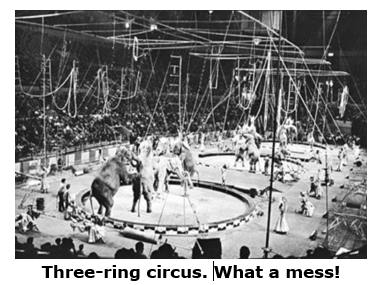
For TNT Tony and his gang of puppets, we all can see now just how idiotic his intel is since there is no way the Iraq dinar could have been exchanged unless it was back on FOREX and OPFAC through the US Treasury has sanctions against the IQD that prohibit is from the foreign currency exchanges and open global trading. He has been talking his nonsense for over a decade now telling listeners every week it would RV. He even told them at one time that removing the zeros did not have to happen and was insignificant to us going to the bank and exchanging. These kind of statements alone tell us so much about who is pumping them with false info and who is deceiving them. Why people continue to follow this idiot is beyond me.
Then intel guru Frank26 is getting very close to the truth nowadays but still puts too much emphasis in events he does not truly understand. He is another one who has a hard time remembering what was said from Iraq in the past and applying it to recent events. He claims they will remove the zeros but first revalue the dinar in country to $1.30 USD. He thinks they will RV by just by taking the zeros off the CBI official rate of 1310 by moving the zeros over three decimal places. This tells me he truly does not understand how the zeros will be removed. After all the articles he reads on his ‘Youbie Tubies’ you would think he would know better as these articles clearly outline how they are intending to remove the zeros. Why don’t these people listen to what Iraq is telling them? Of course, we all know that there will be NO revaluation in the process of removing the zeros and it has nothing to do with moving the decimal over three places on the official CBI rate. We all should know by now that there will be no formal revaluation and this will allow the two sets of currencies (the 3 zero notes and the newer lower denominations) to coexist in circulation while they slowly swap them out. At least this is what they are now telling us will happen.
If you happen to listen to the idiot Bruce from the BigCall you quickly realize just how bad this idiot is and how foolish is all is. There is so much he does not know. I don’t know how many times he preached that the RV has already happened in Iraq and just has to move around the globe to reach the U.S. banks. How can anyone, never mind someone who claims to be so smart, claim such foolishness. This is a full-grown man spurting out this nonsense. This could never happen and all of us should know why. He is yet another one who bought into some sources that are just lying to him and pretending to be reliable and knowledgeable sources. How can anyone call them reliable when they flat out lie to their listeners with their every day / any day RV stuff for over 2 decades now. And he is proud to be the BigCall too and to be doing this to his listeners for so long.
Did any of these other intel gurus actually read the Dr Shabibi plan to get to the reinstatement (back on FOREX)? Did any of them actually read and understand the ‘White Paper’ which was a 95-page document basically taking the Dr Shabibi plan of 2011 and then formulating a blue print as to how to get there. It was formally approved by Iraqi Prime Minister Mustafa Al-Kadhimi’s term as provisional prime minister 2020-2022. This is a legacy of Al-Kadhimi’s administration.
But of course getting to the TRUTH with actual documents explaining the TRUTH is not really their objective. They all have other notions of just using the intel as part of their program to draw you in to them sell you something. Just pay attention to what they are selling the their sales pitches to you.
_________________________________________________
Okay so let’s get on with today’s news.
As I already mentioned the important part now is the timing of this event of removing the zeros. WE now have many confirmations that they are going forward with it now. We know this Project to Remove the Zeros is close at hand and is going to be completed shortly. Time has run out and with many other issues from the past, delays cause consequences due to a corrupt government holding back real progress. The article we are concerned about today in our study of the Iraq dinar RV is titled “IRAQI GOVERNMENT MAY INTRODUCE A NEW CURRENCY IN 2027”
So, once again in this recent article from Baghdad Today – August 30, 2026, we learn of the urgency of completing the removal of the zeros.
I quote from the article – “Iraqi government may introduce a new currency in 2027 with leading zeros removed to address hyperinflation and currency devaluation.”
Then again is this statement we see the urgency – “The move is part of broader economic reforms aimed at stabilizing the currency, which has suffered from severe depreciation and a massive increase in total issuance.”
Then again the urgency in the statements – “This reflects deep liquidity issues and a loss of public trust in the currency.”
So, let’s summarize the urgency:
- to address hyperinflation;
- to address currency devaluation;
- to address severe depreciation of the dinar over the dollar;
- to address a massive increase in total issuance.;
- to address deep liquidity issues;
- to address a loss of public trust in the currency
Folks this is Iraq telling us this not me! Do you think that these six (6) issues are reason enough to remove the zeros and do it now? Can you see the impact they can have on the overall economy of Iraq?
Then in the following statement from today’s article, I can see how Frank26 may be getting confused. I quote from the article – “According to The Media Line network, a report published today revealed that the Iraqi government is considering launching a new currency in 2027 that would strip leading zeros from current dinar denominations.” This statement does not say strip three decimal places from the “official CBI rate” but says from the notes themselves. Frank are you listening?
Then they tell us that data from the Central Bank of Iraq (CBI) shows that- “by the end of June 2026, the total value of currency issued had reached 111.189 trillion dinars (about $84.5 billion), with 91.7% held outside banks and only 8.3% in bank vaults. This reflects deep liquidity issues.”
Do you think with over 90% of the issued currency outside the banking system they have a problem? Just maybe? Lol…. Lol…. Lol…. Is it time to get this money back into t the banks to help pay the bills?
Oh…. but in this recent article they are telling us they have a temporary solution and I quote from it – “The government is also exploring loans from U.S. banks as a quicker alternative to printing more money”. Imagine that they have to borrow money and pay interest on it while 90% of their funds is outside their reach to use. Wow! Do you see the urgency? Did they say ‘quicker alternative’. Again, this wording shows us the urgency.
Then they tell us something that we should also pay attention to and I quote –“while preparing temporary legislation on borrowing, grants, and subsidies to cover essential spending until the federal budget is approved.”
If you recall Iraq cannot get money from their oil revenues until they submit their budget to the US Treasury who them scrutinizes it and if approved, will transfer the needed funds from the Chase/JP Morgan bank in NYC to Iraq for the budget spending. So, a hold up in getting the budget is significant and so how can Iraq pay its bills without it? This is where the banks would help but can’s since they have no singificant money to loan to the CBI to pay salaries and pensions either. The oil companies now get a third of the revenue generated from the wells and so they too will soon stop work if not paid shortly. Then what?
In the ‘Implications’ section of this article we learn that – “This development comes amid ongoing regional and domestic economic pressures, making 2027 a potential turning point for Iraq’s monetary policy.”
__________________________________________________
In another recent article titled “AL-ZAYDI’S FINANCIAL ADVISOR: THERE ARE NO BANKING TRANSACTIONS WITH IRAN… AND WE WILL NOT CHANGE THE EXCHANGE RATE” we learn that the financial advisor to the Prime Minister, Mazhar Muhammad Saleh, “denied the existence of any banking transactions with Iran, stressing that the salaries of state employees require 7.7 trillion dinars per month, while revealing that between 12-14 trillion dinars have been borrowed since the beginning of the financial crisis.”
Saleh said in televised remarks followed by “Ultra Iraq” that “Iraq is the fourth country in the world in terms of state intervention in economic activity due to its rentier nature,” indicating that “the government payroll amounts to 7.7 trillion Iraqi dinars per month and securing it is a mandatory matter.”
Then I quote again – “Regarding the budget, Saleh explained that “the price of a barrel of oil in the budget will be between $50 and $60, and it will focus on electricity,” while noting at the same time that “there is no current decision to amend the exchange rate.”
So again, I want to emphasis we learn that the budget is based on the price of oil and not the exchange rate of the dinar. So much for all these idiot intel gurus telling you the RV rate is in the budget…lol… lol… lol… ☹. This quote, even though small in nature is telling us so much more. It is also telling us it is not yet able to base the budget on the exchange rate and must use the price of oil at this time. Later, when the dinar is priced on FOREX then the exchange rate can be a larger part and used for the budgeting purposes. Remember that Iraq is still using the provisional / manipulated / stiffened rate solely pegged to the dollar and the dollar is still the petro-dollar. Do you see this tie into the dollar has not yet gone away.
________________________________________________
In this next article titled “THE FRAMEWORK ASKED AL-ZAIDI TO FORGET TRUMP… TEHRAN DELEGATIONS: ATTENTION… WE WILL PREVENT ANY CHANGE IN BAGHDAD”
we can clearly see just how corrupt the Coordination Framework is. Will Al-Zaidi bow down to the Framework and change his direction of following advice from the Trump administration for anticorruption measures, partnering with the US for economic development and following his own Iraqi constitution? And if he refuses to follow their instructions what will happen to him? Will he be forced to resign?
I quote from the article – “A report by the London-based Asharq Al-Awsat newspaper reveals pressure that appears deeper than what has surfaced, exerted by Tehran through its recent delegations. This pressure has reached the point where Qalibaf is demanding that the framework forces turn the weapons control file into a “formal and symbolic procedure” and urge them to prevent the government from tampering with the capabilities of the factions because Tehran will not accept changing the “balance of power in Baghdad.”
WOW! Really?
“This has prompted some leaders of the framework to try to convince Al-Zaidi to change his plans regarding weapons and even the anti-corruption campaign, and not to fear too much the threats of “isolation and sanctions” brandished by Trump, as they believe that Washington will still need Iraqi oil.”
This the good news and I quote – “However, the assessment did not convince Al-Zaidi, who reportedly saw resignation as an option if he was forced to backtrack on commitments he had made.”
So, we can see in this article the pressure from Iran for Al-Zaidi to bend in his reform plan for Iraq. Of course, the pressure is building and is going to be turned up VERY HIGH for Al-Zaidi since the United State’s new plan to economically starve Iran into submission through secondary economic sanctions campaign called “Operation Economic Outcast”.
Iran depends on proxy states to funnel monies to them. The Islamic Jahad are leaches. They use these terrorist organizations to control countries and then suck the money from them for Tehran. This is how they have been working all along through Lebanon, Libya and Syria proxy states. They desperately also want to use Iraq as a proxy state but under Trump with the help of Al-Zaidi it is being shut down. Under the U.S. and Israel efforts the Iranian proxy states of Lebanon and Syria have already been shut down or in the making.
Remember that this Islamic movement ruled the Ottoman Empire and was a major Islamic imperial power that emerged in northwestern Anatolia under Osman I around 1299. It grew into one of the world’s most influential empires, lasting more than 600 years until its dissolution in 1922, when it was replaced by the Republic of Turkey. The empire suffered major defeats in the Balkan Wars (1912–13).
It entered World War I on the side of Germany and the Central Powers; defeat led to partition by Allied powers. In 1922, the sultanate was abolished by Mustafa Kemal Atatürk, ending the empire and paving the way for the Republic of Turkey (1923).
But today unlike during the Ottoman Empire, the Muslim radicals in Iran are not interested in cultural achievements flourishing in architecture in literature, science, and law. They destroyed the ‘Paris of the middle east‘, as Iran’s capital Tehran was known as prior to the Islamic revolution.
Instead, they chose control through might, a police state, where as the goal is to make the citizens submissive to their radical ideology using religion to justify their radical platform. So like in 1922 when this Islamic state was torn apart it began a revival again in 1929 and in 1979 Islamic Revolution in Iran overthrew the monarchy of Shah Mohammad Reza Pahlavi and established an Islamic Republic under Ayatollah Ruhollah Khomeini. The revolution was fueled by widespread dissatisfaction with the Shah’s autocratic rule, social inequality, and Western influence in Iran. It was ripe for change but the citizens did not know it would go from bad to worst than what they had under the Shah.
It is time for yet another fall of the Islamic empire of Iran.
What will Al-Zaidi do in the midst of all these threats from Iran and the Coordination Framework?
Getting back to the article we learn that the spokesman stressed that “the government has taken effective and important steps in the path of (restricting weapons), and it is committed to completing this approach in accordance with the requirements of Iraq’s sovereignty and national interests.”
According to Al-Aboudi, “The government deals with the issue of weapons as a constitutional principle that is addressed through legal institutions and channels in light of the country’s supreme interest, sovereignty, stability and international relations.” Yes, its about following their own constitution. The U.S. is only trying to make them live up to their own constitution which they themselves help put together in 2005.
The government’s stated commitment does not negate the magnitude of the pressures it faces in implementing the plan, especially since al-Zaydi had linked the success of his government from the beginning to its ability to strengthen the authority of the state and fulfill its external obligations.
The President of the Kurdistan Region said in a televised statement in mid-August that “international isolation is approaching Baghdad if it does not find a solution to the factions’ weapons.” This is especially true now that “Operation Economic Outcast” is in force.
Bottom line is the U.S. is not putting all its eggs in one basket when it comes to oil. It has secured a 25 year agreement with Venezuela for oil reserves. And with a new U.S. pipeline from Alaska under development, there is enough crude to bypass middle eastern and Canadian oil all together, should the US desire it.
Washington is trying to cling to its opportunity in Baghdad for U.S. Investment opportunities. A spokesperson for the US State Department, speaking to Asharq Al-Awsat on condition of anonymity, said that “Iraq has embarked on a new path under al-Zaidi’s leadership in full partnership with the United States,” adding that Washington supports his vision of “an Iraq free of terrorism” and of preventing “attacks from and on Iraqi soil.” The U.S. will need this vision to attract U.S. companies to Iraq.
In the article titled “WASHINGTON OUTLINES ITS PARTNERSHIP WITH BAGHDAD: AN IRAQ FREE OF TERRORISM AND WEAPONS IN THE HANDS OF THE STATE” we see the truth of what is taking place with pressure from Washington to help Iraq. Did we forget already the personal meetings between president Trump and Al-Zaidi? I do not believe Al-Zaidi is going to not live up to all the promises made to Trump. He is focused on these promises. He would rather resign then give in. So, articles with negative news like we recently witnessed from the Coordination Framework and Tehran should not discourage you. It is just news it does not mean Al-Zaidi is going to give in to them.
Now we can also look at this negativity and coordination with Tehran by the Coordination Framework is painting a negative picture too of this so-called majority party partnering with Iran instead of the U.S. as it will come to hurt them in the next election cycle. Take my word on this and remember it! The old paradigm with Iran is changing quickly.
I also at this time want to point out the convergence of events that is about to happen. We will get peace in the middle east, Iran’s influence in Iraq will end, the IQD will be on FOREX, accession to the WTO, and we will be going to the bank.
The only issue we don’t know for certain is the timing of it all. For us we must watch the timing of the removing the zeros. This will be the movement we need to see. There is ABSOLUTELY NO WAY the IQD could EVER go back to FOREX at a rate to attract investors at 1/6 of a penny so it will have to be at least over the 1990 pre-war days of $3.22. At this new rate they can not use the 3 zero notes. Get it? IF they did it would make everyone in Iraq billionaires overnight and hyperinflation would set in and destroy their economy. Some say they might set the initial rate on FOREX as just over a dollar. Why would they do this? This is not all about us investors exchanging. Get it. We are nothing in the scheme of the events. Such a low rate would lose a lot of money for Iraq.
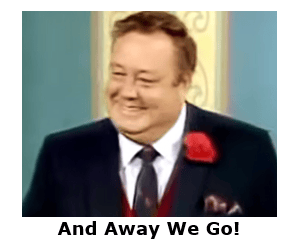
Iraq MUST FIRST REMOVE THE ZEROS thus swap out them out for the newer lower denominations. The ONLY reason why they have not yet done this is due to corruption. Yes, corruption, corruption and more corruption over these last 20 years. The Iranian influence wants the status quo to continue funneling dollars to Iran. This is their goose that lays the golden eggs. They strategically set in motion this corruption through these currency auctions and then through the parallel market. They will fight Al-Zaidi all the way. Shut this corruption with Iran down and then remove the zeros and “away we go”, as Jackie Gleason used to say…lol….lol….lol…. I used to sit on my dad’s lap and watch this show each Sunday night growing up.
When the IQD is reinstated, it ends the sole peg to the US dollar and a lot, if not all, of this corrupt money laundering goes away. The parallel market goes away.
The following article titled “THE RISING DOLLAR IS TESTING BANKING REFORMS; THE CENTRAL BANK IS CHANGING RULES, BUT THE PARALLEL MARKET IS RESISTING.” This article reveals a paradox facing Iraqi monetary policy. But we must remember in reading articles like this one we ask ourselves if the CBI can ever break the parallel market without getting off the sole peg to the US dollar. Remember Iraq told us under Ali Al-Alaq and later also by Saleh, the PM financial advisor, that the parallel market is a temporary market that will disappear later. Their concern now is just to keep it at bay and control it until the reinstatement. They call the monetary policy of Iraq a paradox for many reasons. It is a fake system put in place to coincide with the Iraqi Development Plan (IDF). Why do I call it fake? Why do they call it temporary?
It is fake for many reasons. First the three zero notes and the currency auctions were meant to be temporary. Sources told us that by five years after the issuance of the 3 zero notes, they expected to be back on FOREX. Also, the sole peg to the petro-dollar does not give Iraq the flexibility to manage their own money. If forces the use of the dollar to pay for imports yet the parallel market takes advantage of it to launder money to Iran.
The U.S. is suppressing the dinar’s real value of the dinar called Real Expected Exchange Rate (REER). The Basel III Monetary Implementation Plan calls for currency revaluations based on the true assets of a country and economic indicators not speculation or manipulation. It has been in force since 2019 already. Why is the IQD still heavily manipulated and worst, by the same entities that manage global markets and dictated the Basel III requirements? Where is the REER? Is it now time. Has all this manipulation finally caught up to Iraq?
________________________________________________
Some of my blog readers would like me to cover the EO 13303 and its ramifications to the Iraqi dinar. So I will try to cover this now. Remember that anything that helps Iraq develop and keep the fox out of the hen house is good for us investors in the dinar. As long as they continue to renew this EO they will continue with the petro-dollar and stay in this suppressed version of the Iraqi dinar. At anytime the president can sign a presidential decree to repeal the order. Our concentration should be focused less on the status of this EO and more on the process of how to get the IQD back to FOREX. When it is time OFAC sanctions will be repealed and the IQD will be free again. We must be careful not to get sidetracked on so many other issued taking our attention away from the real process and desire to get to the banks and exchange.
Executive Order 13303 and the Iraqi Dinar
Executive Order 13303, signed by President George W. Bush on May 22, 2003, is titled Protecting the Development Fund for Iraq and Certain Other Property in Which Iraq Has an Interest. It was issued to shield the Development Fund for Iraq—a UN‑nominated fund created to finance Iraq’s reconstruction—and related Iraqi oil and petroleum products from legal attachments, liens, or other judicial processes
The order was part of a broader U.S. strategy to control Iraqi oil revenues through the Development Fund, which was established with UN approval and supported by the World Bank and IMF.
It aimed to:
- Prevent foreign or domestic legal actions from blocking U.S.‑linked oil projects in Iraq
- Protect U.S. corporate interests in Iraq’s oil sector
- Facilitate the transfer of oil‑for‑food program funds into the fund
Iraqi Dinar Connection
While EO 13303 does not directly regulate the Iraqi dinar (the Iraqi currency), it indirectly affects it because:
- The Development Fund’s revenues (in Iraqi dinars) are the primary source of funds for reconstruction
- U.S. sanctions and legal protections under EO 13303 influence how Iraqi oil revenues are managed and transferred
- The order’s protections can impact the flow of oil‑related funds into Iraq, which in turn affects the dinar’s value and stability
- It is illegal and unethical to profiteer off of war. EO 13303 allows US citizens to own Iraqi dinar and support the development fund as investors in Iraq, post war.
Renewal
The national emergency declared in EO 13303 has been renewed annually since 2003, most recently in May 2026
The Iraq Fund for Development, primarily known as the Development Fund for Iraq (DFI), was established to manage proceeds from Iraq’s oil exports and support the country’s reconstruction and development efforts following the 2003 invasion.
Overview of the Development Fund for Iraq (DFI)
- Establishment: The DFI was created in May 2003, shortly after the invasion of Iraq, under the authority of the Coalition Provisional Authority (CPA) and in accordance with United Nations Security Council Resolution 1483. It was designed to administer proceeds from oil sales, funds from the UN Oil-for-Food Program, and other assets seized from the former regime
- Purpose: The fund aims to support various development projects in Iraq, including infrastructure improvements, public services, and economic recovery initiatives. It has been used for programs such as wheat purchases, electricity and oil infrastructure, and salaries for civil service employees
_______________________________________________
UPDATE: On disarming the militias

In the recent article titled “AL-DULAIMI: WASHINGTON IS PRESSURING THE LEADERS OF THE BLOCS TO PREVENT THE PASSAGE OF THE POPULAR MOBILIZATION FORCES LAW”. We must ask what is so bad about this law? Let me address this today.
First, is goes against the new Iraq constitution and the sovereignty of Iraq.
Second, the Popular Mobilization Forces law, recognizes the Iranian militia as an official security institution on par with the army, police, and other security agencies. This would legalize the Iranian influence forever in Iraqi affairs. It would also include salaries and pensions. Can Iraq afford more of this burden on the budget?
Third, there are still rockets firing over Iraqi cities from these factions. The U.S. economic policy for Iraq under Trump must disarm these militia if it is to attract U.S. investors.
Forth, I am told by my CBI contact that we will NOT see the reinstatement of the IQD unless these militias and factions are disarmed. This one should hit home to all you investors in the dinar.
If you remember a year ago they tried to pass this law and it never reached parliament. Now they want to try again in this new government. In the article it tells us that “the US administration is conducting intensive contacts with the Speaker of Parliament before the sessions are held, and is recommending that the Popular Mobilization Forces Law not be included on the agenda or discussed,” noting that there is “near consensus” among members of Parliament to include the law and vote on it.
____________________________________________________
SUMMARY
So, we have two more articles in the news today about removing the zeros. I talked to my CBI contact about them and I was told this decision of 2027 is not yet final. It was just another option discussed by two different authors. She told me she cannot understand how they would even think about waiting that long to swap out the currency. This is something they need to happen now. Even another couple months might prove disastrous.
I tried to give you a bit of history about this Muslim Islamic group that keeps raising its head throughout history. This resurrected group of radicals must be stopped and its time to end this radical movement that has been the cause of most terrorist movements throughout the world. Countless suffering has occurred, countless people have died under this state of Iran. They now have their eyes on the developed nations and we can see the Muslim movements in all of them. The FBI has already identified the Muslim Brotherhood has infiltrated in the U.S. and has stockpiled military grade weapons in many of the mosque.
We see the mosques creeping up and the conflict of values and life styles is making citizens concerned. The recent exposure of Muslim corruption in Minnesota and Detroit politics and stolen Covid funds does not also help the Muslim cause. Is taking people out of their familiar surroundings and placing them in such different societies really a healthy thing to do? Why is this happening. If you are even a bit curious then read the United Nations Agenda 2030 and 2050. It will be an eye opener for you.
We can see who is orchestrating all this unnecessary migration into our countries. Most of it is unchecked, unvetted and illegal. Most of it happened too under the Covid pandemic and you would think this would be the most restricted time period ever to allow vetting for the virus. But just the opposite occurred and so go figure. Basically there was an opportunity and the country was venerable and so they used it to sneak these people in.
Why is the UN supporting such efforts? Don’t they realize by now the damage it is doing? We must take a step back and take a hard look at the UN in general and who is running it and what their true objectives are. They like to use terms like ‘Sustainable Development’ but I assure you implementing most of their cockeyed plans are nothing but disastrous and surely not creating sustainable environments for people to live in.
All you need to do it look at the disaster of the climate change initiative and open border policies, these are just two of dozens that are ruining the earth and our society. These careless policies have created humanitarian crises and financial burdens unnecessarily in all our developed countries. They do not develop sound plans as to how to integrate and pay for all this nonsense. They hug trees and kill people! These policies are not transforming the world for the better but instead harming it for the worst. I believe the UN knows it too. Are they really that stupid or just corrupt enough? This is all part of a much larger conspiracy to bring down developed countries and control them.
__________________________________________________
What do you think will happen next? (Leave a comment)
______________________________

________________________________________
Their words not mine…..No Rumors, No Hype, No Opinions ,,,,,
Just the FACTS!
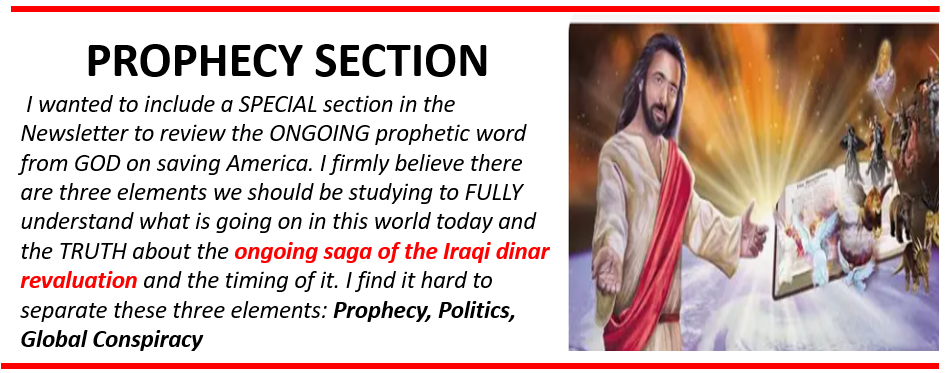

These prophecies are an important tool we have to lead us on our path. They are more important now than ever. They give us the strength, perseverance and hope that a better time is coming and that God’s Hand is at work behind the scenes. If you just take a second even to look around you at these past three election cycles, how can you deny that God is at work? Are you sleeping or what?
It is amazing and there is no other way that these events could have happened the way they turned out. But there is more to come, much, much more, I assure you! Now that God has his biblical David re-elected, we need to pay attention to what He does next.
NOTE: These prophecies just keep getting better and better, giving us HOPE of a brighter future. But the real reason why I listen to them is that we can actually see what God says He will do is taking place right in front of our noses. It is a confirmation to me that God is real and is still with us forever just as in biblical times.
Prophetic Words from the prophets: Julie Green
“You Will See Things You May Not Understand“
Go to the 14:33 mark on the video. Given on Aug 14th
Things are not as they appear to be. You may ask yourself what is going on.
Things that have been hidden will soon be exposed. More understanding will happen once you see what is really going on.

“The Deep State Has Left This Nation Venerable and Wide Open For Attack“
Go to the 21:21 mark on the video. Given on Aug 23rd.

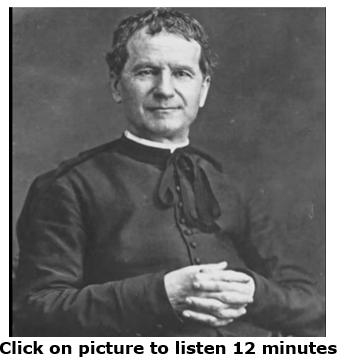
Fr. DON BOSCO EXPOSED THE DARK SECRET BEHIND ISLAM
I keep this one out here to view. Everyone should take the time to watch it. It will awaken you about the Muslim so-called religion (or should we call it for it is — a ‘cult‘.)
— And the truth the world forgot about the so-called Muslim religion.
Fr.Don Bosco, also known as John Bosco, was an Italian Catholic priest and educator, born on August 16, 1815. He founded the Salesian Society in 1859 to help disadvantaged youth, particularly boys, through education and community service. His teachings emphasized lovekindness, and the importance of education for young people, making him a beloved figure in Catholicism and a patron saint of youth. Don Bosco was canonized in 1934.
IRAN OIL PROVINCE: CAN INSIDE REBELS TAKE THE ISLAMIC REGIME DOWN?
America declared Economic War on Iran with Operation Economic Outcast, sanctioning 60 targets in one day. But the real war is inside Iran. In this episode of Decoded, Nikita Kapoor breaks down Khuzestan, the province that produces 80% of Iran’s oil, houses Bushehr nuclear reactor and Abadan refinery, but lives with 50% unemployment and is the world’s most polluted city on earth.
Ahwazi Arabs, armed groups like Arab Struggle Movement for the Liberation of Ahwaz, Ahwaz Falcons and Ahwaz Freedom Brigades have declared open rebellion against the IRGC. Can they blow pipelines, block ports and shut refineries to collapse the regime?
WHAT NOW FOR IRAN?
The U.S. imposes strict broad secondary economic sanctions against Iran on August 24th. What will Iran do now? Total Meltdown! Iran President Loses ALL Powers As Hardliners Take Over? Civil War Now?
Iran hard liners threaten to choke anyone who partners with the U.S. in this new embargo. Iran’s president says to end the war now that contradicts the hardliners. Who is really in charge?
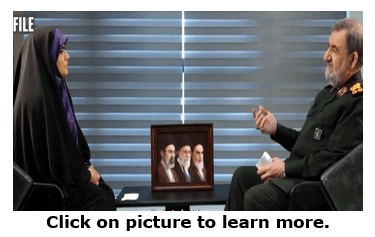
PPF: (Peoples Fighter Front) A NEW INSIDE REBEL ARMY UNLEASHES CHAOS ON THE ISLAMIC HARDLINERS
I really luv Nikita Kapoor’s updates of what is really happening in Iran. We are not going to get this TRUTH from any western news channels.
ARMY OF JUSTICE: Has a regime change begun from the inside? All the U.S. has to do is wait out the effects of Operation Economic Outcast secondary sanctions and let the PPF overtake the IRGC forces and round up hardlines and bring the regime to its knees. We simply don’t know how this will al play out, but this regime will fall, just not as easy as the Trump Administration thought.
Iran is planning to evacuate its capital, Tehran, due to a severe water drought, moving its government straight into a war zone. As the regime considers relocating to Makran, a powerful new rebel force, the People’s Fighters Front, is striking from within. In this episode of Decoded, Nikita Kapoor reveals why Iran’s biggest threat isn’t foreign air forces, but an internal army rising inside its own borders.
Timing is everything!
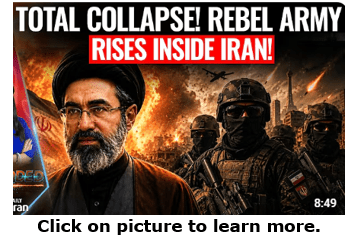
U.S. BLOCKADE CRIPPLES IRAN ECONOMY
Lt. Col. Jonathan Conricus joins Erick Stakelbeck to break down Trump’s Strait of Hormuz blockade, Iran’s crumbling leverage, the U.S.-Israel military alliance, Hezbollah’s disarmament, Hamas in Gaza, and the path to a new Middle East.
Do we need this peace to move the Iraqi dinar to FOREX later. Let’s only hope Iran falls prior to 2027.
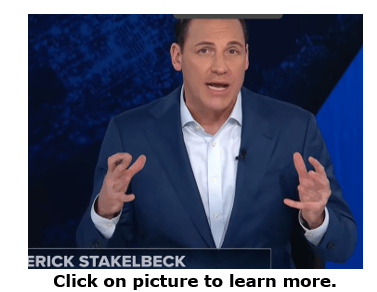
OPERATION ECONOMIC OUTCAST
This will probably finally break the proverbial camel’s back with Iran. We can only hope for the sake of Iraq. Will the U.S. allow limited trade between Iraq and Iran? Iran is a major trading partner with Iraq. Iraq depends on certain food products from Iran.

MASSIVE RECOUNT FOUND FRAUD IN MINNESOTA’S GOVERNOR RACE
They are still doing it to us…. They are still rigging the elections. We need to pass the Save America Act and do it now, then enforce it.

TRUMP’S REAL PLAN TO REBUILD AMERICA
What is president Trump really up to?


THE SILVER SUPPLY SHOCK MOST DON’T SEE COMING
A delayed reaction: Is the silver, a precious metal about to have another bubble?
Restricting the oil supply by limiting oil through the Straight of Hormuz causes other downstream supply shortages, other than oil.
HOW COULD A FAMILY TRUST HELP PROTECT YOUR ESTATE

6 STATES CUTTING PROPERTY TAXES TO ZERO
There are actually 16 states now tackling the home ownership property tax issue. They are finding alternatives to funding their district. Even the supreme court (SCOTUS) is now taking up a case to determine if these taxes are even constitutional.


IRAQI GOVERNMENT MAY INTRODUCE A NEW CURRENCY IN 2027
Baghdad Today – August 30, 2026
Iraqi government may introduce a new currency in 2027 with leading zeros removed to address hyperinflation and currency devaluation.
According to The Media Line network, a report published today revealed that the Iraqi government is considering launching a new currency in 2027 that would strip leading zeros from current dinar denominations.
The move is part of broader economic reforms aimed at stabilizing the currency, which has suffered from severe depreciation and a massive increase in total issuance.
Economic Context:
Data from the Central Bank of Iraq (CBI) shows that by the end of June 2026, the total value of currency issued had reached 111.189 trillion dinars (about $84.5 billion), with 91.7% held outside banks and only 8.3% in bank vaults. This reflects deep liquidity issues and a loss of public trust in the currency.
The government is also exploring loans from U.S. banks as a quicker alternative to printing more money, while preparing temporary legislation on borrowing, grants, and subsidies to cover essential spending until the federal budget is approved.
Related Developments:
Corruption crackdown: In a separate major operation, Iraqi security forces arrested 47 people accused of corruption in Baghdad, including several senior officials and lawmakers.
Political stability: Hadi al-Amiri, Secretary-General of the Badr Organization, assured there would be no confrontation between the state and the IRI resistance, emphasizing unity in fighting corruption.
Implications:
Removing leading zeros from currency denominations is a symbolic and practical step to make the currency more transparent and easier to handle in daily transactions. However, the success of the reform will depend on whether it is accompanied by structural economic measures, such as fiscal discipline, currency board reforms, and improved public confidence.
This development comes amid ongoing regional and domestic economic pressures, making 2027 a potential turning point for Iraq’s monetary policy.
*********************************************************************************************
WHEN WILL THE REMOVAL OF ZEROS BEGIN? A MEMBER OF PARLIAMENT SETS A DATE FOR THE PROJECT’S IMPLEMENTATION.
(Mnt Goat: The MP is just making reference and responding to the article we see above in the first article. Nothing new here. This show you however, how uniformed these MPs in parliament are on what is actually happening on the ground and the crisis and urgency of the situation.)
MP Murtadha Afween confirmed on Monday that the project to remove zeros from the Iraqi currency has not yet moved to the implementation phase, indicating that the project does not represent a direct solution to the crises plaguing the Iraqi economy.
He added that “removing zeros from the currency, if it proceeds, should not be considered a sufficient measure to address the economic challenges,” noting “the importance of focusing on issues directly related to the country’s economic and financial reality.”
Afween pointed out that “addressing the economic crises requires concrete steps and measures targeting the root causes of the problems, in addition to developing solutions for issues affecting financial and economic stability,” emphasizing that “monetary measures alone are insufficient to address the accumulated economic problems.”
Earlier, The Media Line network revealed in a report that the Iraqi government will begin issuing a new currency with zeros removed at the beginning of 2027.
*********************************************************************************************
THE FRAMEWORK ASKED AL-ZAIDI TO FORGET TRUMP… TEHRAN DELEGATIONS: ATTENTION… WE WILL PREVENT ANY CHANGE IN BAGHDAD
(Mnt Goat: everyone should read this article in full to understand just how bad and crooked these Iranians and Coordination Framework people are. They all need to go! These are the people Al-Zaidi has to deal with on a daily basis. May God Bless him! )
Please say a short prayer for the success of Al-Zaidi and his new government.

Just how bad do you want Iraq to have its riches, how about your riches?
A report by the London-based Asharq Al-Awsat newspaper reveals pressure that appears deeper than what has surfaced, exerted by Tehran through its recent delegations. This pressure has reached the point where Qalibaf is demanding that the framework forces turn the weapons control file into a “formal and symbolic procedure” and urge them to prevent the government from tampering with the capabilities of the factions because Tehran will not accept changing the “balance of power in Baghdad.”
This has prompted some leaders of the framework to try to convince Al-Zaidi to change his plans regarding weapons and even the anti-corruption campaign, and not to fear too much the threats of “isolation and sanctions” brandished by Trump, as they believe that Washington will still need Iraqi oil. However, the assessment did not convince Al-Zaidi, who reportedly saw resignation as an option if he was forced to backtrack on commitments he had made.
(Mnt Goat: You can clealy see just corrupt the Coordination Framework is by these last two paragraphs. Will Al-Zaidi change his direction? And if he refuses to follow their instructions what will happen to him? Will president Trump protect him somehow?)
While government spokesman Haider al-Aboudi denies the idea of resignation, stating that it has not been and will not be a way to deal with the issue of the factions, Kazem al-Fartousi, spokesman for the “Sayyid al-Shuhada Brigades,” confirms that the factions “asked the government to find a strong and reliable alternative to the factions’ weapons that can be depended on, so that they would be convinced to give up their arsenal,” as stated in an article published by writer Ali al-Sarai in “Asharq Al-Awsat.”
This is the newspaper report:
The Iraqi government said on Thursday that Prime Minister Ali al-Zubaidi “does not and will not consider submitting his resignation” in the face of increasing pressure regarding the factions, stressing that it is dealing with this issue as a “constitutional principle that is addressed through legal channels.” Meanwhile, officials and sources reported that parties within the “Coordination Framework” alliance are pushing the government to back down from its plans, after Iranian Parliament Speaker Mohammad Baqer Qalibaf called for turning the arms monopoly into “a mere symbolic project.”
Haider al-Aboudi, spokesman for the Iraqi Prime Minister, told Asharq Al-Awsat in an exclusive statement that “al-Zaidi pledged to the Iraqi people in the government’s program to continue strengthening the prestige of the state and enshrining the rule of law.” The spokesman stressed that “the government has taken effective and important steps in the path of (restricting weapons), and it is committed to completing this approach in accordance with the requirements of Iraq’s sovereignty and national interests.”
According to Al-Aboudi, “The government deals with the issue of weapons as a constitutional principle that is addressed through legal institutions and channels in light of the country’s supreme interest, sovereignty, stability and international relations.”
The government’s stated commitment does not negate the magnitude of the pressures it faces in implementing the plan, especially since al-Zaydi had linked the success of his government from the beginning to its ability to strengthen the authority of the state and fulfill its external obligations.
In response to a question regarding al-Zaidi’s future under these pressures, government spokesman Haider al-Aboudi asserted: “Resignation was not and will not be a means of dealing with the issue of restricting weapons.”
Al-Aboudi confirmed to Asharq Al-Awsat that “the Iraqi government is proceeding with its responsibilities and completing the executive steps it has begun, in accordance with a clear national vision that strengthens the authority of the state and preserves the unity of national decision-making and the supreme interests of Iraq.”
The state’s monopoly on weapons was among the commitments previously approved by the forces within the “Coalition for State Administration,” which renewed its support for its implementation on August 6 and called for adherence to the timetable for weapons monopoly steps after September 30, after which, according to the statement, any armed behavior outside the framework of the state will be dealt with under the counter-terrorism law.
Al-Zaidi also pledged, during his visit to the White House on July 14, 2026, not to allow any faction to bear arms in Iraq after the end of the deadline on September 30, which coincides with the withdrawal of US forces.
The symbolic restriction of weapons:
In the past few weeks, the balance of power has shifted following the visit of Iranian Parliament Speaker Mohammad Baqer Qalibaf to Baghdad, according to a leader in the “coordination framework.”
Iranian officials have significantly intensified their visits to Baghdad. Last Monday, Mohsen Qomi, a representative of Iranian Supreme Leader Mojtaba Khamenei, arrived in Baghdad and attended part of a meeting of the ruling coalition in the presence of al-Zaidi. Prior to that, factions had been leaking news of unannounced visits by Ismail Qaani, commander of the Quds Force of the Revolutionary Guard.
Sources told Asharq Al-Awsat that Qalibaf urged the leaders of the “Coordination Framework” not to abandon the factions, and to work to “prevent the government from ending the factions’ ability to retain their weapons.”
Qalibaf was quoted as saying that the “coordination framework” should play its role in turning the arms control project into “a mere symbolic project,” noting that “Iran will not allow the United States to manipulate the balance of power in Baghdad.” At the conclusion of his visit to Najaf, southwest of Baghdad, Qalibaf stated that “a new security system is being formed in the region, and Iraq is Iran’s first partner in it.”
It appears the factions gained negotiating momentum after receiving urgent assistance from Tehran. A senior advisor to the “State Administration” alliance said, “Iranian officials intervened to demand a postponement of the weapons confiscation plan and a change in its approach; replacing the weapons withdrawal with mutual guarantees, including a pledge from the factions not to use the weapons.”
According to Kadhim al-Fartousi, a spokesman for the Sayyid al-Shuhada Brigades, “The resistance factions have asked the government to find a strong and reliable alternative to their weapons, something they can depend on, so that they will be convinced to give up their arsenals.” He told Asharq Al-Awsat, “The factions want guarantees regarding the alternative to their weapons.”
Don’t worry about loneliness:
The talk of guarantees reveals how the tone has finally shifted from restricting weapons to regulating them. Two officials within the “coordination framework” stated that some parties within it “translated Iranian pressure into what appeared to be accelerated efforts to push the government to change its plans.”
One of them told Asharq Al-Awsat that leaders in the coalition informed the Prime Minister, during bilateral meetings and public gatherings, that “Baghdad should not be concerned about American sanctions or international isolation if the plan to restrict weapons does not succeed on time.”
There is a prevailing belief in Iraqi circles that allowing the factions run by the “Revolutionary Guard” in Iraq to keep their weapons “will cost a lot,” to the point that the President of the Kurdistan Region said in a televised statement in mid-August that “international isolation is approaching Baghdad if it does not find a solution to the factions’ weapons.”
However, leaders in the “coordination framework,” according to sources, believe that “sanctions or isolation are very far from Iraq in the current situation, because the United States and other countries will still need Iraqi oil to compensate for what they lost from strategic reserves during the war with Iran, and that this will make it difficult to impose broad economic sanctions on Iraq.”
They suggested to the Prime Minister that he adopt this assessment to back down from his plans to restrict the weapons of the factions, and a number of them went so far as to push for “turning the page on the anti-corruption campaign,” considering that “Iraqi oil will be of strategic value to international markets, which will limit Washington’s ability to use economic sanctions against Baghdad.”
But the prime minister “rejected this assessment,” according to sources. A senior official also told Asharq Al-Awsat that al-Zaidi “considers resignation an option should he find himself forced to renege on his international commitments.”
According to a source close to al-Zaydi who spoke to Asharq Al-Awsat, “al-Zaydi has a feeling that the coordinating framework and the forces allied with him are treating him as a rival party, and not as a party that bears responsibility in the government that he formed about three months ago.”
The factions do not consider al-Zaidi’s fate a priority. Kazem al-Fartousi told Asharq Al-Awsat, “The prime minister’s resignation is a personal right and a political decision; the matter is handled by the (coordination framework), and it has never been a demand of the factions.”
A new direction under Zaidi’s leadership:
There is a gap between the calculations of the government and its allies within the “coordination framework” regarding the cost of backtracking on Iraq’s international commitments, which could affect its political credibility and the future of its government.
From a Western perspective, the constant fluctuation in the positions of the Shiite forces is a reflection of the Iranian style of postponing crucial decisions.
A Western diplomat who worked in Iraq between 2019 and 2023 tends to believe that “Iran’s allies in Iraq are trying as much as possible to buy time for the regime in Tehran.”
Nevertheless, Washington is trying to cling to its opportunity in Baghdad. A spokesperson for the US State Department, speaking to Asharq Al-Awsat on condition of anonymity, said that “Iraq has embarked on a new path under al-Zaidi’s leadership in full partnership with the United States,” adding that Washington supports his vision of “an Iraq free of terrorism” and of preventing “attacks from and on Iraqi soil.”
A political advisor in the “Coordination Framework” reported that the US Chargé d’Affaires, Joshua Harris, informed leaders in the “Coordination Framework” that his country “is eagerly awaiting the end of next September to achieve the primary goal of imposing state authority and ending the influence of uncontrolled weapons.”
*********************************************************************************************
AL-ZAYDI’S FINANCIAL ADVISOR: THERE ARE NO BANKING TRANSACTIONS WITH IRAN… AND WE WILL NOT CHANGE THE EXCHANGE RATE.
The financial advisor to the Prime Minister, Mazhar Muhammad Saleh, denied the existence of any banking transactions with Iran, stressing that the salaries of state employees require 7.7 trillion dinars per month, while revealing that between 12-14 trillion dinars have been borrowed since the beginning of the financial crisis.
Saleh said in televised remarks followed by “Ultra Iraq” that “Iraq is the fourth country in the world in terms of state intervention in economic activity due to its rentier nature,” indicating that “the government payroll amounts to 7.7 trillion Iraqi dinars per month and securing it is a mandatory matter.”
He added that “10 million citizens receive salaries, including employees, retirees, and social protection recipients, and every salary paid by the state is considered to support and affect 4 members of the family or beneficiaries, and therefore about 40 million Iraqi citizens benefit from state salaries.”
Regarding the budget, Saleh explained that “the price of a barrel of oil in the budget will be between $50 and $60, and it will focus on electricity,” while noting at the same time that “there is no current decision to amend the exchange rate.”
He explained that “Iraqi oil production currently exceeds 3 million barrels per day, with one million barrels going to refineries, while more than two million barrels are allocated for export and storage,” indicating that “Iraq’s exports have been stable for the past 10 days at more than one and a half million barrels per day.”
Regarding the energy and trade file with Iran, the financial advisor explained that “the volume of Iranian gas imported to Iraq amounts to 18 million cubic meters, supporting the national grid with 4,500 megawatts,” while emphasizing at the same time “the absence of any banking relations between Iraq and Iran or any electronic payment transactions, and there have also been no dollar payments since 2011.”
He pointed out that “the US sanctions imposed on Iran did not address the issue of importing vegetables and foodstuffs, provided that payment is not made in dollars.”
He revealed that “the size of Iraq’s hard currency reserves amounts to $78 billion,” stressing that “there is currently no external borrowing to support the budget, and we may need it at low costs and with a long repayment period.”
The Prime Minister’s financial advisor indicated that “the total amount borrowed by the state domestically during the crisis ranges between 12-14 trillion dinars.”
*********************************************************************************************
DESPITE PRESSURE AND DEMANDS, THE POPULAR MOBILIZATION FORCES LAW REMAINS LOCKED AWAY IN THE SHADOWS.
Calls have grown louder for the enactment of the Popular Mobilization Forces (PMF) law to do justice to a large segment of the population that defended Iraq and its people, achieved victory over ISIS terrorism, and deserves the greatest credit for the existence of the government and the continued functioning of the economy and other sectors in the country. The PMF law remains stuck in bureaucratic limbo, with some political parties asserting that American interference and the veto imposed by the Trump administration are the primary obstacles to its enactment. Other parties, however, believe there is ongoing political activity to pass the law during the current parliamentary session.
MP Safaa al-Jabri, from the Sadiqun bloc, told Al-Maalouma, “The Sadiqun bloc is continuously monitoring the PMF law file and working to push the government to finalize it and refer it to the legislative authority. The bloc has received promises from Prime Minister Ali Falih al-Zaidi regarding the completion of the law and its submission to the Council of Representatives.”
He added, “There is a governmental inclination to complete the procedures related to the law in the coming period, especially since current indicators suggest the possibility of the draft law reaching the Council of Representatives within a short period after the remaining procedures are completed.”
He explained that “the Popular Mobilization Forces (PMF) law, once it reaches the Council of Representatives, will be referred to the Parliamentary Legal Committee for review and discussion of its articles, and to make any necessary amendments or observations, before completing the legislative process and placing it on the Council’s agenda for a vote.” He indicated that “the Sadiqun bloc will continue to follow up on the matter and exert pressure to ensure the law is not delayed.”
In a related context, Fawaz Muhammad al-Dulaimi, a leader in the Anbar Alliance, confirmed to Al-Maalomah that “the Trump administration and local political entities are working against the passage of the PMF law and its inclusion in the parliamentary agenda. This comes after lengthy meetings held by senior officials at the US Embassy in Baghdad with prominent political figures, who recommended against voting on the law and obstructing its passage for reasons that are transparently self-serving.”
He continued, “The Trump administration’s attempts to obstruct the passage of the Popular Mobilization Forces (PMF) law align with the views of some Sunni and Kurdish political parties. Meanwhile, there is near-unanimity among members of parliament to include the law on the agenda and vote on its articles, disregarding objections and resorting to a majority vote to pass the resolution despite the opposition of the US and its allies.” He pointed out that “the current parliamentary session will witness a vote on the PMF law, recognizing it as a security institution on par with the police, the army, and other security forces.”
In a related context, former MP Hussein Ali explained to Al-Maalomah that “the PMF law, which is expected to be passed in the coming days, has not faced any external comments or negative messages from the US administration, despite attempts to thwart its passage during the previous parliamentary session.”
He added, “There have been some messages regarding merging the PMF law with other laws or reintroducing it to parliament under a different title, but the reality is that the law will be enacted in the coming days, and there is a move to pass it in parliament in the near future.”
He added, “The Popular Mobilization Forces will have their own law regardless, whether through legislation specifically for the PMF or through its integration with another entity, in which case it will have its own law. Ultimately, the law will be enacted during the current parliamentary session.”
*********************************************************************************************
AL-DULAIMI: WASHINGTON IS PRESSURING THE LEADERS OF THE BLOCS TO PREVENT THE PASSAGE OF THE POPULAR MOBILIZATION FORCES LAW.
On Friday, Fawaz Muhammad al-Dulaimi, a leader in the Anbar Alliance, revealed that the administration of US President Donald Trump is exerting pressure on the leaders of political blocs and alliances in order to disrupt and obstruct the passage of the Popular Mobilization Forces Law, noting that there are threats to impose economic sanctions on parties that reject American policies.
Al-Dulaimi told Al-Maalouma that “the Trump administration is exerting great pressure to prevent the inclusion of the Popular Mobilization Forces Law in the agenda of the upcoming parliamentary session, in a move aimed at obstructing its approval,” indicating that the US Embassy in Baghdad is holding meetings with a number of leaders of political alliances before the parliament sessions are held.
He added that “the US administration is conducting intensive contacts with the Speaker of Parliament before the sessions are held, and is recommending that the Popular Mobilization Forces Law not be included on the agenda or discussed,” noting that there is “near consensus” among members of Parliament to include the law and vote on it.
Al-Dulaimi asserted that “Parliament may resort to a majority vote to pass the law despite objections from the US and its allies,” suggesting that the current session will likely witness a vote on the Popular Mobilization Forces law, recognizing it as an official security institution on par with the army, police, and other security agencies.
********************************************************************************************
THE RISING DOLLAR IS TESTING BANKING REFORMS; THE CENTRAL BANK IS CHANGING RULES, BUT THE PARALLEL MARKET IS RESISTING.
The dollar is still being sold in the Iraqi parallel market at a significant difference from the price announced by the Central Bank, despite a series of banking and regulatory measures implemented by the authorities during the past months in an attempt to restructure the financial sector and expand official channels for obtaining foreign currency.
The selling price of $100 at Baghdad exchange bureaus reached approximately 154,500 dinars at the close of trading on Saturday, August 29, the same price as at the Al-Kifah and Al-Harithiya exchanges. Meanwhile, the Central Bank offers the dollar at 1,310 dinars, equivalent to 131,000 dinars per $100. This leaves a difference of approximately 23,500 dinars, or about 18 percent, between the Central Bank’s rate and the cash selling price in the market.
The figures do not reflect a steady upward trend for the dollar. The selling price in Baghdad reached about 156,000 dinars in some sessions in June before it declined, but at the end of August it remained higher than its level at the end of January when it was selling for about 151,000 dinars per 100 dollars.
This means that the new measures have not yet led to a permanent narrowing of the gap between the two prices to limited levels, despite a major change in the way Iraq manages trade finance and access to foreign currency.
Since the beginning of 2025, Iraq has moved from an electronic platform through which the Central Bank oversaw foreign transfers to a system in which commercial banks rely on their accounts and relationships with correspondent banks abroad, while the Central Bank finances those accounts and oversees compliance.
The International Monetary Fund said last year that the transition to the new system had succeeded in reducing the gap between the official and parallel exchange rates at that stage, but it also said that further narrowing the gap required facilitating access to foreign currency, tightening customs controls to curb smuggling and informal trade, and promoting the use of the dinar in local transactions. But the widening gap again in 2026 indicates that reforming the transfer mechanism alone was not enough to eliminate demand outside the formal system.
The central bank said in June that it was committed to meeting legitimate demand for dollars and maintaining exchange rate stability, and that its reform program included reintegrating Iraqi banks into foreign transfers, expanding their relationships with correspondent banks, improving electronic payments, and complying with anti-money laundering and counter-terrorism financing standards.
In July, Central Bank Governor Nizar Nasser Hussein announced that, following discussions with the US Treasury Department, an understanding had been reached allowing restricted Iraqi banks to return to foreign correspondent banking channels in currencies other than the dollar after they met compliance and governance requirements. The bank said that seven banks have become eligible for this stage, and that they can regain eligibility to deal in dollars later after passing additional requirements.
In the same month, the Central Bank withdrew the licenses of three companies that mediated the buying and selling of foreign currencies, namely Al-Rawajeb, Saba and Al-Nitaq, due to their violation of the sector’s regulatory controls. Then, it held meetings with exchange companies to discuss reorganizing their operations and raising compliance and governance levels.
The policy towards cash dollars also witnessed another change. In July, Iraqi media published a directive from the Central Bank allowing banks to deliver some foreign remittances and incoming dollar deposits to their owners in the same currency, according to specific controls, in a move that would increase the banking system’s ability to meet the legitimate demand for foreign currency.
However, the parallel market did not disappear.
This is partly due to the nature of demand, which does not all pass through the banking system. The IMF stated in its report on Iraq that the remaining difference between the two exchange rates reflects, among other factors, informal trade, demand for dollars for activities that cannot access regulated channels, and speculation.
The central bank itself had previously stated in clarifications that part of the parallel demand comes from traders who do not use official import methods, or from trade that does not pass through regular customs ports, or from prohibited activities, which makes providing dollars for legitimate transactions insufficient on its own to eliminate the informal market.
Iraq’s financial relationship with the United States and its trade with Iran add another layer of complexity.
Reuters reported last week that Iraq’s reliance on the dollar-based financial system gives Washington significant leverage over its financial sector, at a time when Iraq maintains extensive economic ties with Iran. According to figures cited by the agency, Iraqi-Iranian trade exceeded $10 billion in 2025.
In recent years, the United States has also imposed restrictions and sanctions on Iraqi banks that it said were involved in transactions linked to Iran, prompting the central bank to tighten compliance requirements and restructure the relationship of Iraqi banks with the international financial system.
This reveals a paradox facing Iraqi monetary policy: stricter compliance reduces the risks of sanctions and money laundering and brings banks closer to the international financial system, but at the same time it may leave a portion of demand that is unable or unwilling to go through official procedures heading to the parallel market.
Therefore, the market rate alone does not provide a complete measure of the success of banking reform. Restructuring banks, improving governance, expanding their international relationships, and subjecting remittances to scrutiny are objectives that extend beyond the daily exchange rate.
However, a persistent gap approaching 18 percent is at the same time an indicator that is difficult to ignore when measuring the ability of reforms to reach the real economy.
For a trader who cannot finance all of his needs through a correspondent bank, or a citizen who needs cash dollars for purposes other than those specified, the parallel market rate remains the actual rate he faces. Herein lies the most difficult test for the Central Bank and the government of Ali al-Zaidi.
After changing the rules for foreign exchange, reopening banking channels, regulating exchange companies, and expanding dollar transactions through banks, the challenge is no longer limited to building a more compliant financial system, but has become making this system capable of competing with the parallel market in speed, access, and cost.
The experience of the first eight months of 2026 suggests that the parallel market has not yet given up.
The dollar, which was selling for about 151,000 dinars per 100 dollars at the end of January, reached 154,500 dinars at the end of August, although it fell back from the peaks it recorded in June.
Thus, what has been achieved so far seems closer to a reform of the banking structure and channels than to a complete transformation of the exchange market.
Narrowing the gap between the two prices, rather than just the number of instructions or banks that have been rehabilitated, will be one of the clearest tests of the new policy’s ability to transfer reform from the banks to the market.
********************************************************************************************
WASHINGTON OUTLINES ITS PARTNERSHIP WITH BAGHDAD: AN IRAQ FREE OF TERRORISM AND WEAPONS IN THE HANDS OF THE STATE.
A spokesman for the US State Department confirmed on Sunday that Iraq has begun a new path under the leadership of Prime Minister Ali al-Zaidi, and in full partnership with the United States.
The ministry spokesman told Shafaq News Agency that “Washington, as emphasized by US President Donald Trump during his meeting with Prime Minister al-Zaidi on the historic visit on July 14, strongly supports the Iraqi government’s vision for a better and brighter future for all Iraqis, free from terrorism.”
He added that “the United States clearly supports efforts to prevent the execution or launching of any attacks from within or through Iraqi territory,” noting that “proceeding with the process of controlling and restricting weapons to the state is a fundamental pillar for enhancing security and stability in Iraq.”
The spokesman explained that “restricting weapons to the state would reduce the threats that armed factions and groups may pose, and create a stable security environment that would allow for building a strong and mutually beneficial partnership between Baghdad and Washington.”
The issue of armed factions is one of the most sensitive issues facing the Iraqi government, with the approach of September 30, which the main political forces have set as the deadline for restricting weapons to official institutions.
The State Administration Coalition, which includes the most prominent Shiite, Sunni and Kurdish political forces, stressed during its meeting on August 5 the need to restrict weapons to the state, and considered the parties that carry out activities that threaten the security of the country outside the framework of official institutions as “outlaws and must be fought.”
The coalition warned that any armed activity outside the framework of the state after September 30 would be dealt with according to the anti-terrorism law.
Following this, Iraqi security and military forces raised their readiness level throughout the country, and the leave of a number of commanders and officers was cancelled, while security agencies began implementing field movements and exercises in anticipation of any emergency or friction that might develop into an armed confrontation.
Last week, Baghdad witnessed hours of security tension coinciding with threats by armed factions to retaliate against Saudi Arabia after strikes targeted Popular Mobilization Forces sites, before it ended with contacts and a dawn meeting between Prime Minister Ali Faleh al-Zubaidi and Badr Organization leader Hadi al-Amiri, which led to a mutual calming and opened the way for diplomatic action to address the crisis.
Al-Amiri later called on the “Islamic Resistance” factions to postpone any military response against Saudi Arabia and to prioritize “Iraq’s higher interest,” but he returned and stressed during a meeting with a number of Popular Mobilization Forces leaders the importance of maintaining a high level of readiness.
The plan to restrict weapons does not have a unified stance from the armed factions.
While some forces expressed a willingness to reorganize their military and security relationship with the state, other factions, including Kataib Hezbollah, Harakat al-Nujaba and Kataib Sayyid al-Shuhada, announced their refusal to relinquish their military capabilities, and linked any discussion about their weapons to the end of the presence of foreign forces and ensuring the protection of Iraq from external attacks.
September 30th also coincides with the deadlines related to ending the international coalition’s military presence in Iraq, which some factions use as a basis for linking the future of their weapons to the withdrawal of foreign forces.
*********************************************************************************************
DESERT TOURISM IN IRAQ: A NATURAL RESOURCE AWAITING INVESTMENT
(Mnt Goat: lol… lol.. lol… now all they need to do is get rid of the militias and terrorist factions and secure their country and the tourist may flock in…lol… )
Iraqi tourism is looking for new ways to diversify the tourism product, including desert tourism, which is still in its early stages, despite Iraq having vast areas and natural and cultural sites that can be a destination for tourists, especially in the governorates of Anbar, Muthanna, Najaf, Karbala and Dhi Qar.
Ali Yassin, spokesman for the Tourism Authority at the Ministry of Culture, Tourism and Antiquities, told Shafaq News Agency that desert tourism is still in its initial stage, but it has begun to receive increasing attention within tourism diversification plans.
Yassin explained that the Iraqi desert regions possess unique natural and cultural resources, but this type of tourism still lacks an organized investment and tourism framework, in addition to the limited products and services directed to tourists in those regions.
He pointed out that current activities are mostly limited to individual trips or trips organized by local and international organizations, in addition to nature and desert photography activities by amateurs.
Yassin believes that the Iraqi desert offers multiple assets that can be transformed into marketable tourism products, taking advantage of its natural diversity, which includes valleys, hills, rocks, sand dunes, and clear skies, as well as the possibility of stargazing away from light pollution.
The most prominent proposed products include desert camping, both traditional and luxury, and the establishment of tents equipped with tourist services and nighttime programs that include local food and music. Astrotourism can also be developed by organizing programs to view stars and planets, using guides who specialize in astronomy, and choosing sites far from sources of light pollution.
The proposed products also include hiking and climbing trips through valleys and sand dunes, with local guides and rest stops provided, along with adventure tourism that includes desert biking, sandboarding and dune racing in four-wheel drive vehicles.
Desert tourism is not limited to nature and adventure, as it can include cultural and tribal tourism through visiting Bedouin communities and learning about traditional hospitality patterns, folklore performances, local cuisine and handicrafts, as well as organizing workshops for desert photography at sunrise and sunset, wildlife photography, holding specialized courses and producing documentaries and geographical programs.
The spokesperson for the Tourism Authority also confirmed that developing desert tourism can contribute to creating job opportunities for local communities in remote areas, in addition to supporting the local economy and diversifying sources of income.
According to the proposed vision, this type of tourism is linked to the concept of sustainable ecotourism, provided that controls are put in place to preserve natural resources, plants and wildlife in desert areas.
Yassin continued, saying that transforming these capabilities into an actual tourism sector requires a clear institutional framework, with the participation of the Tourism Authority, the Ministries of Environment, Interior and Transport, the relevant governorate councils, as well as the private sector, the local community, and environmental and cultural organizations.
Among the proposals put forward is the establishment of a unit specializing in the development of desert tourism within the Tourism Authority, in addition to setting up a licensing system for desert camps, adventure travel companies, and desert guides.
The activity also requires organizing camping, camel riding, desert trips and stargazing trips, ensuring safety, insurance and training requirements.
Opportunities for the private sector to invest in ecotourism and adventure companies, desert camps and eco-hotels, as well as transportation and logistics services within desert areas, are emerging.
It also proposes the establishment of a coordination committee comprising government agencies, governorates, the private sector, the local community, and environmental and cultural organizations, with the adoption of performance indicators to measure the impact of desert tourism, a system for classifying and licensing camps and trips, as well as conducting periodic environmental and security monitoring.
These proposals come within a broader direction of the Tourism Authority to diversify the Iraqi tourism product, as the announced tourism vision includes goals to attract tourists and develop archaeological, heritage, cultural, religious and natural sites, with a focus on integration, sustainability and quality.
While the Iraqi desert possesses vast natural resources, transforming it into a tourist destination requires moving from limited trips and individual initiatives to organized tourism products, supported by infrastructure, legislation and investment, making the desert one of the new paths for diversifying tourism in Iraq.
*********************************************************************************************
MALIKI’S COALITION WITHDRAWS ITS APPEAL TO THE FEDERAL COURT REGARDING THE MINISTERS OF INTERIOR AND EDUCATION, LEAVING THE DECISION TO PARLIAMENT.
(Mnt Goat: yes folks Maliki has struck again. This has been part of the holdup all along in getting these key ministers seated in Al-Zaidi’s government.)
On Tuesday, Jassim Mohammed Jaafar, a leader in the State of Law Coalition, revealed that his coalition had withdrawn its appeal to the Federal Court regarding doubts about the vote counting process for candidates for the Ministries of Interior and Defense.
Jaafar told Al-Maalomah News Agency that “it was agreed to refer the authority to re-nominate Qasim Atta and Amer Al-Khazai to the House of Representatives, to decide through a voting process on the option of re-nomination or not.”
He added that “if an absolute majority is not obtained to re-nominate the previous candidates, the names of the reserve candidates will be put forward immediately,” while ruling out “the completion of the cabinet in next Monday’s session, due to the lack of clarity regarding the candidates of the political blocs and the continuation of unresolved disputes.”
It is worth noting that the statement issued after yesterday’s coordination meeting set Monday as the date for finalizing the government formation and voting on the nominated ministers.
******************************************************************************************
SHAHID: POLITICAL DISAGREEMENTS OVER THE CREATION OF DEPUTY PRIME MINISTER POSITIONS
Member of Parliament, Ahmed Shaheed, confirmed on Tuesday that the issue of appointing deputies to the Prime Minister has not yet been resolved, suggesting that political forces will begin discussions on this issue after the vote to complete Al-Zidi’s cabinet.
Shahid told Al-Maalomah News Agency, “There is a political trend emerging towards appointing deputies for Prime Minister Ali Falih al-Zaidi, but the idea is still under discussion and has not yet taken an official stance.”
He added that “this proposal faces mixed acceptance within political circles, as some reject this approach based on financial and administrative considerations, because it will constitute an additional financial burden on the budget and an extra routine link in the structure of state administration.”
It is worth noting that the statement issued after yesterday’s coordination meeting set Monday as the date for finalizing the cabinet formation and voting on the nominated ministers.
*******************************************************************************************
Their words not mine…..No Rumors, No Hype, No Opinions ,,,,,
Just the FACTS!
Disclaimer: All information in this newsletter is not intended for investment decisions / purposes. Mnt Goat is not a financial analyst, planner, banker, attorney or associated in any role with giving out professional investment advice.
Auf Wiedersehen
Much love to ya all,
Mnt Goat


You must be logged in to post a comment.