
a

Disclaimer: All information in this newsletter is not intended for investment decisions / purposes. Mnt Goat is not a financial analyst, planner, banker, attorney or associated in any role with giving out professional investment advice.
ABOUT THE NEWSLETTER:

June 30, 2026 Mnt Goat News Brief
Guten Tag everyone:
Today’s news is fantastic news. No, there is no RV yet but if what is planned pans out we can soon see the beginning of the end to this RV saga. Pay attention to today’s news carefully.
GIVE A GIFT TO MNT GOAT
I decided to allow everyone to give a Free-will GIFT to Mnt Goat on PayPal if you so desire. Here is the link below. Please show your appreciation for all the hard work I do.

I recommend $15-$20 dollars a month or whatever you can afford. Do you realize I write up to eight (8) Newsletters every month. This is like a second job to me. The only way I know that people are reading and appreciating all the FACTUAL news I bring is through their appreciation. If I do not receive equal appreciation for all the hard work I do, I will simply end the Newsletter and save myself endless hours at the computer. You do want to get paid for your job, don’t you? What makes my job any different? Tell me….. I am tired of this RV saga just as you are.
Let’s all try to chip in!

____________________________________
Proverbs 11:25
“A generous person will prosper;
whoever refreshes others will be refreshed.”
STATUS OF THE RV
Glad everyone could join me today on my blog as we move into July. Welcome to July,,, well almost July, close enough.
HAPPY 4TH of July in USA

FYI: It is the beginning of a new month. The Latest Mnt Goat Newsletter will only be published once a week due to non-participation of viewers. I can publish twice a week but why when no one seems to care anyhow. Do you even care about the TRUTH? I do, but I am asking if you do. I am not complaining only stating a fact. I put a lot of effort into this Newsletter. By now all readers should realize this is much bigger than just a currency reset. I must keep my sanity as I am already working 3-jobs, trying to keep the gasthaus open and research and write this Newsletter. I want to help with all the charlatans out there lying to you, but I need to know everyone appreciates me.
In Bavaria the romantic tourism is not what it used to be since COVID and then the heavy migration of illegals. If I am to work my jobs and I want to get paid for all of it. It is not that I am greedy or complaining by I know that there are people out there who actually appreciate all that I do but the rest just sneak in and peek. There are 20,000+ hits on my blog each Newsletter. So, do I matter or not? My audience will have to decide if you want the TRUTH or not.
________________________________
Today I am going to take a VERY DEEP dive into what is going on in Iraq with disarming these militias, as well as a few other issues needing updates. This is a very detailed explanation from a couple articles that recently were published on this subject matter of disarming the militias. If you have been paying attention to my commentaries in the blog you can connect very nicely to what these articles are saying to what I have been telling you all along. I’d say I am pretty much ‘spot on’!
So, you want to know what is holding up the RV? I also want to add that the glass is half-full as my CBI contact has already told me once the SECURITY situation is taken care of, her committee has plans to roll out the lower denominations and move ahead again. Will this take until 2027? Your guess is as good as mine. But the good news is they are still planning it and always moving ahead while the GOI is playing catch up. There is a said deadline to disarm ALL the militias and arrest or deport the factions. This deadline is September 2026. Will it take this long? What we do know for a FACT is al-Zaidi is expected to present his plan to President Trump during his visit to Washington in mid-July.
I don’t want this Newsletter today to discourage you from this investment in the IQD. It is going to happen and it is in the plan for Iraq and part of the bigger RESET picture. These larger notes we hold are going to stay legal tender and used for inter-banking transactions of large amounts, when cash is needed. The CBI told us this many times. Many of you were not around then or did not tie into my blog. Glad you can now join us and learn the TRUTH.
Yes, upon our exchange, the US Treasury will document each notes and the will burn much of it that is not needed by the CBI, when collected. But to say what we hold will be in the same category as in Iraq is not true. Iraq will be dealt with much differently when they collect their large three zero notes and exchange them for the lower denominations. So, please let’s not get confused over the process. I have explained it many times, over and over again. The only part added to the process since 2011 is the addition of the concept of a digital dinar. I am told the digital dinar will replace the dollar for foreign exchange transactions. That is its initial main purpose. By the time the digital dinar is rolled out all over Iraq we will be long-gone out of this RV saga. Iraq will need a much more robust and secure electronic payment system to do so. So, this cannot happen until the repeg is completed, thus the reinstatement. The basic plan to get to the reinstatement comes directly from a 2011 conference held during Dr Shabibi’s time as the director of the CBI with the US treasury, the World Bank and the IMF.
We already have witnessed many pieces to the plan executed, so hang in a bit longer you won’t regret it. Yes, the plan has changed a bit, but Iraq must adapt as this is taking so long and technology changes over time. Only that we may see what we want later rather than sooner as most of these so-called idiotic intel gurus on the internet are telling you false timelines. If you are discouraged from my news today this is your fault for listening to them and their everyday / any day stories/lie of an RV and their other bullshit.
__________________________________
So there always seems to be an ongoing saga of some sort in Iraq. I swear that these Arabic people must be out of their f__ken minds in the middle east. Let me explain. They have let the satanic darkness into their politics, and they are now paying the price. With the dark side it may always seem so nice while you are being tricked, then all hell really breaks out later. Iraq is now experiencing it.
That is the only conclusion I can come to after reading today’s news. Here they have the potential for Iraq to not only be one of the richest countries in the world, but the most compassionate too to provide for it’s citizens because of their wealth. God put that oil in the ground purposefully for this reason, not to use for terrorist destruction. But so far what have they done with all this wealth after 20+ years. They have barely made a dent in their economy as it is still a rentier economy at 90% revenues. Yes, after 20 years!!!!! After WWII, they rebuilt all of Europe in less than 10 years. Nobody is going to tell me that Satan in not at work in the middle east……
Iraq simply blew it because they are not strong enough to face up to Iranian influence in their country that is slowly destroying their country. As I mentioned before the largest mistake was letting Iran enter their country to fight ISIS and then worst letting them remain. Then if this was not bad enough, they put the militias on the payroll, while their own citizens suffer. Well folks, if the US decides to go the proverbial ‘nuclear’ option with Iraq perhaps this will wake them up…. finally. If they refuse to wake up to reality, we will be waiting a much longer time for the RV investment. Are they really that stupid to let this happen. We must continue to pray for Iraq as the darkness overshadows it and the light must come forth.
The Iraqi election saga of November 2025 seemed to quiet down and so another saga takes over. This time we watch the saga of disarming these Iranian-backed militias and factions. Will the new prime minister al-Zaidi be able to make a difference? So far this weekend’s crackdown on corruption may be a good sign. Or will the US be forced to take the ‘nuclear’ option to Iraqi. If this nuclear option is the path, of course it will delay the RV but I also have to say we would be waiting anyhow. At least this path we do move ahead, and it can result in the elimination of this security threat thus clearing the way for the RV. Once cleared, investors can flock into Iraq as part of Trump’s economic development plan for the region.
As you know way back last September, in a conversation with my contact in the Central Bank, she said that this Iranian issue would be the ‘stickiest’ issue of the five (5) issues to resolve since it has gone on way too long already and Iran is well seeded in Iraq. This issue has only been highlighted and has ONLY now become a major security threat and now is the time to end it. Here are the reasons why to fix this now and not later:
1)The infiltration of the terrorist organization called Hezbollah now inside the militia organizations. As you know Hezbollah does the dirty work for Iran and is it’s strongarm. It is funded by Iran. It has been working in Syria, Lebanon and now inside Iraq;
2)The threat of these terrorists in Iraq against the US military as missile launches in recent years against US bases inside Iraq;
3)There is a new US president who is finally stepping up and challenging the Iranian Islamic Jahad revolution movement in the middle east. It is now even moving into the US through the Biden’s open border policy. It is time to end this onslaught of civilians in the name of Mohamad and cut the head off the snake. In this regard visits like what recently happened in Iraq in the article titled “ARAGHCHI CONGRATULATES ALI AL-ZAIDI AND THE NEW IRAQI CABINET” really gets my goat. Here we have Iranian Foreign Minister Abbas Araghchi arriving in Baghdad on Sunday for high-level meetings with senior Iraqi leadership. I quote – “While visiting he added that one of the primary aims of the visit is coordination with Iraqi authorities regarding the upcoming funeral processions of the late Supreme Leader Ayatollah Ali Khamenei”.
You got to be kidding me….. As we all know Khamenei, the ‘supreme’ leader of Iran was killed intentionally by the US to overthrow the leadership in the regime to bring them to their knees. Finally, a leader in the US willing to challenge them to this level. So, this funeral memorial totally under minds what the US is trying to do in the middle east. Are the Iraqis really that stupid to allow it? Why does Iraq even still recognize any leadership from Iran in their country never mind honor the head of an Islamic Jahad state that took over Iran by a forceful revolution and has been supporting terrorists efforts throughout the middle east and world over ? Can’t they see what is doing to their own country too? They are barking up the wrong tree and will only lose. Does this tell us just how well seeded Iran is already in Iraq. Sad to say but true! ☹
4)The US has elected president Trump who is the only recent president that has the guts to deal with this Islamic threat. Through the Abraham Accords, it outlines a peace plan for the middle east making economics a priority rather than terrorism. It focuses on shifting resources towards peaceful economic benefits for the civilian population and wealth growth through productive trading partners rather than leveraging another country’s wealth through ‘forceful taking’ and proxy occupied countries.
If you recall first there was Mark Savaya, US President Donald Trump’s envoy to Iraq (January 29th 2026 Newsletter), then US General David Petraeus (May 21st 2026 Newsletter) and now Tom Barrack also chosen as US President Donald Trump’s latest envoy to Iraq. What do they all have in common?
Their commonality is a common task to develop a plan to end the current formula for armed formations, most notably the Popular Mobilization Forces (PMF) militias and Hezbollah terrorists factions in Iraq. We no longer hear much about tSavaya or Petraeus plans which were not really plans at all to be orchestrated but rather forceful words delivered as threats from the US government. These threats were given during the election cycle with only a standby prime minister in place, al-Sudani. Now the election is over and someone has to work with the new elected prime minister to solve this problem. After the attempts by Savaya and Petraeus it appears the problem is going to be much harder than expected to resolve. So, Trump brings in the heavy hitter Tom Barrack. What is Barrack’s plan?
If you can take the time to read the article titled “THE BANKER OF BAGHDAD: HOW TOM BARRACK PLANS TO STARVE IRAN’S MILITIA MACHINE” you can get a real good idea of what has been going on with these militia and factions inside Iraq. If you only read one article from the many in today’s Articles Section, please let it be this one.
In the article we can see why the Trump administration considers the Iranian influence a threat to Iraq and US interests. I am not going to review the entire article as it is long article and you can go read it for yourself. I will address a couple points that you can go research for in the article upon reading the article.
1.What has Iraq been doing with the US Aid money is has been sending to Iraq? Is used to be 2 billion a month in cash of $100 bills. Then reduced to $500 million a month under Trump. I suspect this will probably stop shortly.
2.As Iraq has a hardship paying the salaries and retirements of its own population yet it can money launder and funnel billions over to Iran and even manages to pay salaries to the Iranian militias. Really? Then we read article like this one titled “THE COFFERS ARE EMPTY AND THE 2026 BUDGET IS BURIED… WILL IRAQIS ENTER A PHASE OF “TIGHTENING THEIR BELTS”? Oh… please spare me the tears Iraq…. ☹ Does this all sound crazy to you? Can Iraq even be trusted with all this oil revenue stream? Could they revert to a terrorist state? Can Trump prevent this? No wonder they can’t move their economy and attract investors after 20+ years of trying. Then other articles like “SALEH: IRAQ NEEDS A COMPREHENSIVE REVOLUTION IN ECONOMIC DIVERSIFICATION”. Folks, again it has been 20+ years already since the liberation of Iraq.
__________________________________
In the article titled “THE TRUMP ADMINISTRATION SENDS A DECISIVE MESSAGE TO BAGHDAD: THE ERA OF AMBIGUITY REGARDING IRAN IS OVER.” Sounds like Trump means business…. We see “the administration of US President Donald Trump is no longer willing to accept the ambiguity of Iraq’s position through its rapprochement with Iran, as it believes that Baghdad should turn westward instead of eastward, and strengthen its friendship with the United States and the surrounding Arab countries. Washington now expects changes in government that will strengthen Iraqi sovereignty.”
Then again more about the Trump plan for Iraq in the article titled “IRAQ-U.S. TIES TO SHIFT FROM MILITARY COOPERATION TO ECONOMIC PARTNERSHIP, PM SAYS”
Al-Zaidi added that “Iraq’s relationship with the United States is entering a new phase, saying, “The relationship with the United States will shift from a military one to an economic partnership.”
__________________________________
Did the Iraqi dinar really devalue last week?
Another issue that came forth in my last Newsletter dated June 23, 2026 was about the intentional devaluation of the Iraq dinar as they talked about increasing the value of the dollar in Iraq, which we all should know by now would undermind the dinar and thus cause a devaluation of it. So, did the CBI really devalue the dinar by announcing a new official rate of around 1650 from 1320 as many economists told us would happen? Or was is all just speculation and rumors?
😊 In an article today we learn from the CBI that is DID NOT devalue the dinar and thus did not change the official rate. See article titled “THE GOVERNMENT SETTLES THE DEBATE OVER THE DOLLAR EXCHANGE RATE.” When the CBI talks, I listen.
Government spokesman Haider al-Aboudi confirmed that “neither the government nor the central bank intends to change the exchange rate of the dollar against the Iraqi dinar” . Al-Aboudi said in a televised interview followed by Al-Sa’a Network that “there is no intention to raise the exchange rate of the dollar against the Iraqi dinar,” indicating that “the monetary and financial policy between the government and the Central Bank is proceeding in an integrated and regular manner .”
We also find out in a recent article the rise in the dollar was temporary and will soon end it is titled “SALMANIYA CURRENCY MARKET: RUMORS BEHIND DOLLAR FLUCTUATIONS… WE EXPECT IT TO DECLINE THIS WEEK” So no worries! Again, I say we must caution our assumptions since we must remember the dinar is solely still pegged to the dollar and that is a large part of the problem for the dinar. Every little hiccup in the middle east causes the dollar to increase since it is still a strong, safe currency and everyone wants it, especially the terrorists.
The spokesman for the dollar market in Sulaymaniyah, Jabbar Goran, confirmed on Saturday that the fluctuation in the value of the Iraqi dinar against the dollar during the past few days was a result of the circulation of incorrect rumors, while he expected the exchange rate of the dinar to improve during the current week.
__________________________________
😊 More good news in the article titled “CENTRAL BANK OF IRAQ: REINTEGRATION OF DOLLAR-DENOMINATED BANKS IS IN ITS FINAL STAGES”.
The Central Bank of Iraq confirmed on Monday that the process of reintegrating banks restricted from dealing in US dollars in foreign transfer operations has reached its final stages, while reiterating its commitment to meeting the demand for dollars in accordance with the approved regulations and standards.
The bank stated in a statement received by (Mawazin News) that it continues to implement its reform program in coordination with the relevant international institutions, with the aim of strengthening monetary and financial stability, developing the banking sector and raising its level of integration into the global financial system.
__________________________________
Huge ongoing massive anti-corruption campaign in Iraq….finally!
Will they finally arrest Nouri al-Maliki too?
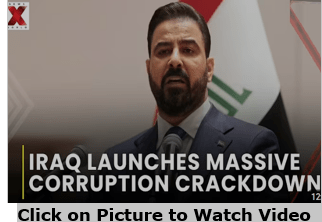
What is the Trump administration doing in the US in these terms of weeding out the corruption it is now forcing Iraq to do the same. No wonder, seems Trump is conducting the same type of campaign in Iraq using al-Zaidi. Could the FBI actually be involved to help? This is tricky to believe since the FBI is an internal US federal crime fighting agency not an international agency this might be an illegal use of federal funds. To me it would make more sense to see the CIA involved or perhaps just FBI trained advisors in Iraq.
If you haven’t already heard there is a sweeping anti-corruption campaign waging in Iraq. Some say is has the US FBI driven all over it? The title to the article is “IRAQ’S ANTI-CORRUPTION OPERATION WIDENS; IS FBI INVOLVED?”
The corruption campaign has targeted dozens of senior officials, but analysts and politicians remain divided over whether the crackdown will ultimately reach the country’s most powerful figures, with some arguing the operation has been driven in part by US pressure and financial oversight. A Rudaw analyst said the Federal Bureau of Investigation could be behind the raids. Boy, oh boy I sure wish they can go after Nouri al-Maliki for his crimes.
Yet another article on this topic is titled “MALIKI ENDORSES ANTI-CORRUPTION CAMPAIGN, URGES GOVERNMENT TO PRESS ON”. is this a joke or what? Of course, Maliki endorses it since his neck is already in the noose and he knows it. How he keeps surviving I don’t know. But Trump did put him in his place during the elections. Was this a first step in more things to come? What else can Maliki do but hope they don’t come after him. But will they? Let’s see what the article says that is most important. I quote from the article- “BAGHDAD — Former Prime Minister Nouri al-Maliki, head of the State of Law Coalition, endorsed the government’s anti-corruption campaign on Sunday, calling it a long-awaited step and urging authorities to continue “until the end.” Really? The end includes Maliki too. Let’s see what happens.
These are hypocritical, useless words by Maliki since he had 8 years to run his own campaign against corruption. Did he? This current situation in Iraq didn’t happen overnight. No wonder why Trump did not want him as the prime minister again. The peanut-head is included up to his neck in the corruption. He stole trillions from Iraq to Iran and for himself when he was in power. Again, he proves he moves with the way the wind is blowing. Of course, he still has high hopes of being prime minister again someday and so right now the wind is blowing in the direction of what al-Zaidi is doing and what the US wants. The overwhelming public support is also against him.
I quote again – “We affirm our support for you in establishing justice. Continue this mission until the end, as it is a step the Iraqi people have long awaited,” he wrote. “We announce our full support for the measures taken by the government, in cooperation with the oversight and judicial authorities, as part of the national campaign to combat corruption and pursue those involved” I totally agree and this should include Maliki himself.
“The coalition said corruption had looted state funds, derailed vital projects, drained the country’s resources and deprived citizens of services, and called on authorities to hold accountable “everyone proven to be involved, without exception or discrimination.”
Yes, this accountability they are talking about should also include Nori al-Maliki for what he stole while prime minister and all his constitutional violations. Where is all this money? They must deal with him now or later. Must Iraq again go through yet another horror story for an election cycle? There are reasons why Iraq is in the mess it is in today and all fingers point to the 8 years of Maliki and his Iranian friends. Remember during his leadership ISIS entered Iraq and he asked Iran to come to help.
Again I quote – “It said the campaign “must continue until it fully achieves its objectives, foremost among them recovering all stolen funds to the state treasury and holding the corrupt accountable under the law, without any leniency, favoritism or political pressure.”
The statements followed a sweeping operation earlier Sunday that Iraqi authorities said led to the arrest of dozens of current and former officials. State media said the arrests were based on confessions by detained Deputy Oil Minister Adnan al-Jumaili, and that the 15 names released so far were the first group in a wider investigation it said involved 47 detainees whose identities would be released later.
Why is Maliki not on the list of those arrested? When will his turn come? Oh….but now he’s Mr Nice guy. He wasn’t like this during his term in office or during the election cycle. Remember he is also after al-Sudani and is trying to get him convicted. Remember al-Sudani will most likely be around for the next election too. Yes, Maliki’s competition.
Then yet another article showing more evidence of just how corrupt this smuggling network of Iraqi funds really is. It is titled “FROM BAGHDAD TO ANKARA: MONEY LAUNDERING NETWORKS FOR CORRUPT OFFICIALS IN IRAQ EXPOSED”. In it a Syrian source revealed on Sunday the existence of money smuggling networks operating between Iraq, Syria, and Turkey.
The source added that “Syrian figures close to Turkish-backed factions, such as the former Hamza Division (which was later integrated into the 76th Division, a unit of the de facto government’s Ministry of Defense), are also involved.” The source explained that “this division oversees the smuggling of funds from Iraq to Syria, and then their transfer to Turkey.”
I will conclude this section by adding a few questions. Wasn’t the idea of taking the dinar off of FOREX and then adding the three zero notes supposed to avoid smuggling of funds to terrorists? I guess it didn’t work and is still not working. Is it time to get off the sole peg to the dollar? How much longer must Iraq suffer with this sole peg? It is time to STOP the flow of US dollars to Iraq! Oh… but they can’t as long as they are on the sole peg to the US dollar. Get it? ☹ What comes first the chicken or the egg?
_________________________________
What’s happening with the 2026 budget?
In the recent article titled “A YEAR WITHOUT A BUDGET… AND THE GOVERNMENT IS BANKING ON COMPREHENSIVE FINANCIAL REFORMS IN 2027” we learn that Iraq WILL NOT have a budget for 2026 and why.
In a new indication of the complexities of the financial and administrative landscape, attention is turning to the 2027 budget after the chances of approving the 2026 budget declined, as a result of the delay in completing the formation of the government and the continued vacancy in a number of key ministries.
On Thursday, Hussein Al-Darraji, a member of the Parliamentary Finance Committee, “ruled out the possibility of the government finalizing the current year’s budget within the required constitutional and administrative timeframes. He emphasized that the remaining time in the year is insufficient to prepare a comprehensive draft and present it to the Council of Representatives for approval.”
Al-Darraji explained that “the government is effectively moving toward preparing the 2027 budget, anticipating that the draft will be sent to Parliament this coming October or November, in preparation for debate and approval prior to the start of the new fiscal year.”
All I can say is I told you so!
This is all exactly what I said in my last Newsletter when I talked about the 2026 budget. If you are still sticking to some notion that the new RV rate is in the budget tables you are a crazy person. Again, I tell you the budgets are calculated on the price of oil not the rate of the dinar, especially since the dinar is still not on FOREX and most likely will not be there even this year. Just look at the facts in today’s Newsletter. How can any sane person believe they would move the dinar back to FOREX in the midst of what is going with the disarming of the militias and the factions inside Iraq and the Iranina conflict. Hey….. I got news for you these are the reasons they took it off of FOREX to begin with. Get it?
Yet another article to show you just how intricate this network of smuggling Iraqi oil revenue funds really is. It is titled “FROM BAGHDAD TO ANKARA: MONEY LAUNDERING NETWORKS FOR CORRUPT OFFICIALS IN IRAQ EXPOSED” A Syrian source revealed on Sunday the existence of money smuggling networks operating between Iraq, Syria, and Turkey.
The source told the Information Agency: “There is a money smuggling network managed by Syrian figures. Smuggled funds are transferred to certain Iraqi political figures accused of corruption, including individuals close to Sarmad al-Khanjar, son of the head of the Sovereignty Alliance, and Mohammed al-Halbousi, head of the Progress Party, as well as other figures associated with Muthanna al-Samarrai.” The source
added that “Syrian figures close to Turkish-backed factions, such as the former Hamza Division (which was later integrated into the 76th Division, a unit of the de facto government’s Ministry of Defense), are also involved.” The source explained that “this division oversees the smuggling of funds from Iraq to Syria, and then their transfer to Turkey.”
He confirmed that “the mastermind behind this network is a Syrian man residing in the Aleppo countryside and close to Turkey, named Abdul Rahman al-Mawali,” explaining that “this network works to smuggle millions of dollars for corrupt figures linked to corruption cases in Iraq, depositing them in Turkish banks under the names of Syrians.”
__________________________________
Can Iraq bypass the Straight of Hormoz and continue exporting oil?
He added, “The dispute over oil exports in 2014 ended after the recent rulings of the Paris Court, and therefore, the oil pipeline running from Kurdistan to Turkey has the capacity to export one million barrels per day.”
He explained that “there are greater advantages to exporting via the pipeline, as transportation costs will be lower than exporting by sea, in addition to generating double the revenues after the rise in oil prices, as well as avoiding the repercussions of recent developments in the region regarding exports by sea.”
In a recent article titled “IRAQ IS CONSIDERING WITHDRAWING FROM OPEC AND IS MOVING TOWARDS INCREASING ITS OIL EXPORTS INDEPENDENTLY” the
Government sources revealed on Wednesday that Iraq is considering a proposal to increase its oil exports outside of OPEC regulations to compensate for the shortfall that occurred during the war. Sources told Shafaq News Agency that “Iraq is studying the repercussions and consequences of exceeding the oil production ceiling set by OPEC due to the oversupply of crude oil and the impact of this on the buying and selling price.”
A question that arises in my mind is always who determines the price of oil on the open market? Then if the US is in-fact now oil independent why does it now create its own oil market and pricing? This could bring down the price of gas at the pumps significantly. Also the gas tax should be abolished in all states as gasolene has become one of these essential items. Try living without it. Do the oil companies have such a hold on the oil market that this is impossible to do?
________________________________________________
Let’s keep our prayers alive. There is a deep spiritual dimension at work today bringing about this reset. I believe we are closer than ever for the dinar to get reinstated. But first things first. Part of the mess in the US must be cleaned up too. Then certain laws in Iraq must be passed. Certainly, reviving the economy to at least 45%-50% non-oil revenues could make a huge difference for Iraq and the IMF. Let’s also let the Abraham Accords take effect as more Arab countries join in. By now everyone should be fully aware of these events that caused delays in the currency reform process. This is not rocket science to understand. We are not in control over these obstacles. We need to STOP spreading rumors and over speculating.
What do you think will happen next? (Leave a comment)
______________________________

________________________________________
Their words not mine…..No Rumors, No Hype, No Opinions ,,,,,
Just the FACTS!

These prophecies are an important tool we have to lead us on our path. They are more important now than ever. They give us the strength, perseverance and hope that a better time is coming and that God’s Hand is at work behind the scenes. If you just take a second even to look around you at these past three election cycles, how can you deny that God is at work? Are you sleeping or what?
It is amazing and there is no other way that these events could have happened the way they turned out. But there is more to come, much, much more, I assure you! Now that God has his biblical David re-elected, we need to pay attention to what He does next.
NOTE: These prophecies just keep getting better and better, giving us HOPE of a brighter future. But the real reason why I listen to them is that we can actually see what God says He will do is taking place right in front of our noses. It is a confirmation to me that God is real and is still with us forever just as in biblical times.
Prophetic Words from the prophets: Julie Green
“Your Election System Is Being Purged And Completely Changed ”
Go to the 15:37 mark in video for the prophecy. From June 20th.
This is a time when more politicians will die. God will take this nation by surprise. The ‘angel of death’ is coming again to those who refuse to obey. Many of the old guard politicians will pass away and there will be younger ones too. It is time for them to pay for their crimes and time for many removals.
I don’t know about you but this prophecy today is shocking to me. The angel of death is coming again just like in biblical times of the exodus? We have been promised these prophetic events many times already in the past. Do you remember? So these events are close at hand. The November elections are only four (4) months away so I don’t think we are going to wait very long for the fulfillment of these prophecies.

About Iraq:
Remember God is the same God in the U.S. as He is in the middle east. So, He is going to fulfill his promises in his past prophetic words for Iraq too. Only the axis of satanic portals must be closed in the middle east first, as they prevailed way too long already. What did God promise us? He promised a big change in the Iraq dinar and the Iranian rial. I know it may seem impossible at this time. Are you listening to me? I presented the Kim Clement prophecies to you. These are VERY powerful words given more than a decade ago. Where is your faith? Why do so many of you doubt God? Just look at how God effected the Iraq elections and when for over 4 months we all though Iraq was going to the dogs again with Nouri al-Maliki, suddenly He switched it all around. Remember the new prime minister Al-Zaidi has until mid-July 2026 to clean up the Iranian militias and factions, not years. This is a condition of his visit to Washington DC. Didn’t you read the news I presented even? Is the glass half empty or half full?
_______________________________________________
“Your Enemies Plans To Depopulate The Earth Is Being Stopped ”
Go to the 14:55 mark in video for the prophecy. From June 21st

PERSPECTIVES ON THE IRAQI DINAR PROPHECIES

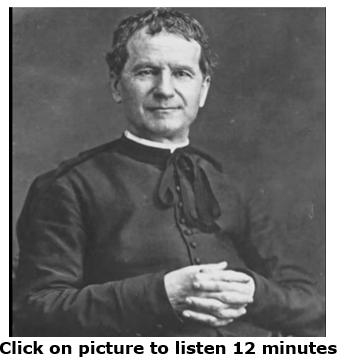
Fr. DON BOSCO EXPOSED THE DARK SECRET BEHIND ISLAM
— And the Truth the World Forgot about the so-called Muslim religion. Fr.Don Bosco, also known as John Bosco, was an Italian Catholic priest and educator, born on August 16, 1815. He founded the Salesian Society in 1859 to help disadvantaged youth, particularly boys, through education and community service. His teachings emphasized lovekindness, and the importance of education for young people, making him a beloved figure in Catholicism and a patron saint of youth. Don Bosco was canonized in 1934.
THE 100 YEAR HISTORY OF ‘WOKENESS’ (IN 15 MINUTES)
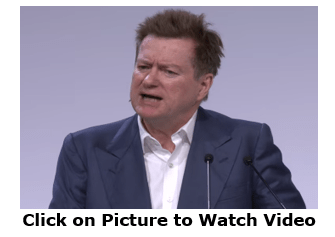
JUSTICE COULD BE ON ITS WAY…..FINALLY. WHO’S NEXT?
This is just one of thousands of the corrupt that need to meet the hand of justice in the US. Do you see what is now going on in Iraq?
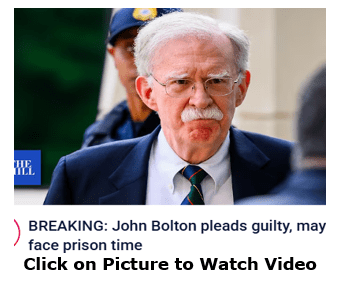
THE ‘COMMI CORRIDOR’
THIS IS NO JOKE. When will the democrats wake up and pull away from these so-called democrat socialists communists who have hijacked the party. They are ruining their party. When will they take back their democrat party?
How much longer is God going to let this continue? Are there lessons to be learned from all this foolishness? Sometimes God let’s this go on so we can later learn who these people are as they expose themselves more and more. Trust me, there is going to be a house-cleaning of these socialists. Do you know what house-cleaning is? It’s taking out the garbage…..

Connecticut’s own DELAURO INSANITY STRIKES AGAIN…..
As soon as the cameras are on her, its show and tell time….I think it’s time for a change in leadership in Connecticut. I’m not sure this woman is mentally stable as she is pandering for the TV cameras. This is why we need TERM LIMITS.
‘SAVE AMERICA ACT’ ABOUT TO CROSS THE FINISH LINE.
Rep. Tom Cole, R-Okla., joins ‘Mornings with Maria’ to discuss the fight to advance President Donald Trump’s SAVE America Act, government funding, defense spending and the risk of an election-year shutdown.
ARE TERROR CELLS ALREADY WORKING IN THE US?
Who are these people planning these terrorist strikes?

WESTERN CULTURE: ARE WE BEING TOLD THE TRUTH OF WHAT’S HAPPENING IN IRAN BY THE MAJOR NEWS MEDIA CHANNELS?
Never-Before-Seen Footage of Massive Anti-Regime Protests Across Iran happening right now. the Islamic Republic has attempted to control the narrative through censorship, intimidation, internet shutdowns, and information warfare. But despite those efforts, Iranians continue to find ways to communicate with the world. Now, with internet access restored, footage that was previously inaccessible is finally emerging.
GLOBALISM MUST DIE. WHY?
This is part of my Awakening Series of presentations. If we investors are truly concerned about when the RV is going to happen on these currencies as part of the reset we should pay attention to what Kokinda is telling us. As I have been telling you it is much deeper. The end result of the process is freeing Iraq and until this is able to happen we will not see what we are looking for. I totally agree this RV should have happened in 2013 and so why not since then even? So, who or what is behind the scenes has a hold on Iraq? Can the Trump administration break his hold?
I want to add that if you remember the banking crash under the housing crisis many more banks would have folded had it not been for the infusion of dark cash into the system from the drug cartels. This legitimized their illegal money that normally would take much longer to launder. I believe there is going to be yet another huge banking crash. Finance experts keep telling this it is inevitable soon. But this time the infusion of cash is going to be more legitimate sources and much of it coming from the currency reset part of the process. Many experts keep telling us the system must first crash then to be rebuilt again under more sound practices to save it. For those of you who are military you might remember how the boot camp initiation first breaks you down, then slowly builds you back up to the image of soldier that they want. This same thing is going to happen to the global banking system. There will have to be a financial war against the globalist who have it too good for all too long. By globalist I mean the IMF, World Bank, Central Banking system, the United Nations, etc. This financial war has already begun and so we see it in the US Federal Reserve system and the changes that are going to take place. Then we see it in the oil industry and this one is about to get hit very hard, as new sources of energy, i.e. mini nuclear reactors, are about to take the scene. Eventually this charter with the Feds will be revoked and the US Treasury will take it over completely again, as it should have been all along.
We should all listen carefully to Kokinda, especially young adults in college or just coming into the workforce. I think it will open your eyes to the real fight that is going on under Trump and who is actually behind most the narratives they are pushing out. As an awakened person can clearly see, this war with Iran was not a usual war. Trump is not empire building. He is crashing the terrorism and drug cartels along with the nuclear ambitions of a terrorist Islamic Jhad state of Iran. I will add this is not an easy task and we can criticize Rubio and Trump. We listen to ignorant news idiots who screw with our rational minds. But we must remember a war is won with battles but it is the overall outcome that matters the most.
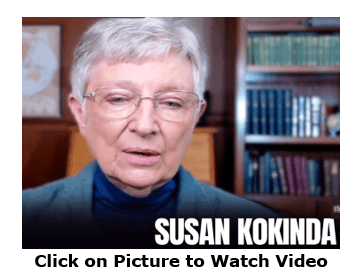
Many of my readers may look at the headline for this video and ask why is globalism so bad. If you are asking this question, you surely do not understand what the global elites are trying to do to the world and the sovereignty of our nations. On the surface we can define ‘globalization as follows: the process by which businesses or other organizations develop international influence or start operating on an international scale.
But this is not what the global elitist have in mind when they use this term. They try to convince you it is. Sounds simple, sounds all good. There is nothing wrong with global trade, but is it fair. There is nothing wrong with immigration but unvetted open borders does not work. Food and manufacturing quotas and mandates do not work. Socialism taking money from those who work hard and earn it, only to give it to the poor that does not work. So, we can see this goes much deeper.
Unfortunately, there is a notorious factor when you take the desires and dreams of the citizens of a nation out of the equation. Their intent is really to build a ‘One World Government’ system owned and operated by the elitist. They decide everything aspect of your life. It is pure imperialism masked by a group of convenient narratives to convince you it is all so good.
Yes, they decide all aspects of what happens in the world as they claim they know best. Well… we don’t have to go much further than to look what happened during the Covid pandemic, the Diversity, Equity and Inclusion (DEA) four years of the Biden administration and then the unchecked massive immigration and open borders. Also, we need to study the Central Banking System, the IMF or the World Bank and who they serve. They do not serve the nations they claim to work for but rather the global banking cartel.

I have created a brand-new “Post RV Workshop” page in the blog. I included my own personal tips on investing post-RV and also organizing and protecting your estate. Here is the LINK. Going forward I will only post new and exciting information and opportunities here on the Latest Newsletter as they come along. Later I will transfer it to the ‘Post RV Workshop’ page in subsequent Newsletters for your future reference.
Just so you know I absolutely DO NOT adhere to high-risk investments where I can lose it all in a flash. Look at it this way – you are going to have all this money from your dinar exchange. Then why blow it! Most of us investors waited decades for this RV to happen and so why would you even think about pissing is all away in some high-risk gamble of an investment. Yes, there are going to be scammers out there but let’s talk about legitimate investment opportunities only. These scammers can suck you dry and there is not a damned thing you can do about it.
Go to a legitimate wealth manager associated with your bank. Let the licensed experts advise you. Please, please stay away from idiots like MarkZ, TNT Tony, Bruce (on the Big Stupid Call), etc. , etc. Go to professionals. It doesn’t mean you have to follow everything they advise you but it’s a great start. Remember they too are selling investment products and get commissions.

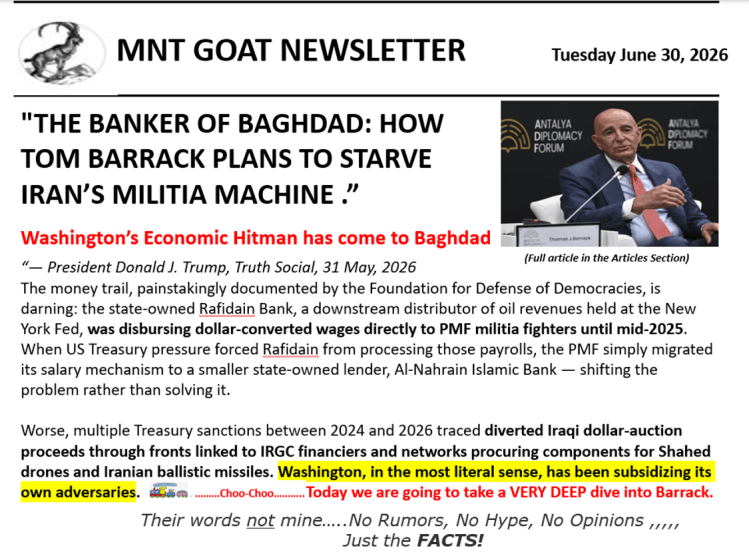
THE BANKER OF BAGHDAD: HOW TOM BARRACK PLANS TO STARVE IRAN’S MILITIA MACHINE
Washington has found a weapon more precise than any cruise missile — the routing number of the Federal Reserve Bank of New York
When President Donald Trump announced on 31 May that Tom Barrack would serve simultaneously as US Ambassador to Ankara, Special Presidential Envoy to Syria, and now Special Presidential Envoy to Iraq, the diplomatic community in Baghdad greeted the news with the mild interest one accords a routine reshuffling. They were wrong. Barrack is not arriving in the Iraqi capital with a briefing book and a handshake. He is arriving with a vault key — and the vault holds Baghdad’s oxygen.
Read this slowly and carefully —–>
Since 2003, Iraq’s hydrocarbon revenues have been deposited into a dedicated account at the Federal Reserve Bank of New York. When Baghdad needs hard currency, the Treasury arranges for physical dollar banknotes — sometimes as much as $13 billion in a single year — to be flown on cargo planes from New Jersey to the Central Bank of Iraq. It is an arrangement born of post-invasion necessity, designed to shield Iraq’s new government from Saddam-era creditors and reparation claims. It has since become something else entirely: the master switch of Iraqi political economy, controlled from lower Manhattan.
In April, the Trump administration quietly demonstrated just how absolute that control is. The Treasury blocked a cargo-plane delivery of nearly $500 million in US banknotes — proceeds from Iraqi oil sales — and simultaneously suspended security cooperation programs with the Iraqi military.
A senior Kurdish official, speaking to Fox News, offered the most frank assessment heard in months: “The dollar pause is the nuclear option in the Treasury Department’s arsenal, and the Americans have always been reluctant to leverage it.” Barrack’s appointment signals that the reluctance is over.
“The balance of power around which the United States operates works best when allies become more self-reliant and share the burden — always within a framework that preserves American influence, stability, and alignment with core US interests.” — Tom Barrack, Special Presidential Envoy for Syria and Iraq, June 2026.
To understand what Barrack is up against, one must first understand the architecture of Iran’s position in Iraq, because it is not a foreign occupation in any conventional sense. It is an inside job. The Popular Mobilization Forces (PMF), an umbrella of some 238,000 fighters drawing $3.6 billion in annual state funding, was enshrined into Iraqi law in 2016 under Law No. 40. Its most powerful components — Kataib Hezbollah, Asa’ib Ahl al-Haq, Harakat Hezbollah al-Nujaba — were IRGC-Quds Force proxy formations long before they were absorbed into the Iraqi state payroll. In Tehran’s strategic calculus, the PMF is the Hezbollah model, replicated on a state budget.
“Tom Barrack, who has done an outstanding job, will advance our strategic cooperation with the Governments of Syria and Iraq. Our relationship with them continues to grow!”
— President Donald J. Trump, Truth Social, 31 May, 2026
The money trail, painstakingly documented by the Foundation for Defense of Democracies, is darning: the state-owned Rafidain Bank, a downstream distributor of oil revenues held at the New York Fed, was disbursing dollar-converted wages directly to PMF militia fighters until mid-2025. When US Treasury pressure forced Rafidain from processing those payrolls, the PMF simply migrated its salary mechanism to a smaller state-owned lender, Al-Nahrain Islamic Bank — shifting the problem rather than solving it.
Worse, multiple Treasury sanctions between 2024 and 2026 traced diverted Iraqi dollar-auction proceeds through fronts linked to IRGC financiers and networks procuring components for Shahed drones and Iranian ballistic missiles. Washington, in the most literal sense, has been subsidizing its own adversaries.
The war on Iran: Through the lenses of pragmatism and realpolitik:
In Tehran, IRGC commanders have understood precisely what is at stake. According to reporting by Critical Threats, senior IRGC officials briefed President Masoud Pezeshkian that US and Israeli military pressure on Iran had paradoxically unified the population behind the regime, framing the entire confrontation, Iraq included, as a civilizational struggle rather than a policy dispute. That framing serves a purpose: it raises the psychological cost of compliance for PMF factions, as it can be recast as ideological betrayal. In this sense, the IRGC’s most effective weapon in Iraq is not a drone — it is a narrative.
“The United States provides Iraq with more than counterterrorism aid annually, yet instead of using these funds to constrain Iran-backed terrorist organizations, the arrangement has at times channeled resources toward the very groups Washington designates as threats. The choice for Baghdad is simple: reclaim sovereignty from IRGC influence, or lose the financial and military support that sustains the current system.” — Washington Institute for Near East Policy, April 2026.
Barrack is no career diplomat, and that is almost certainly the point. He is a private equity dealmaker who described Iraq, in an unguarded moment, as a “failed political experiment” — and Lebanon as “a farce.” Translated into policy, those are not insults but diagnostics: Washington no longer views Iraq as a political negotiating partner to be flattered, but as a malfunctioning security file to be restructured. His instrument of choice is the one he knows best — leverage. And the leverage is staggering. Oil export revenues fund an estimated 90 percent of the Iraqi government budget. A prolonged dollar shortage would not merely inconvenience Baghdad’s ministries; it would ignite inflation, destabilize the Iraqi dinar, and hollow out the very state salaries that keep the PMF nominally loyal to Baghdad rather than exclusively to Tehran.
There are early signs the strategy is drawing blood — or at least a strategic retreat. In late May and early June 2026, Muqtada al-Sadr dissolved his Saraya al-Salam militia, and Asa’ib Ahl al-Haq and Kataib Imam Ali announced they would hand their weapons over to state control. Barrack’s response on X was carefully calibrated — congratulatory but conditional. He told Iraqi Prime Minister Ali Falih al-Zaidi that the move represents the “nascent foundation for renewed Iraqi self-governance” — and then added the pointed rider: “Prime Minister Al Zaidi’s confidence is well-placed, for this marks only the beginning.” The subtext was unmistakable: the dollar tap remains in American hands.
But the hardest cases remain unmoved. Kataib Hezbollah and Harakat Hezbollah al-Nujaba — the formations most directly under IRGC command — have declined to disarm. The Middle East Forum has warned that what appears to be a militia shake-up may in fact be an Iranian adaptation: superficial compliance by manageable factions, preservation of the core command-and-control network. On 17 April, the Treasury designated seven senior commanders across four Iran-backed groups for attacks on US personnel — a signal that financial and kinetic pressure will run in parallel. The US conducted 138 strikes inside Iraq in April alone, killing 73 PMF members.
Tom Barrack enters Iraq carrying three portfolios — Ankara, Damascus, Baghdad — and one overarching thesis: that the architecture of Iranian influence in Iraq runs on American dollars, and that architecture can be disassembled the same way it was built, through the banking system. Lebanon took decades and a catastrophic financial collapse before Hezbollah’s model showed its limits. Iraq, with its oil revenues hostage to a New York account number, may face a compressed timeline. The barista who once claimed he was merely “bringing temperatures down and logic back together” in Kurdistan oil negotiations has a different mandate now. He holds the purse. And in Baghdad, the purse is the power.
*******************************************************************************************
WHY ARE INVESTORS HESITANT? AN EXPERT REVEALS THE OBSTACLES HINDERING THE INVESTMENT BOOM IN IRAQ.
Economic expert Saleh al-Khafaji asserted on Friday (June 26, 2026) that “several key factors are preventing Iraq from achieving a genuine leap in foreign investment, despite the availability of vast and diverse opportunities.”
Speaking to Baghdad Today, al-Khafaji stated, “Iraq boasts promising investment opportunities across multiple sectors, not limited to the energy sector (oil and gas), but extending to housing, industry, and agriculture. Furthermore, its strategic geographic location could contribute to the development of industrial and pharmaceutical sectors capable of exporting to the Middle East.”
He added, “While the initial foundations for attracting investment are present, several factors are discouraging many companies and investors from entering the Iraqi market. These include bureaucratic procedures, the pervasive corruption that hinders any progress in this direction, and the nature of the political disputes and problems that arise periodically.”
Al-Khafaji pointed out that “capital needs a stable and calm environment with all the necessary support, especially regarding the banking infrastructure.” He explained that “the banking environment in Iraq is still lagging behind other countries in terms of developing its operational mechanisms, which requires serious attention to this issue.”
He clarified that “the factors for attracting investment and achieving a real leap in foreign investment are numerous and interconnected. Despite this, some companies and investors have taken the plunge and achieved successes, but these remain contingent on patience and navigating the existing complexities and problems.”
Al-Khafaji emphasized that “the most significant obstacles to investment are corruption and the bureaucratic hurdles imposed by some corrupt individuals within institutions to extort money in exchange for granting approvals.” He noted that “many investors complain about these practices, which necessitates finding mechanisms to facilitate their work and send genuine reassurances.”
The economic expert concluded by stressing that “the volume of foreign investment in Iraq is substantial, but more than 90% of it is concentrated in specific sectors, primarily the energy sector. This necessitates diversifying the investment environment and attracting capital to other sectors.”
********************************************************************************************
CENTRAL BANK OF IRAQ: REINTEGRATION OF DOLLAR-DENOMINATED BANKS IS IN ITS FINAL STAGES
The Central Bank of Iraq confirmed on Monday that the process of reintegrating banks restricted from dealing in US dollars in foreign transfer operations has reached its final stages, while reiterating its commitment to meeting the demand for dollars in accordance with the approved regulations and standards.
The bank stated in a statement received by (Mawazin News) that it continues to implement its reform program in coordination with the relevant international institutions, with the aim of strengthening monetary and financial stability, developing the banking sector and raising its level of integration into the global financial system.
He explained that “the bank has completed the requirements and procedures for reintegrating a number of dollar-denominated banks into foreign currency transfer operations, after they met the reform conditions and regulatory and technical standards, in addition to strengthening anti-money laundering and counter-terrorism financing measures.” He indicated that the process has entered its final stages in preparation for a gradual and organized reintegration. He added that “the bank has also completed the technical and procedural requirements for raising the limits on electronic payment cards for the corporate and business sectors, in a step aimed at expanding digital financial services and enhancing financial inclusion.”
Regarding the currency market, the Central Bank affirmed its commitment to meeting the demand for US dollars and covering the legitimate needs of the public and private sectors, relying on strong foreign reserves and effective monetary tools, while fully adhering to compliance standards and anti-money laundering and counter-terrorism financing measures. The bank stressed that “these measures are part of a comprehensive reform program aimed at strengthening confidence in the Iraqi banking sector, supporting financial and monetary stability, and contributing to achieving sustainable economic development.”
******************************************************************************************
EXPERTS: THE RISE IN THE DOLLAR IS TEMPORARY AND THE MARKET IS ON ITS WAY TO STABILITY.
The parallel market has witnessed a significant rise in the dollar exchange rate in recent days, with the price exceeding 157,000 dinars per 100 dollars, amid anticipation in economic and commercial circles regarding the repercussions of recent regional developments and their impact on the movement of local markets.
This rise comes at a time when economic and financial experts confirm that the factors behind the increase in the dollar’s price are not related to official decisions concerning monetary policy or the exchange rate adopted by the state, but rather are due to a combination of speculation, rumors, and regional developments that have led to an increase in demand for foreign currency in the parallel market.
Experts believe that Iraqi markets are directly affected by political and security events in the region, particularly those related to international trade and energy markets. This, in turn, impacts the behavior of traders, importers, and currency speculators. Financial and banking expert Dr. Mustafa Hantoush stated that the current rise in the dollar exchange rate is primarily due to speculation and rumors circulating about a possible adjustment to the official exchange rate in the near future. Hantoush explained that the circulation of such news, despite its lack of basis in official decisions or indicators, has prompted some traders and speculators to increase their dollar purchases in anticipation of future changes. This has led to increased demand in the parallel market and contributed to rising prices.
He added that these practices have negative repercussions on the national economy, as they lead to higher import costs and are directly reflected in the prices of many basic and consumer goods, in addition to creating a state of anxiety and uncertainty in the markets. He pointed out that any decision related to adjusting the exchange rate, whether raising or lowering it, is part of the state’s monetary policy and is subject to studies and procedures undertaken by the Central Bank of Iraq. He emphasized that official bodies have not yet announced any intention to change the official rate. He noted that the new governor of the Central Bank may consider various options related to managing monetary policy in the future, but talk of an imminent exchange rate adjustment is not based on official data at present.
Hantoush stressed the importance of curbing speculation that affects market stability, noting that the Central Bank had previously issued reassuring messages to the markets in recent days, and is expected to continue taking measures to maintain exchange rate stability and enhance confidence in the financial sector.
For his part, economist Haider Al-Sheikh explained that an important part of the increased demand for the dollar during the recent period is related to the rapid regional developments, and the concerns they raise in the markets regarding trade and supply chains.
The sheikh said that news related to the Strait of Hormuz and maritime traffic in the region prompted some traders to increase demand for the dollar as a precautionary measure, in addition to the impact of rumors circulating about the possibility of adjusting the official exchange rate.
He stressed that monetary policy in Iraq has not changed so far, and that the official price of the Iraqi dinar remains stable, which makes the current rise in the parallel market have a limited impact compared to the basic economic indicators.
He added that the Iraqi market had previously gone through similar circumstances during which it witnessed temporary increases in exchange rates as a result of psychological factors or political developments, before prices returned to their normal levels after fears subsided and conditions stabilized.
The sheikh predicted that the market would witness gradual stabilization in the coming days as the impact of circulating news subsides and demand levels return to normal. To their normal levels.
For his part, economic researcher Ahmed Eid attributed the rise in the dollar exchange rate to a set of overlapping factors, some of which are related to the internal situation and others to regional and international developments.
He explained that geopolitical tensions in the region and concerns about the security of navigation in the Strait of Hormuz are worrying the markets, given the potential impact on Iraqi oil exports and government revenue flows, which constitute the main source of foreign currency in the country.
He pointed out that these concerns prompted a number of traders and importers to increase their dollar holdings in anticipation of any potential disruptions that might affect trade or financial transfers, which led to increased demand within the parallel market.
He added that the continuation of some procedures and restrictions related to foreign transfers makes part of the demand move towards the informal market, which contributes to increasing the gap between the official price and the parallel market price, especially during periods of tension and uncertainty.
Eid also pointed out that recent developments related to Iraq’s inclusion on the Financial Action Task Force (FATF) grey list have raised concerns among some traders regarding transfers and foreign financial transactions, which has indirectly affected market activity.
*********************************************************************************************
AL-ZAYDI IS ACCELERATING THE IMPLEMENTATION OF THE “JUNE AGREEMENT,” BUT CAN HE DISMANTLE THE FACTIONS’ INFLUENCE BEFORE THE WASHINGTON TRIP?
He presented himself as a one-term president to escape the accusations.
Prime Minister Ali al-Zaidi is expected to arrive in Washington in mid-July, having completed a significant portion of the process of removing figures and leaders linked to factions from sensitive positions within the government.
Informed political sources say these measures constitute one of the pillars of a three-pronged plan agreed upon with the United States. This plan is based on parallel tracks that include on-the-ground measures related to weapons, cutting off funding sources, and removing influential figures from positions of power and influence.
In recent weeks, al-Zaidi’s opponents within the Shiite political forces have begun to view his actions as more than just an administrative or security reform campaign; they see it as a project that could lead to what they describe as a “cold coup” against the power structure that emerged after 2003.
This may explain, according to observers, al-Zaidi’s early announcement that he will not run in the upcoming elections—a first for a prime minister since 2003—a move interpreted as an attempt to deflect political suspicion from his decisions and present them as part of a national project rather than an electoral campaign.
The “June Agreement”: A Short Timeframe Before Washington.
Sources speaking to Al-Mada confirm that the Prime Minister is working within a tight timeframe to finalize what has become known in political circles as the “June Agreement,” an understanding that crystallized during the visit of US President Donald Trump’s envoy, Tom Barrack, to Baghdad.
Information indicates that the closed-door meeting between Barrack and al-Zaidi, which lasted four hours, later became the starting point for a series of decisions and changes witnessed in state institutions over the past few weeks. The sources believe that the Prime Minister has limited time to implement the majority of the understandings before his anticipated visit to Washington, where reducing Iranian influence in Iraq tops the US administration’s priorities.
Three Fronts Against Iranian Influence. According to sources close to the government, al-Zaidi has opened three parallel fronts to achieve this goal. The first involves removing influential figures from positions of power within the state, a front that has made tangible progress recently.
The second involves pursuing corruption cases and economic networks believed to have provided funding to political forces and armed factions in recent years.
The third and most sensitive front remains the issue of weapons and their monopoly by the state, a file that continues to move at a slower pace than the others.
Sources say the government has achieved relative success in removing senior officials whose dismissal is believed to be related to their ties with factions, their proximity to Iranian influence circles, or their failure to curb the expansion of this influence within state institutions.
It appears that al-Zaydi is managing this file according to a policy of “rotation and appeasement” rather than outright exclusion, despite a near-universal conviction within political circles that the forces of the “Coordination Framework” are compelled to adapt to these measures.
In this context, Hussam al-Hassani, spokesperson for the Hikma Movement, dismisses the notion that the recent dismissals and changes are separate from the government’s priorities, considering them consistent with the project of monopolizing weapons by the state and economic reforms. Within a few weeks, the Prime Minister was able to make changes in some of the most sensitive positions in the country, including the National Security Service and the National Security Advisory.
The excluded figures did not disappear entirely from the scene; rather, some were transferred to less influential positions or assigned advisory roles, thus maintaining political balances and mitigating potential backlash.
Al-Zaidi also succeeded in implementing a significant change within the Central Bank, which is considered a key component of the financial and economic reform plan linked to Iraqi-American understandings. Political circles believe these measures will have repercussions on complex financial and economic networks, extending their influence to political forces and armed factions.
In this context, Central Bank Governor Ali al-Alaq was transferred to the position of financial advisor to the government, a move seen as a clear example of the “rotation” policy adopted by the Prime Minister in managing changes.
Is the Popular Mobilization Forces (PMF) next in line? The most sensitive position, however, remains undecided: the chairmanship of the PMF. Faleh al-Fayyad, one of the longest-serving officials to have retained his post since 2003, may face a scenario similar to that of other officials, especially since the issue of his retirement has resurfaced.
There are indications that he might be transferred to an advisory position, similar to what happened with Qasim al-Araji after leaving the National Security Advisory, or Abu Ali al-Basri after leaving the head of the National Security Service.
The position of head of the Popular Mobilization Forces (PMF) is one of the most problematic in the political system. It previously caused a major crisis between Fayyad and former Prime Minister Haider al-Abadi, which ended with Fayyad siding with Abadi’s opponents during the 2018 elections. This stemmed from Fayyad’s brief removal from his post, to which he was later reinstated—a move many considered a contributing factor to Abadi’s failure to secure a second term.
(Mnt Goat: So we can see that these Iranian militias have direct influence on the elections. It all comes out sooner or later.)
The scenario was repeated, albeit in a different form, recently when Fayyad distanced himself from former Prime Minister Mohammed Shia al-Sudani after sensing that his position might be targeted for future changes. He later allied with Ahmed al-Asadi, the former Minister of Labor, in an attempt to form a new political bloc, but this has not yet achieved the desired results due to its limited size and the lack of complete agreement with Nouri al-Maliki.
2.Combating Corruption
The second area where the government appears to have made progress is combating corruption, which it considers the government’s economic weapon . This approach grants al-Zaydi two objectives simultaneously: achieving economic reform on the one hand, and dismantling the networks of vested interests linking certain influential figures to powerful parties and factions on the other.
Al-Mada had previously revealed estimates suggesting that approximately $350 billion had been amassed by groups dubbed “corruption kingpins,” with a list containing at least 50 names possessing vast sums of money both inside and outside Iraq, including luxury real estate and diverse financial assets. Precise figures regarding the funds recovered by the government are not yet available, despite reports of billions of dinars being reclaimed from individuals connected to the oil, electricity, and port sectors. Former Electricity Minister Luay al-Khatib believes that these developments represent a bold step targeting an issue long avoided by political forces: economic reform.
Government spokesman Haider al-Aboudi affirmed that the Prime Minister views corruption as the most serious threat facing the country and the political system. He indicated that all previous contracts will be subject to auditing and review, and that several projects have been halted despite some having received more than 50 percent of their funding.
Al-Aboudi stressed that the anti-corruption campaign “will not stop and will target all those accused, regardless of their positions or titles.”
3.Weapons: The Most Difficult Issue
. Meanwhile, the issue of weapons remains the most complex aspect of the plan to reduce Iranian influence.
With the exception of the Peace Brigades (Saraya al-Salam), affiliated with the Sadrist Movement, which previously announced the surrender of its weapons and its voluntary integration into the Popular Mobilization Forces (PMF), no other armed group has taken any practical or public steps in this direction.
Although Asa’ib Ahl al-Haq and Kata’ib al-Imam Ali have declared their readiness to participate in the plan, implementation remains limited, while approximately ten other factions continue to reject the project.
The government believes this issue will be nearing its end by next September, coinciding with the withdrawal of international coalition forces, as the justifications for retaining weapons will significantly diminish. However, influential factions, including Kataib Hezbollah, do not share this assessment.
4.The Cabinet: The Fourth Front.
But there is a fourth issue, no less important than the previous ones, which is the completion of the cabinet. This issue is directly linked to the future presence of factions and parties close to Iran in government institutions.
The cabinet’s completion has been stalled for over a month due to what political circles describe as an “American veto” on figures associated with the factions assuming ministerial portfolios or influential positions. Furthermore, this issue is closely tied to the process of disarming militias and the accompanying internal and external understandings and tensions.
Sources speaking to Al-Mada indicate that a crucial session is likely to be held on July 11 to finalize the cabinet formation and fill the nine vacant ministerial positions. Expectations are that some portfolios—estimated at between three and four—that were originally allocated to factions will be redistributed to other political parties. Compromise formulas, including splitting some ministries, are being considered to address objections and create a new balance of power.
The sources confirm that Prime Minister Ali al-Zaidi is personally managing this process, amidst escalating disputes between the State of Law Coalition and the team of former Prime Minister Mohammed Shia al-Sudani regarding quotas and nominees for the remaining posts.
Why did al-Zaidi announce his withdrawal from the elections?
(Mnt Goat: they are talking about the next future election cycle)
These issues are further complicated by accusations that the Prime Minister is favoring certain parties over others. Some of his opponents believe that the campaigns to pursue “corruption kingpins” have focused on figures close to the “Progress” party, led by Mohammed al-Halbousi, an ally of al-Sudani, as was the case with Alaa al-Jubouri and Adnan al-Jumaili.
Those holding this view argue that it might suggest an undeclared alignment with al-Halbousi’s opponents, most notably Nouri al-Maliki. To preempt these accusations, the government spokesperson, in an unusual move, announced that Ali al-Zaidi would not be running in the upcoming elections and would not be establishing a political party.
The announcement came less than 40 days after al-Zaidi assumed power, making him the first prime minister since 2003 to so early decide his stance on the upcoming elections. This was an attempt to convince his opponents that his decisions were not driven by calculations of power resurgence or the pursuit of another term.
The government spokesperson also defended the recent wave of changes affecting sensitive security and administrative institutions, emphasizing that they were not acts of punishment or political exclusion, nor did they reflect any shortcomings on the part of the officials affected. Rather, they were part of a government vision aimed at rebuilding, empowering, and enhancing the efficiency of institutions, in line with the priorities of the new phase.
Al-Zaidi has thus freed himself from the calculations of the elections.
Academic and political researcher Ghalib al-Da’mi believes that al-Zaidi’s announcement of his non-participation in the elections carries an important political message.
He told Al-Mada that the prime minister reached his position without a political bloc and without running in the elections, and therefore understands the nature of the political game very well.
He adds that al-Zaydi wants to tell political forces that he has freed himself from the calculations of the upcoming elections, and that he is working on building the state, combating corruption, and controlling weapons, without needing to appease any party in the hope of gaining their support in the future.
Al-Da’mi believes this message was long overdue, because one of the reasons for the failure of previous governments was the prime ministers’ pursuit of renewed terms, which led them to engage in constant conflicts and compromises with various political forces.
*******************************************************************************************
THE TRUMP ADMINISTRATION SENDS A DECISIVE MESSAGE TO BAGHDAD: THE ERA OF AMBIGUITY REGARDING IRAN IS OVER.
The administration of US President Donald Trump is no longer willing to accept the ambiguity of Iraq’s position through its rapprochement with Iran, as it believes that Baghdad should turn westward instead of eastward, and strengthen its friendship with the United States and the surrounding Arab countries.
Washington now expects changes in government that will strengthen Iraqi sovereignty, noting that Prime Minister Ali al-Zaidi’s visit to Washington will be scrutinized, but that Americans and Iraqis must be patient and refrain from making judgments at the moment.
The Middle East Institute , in a report entitled “New Relations Between the United States and Iraq?”, reviewed the end of the tug-of-war and the formation of al-Zaidi’s government, the congratulations he received from President Trump, and the invitation to visit Washington in the middle of next month. The American Institute report, translated by Shafaq News Agency, stated that the US administration seems to have high expectations of al-Zaidi, but these expectations should be tempered.
He noted that his government program was ambitious, with the first part of the program addressing state control over weapons and the application of the rule of law, while the second part addressed foreign policy, emphasizing the need to strengthen relations with the Gulf states. He expressed his belief that Washington may have embraced al-Zaidi wholeheartedly because he is a practical businessman who understands how to make deals.
He explained that the American experience with those who held previous positions was disappointing, indicating that despite American efforts to pull Iraq away from Iran, Shiite leaders remained under Tehran’s influence, while the power of Iranian-backed militias increased and they became bolder, he said.
The report went on to say that “repeated US demands to control, disarm, or disband the militias have not been effective,” adding that “the US now expects the new prime minister, who comes relatively from outside the system, may perform better.”
He pointed out that the formation of al-Zaydi’s government has not yet been completed, explaining that it is likely that al-Zaydi will use the remaining ministerial positions, especially the Interior and Defense ministries, to appease his opponents within the coordination framework, as there will be a political cost to these concessions.
He considered that the outcome of the “American-Israeli” war against Iran, and the outcome of the American-Iranian negotiations, would have a potentially significant impact on events in Iraq, adding that if Iran believed it had won the war, and if its allies shared this belief, then Tehran would be more determined to hold on to its assets in Iraq, and would not give up its influence in what it considers its vital area of interest, nor would it easily give up the large political and economic rewards it has obtained in Iraq over the course of two decades, and for this reason, the Popular Mobilization Forces factions may refuse to give up their weapons.
The report argued that the United States and Iraq need to agree on indicators of progress in achieving key objectives and address obstacles together, with the priority remaining the disbanding of militias, which is the most complex task. It noted that the decision by the Supreme Judicial Council, headed by Judge Faiq Zaidan, to expand the scope of the anti-terrorism law to include “any person who manufactures, uses, or possesses drones used for unlawful purposes” represents a step in the right direction and an indication of how al-Zaidi will use it to control the militias, although the real proof will be in the implementation.
According to the report, the United States must offer incentives to groups that disband their military wings, surrender weapons to the government, and transform into political parties as defined in the Constitution. These incentives could include removing sanctions or other designations that restrict their activities and prevent them from engaging in formal politics. However, there must also be direct punitive measures against groups and individuals who refuse the offer of disarmament and remain outside the control of the government.
The report concluded by noting that successive Iraqi governments have declared their desire to establish good relations with both the United States and Iran adding that in practice, this has meant leaning towards Iran, an ambiguity that is no longer acceptable to the Trump administration.
********************************************************************************************
PRIME MINISTER’S ADVISOR: COMMITTEE FORMED TO PREPARE THE COUNTRY FOR THE TRANSITION TO A PERFORMANCE AND PROGRAM BUDGET
The Prime Minister’s financial advisor, Mazhar Muhammad Salih, announced the formation of a committee to prepare the country for the transition to a performance and program budget, stressing that this approach represents one of the modern methods in managing public spending and evaluating its results.
Saleh explained in a press statement that program budgeting is one of the modern policies in managing public budgets, and it differs from traditional budgets that focus on controlling spending, as it depends on measuring the extent to which spending achieves the set goals and evaluating its actual results.
He explained that this type of budget does not eliminate the traditional line item budget, but rather keeps it as an essential part of the financial system, noting that spending is done within specific programs that include goals, human resources and executive bodies, with a comprehensive evaluation of the results after implementation.
Saleh added that programs such as combating poverty or developing the kindergarten sector require coordination between several government agencies, as well as providing resources and clear time plans, so that their success in achieving the goals can be measured later instead of being satisfied with spending procedures.
He pointed out that the global trend today is based on the principle of efficiency in public spending and linking spending to the benefit achieved, explaining that this is based on calculating the cost of programs against the resulting economic and social benefits.
(Mnt Goat: You could have fooled me with all the waste and corruption going on all over the world in most industrialized countries. Just look at what the US uncovered in the last year and a half alone. Does it use ‘program budgeting’?)
He pointed out that the committee formed recommended expanding the cost accounting departments in Iraqi universities to train specialized personnel, stressing that implementing program and performance budgeting requires government support, qualified young personnel, and effective use of information technology.
Saleh stressed that the success of the project requires a high-level executive will and central coordination between the Ministries of Finance and Planning and the rest of the state institutions, warning that relying on traditional methods may hinder the achievement of its goals.
He pointed out that the new system will be implemented gradually through what is known as the “shadow budget,” as a tool to measure the level of progress, indicating that priority will be given to the investment budget due to the difficulty of applying the system to the large operational budget at the present stage.
******************************************************************************************
WILL IRAN SUCCEED IN MAINTAINING ITS INFLUENCE WITHIN IRAQ?
A growing debate is taking place about the future of Iranian influence in Iraq in light of regional transformations and increasing international pressure. While one side sees Tehran’s influence continuing through its allies, others believe that Washington is capable of reducing this influence in the next phase, according to the Asharq Al-Awsat newspaper .
The newspaper, in a report seen by Al-Sa’a Network, quoted its sources as saying that “the basis of the partnership (between Washington and Baghdad) that is beneficial to both parties is that the state deals with the challenge of the militias and confines their weapons to the hands of the state,” indicating that “this is the threshold that must be achieved and overcome in order for this partnership to be realized .”
She added that “Iran has proven over the past two decades that it knows exactly what it wants from Iraq, unlike the American confusion, and I think that will continue even after the signing of the American-Iranian agreement .”
She noted that “Iran may adopt a different approach after the agreement, one that is not entirely public and does not anger Washington, but it will maintain its usual influence in Iraq,” explaining that “Tehran remains firmly in control of Iraqi politics through the group of figures and parties loyal to it .”
The report noted that “the threat of economic sanctions alone is enough to push Shiite leaders and political parties in particular to reconsider the risks of the continuation and growth of Iranian influence in Iraq .”
He added that “Iraq’s oil revenues go to the Federal Reserve (the US central bank) after the sale, before the latter returns them to Iraqi banks
*********************************************************************************************
FOLLOWING THE SELECTION OF THE PRIME MINISTER, AMERICAN INTERVENTIONS ARE WRITING A NEW CHAPTER OF DOMINANCE OVER IRAQI DECISION-MAKING.
A new chapter is being written in the saga of American intervention in Iraq through its proxies and control over political, security, and financial affairs, amidst the acquiescence of some political blocs who believe that implementing America’s agendas guarantees their interests and personal gains. Conversely, voices are rising in opposition to this intervention, which has led to the erosion of national sovereignty and deprived the country of financial independence.
Currently, the country is in the process of forming a government following the appointment of Ali al-Zaidi as Prime Minister. Parliament failed in its first session to approve nine ministerial nominees, and observers asserted that this failure stems from American interference in this process.
The American website “Al-Monitor” announced the nomination of Peter Shea to temporarily head the US mission in Baghdad, replacing Joshua Harris. The same website warned of the danger of the envoy’s interference in the remaining ministries, particularly those related to security. Regarding this issue, former MP Razzaq al-Haidari considered the US administration’s appointment of a candidate to temporarily head the US mission in Baghdad an intervention in Iraqi affairs, emphasizing that this step represents a continuation of Washington’s dominance over the country. Al-Haidari told Al-Maalouma News Agency that “the appointment of a new head of the US mission in Iraq is part of the continued American hegemony over the country,” warning of “the danger of interference in the government formation process.”
He added that “Washington, through its new envoy, will pressure Prime Minister Ali Mohsen al-Ahmad to choose ministers who will implement its agenda, especially in the security ministries, at a time when Iraq is suffering from security threats represented by terrorism, the dangerous security developments in Syria, and the increasing regional tensions in the Middle East.” Al-Haidari called on “the Iraqi Prime Minister not to succumb to external pressures and to keep them out of the ministerial appointments, and to bring forward candidates who will work on developing national plans that serve the country and not serve foreign interests.”
Protecting National Decision- Making: MP Faleh al-Khazali warned of the danger of foreign interference in Iraqi affairs, stressing the need for national political decisions to remain independent and free from any external dictates. Al-Khazali told Al-Maalouma that “Iraqi political decisions must be made within Iraqi constitutional institutions and must not be subject to any external pressures or dictates.”
He added that “preserving national sovereignty requires strengthening the independence of political, economic, and security decision-making, in line with Iraq’s supreme interests.” He pointed out that “national political forces and the government bear the responsibility of protecting national decision-making from any interference that might affect the course of the state and its institutions,” emphasizing that “Iraq possesses the capabilities and resources to make its decisions independently, in a way that achieves stability and safeguards the interests of the Iraqi people.” The issue of foreign interference in the government formation process remains a true test for Prime Minister Ali al-Zubaidi in preventing such interference and selecting suitable figures who align with national interests, not foreign ones.
*********************************************************************************************
THE GOVERNMENT SETTLES THE DEBATE OVER THE DOLLAR EXCHANGE RATE.
Government spokesman Haider al-Aboudi confirmed that neither the government nor the central bank intends to change the exchange rate of the dollar against the Iraqi dinar .
Al-Aboudi said in a televised interview followed by Al-Sa’a Network that “there is no intention to raise the exchange rate of the dollar against the Iraqi dinar,” indicating that “the monetary and financial policy between the government and the Central Bank is proceeding in an integrated and regular manner .”
He pointed out that “the printing of currency is stored in all banks of the world, and it acquires its value when it enters circulation,” stressing that “all salaries are guaranteed .”
Regarding the amendment of the salary scale, Al-Aboudi explained: “In order for this matter to be achieved, the Iraqi government alone cannot proceed with amending the salary scale unless the Iraqi state, with its executive and legislative authority, is able to amend no less than 30 laws within the constitution .”
He added that “the existing laws on which the salaries of state employees varied are due to the existence of laws that grant special privileges to certain segments
*********************************************************************************************
AL-NASSIRI: THE RISE IN THE DOLLAR EXCHANGE RATE IN THE PARALLEL MARKET IS TEMPORARY, AND MAINTAINING THE GENERAL PRICE LEVEL IS UNDER CONTROL.
Economic and banking advisor Samir Al-Nassiri stated on Thursday that the rise in the exchange rate of the US dollar in the parallel market is temporary and is due to rumors and speculation in the markets, stressing that there is no risk of an increase in the costs of importing basic commodities.
Al-Nassiri explained to “Al-Eqtisad News” that only 5% of the dollars that the Central Bank sells daily to travelers are traded in the black market, and the remainder falls into the hands of speculators who manipulate prices.
He explained that the remaining 95% is secured by the Central Bank at the official rate for traders to import from abroad, and therefore there is no risk of an increase in the prices of imported basic commodities. The overall level of food and basic commodities is under control.
According to Al-Nassiri, “The fluctuation in the dollar exchange rate is due to speculators and economic variables because of the closure of the Strait of Hormuz and the effects of the regional war.”
He stressed that this situation is temporary, and the exchange rate will gradually stabilize as conditions in the region calm down, the Strait of Hormuz is opened, and oil exports resume in the planned export quantities.
*********************************************************************************************
WASHINGTON SENDS A MESSAGE TO BAGHDAD REGARDING THE “POPULAR MOBILIZATION FORCES”
The US State Department published on Wednesday statements by its Secretary of State, Marco Rubio, which included a “message” to the Iraqi government, according to the Jerusalem Post.
According to what was translated by “Baghdad Today” and followed up by “Roj News”, Rubio’s statements, which he made yesterday and published today as an official statement, confirmed that “the factions in Iraq that launch drones and missiles are preventing the end of hostilities and conflict in the region and threaten its stability and will continue to do so unless they are dealt with.”
He added that “this issue will be dealt with in due course and will be raised in the negotiations currently underway,” while the US State Department stressed in its statement that its government is working to achieve stability in the region by eliminating the factors that affect it.
The newspaper, for its part, confirmed that Rubio’s statements represent “a clear and important message to the Iraqi government about Washington’s desire to control the factions in Iraq,” explaining that the US administration had already begun a “campaign” to target the factions and their leaders through economic sanctions and placement on terrorism lists.
It is worth noting that Rubio’s statements coincided with the Iraqi government’s calls to restrict weapons to the state, a matter emphasized by US President’s envoy Tom Barrack during his visit to Baghdad and his meeting with Prime Minister Ali Faleh al-Zaidi.
********************************************************************************************
SALEH: IRAQ NEEDS A COMPREHENSIVE REVOLUTION IN ECONOMIC DIVERSIFICATION.
The government believes that increasing the production and export capacities of oil and oil derivatives is a priority at the present stage, which will enhance public revenues and restore to Iraq part of its share in global markets.
The Prime Minister’s financial advisor, Mazhar Muhammad Salih, confirmed on Wednesday that diversifying the country’s sources of financial funding has become “an unavoidable necessity” after the Hormuz shock and the resulting financial conditions in the country, given that Iraq relies almost entirely on revenues from exported crude oil.
Saleh said that the importance of parallel work lies in raising the export capacities of crude oil and oil derivatives in order to restore Iraq’s rightful place in the global market.
In reviewing the current production situation, Saleh explained that Iraq currently produces about 4 million barrels per day, of which 1 million barrels are directed to meet local needs and activities, while the remaining 3 million barrels are exported.
He pointed out that “this figure does not reflect the true weight of the country,” indicating that “Iraq’s supposed share in the international market should not be less than 7 million barrels per day or more.”
He also pointed out that “the successive wars, conflicts and crises that have plagued Iraq since the 1980s have caused its historical oil shares to go to other countries.”
The financial advisor added that “the current stability gives Iraq a favorable and available opportunity today to rearrange its economic papers, by raising production and export capacities, with a focus on expanding the export of high value-added oil derivatives instead of relying entirely on crude oil.”
Saleh concluded his remarks by emphasizing the government’s vision of achieving a “ comprehensive diversification revolution ” covering the oil, industrial and agricultural sectors alike, ensuring the building of a resilient economy capable of withstanding price fluctuations in global markets and achieving sustainable development.
*********************************************************************************************
IRAQ IS CONSIDERING WITHDRAWING FROM OPEC AND IS MOVING TOWARDS INCREASING ITS OIL EXPORTS INDEPENDENTLY.
Government sources revealed on Wednesday that Iraq is considering a proposal to increase its oil exports outside of OPEC regulations to compensate for the shortfall that occurred during the war.
Sources told Shafaq News Agency that “Iraq is studying the repercussions and consequences of exceeding the oil production ceiling set by OPEC due to the oversupply of crude oil and the impact of this on the buying and selling price.”
She added, “If OPEC rejects Iraq’s proposals to raise the production ceiling, similar to some of its member states, it may resort to withdrawing from OPEC, thus providing it with sufficient space to raise the production and marketing ceiling.”
She added that “the proposal to increase production or withdraw from OPEC may be realized after Prime Minister Ali al-Zaidi’s visit to Washington in the middle of next month.”
Earlier today, Basra Oil Company directed the suspension of pumping and reduction of production at the West Qurna/2 field, due to the continued state of “force majeure “.
A document issued by the company, which was received by Shafaq News Agency, stated that due to the continued state of force majeure in the region and the unavailability of tankers, please stop pumping by (100%) and reduce production to (50) thousand barrels and store it in your tanks, starting from 12 pm yesterday, corresponding to June 23rd .
This comes at a time when Iraqi oil prices recorded a sharp decline during trading on Wednesday, as Basra Heavy crude fell by 4.09% to $45.78 per barrel, while Basra Medium crude fell by 3.91% to $47.88, coinciding with a decline in crude prices in global markets . Brent crude fell 0.71% to $76.53 a barrel, while US West Texas Intermediate crude fell by the same percentage to $72.69 a barrel, and UAE Murban crude dropped 1.64% to $69.63 .
An official source in the state-owned North Oil Company revealed earlier on Wednesday that the preparation and readiness of the Iraqi-Turkish pipeline extending from Kirkuk to the Turkish port of Ceyhan has been completed, confirming that trial pumping through the pipeline will begin within two weeks in preparation for resuming exports in a stable manner .
Iraq had asked Turkey to extend the Kirkuk-Ceyhan oil pipeline agreement for at least a year, in a move aimed at giving both sides more time to negotiate a new agreement regulating oil exports through this vital route.
Iran had lifted the de facto blockade of the strait last week after agreeing with the United States to extend the ceasefire for 60 days, before the Iranian Revolutionary Guard announced on Saturday that it was closing the waterway again in response to Israeli strikes in Lebanon, while the US military confirmed that commercial ships continued to operate.
*********************************************************************************************
IRAQ-U.S. TIES TO SHIFT FROM MILITARY COOPERATION TO ECONOMIC PARTNERSHIP, PM SAYS
Al-Zaidi added that Iraq’s relationship with the United States is entering a new phase, saying, “The relationship with the United States will shift from a military one to an economic partnership.”
Iraqi Prime Minister Ali al-Zaidi said on Wednesday that relations between Iraq and the United States are set to transition from a military-focused partnership to one centered on economic cooperation, while emphasizing his government’s commitment to combating corruption and strengthening state authority.
Speaking to IMI, al-Zaidi said that fighting corruption remains his top priority.
“Combating corruption is at the top of my priorities,” the prime minister stated.
Al-Zaidi added that Iraq’s relationship with the United States is entering a new phase, saying, “The relationship with the United States will shift from a military one to an economic partnership.”
He also noted progress in efforts to consolidate state control over weapons, stating that “most factions have already begun handing over their weapons to the state.”
Addressing Iraq’s energy sector, al-Zaidi said Baghdad wants the Organization of the Petroleum Exporting Countries to increase Iraq’s oil production quota in line with the country’s production capabilities and population size.
“We want OPEC to increase our oil production in line with Iraq’s oil capabilities and population size,” he said.
The prime minister further stated that the complete withdrawal of U.S. forces from Iraq would eliminate the rationale for armed resistance groups operating in the country.
“After the withdrawal of all U.S. forces, there will be no justification or need for any resistance in Iraq,” al-Zaidi said.
Al-Zaidi is scheduled to visit Washington, D.C. in mid-July for talks with U.S. President Donald Trump at the White House. The visit will mark his first official trip abroad since assuming office in May.
*********************************************************************************************
A YEAR WITHOUT A BUDGET… AND THE GOVERNMENT IS BANKING ON COMPREHENSIVE FINANCIAL REFORMS IN 2027.
In a new indication of the complexities of the financial and administrative landscape, attention is turning to the 2027 budget after the chances of approving the 2026 budget declined, as a result of the delay in completing the formation of the government and the continued vacancy in a number of key ministries.
On Thursday, Hussein Al-Darraji, a member of the Parliamentary Finance Committee, ruled out the possibility of the government finalizing the current year’s budget within the required constitutional and administrative timeframes. He emphasized that the remaining time in the year is insufficient to prepare a comprehensive draft and present it to the Council of Representatives for approval.
Al-Darraji explained that the government is effectively moving toward preparing the 2027 budget, anticipating that the draft will be sent to Parliament this coming October or November, in preparation for debate and approval prior to the start of the new fiscal year.
He noted that the upcoming budget would undergo fundamental changes regarding the philosophy of its preparation and the mechanisms for organizing its financial schedules. Additionally, spending priorities will be re-evaluated and the actual needs of government institutions assessed to align with current economic and financial conditions. This approach comes as the state continues to rely on the “1/12” provisional spending mechanism—authorized by current financial management laws—to cover employee salaries and essential operating expenses. This reliance follows the failure to pass the 2026 budget, a process that has since become complicated by accounting and technical challenges.
According to the Finance Committee, there is a preliminary consensus between Parliament and the government of Prime Minister Ali Al-Zaidi to focus efforts on drafting a new budget with a distinct economic vision. This new budget aims to rectify past imbalances and reduce the fiscal deficit, while ensuring readiness before the start of the upcoming fiscal year.
This delay is attributed to a range of political and administrative factors—most notably the recent election period and ongoing disputes regarding the completion of the current cabinet—which have hindered the ability of executive institutions to prepare a comprehensive draft budget during the first half of the year.
*********************************************************************************************
HEAD OF MONEY CHANGERS SYNDICATE: RECENT CENTRAL BANK CHANGES A POSITIVE STEP TO ENHANCE FINANCIAL STABILITY
The head of the Exchange and Mediation Syndicate, Diaa Al-Tai, confirmed that the recent changes made by the Central Bank of Iraq represent a positive step in the path of developing the financial sector, praising the selection of Nizar Nasser to assume his new duties due to his experience and competence in the field of combating money laundering and the financing of terrorism.
Al-Ta’i told “Al-Jarida” that Nizar Nasser’s expertise is in line with the requirements of the current stage and the challenges facing the financial sector, which contributes to enhancing compliance with international standards and consolidating financial stability in the country.
He added that the previous changes in the Directorate of Supervision of Non-Bank Financial Institutions, which included the appointment of Dr. Dirgham and his assistant Zaid Hamid, proved successful thanks to their high professionalism and extensive experience in following up on the affairs of exchange companies and handling administrative and supervisory files.
He pointed out that these measures contributed to accelerating the completion of many pending files, as well as strengthening communication and coordination channels between exchange companies and the Central Bank of Iraq.
Al-Ta’i reiterated the Money Exchange and Mediation Syndicate’s support for all steps and reforms aimed at developing the financial sector and consolidating the principles of oversight and compliance, thereby enhancing the stability of the financial market and raising the level of confidence in financial institutions operating in Iraq.
********************************************************************************************
SALMANIYA CURRENCY MARKET: RUMORS BEHIND DOLLAR FLUCTUATIONS… WE EXPECT IT TO DECLINE THIS WEEK
The spokesman for the dollar market in Sulaymaniyah, Jabbar Goran, confirmed on Saturday that the fluctuation in the value of the Iraqi dinar against the dollar during the past few days was a result of the circulation of incorrect rumors, while he expected the exchange rate of the dinar to improve during the current week.
Goran told Shafaq News Agency that “the instability in the exchange rate of the dinar against the dollar was due to the spread of some inaccurate rumors, but the Central Bank of Iraq denied all the news circulating about making any change in the exchange rate of the dinar.”
*********************************************************************************************
THE COFFERS ARE EMPTY AND THE 2026 BUDGET IS BURIED… WILL IRAQIS ENTER A PHASE OF “TIGHTENING THEIR BELTS”?
Jamal Kojar, a member of the Parliamentary Finance Committee, confirmed on Saturday that the government’s continued operation without a general budget effectively transforms it into a “caretaker government.” He also revealed that the current government has shelved the 2026 budget and is moving towards a radical change in the structure of the 2027 budget.
Kojar told Al-Maalouma that “the government now lacks the necessary legal cover for investment and development spending,” noting that “current government spending is limited exclusively to the operational budget (salaries and daily expenses), based on the (1/12) mechanism.”
Kojar added that “the government’s talk of sending the draft 2027 budget to Parliament next October means, practically and theoretically, the end and closure of the 2026 budget file without its approval,” pointing out that “if the government had intended to send a budget for the current year, it would have done so months ago.”
In a highly anticipated strategic shift, the MP revealed a “comprehensive change in the state’s financial philosophy,” explaining that “the upcoming budget (2027) will most likely be a program and performance-based budget, not a traditional line-item budget, which will completely transform the country’s financial management.”
Kujer urged the state’s executive branch to “adhere to the provisions of the Financial Management Law,” emphasizing the necessity of “finalizing the draft 2027 budget and submitting it to Parliament before mid-October, to ensure legislators have sufficient time to review and approve it, so that it becomes effective at the start of the new year.”
The Finance Committee member warned of “the severe consequences of the absence of an investment budget on the public and markets,” noting that “the failure to submit the 2026 budget resulted in the freezing of financial entitlements for broad segments of the population.” He pointed out that “this freeze has cast a heavy shadow on the business sector, particularly contractors and owners of investment projects, exacerbating the crisis of stalled projects and halting development in the provinces.”
********************************************************************************************
MALIKI ENDORSES ANTI-CORRUPTION CAMPAIGN, URGES GOVERNMENT TO PRESS ON
2026-06-28
BAGHDAD — Former Prime Minister Nouri al-Maliki, head of the State of Law Coalition, endorsed the government’s anti-corruption campaign on Sunday, calling it a long-awaited step and urging authorities to continue “until the end.” In a message to Prime Minister Ali al-Zaidi and the judiciary, Maliki congratulated them on launching the campaign to pursue what he called “the corrupt who tampered with the Iraqi people’s money.”
(Mnt Goat: This is a contradiction by Maliki since he had 8years to run his own campaign. He stole trillions for Iran and himself when he was in power. Again he proves he moves with the way the wind is blowing. Of course he still has hopes of bring prime minister again someday and so right now the wind is blowing in the direction of what al-Zaidi is doing. )
“We affirm our support for you in establishing justice. Continue this mission until the end, as it is a step the Iraqi people have long awaited,” he wrote. Separately, State of Law lawmaker Othman al-Shaibani issued a statement declaring the coalition’s “full support” for the government’s measures and thanking Supreme Judicial Council President Faiq Zaidan and Zaidi.
“We announce our full support for the measures taken by the government, in cooperation with the oversight and judicial authorities, as part of the national campaign to combat corruption and pursue those involved,” the statement said, adding that the steps were necessary to protect public funds and reinforce the rule of law.
The coalition said corruption had looted state funds, derailed vital projects, drained the country’s resources and deprived citizens of services, and called on authorities to hold accountable “everyone proven to be involved, without exception or discrimination.”
(Mnt Goat: Yes, this accountability they are talking about should also include Nori al-Maliki for what he stole while prime minister and all the constitutional violations. Where is all this money? They must deal with him now or later. Must Iraq go through yet another horror story for an election cycle again?)
It said the campaign “must continue until it fully achieves its objectives, foremost among them recovering all stolen funds to the state treasury and holding the corrupt accountable under the law, without any leniency, favoritism or political pressure.” Maliki and Sudani both bid to lead the next government after the 2025 election before the Shia Coordination Framework settled on Zaidi as a compromise. Several current and former members of Sudani’s Reconstruction and Development Coalition were among the 15 people state media named in Sunday’s campaign.
The statements followed a sweeping operation earlier Sunday that Iraqi authorities said led to the arrest of dozens of current and former officials. State media said the arrests were based on confessions by detained Deputy Oil Minister Adnan al-Jumaili, and that the 15 names released so far were the first group in a wider investigation it said involved 47 detainees whose identities would be released later.
(Mnt Goat: Why is Maliki not on the list of those arrested? When will his turn come? Oh….but now he’s Mr Nice guy. He wasn’t like this during his term in office.)
*******************************************************************************************
ARAGHCHI CONGRATULATES ALI AL-ZAIDI AND THE NEW IRAQI CABINET
The Iraqi and Iranian foreign ministers emphasized strengthening bilateral relations, coordinating on regional stability, and finalizing joint logistics for the upcoming funeral processions of the late Supreme Leader, Ayatollah Ali Khamenei.
Iranian Foreign Minister Abbas Araghchi Araghchi arrived in Baghdad on Sunday for high-level meetings with senior Iraqi leadership, including the President, Prime Minister, National Security Advisor, and Speaker of Parliament. Speaking at the joint conference after their meeting, Foreign Minister Fuad Hussein stated that the relations between Iraq and Iran are “historic,” and Minister Araghchi’s current visit holds “great significance.”
Hussein noted that Iraq maintains strong relations with both the United States and Iran, emphasizing that Iraq remains firmly opposed to the war.
Hussein stated that during the meeting with Minister Araghchi, comprehensive discussions were conducted, expressing gratitude for his continuous engagement regarding the conflict and ongoing negotiations. He underlined that Iraq faced a severe crisis due to the war and the closure of the Strait of Hormuz, which directly impacted the nation’s economy.
It is crucial that the MOU between Iran and the United States is implemented, he added. The foreign minister called on countries within the region to actively preserve regional stability. Araghchi Commends Iraq’s Stance on Regional Attacks
Meanwhile, Araghchi congratulated Ali al-Zaidi and the new Iraqi cabinet, adding that Tehran aims to expand bilateral relations across all sectors.
Araghchi emphasized that his visit occurs during a critical juncture, marking his first trip to Baghdad following the recent American and Israeli military campaign in late February. He noted that the Iraqi government took a positive stance in denouncing the attacks on Iran. According to the current MOU, the Strait of Hormuz is scheduled to reopen under Iranian procedures within the next 30 days, Araghchi said.
Visit Focuses on Bilateral Cooperation
The foreign minister stated that the objectives of this visit focus on bilateral relations and enhancing economic, political, and security cooperation.
He added that one of the primary aims of the visit is coordination with Iraqi authorities regarding the upcoming funeral processions of the late Supreme Leader Ayatollah Ali Khamenei.
****************************************************************************************
IRAQ’S ANTI-CORRUPTION OPERATION WIDENS; IS FBI INVOLVED?
Thecorruption campaign has targeted dozens of senior officials, but analysts and politicians remain divided over whether the crackdown will ultimately reach the country’s most powerful figures, with some arguing the operation has been driven in part by US pressure and financial oversight. A Rudaw analyst said the Federal Bureau of Investigation could be behind the raids.
****************************************************************************************
FROM BAGHDAD TO ANKARA: MONEY LAUNDERING NETWORKS FOR CORRUPT OFFICIALS IN IRAQ EXPOSED
A Syrian source revealed on Sunday the existence of money smuggling networks operating between Iraq, Syria, and Turkey.
The source told the Information Agency: “There is a money smuggling network managed by Syrian figures. Smuggled funds are transferred to certain Iraqi political figures accused of corruption, including individuals close to Sarmad al-Khanjar, son of the head of the Sovereignty Alliance, and Mohammed al-Halbousi, head of the Progress Party, as well as other figures associated with Muthanna al-Samarrai.”
The source added that “Syrian figures close to Turkish-backed factions, such as the former Hamza Division (which was later integrated into the 76th Division, a unit of the de facto government’s Ministry of Defense), are also involved.” The source explained that “this division oversees the smuggling of funds from Iraq to Syria, and then their transfer to Turkey.”
He confirmed that “the mastermind behind this network is a Syrian man residing in the Aleppo countryside and close to Turkey, named Abdul Rahman al-Mawali,” explaining that “this network works to smuggle millions of dollars for corrupt figures linked to corruption cases in Iraq, depositing them in Turkish banks under the names of Syrians.”
*********************************************************************************************
Their words not mine…..No Rumors, No Hype, No Opinions ,,,,,
Just the FACTS!
Disclaimer: All information in this newsletter is not intended for investment decisions / purposes. Mnt Goat is not a financial analyst, planner, banker, attorney or associated in any role with giving out professional investment advice.
Auf Wiedersehen
Much love to ya all,
Mnt Goat
*********************************************************************************************


You must be logged in to post a comment.