
a

Disclaimer: All information in this newsletter is not intended for investment decisions / purposes. Mnt Goat is not a financial analyst, planner, banker, attorney or associated in any role with giving out professional investment advice.
ABOUT THE NEWSLETTER:

June 16, 2026 Mnt Goat News Brief
Guten Tag everyone:
Again, the saga continues……The last of the ministers for Zaidi’s cabinet is still not appointed and official. We are told a special session will be held soon for this effort. There is some ‘fantastic’ news today, no not the RV, but we are heading in that direction very quickly.
GIVE A GIFT TO MNT GOAT
I decided to allow everyone to give a Free-will GIFT to Mnt Goat on PayPal if you so desire. Here is the link below. Please show your appreciation for all the hard work I do.

I recommend $15-$20 dollars a month or whatever you can afford. Do you realize I write up to eight (8) Newsletters every month. This is like a second job to me. The only way I know that people are reading and appreciating all the FACTUAL news I bring is through their appreciation. If I do not receive equal appreciation for all the hard work I do, I will simply end the Newsletter and save myself endless hours at the computer. You do want to get paid for your job, don’t you? What makes my job any different? Tell me….. I am tired of this RV saga just as you are.
Let’s all try to chip in!

____________________________________
1 Chronicles 29:14
But who am I, and who are my people, that we should be able to give as generously as this? Everything comes from you, and we have given you only what comes from your hand.
STATUS OF THE RV
Glad everyone could join me today on my blog. Oh… its mid June already and still not RV? Who is telling you there would be the RV?
Let’s get right into the news.
Lots of smiles today in the news. It is all very good as Iraq is addressing many of the long-term issues. But I have to ask why have they not fixed this before. Why does it always take outside pressure to do it. This is why Iraq is failing. They need to step up their game. Maybe with the lack of Iranian influence, they will be able to do it.
Today’s news mostly stems around two themes. One is the plan to grow the Iraqi economy. As we learned prior, there is now a solid benchmark set of at least 45% of the economy generating revenues of non-oil based. If you think about this goal then you can clearly see additional revenues being generated in the future besides what they have today to meet their budgets. What do you do with these surplus revenues? Do you save them for a rainy day? Do you let the Iranians steal them to support terrorism throughout the middle east? Or do you take these surplus revenues that allow diversity during good times and security during bad times (oil market drops).
Yes, with these surplus revenues, the CBI can then be able hoard more of the surplus oil revenues to put towards its reserves, gold, and other investments bringing Iraq into more light with the international scene. There has to be a perception of being able to manage their wealth instead of wasting it. Don’t forget the oil drilling that is also taking place to expand the oil revenues even more. So, is Iraq wealthy? It is not a matter of asking the question if they are wealthy, but they are VERY wealthy but being wealthy is relative to how you manage the money, rather can they manage it to restructure the politics and economy in such a way so they can best use this wealth instead of it being blown on corruptive practices. I sincerely pray that al-Zaidi will leave a legacy of being able to accomplish this economic revolution.
😊 WOW! So, the oil revenues will be growing too beside the non-oil revenues? Take a peek at this article titled “A STRATEGIC MOVE: EXXONMOBIL OPENS THE DOOR TO MASSIVE INVESTMENTS IN IRAQI OIL.” Baghdad/Al-Masalla Translation: ExxonMobil executives met with the new Iraqi Oil Minister, Basim Khudair. The American giant had signed a preliminary agreement last year to develop the Majnoon field, which has a production capacity of 450,000 barrels per day, in addition to exploring the development of infrastructure for Iraq’s oil exports.
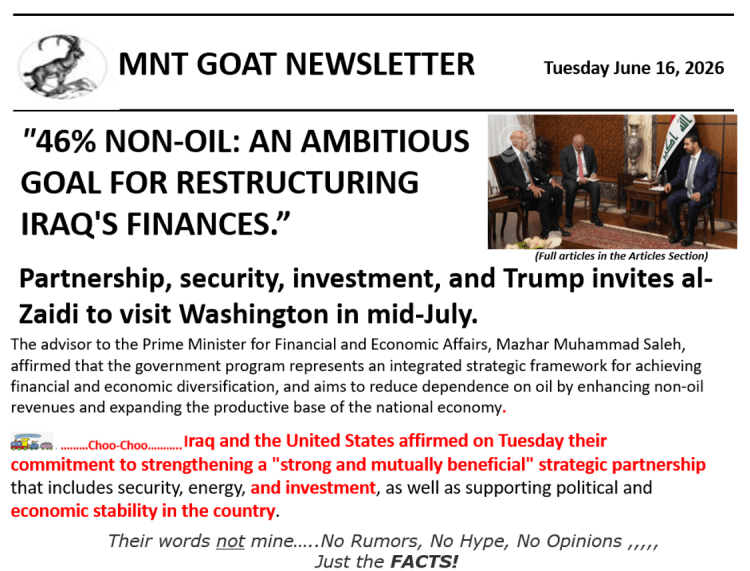
😊 WOW! again! Then please take the time to read the following article in today’s new titled “46% NON-OIL: AN AMBITIOUS GOAL FOR RESTRUCTURING IRAQ’S FINANCES.”
Next, I want to bring to you yet more good news in the following articles on this same theme of making Iraq great again. Yes, life is going to get really good for Iraqis but only if they can overcome their corruption and revolutionize the way they handle their economy. Al-Sudani gave them a gift. Yes, a head start on this new undertaking for Iraq, which I believe is the direct path to investors of finally realizing what we have been waiting for – the reinstatement back to FOREX. But, as I said they must be able to pull this off (and do it not just talk about it). My CBI contact is very excited about this new undertaking and believes strongly in al-Zaidi. She was in the conference when he met with Ali Alaq (CBI governor) and talked about the future.
Now, let’s also talk about what the US can do for Iraq under Trump. Oh… yes I talked about this movement with Trump to rebuild Iraq. Let’s see what this will mean for Iraq?
Remember this partnership that Trump wants with Iraq and I keep talking about this. Once again, I need to mention this is the primary reason why the Trump administration is standing so firmly on the security issue inside Iraq. The US cannot convince US investors to flock to Iraq unless there is security. Yes, security, security, security! Iraq cannot have these Iranian backed militias holding Iraq hostage. The terrorist faction’s rockets cannot fly into buildings, factories, malls, etc costing US companies billions to build. I don’t think the stockholders would appreciate this loss of their company’s revenues. What do you think? I believe Trump gets it! Do the Iraqis?
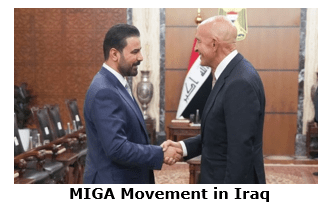
I firmly believe that it will ONLY be through a partnership with the US, China or some other industrialized, developed nation, that Iraq can complete this economic revolution we are talking about today. It will need massive investment money. The US has been too laid back so far in this effort prior to Trump. It will need the help of the U.S. and the new mantra of ‘Make Iraq Great Again’ (MIGA) following the MAGA movement of the west.
Please take a peek at this article tited “PARTNERSHIP, SECURITY, INVESTMENT, AND TRUMP INVITES AL-ZAIDI TO VISIT WASHINGTON IN MID-JULY”
I quote from the article: “Iraq and the United States affirmed on Tuesday their commitment to strengthening a “strong and mutually beneficial” strategic partnership that includes security, energy, and investment, as well as supporting political and economic stability in the country.”
MIGA Movement in Iraq
Why do you think the Trump administration’s economic hit man special envoy Tom Barrack is in Iraq right now giving his message of cooperation VERY clear to Iraq. But this message also has conditions with it. We all know what they are, don’t we? I’ll say it again – disarm the militias and factions, do it and not just talk about it! I will cover this topic more in my second of the two themes of today’s Newsletter later.
Take peek at this article titled “AMERICAN EFFORTS TO STRENGTHEN ECONOMIC PRESENCE IN IRAQ THROUGH INVESTMENTS AND JOINT PROJECTS.”
Oh…. another article chock-full of information and a good read to learn even more about the coming dinar and its rise again is titled “CAN IRAQ CONTROL ITS REVENUES INDEPENDENTLY OF AMERICAN INFLUENCE? A LEGAL EXPERT EXPLAINS.” Remember that I talked about this issue too many times already in my Newsletters. Can Iraq get off the petro-dollar someday and move towards a petro-dinar. Is that yet another coming goal they will strive for? Why is this so important for Iraq and getting back on the international scene? Read on and find out…..
Legal expert Ali al-Tamimi explains in this article how Iraq can control its oil revenues and funds, free from American influence and control over these funds. But when?
“Iraq’s oil revenues as we all should know by now are deposited with the US Federal Reserve Bank by virtue of UN Security Council Resolution 1483, issued in May 2003. This resolution obligates Iraq to transfer all oil and gas revenues to a special account in the name of the Central Bank of Iraq at the US Federal Reserve.” I will play the devils advocate now with you. Can you image the situation of this last election if the US had no leverage over the dollar transfers from these accounts to Iraq? Remember how Trump began to cut off just even a little bit of the funding and how it changed the elections? Yes, they were able to turn the tide and get rid of Nouri al-Maliki as the candidate for prime minister, oh boy!
So, when Iraq learns to behave and grow up and can qualify to enter the international arena again then this change may occur. Remember Iraq was invaded in the first place because they did not behave. These issues with Iran only hurt Iraq (how stupid of them) in that they can’t yet be trusted no matter how many banking and financial reforms they implement. They must show they are worthy by their STABILITY and SECURITY. Are you beginning to see what this means when Ali al-Alaq tells us he need stability and security first before implementing the Project to Delete the Zeros and we all know this will shortly lead to the Reinstatement. It is the path to the RV.
Then also in this article, Ali al-Tamimi added that “the Security Council resolution can be amended or revoked by the Council itself, but this requires the approval of a majority of its members, including the five permanent members.” – “Iraq can someday have greater control over its funds but this will take changes to their politics and level of corruption. So, Iraq must also take steps to reduce its dependence on the US dollar and increase the independence of its fiscal policy.
How does Iraq do this? (quoting from today’s article)
- It does it by diversifying the currencies in Iraqi reserves,
- developing a local payment system based on the dinar,
- increasing cooperation with other countries to facilitate trade in local currencies,
- improving the management of foreign reserves, and reducing reliance on the dollar.”
Are each of these items not what we have been reading about in the recent reforms from al-Sudani and I assure you we will be reading more about each of these issues under al-Zaidi too. Remember these words of mine today carefully….. Are these objectives they will strive to complete? Yes, of course they are. These issues are all interconnected with this economic revolution and financial reforms. But these sound more like CBI goals don’t they?
Does it seem to you that when financial issues arise in Iraq they always seem to go back to the dollar and not the dinar? It is because the dinar is backed solely by the dollar, it is pegged only to the US Dollar. Would it make the dinar yet more stable if it could be backed by a ‘basket of currencies’ thus less dependent on the sole dollar? Could this eliminate the parallel market then and restrict the necessity for payments from the US Treasury in dollars only to Iraq to pay its bills? Things could change drastically in Iraq.
The fact is I am mentioning all this and asking these questions because this is exactly what has to happen to the dinar. We were told this would happen in 2011 and is a part of the plan when reinstating the dinar back to the global currency trading markets.
I know it took a lot of explaining to get to make this final point that I just talked about but we should try to understand it. Seeing these four (4) issues in today’s news bring hope. Hope that they are now getting really serious in defining these goals and moving towards accomplishing them.
Okay, so there was a statement made in the article and I quote “So, Iraq must also take steps to reduce its dependence on the US dollar and increase the independence of its fiscal policy.”
Oh…. “Fiscal Policy” sounds like annual budgeting to me.
Does Iraq have issues in implementing their annual budget? Oh boy, oh boy do they ever! I can remember each year they go through the same old, same old hassles in budgeting. You think maybe, just maybe, they do not have the process correct or some obstacles are in the way? What are these obstacles? Seems to me the process overall may be good. So what else is wrong?
Here is the overall process: The cabinet with the ministers of each ministry get together to determine priority on projects to complete in the following year, then the funding needed to complete them. These are called ‘budget tables’. This budget should be completed by year end or in part. By completed I mean put together, pass on to parliament and finally voted into law by the end of the year. Not spilling over to March or even June of the year the budget is supposed to fund. Get it? So, yes there are grave issues and these issues prohibit the progress in Iraq too of completing vital projects to move it ahead. Some of this work is the needed reforms we need completed to get to the RV. Get it? So, yes, the budget is very important in the overall RV process.
____________________________________
THE ANNUAL BUDGETING ISSUE:
In regard to the budgeting issue in Iraq, take a peek at the following article titled “HOW IS THE ECONOMY BEING MANAGED? IRAQ IS WITHOUT A BUDGET FOR THE FOURTH TIME SINCE 2003.” This article is yet more proof of what I have been saying about the budgeting process. But is it the process or the barriers to facilitating the process. Does massive corruption cause disputes over the money proposed? Does corruption hinder the completion of many projects? So, it appears the answer is yes to both questions and there is much work to be done to let the said budgeting process actually work for the timetable of providing the budget for the new fiscal year on time, every time.
Iraq is entering an unprecedented financial phase, with increasing indications that the federal budget for 2026 will not be approved, at a time when the country is facing double pressures represented by the decline in oil revenues and the continuation of regional turmoil that has affected the movement of oil exports, which puts the government before the challenge of managing the economy through temporary spending rules for the fourth time since 2003. Surprise! Surprise! 😊
Iraq is almost entirely dependent on oil revenues, which constitute more than 90% of public revenues, while public finances are facing increasing pressure after the failure to approve spending and revenue schedules, amid fears of the repercussions of this on investment projects, infrastructure, job opportunities and economic growth.
I have yet more recent articles about this budgeting issue so this issue is finally of major concern. Yes, Iraq finally realizes it is biting them in the ass every time they turn around to do something. In place of a budget, they are using a 1/12 budget meaning they only allocate what is needed to keep the government running and no new project funding. It is 1/12 of what they used the previous year. How can you grow an economy when you in chaos constantly?
AN ATTEMPT TO FIX THE BUDGETING ISSUES?
So, here is one article I thought is a nice one to read since it tells us they now realize change is needed in the budgeting process. Did you hear me, I said process. Again was the process really broken or was it corruption or the rentier economy (drop in oil prices) or both that always seemed to hinder getting a sound budget on time? Let’s explore which it may be or maybe both in the recent news titled “PROGRAM BUDGETING IN IRAQ: FINANCIAL REFORM OR A RESTRUCTURING OF THE PUBLIC SPENDING SYSTEM?”
Iraq’s move towards program budgeting reveals an attempt to rebuild the philosophy of public finance management by linking spending to results and objectives instead of the traditional distribution of allocations. The new Finance Minister Faleh Sari announced during his talks with the US Chargé d’Affaires in Baghdad a government plan to prepare a program budget and gradually move away from the traditional system, which would raise the efficiency of spending and link allocations to performance and results, within the framework of a reform vision that enjoys the support of international institutions and seeks to develop the state’s financial management.
I am presenting all this budget stuff to you today because it is important. Budgeting properly is STABILITY. Get it? They must be able to get the budget done on time and allocate funds they have and not borrow. This is called discipline. Seems discipline is not a problem as the Finance Committee does not want to go out and borrow money to pay for the budget when the oil prices dropped. Instead, they cancelled or delayed projects since the funding dried up. But why are budgets always delayed? Seems each year some hiccup (drop in oil prices) renders the budget inoperable and it gets delayed. In fact they NEVER got a budget passed and opened yet after 2003. Correct me if I am wrong. The article is titled “AL-ZAYDI’S ADVISOR: NO RETURN TO RENTIER BUDGETS, NEW PLANS TO DIVERSIFY INCOME SOURCES – URGENT”
On Saturday (June 13, 2026), the Prime Minister’s Advisor for Financial Affairs, Mazhar Muhammad Salih, expressed his optimism about a plan developed by Prime Minister Ali al-Zaidi to diversify the country’s sources of income, indicating that al-Zaidi confirmed that there is no going back to the rentier budget that depends on selling oil.
Oh… this was music to my ears (eyes) when I read this…. 😊 So, we have read many articles already where Al-Zaidi makes a commitment to follow through on his plan to get off the rentier economy and diversify revenues… alleluia ! I think I will call this his ‘pet’ project since the ‘Development Road’ was al-Sudani’s ‘pet’ project…. Lol.. lol.. lol… Let’s see what happens.
There is yet another recent article worth reading that I want to bring out today titled “MEASURING RESULTS AND ACHIEVING GOALS INSTEAD OF SIMPLY DISTRIBUTING FINANCIAL ALLOCATIONS.”
Observers believe that adopting a program budget represents a qualitative shift in public finance management, as it focuses on measuring results and achieving goals instead of merely distributing financial allocations. If left unchecked this leads to corruption.
This contributes to raising the efficiency of government institutions, reducing waste, improving spending priorities, and enhancing transparency in the implementation of development projects and plans.
___________________________________
Oh…. so Iraq is moving to a new process called ‘Program Budgeting’. So what is program budgeting?
Define Program and Performance Budgeting:
Performance budgeting is a budgeting approach that classifies government or organizational transactions into functions and programs aligned with policy goals, establishes performance indicators, and measures the costs and outputs of activities to assess effectiveness and efficiency. Program budgeting, often considered a subset of performance budgeting, emphasizes organizing expenditures by programs to reflect policy objectives and prioritize resource allocation. Both approaches aim to improve transparency, accountability, and decision-making by linking spending to results.
__________________________________________
Understanding the Real Effective Exchange Rate (REER)
The real effective exchange rate (REER) is a measure of a country’s currency value relative to a basket of other major currencies, adjusted for inflation to reflect real purchasing power and trade competitiveness.
___________________________________________
So, if the budgeting process is not broken, then Iraq decided to concentrate on the methodology and changed the methodology not the process. They will change the methodology it uses to put the budget together. Will this exclude the corruptive practices? Will there still be secret payoffs built into the budget for certain projects for certain contractors or the highest bidder? Is this really at the heart of the late budgets? I do not believe this new methodology is going to fix these issues. You see, if they don’t address the corruption no matter what methodology they use it will still fail. Here is some more latest news on this topic of Program Budgeting in the article titled “PROGRAM AND PERFORMANCE BUDGETING: A QUALITATIVE SHIFT IN FINANCIAL RESOURCE MANAGEMENT.”
The Program and Performance Budgeting (PPP), which Prime Minister Ali al-Zaidi directed to be adopted, is a comprehensive system for allocating government financial resources based on actual achievements. It is also a modern financial planning and management tool that links financial allocations to realized results. Instead of blindly funding traditional line items (such as salaries and maintenance), this system allocates funds to specific goals and projects, thereby helping to rationalize spending, enhance transparency, and measure the efficiency of government performance.
Next another article about the budget. I know I am budgeting you to death today….lol…lol… 😊 It is titled “THE DEVELOPMENT FUND: WILL AL-ZAIDI SUCCEED IN CREATING A NEW FINANCING ARM FOR IRAQ?” But what is the concern? What are they trying to tell us?
Al-Mada/Mohammed Al-Obeidi:
The government’s move to establish a “Development Fund” in Iraq is sparking widespread debate in economic and financial circles, given the country’s financial crisis and the general budget’s heavy reliance on oil revenues. While the government sees the project as an opportunity to attract investments and stimulate economic growth, experts are raising questions about its launch timing, funding mechanisms, and its ability to achieve its objectives under current financial pressures.
But putting this article aside, we already know that al-Zaidi is going to take on the diversification of revenues and get out of the rentier economy. This means no more heavy reliance on oil revenues. Did the author not read al-Zaidi’s near future plans for the economy? So, the author should go study first what is happening before opening his big fat mouth on these topics. Besides the title tells it like it is too. It is a financial arm not the entire story. It is like a safeguard, a stop gap measure.
Oh… now I get it! 😊 The program budgeting methodology was probably recommended to Iraq by the World Bank to help them. I guess they do have a budgeting issue…lol..lol..lol.. The article is titled “GOVERNMENT: WORLD BANK DELEGATION ARRIVES IN BAGHDAD NEXT WEEK TO PREPARE PROGRAM BUDGET” The question I still have is can they eliminate all the corruption in any budgeting process they undertake and then monitor the layout of the funds to ensure they are going towards the intended purposes and not stolen or used for bribes. That is my real concern too.
Iraqi government spokesman Haider al-Aboudi revealed on Friday (June 12, 2026) that a delegation from the World Bank will arrive in Baghdad next week to complete the requirements for preparing the program budget, enabling Iraq to move towards adopting a budget capable of facing current and future economic challenges. He added, “The World Bank delegation will work with the Ministry of Finance on economic reforms based on sound constitutional principles that address many sectors such as industry, agriculture, education, and others. Over the past years, the Iraqi economy has faced multiple challenges, most notably fluctuations in oil prices, the expansion of operational spending, and pressures to provide job opportunities and improve services, which has prompted government agencies to search for more effective financial and administrative tools to control economic performance.
Imagine if Iraq can submit the next year’s budget on time to parliament to vote and pass it before the beginning of each fiscal year. Can the World Bank help them make it happen?
_____________________________________
UPDATE ON PMF & FACTIONS DISARMING
The second theme is once again all about the militias and disarming them. Remember we have to get through this to get to it. (‘it’ is the RV). There is now lots of talk from Iraq about this issue. The main part I really like is the tide has finally turned and sentiment is now all about supporting the disarmament. The new mantra is to disarm. Yes, it took over six (6) months to get to this point but we are here now. By this statement I mean the popular movement in the country is now to disarm. We are told that in 2017 Iraq was told to disarm. Why didn’t they do it then? Trump was president then but did not concentrate so much on Iraq.
😊 I really like this first article about the disarming. It is titled “AL-ZAYDI RE-ESTABLISHES THE POPULAR MOBILIZATION FORCES AND THREATENS TO REVEAL THE NAMES OF CORRUPT OFFICIALS.”
Al-Aboudi emphasized that this profound economic transformation necessitates decisive action on internal issues, foremost among them the “weapons control” process, which has already begun.
😊 Then this article also on the topic titled “AL-ZAYDI AND TRUMP’S ENVOY ARE “URGENT” TO RESOLVE THE FACTIONS AND CONFISCATE WEAPONS.” The Iraqi government and the United States agreed on a package of strategic, security, and economic understandings focused on the complete disarmament of militias and the consolidation of weapons under state control, as well as providing security guarantees to protect American investment companies.
😊This funding to these terrorist factions is ridiculousness. Trump is not fooling around. He may cut off dollars again in some way if not disarmed on time. No more words with no action…. This article it titled “TRUMP’S NEW AGREEMENT: 60 DAYS TO TEST THE SERIOUSNESS OF DISARMAMENT AND CUTTING OFF FUNDING TO FACTIONS”
Tom Barrack’s team is developing a plan to support the economy and electricity sector and end Iran’s influence. Remember Iraq is buying electricity from Iran. They already diverted much of their grid to buying Turkey’s electricity while developing their own grid. I think they are going to use natural gas instead of burning off the gas from the oil wells. The infrastructure had to be developed and is ready now. I remember in 2011 under Nouri al-Maliki that Iraq purchased huge electricity power generators. They never did got installed and lay waste as people cannibalized them for parts. What a waste. Do you remember these days? This guy Maliki was a loser! ☹
Shiite parties and armed factions are preparing to receive Tom Barrack, the US President’s envoy to Iraq and Syria, with a different version of their traditional rhetoric. The most prominent theme is demonstrating their readiness to engage in a new phase, one less reliant on weapons and more aligned with the logic of the state.
😊 Yet another article with a different tone on the need to restrict weapons and “disarm” everyone “BARAK IN BAGHDAD: REMOVING FACTION LEADERS, CLOSING BANKS, AND “OPEN OPTIONS” IN CASE OF FAILURE!”
Al-Zaydi emphasizes the need to restrict weapons and “disarm” everyone. US envoy Tom Barrack arrived in Baghdad carrying what resembled a roadmap for the future relationship between Washington and Iraq, but the roadmap was not without warnings. According to multiple political sources, Barrack hinted at “unlimited options” if Baghdad failed to implement commitments related to disarming the factions, cutting off their funding sources, and restructuring the financial networks of influence associated with them.
The sources say that the list of American conditions is not limited to the security aspect, but extends to banking and economic files and controversial figures, all placed within a framework described as a project to “dismantle” or “prevent” the systems of influence that have formed over the past years.
________________________________________________
Let’s keep our prayers alive. There is a deep spiritual dimension at work today bringing about this reset. I believe we are closer than ever for the dinar to get reinstated. But first things first. Part of the mess in the US must be cleaned up too. Then certain laws in Iraq must be passed. Certainly reving the economy to at least 45% non-oil revenues could make a huge difference for Iraq and the IMF. By now everyone should be fully aware of these events that caused delays in the currency reform process. This is not rocket science to understand. We are not in control over these obstacles.
What do you think will happen next? (Leave a comment)
______________________________

________________________________________
Their words not mine…..No Rumors, No Hype, No Opinions ,,,,,
Just the FACTS!


These prophecies are an important tool we have to lead us on our path. They are more important now than ever. They give us the strength, perseverance and hope that a better time is coming and that God’s Hand is at work behind the scenes. If you just take a second even to look around you at these past three election cycles, how can you deny that God is at work? Are you sleeping or what?
It is amazing and there is no other way that these events could have happened the way they turned out. But there is more to come, much, much more, I assure you! Now that God has his biblical David re-elected, we need to pay attention to what He does next.
NOTE: These prophecies just keep getting better and better, giving us HOPE of a brighter future. But the real reason why I listen to them is that we can actually see what God says He will do is taking place right in front of our noses. It is a confirmation to me that God is real and is still with us forever just as in biblical times.
Prophetic Words from the prophets: Julie Green
“The Fraud In California Is Coming To An Abrupt End”
Go to the 11:15 mark in video for the prophecy. From June 14th.

PERSPECTIVES ON THE IRAQI DINAR PROPHECIES

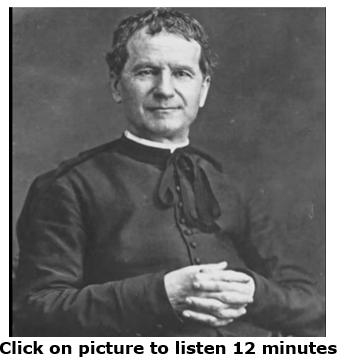
Fr. DON BOSCO EXPOSED THE DARK SECRET BEHIND ISLAM
— And the Truth the World Forgot about the so-called Muslim religion. Fr.Don Bosco, also known as John Bosco, was an Italian Catholic priest and educator, born on August 16, 1815. He founded the Salesian Society in 1859 to help disadvantaged youth, particularly boys, through education and community service. His teachings emphasized lovekindness, and the importance of education for young people, making him a beloved figure in Catholicism and a patron saint of youth. Don Bosco was canonized in 1934.
WILL TRUMP BE PRESIDENT IN 2016?
Against all odds God sends his anointed one to us not just in 2016 but two terms. Even after losing in 2020 many again told us, he would never get into the presidency again. Wrong again! It is God now making all the rules.
If you ever doubted if God existed and if His hands are working to end the corruption in American politics and bring American to it’s greatness again, watch these two videos.
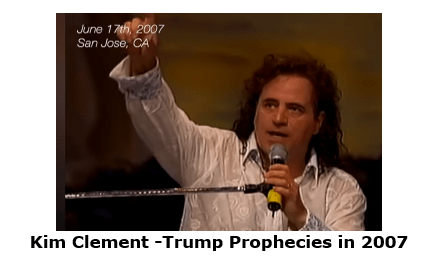
Video 1: The first one is the prophecy by Kim Clement in 2007. Folks its given 9 years prior to Trump’s first term. Don’t you think this is kind of weird? Think, Think, and Think some more of what heck is going on here. I have never seen God work like this.
Video 2: Then the second video may seem like a comedy skit, and it may even be of those with no faith, but the last laugh is on them, ha, ha, ha,,,, 😊 isn’t it…..
This is a compilation of people who told us that Donald Trump would never be president. Really? Yes, but us Christians we knew better, didn’t we…….? We also knew why he was chosen to be president and what his task was and is not still ongoing. He is anointed by God to lead this country through these difficult times, bring us back to Christ, end the corruption, lower taxes (slavery), follow the constitution, make those responsible for the corruption accountable. There’s so much more this man is doing and it is hard to describe all of it here today. I just thought it would be nice for all of us to see God’s hand at work. We must honor our current president. Remember he did not have to run for president and surely, he could give up anytime, but choses to continue.
This is what I have been insistent in telling everyone. What is going on with Iraq is not just a currency reset. There is so much more to it. There is a spiritual aspect to it. We must also follow the spiritual and see it manifested in the physical. Does it surprise you that it will be Trump that gives us the long-awaited reinstatement? I don’t even know if he knows just how prophetic he is. It is not just by Kim Clements words, but by his own actions once elected as president. They are becoming more and more apparent now that he is addressing the middle east, the UN, the Federal Reserve and much more. Let’s watch and see how it all plays out.
I also want to remind you that it may seem funny that Kim Clement gets the crowd chanting ‘no more war’ even though Trump’s administration is fighting a war with Iran and trying to stop the war in Ukraine. Things in prophecy are not always as they seem on the surface. We add our own opinions.
Having said this, I have to add that it is NOT at all funny that Trump had to pick up the pieces to end this terrorism and corruption that has been going on way too long through/from the middle east. Why do these democrats not realize there is still on ongoing war on terrorism? Trump did not start this war but I believe he will end it. To end it means using the power of force not pacification. So, let’s see if ‘no more war’ is our future after Trump is finished with them.
Video 1:
Video 2:
WHY CUBA IS STRATEGICALLY IMPORTANT, IF YOU TRULY WANT TO FIGHT TERRORISM.
WHAT DID TRUMP MEAN BY THE ‘GOLDEN AGE OF AMERICAN BEGINS NOW?’
A NEW FINANCIAL REGIME COMING TO THE U.S.
THE FED’S NEW PLAN TO SHRINK THE US $40T DEBT WITHOUT PAYING IT BACK
The Central Banking System, to which the Federal Reserve is part of, was set up as a wealth transfer system in 1913. Money would transfer from the many to the few. The few being the very wealthy the many being the general populus. They did this by a sly system of spend and tax. Now the reverse is about to happen. The money is going to flow back in the many citizens pockets from the very rich.
This will occur not in a socialist communist way, as many fear will happen or what Bernie Sanders, Mamdani, AOC and other socialist want. They only perpetuate the same old lies and scam but just in a different way. Again, their way is to the very few at the top, taking from us ordinary citizens. They know it too and that’s their real goal. All you need to do is study communism and it become very clear. They plan to do by tight control and scarcity. That is how they maintain control.
But the Trump administration is not going to let this happen. If you are paying attention to the financial wave that is about to take place you can see it is all about expanding and encouraging capitalism. Then at the same time getting out of the corrupt Central Banking System that is the main cause of it.
You have to watch this one!!!!
JPMORGAN CEO: THIS IS WHY KEVIN WARSH CAN’T ‘ACTUALLY CHANGE ANYTHING IN SIX MONTHS’ AS FED CHAIR
Go to 1:06 mark in this video and listen carefully the next few sentences of Jamie Dimon. Oh… can you see it now too… the foolishness goes right back to climate change, DEI, massive rules and regulations, etc., again. All this crap has also even infiltrated the old Federal Reserve. Time to clean it out too. As Dimon says its all just wasteful spending giving us nothing in return.
Why was the Fed getting involved with this stuff? The Feds became much more than just a financial regulator but using this power of the purse to make social change and that’s where the problems began. But who was dictating these mandates to them to push on the US? Was it some outside force such as the World Economic Forum, the United Nations Council of Foreign Relations? How dare they enforce these mandates on a sovereign nation! Most did not even know this was happening. Oh… I guess you’re no longer a free and sovereign nation, when you follow this global order from all these crazy people, are you?
CHANGE, CHANGE, CHANGE IS COMING TO AUSTRALIA TOO.
I mentioned Australia many times already in my Newsletter and how God talked to His prophets about changes coming to the developed countries around the world. He said it would begin in the U.S. and then branch out to the rest of the world. Like a cancer, this woke global ideology has spread but now it is time to combat it and inject these ideas out of our culture.
These are bad ideas as we know from experiencing them so far. We are not just screaming ‘wolf’ for nothing…..They are not working. They are destructive. They are only having negative not positive impacts on society. It is not just a matter of acceptance as these globalists will tell you, as we tried them and they simply not working and so let’s move on. If you truly study this ideology, it is also a satanic culture in nature and only destroys the very fabric of our societies. Just look at what it does. Biological men dressed up like women thinking even they can have kids. Then playing in women’s sports, thinking they are woman. I am not going to go too much deeper into this satanic sexual revolution as it is very deep and scary what they have done.
Yes, change from this bizarre globalist ideology and takeover of our countries. The citizens in Australia now want change as they too have had enough. It is coming. How long it will take depends on how strongly they really want back their freedom. It also depends on how intertwined this ideology is already in our culture. Changing back could be hard.
Yes, we have to unravel it and undo even all the tiniest of threads. I will give you just a couple of examples of what I mean by unraveling it. Just recently the War Dept of the U.S. began working with the Boy Scouts of America too unravel the DEI mess they have created following DEI mandates. I never thought it was this bad.
A LOOK BACK. HOW DID IT BEGIN?
Kirk was warning us….. This is from 8 years ago. What I want to know is who from the top brought this nonsense into our culture? Oh… was it the UN global mandates again? Please take the time to go read the UN Agendas 2021, 2030 and 2050 and see just how bad this stuff is. I will even give you the links above this is how important it is right now for you to see what they are upto. Don’t be followed by all the nice and comfortable wording. We need to look at the impact both economically as well as environmentally. Afterall we also have to live in this world too. We can worship the earth, hug trees, or realize that God gave it to us to use while we are here to use. Yes, we must also be responsible and care for it too. But we can’t keep hugging trees while we have massive unemployment, drugs, destroy our cities, homelessness in our streets, massive debt and control over our liberties and freedoms. This is not how God intended it to be. Sorry UN your thinking is all about more and more control not abundance and prosperity.

Also the ditching of mandatory COVID and FLU vaccines to military members. It is one thing to realize the past mistakes made and how these mistakes are destroying our culture. But we have to then stop it and sadly this takes effort and a lot of undoing.
HOW DO THESE CROOKED POLITICIANS GET INTO OUR POLITICS ANYHOW?
These are usually totally unqualified people to run any government. Most don’t know finance, economics or even the very basics of what societies need to thrive. Most have no common sense and are actually activists not really politicians. They are seeded into our governments to implement the agenda of their masters, the globalists. We must always be careful of the Trojan Horse as they will make promises, but what is really their agenda behind all the promises. We see this in NYC as a very good example. How long will it take for him to fall?

MANY THINGS WE HEARD WOULD HAPPEN, ARE HAPPENING. THIS IS THE TIME.
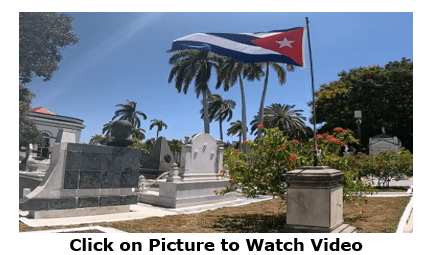
WHAT’S HAPPENING WITH CUBA?
THE TRUTH ABOUT CUBA
HER MESSAGE IS SIMPLE: DO NOT LET AMERICA BECOME A MUSLIM COUNTRY
You only need to do is take the example from what happened in the UK and you won’t like it….. I assure you! We see Detroit and parts of Minnesota becoming more and more like the middle east. I won’t get on my lecture again on how Muslims are not about assimilated but rather making America their Muslim country. Here is yet more proof.
Again UN Agenda 2030….. go read it. 2030 Forced mandates, not just good ideas.
This is sad when the elderly don’t recognize their own country they grew up in.
TRUMP SURVIVES YET ANOTHER ASSASSINATION ATTEMPT AFTER SHOTS FIRED AT WHITE HOUSE
How many does this make now. I think its five? They really don’t want Trump to have another 2 years.


I have created a brand-new “Post RV Workshop” page in the blog. I included my own personal tips on investing post-RV and also organizing and protecting your estate. Here is the LINK. Going forward I will only post new and exciting information and opportunities here on the Latest Newsletter as they come along. Later I will transfer it to the ‘Post RV Workshop’ page in subsequent Newsletters for your future reference.
Just so you know I absolutely DO NOT adhere to high-risk investments where you can lose it all in a flash. Look at it this way – you are going to have all this money from your dinar exchange. Then why blow it! Most of us investors waited decades for this RV to happen and so why would you even think about pissing is all away in some high-risk gamble of an investment. Yes, there are going to be scammers out there but let’s talk about legitimate investment opportunities only. These scammers can suck you dry and there is not a damned thing you can do about it.
Go to a legitimate wealth manager associated with your bank. Let the licensed experts advise you. Please, please stay away from idiots like MarkZ, TNT Tony, Bruce (on the Big Stupid Call), etc. , etc. Go to professionals. It doesn’t mean you have to follow everything they advise you but it’s a great start. Remember they too are selling investment products and get commissions.
Much to report today.
AMERICA’S GOLD ISSUE. WHAT’S REALLY HAPPENING.
The more I dig the more I find…..
THERE ARE HUGE OPPORTUNITIES FOR YOU IF YOU ARE POSITIONED IN THE RIGHT ASSET.
‘Reset’ Survivor Warns: The Dollar Isn’t Different – It’s Just Next
His ‘reset’ happened in Mexico Pesos.
Now I want you to remember what I am about to tell you about this RV is more than anything else I ever told you.
In this video he is describing the coming reset of the dollar not the dinar. But we are exchanging dinars for dollars,,,,right, aren’t we? If this reset of the dollar happens after the RV, and they will most probably lose value in our bank accounts, if inflation is not dealt with first. Is this not what Trump is now working on? The US dollar could potentially take a hit of 10% or more unless Trump’s strategy works and that is the key.
How much of a hit will the US dollar take? Trump is trying to avoid any hit and this is why you are seeing him work so hard. His estate is at risk too. Don’t forget this!
This level of severity we don’t know.
The point of showing you this VERY important video is not to scare you but to make you aware that, if you really want to be a billionaire or even a millionaire, you better be well invested in the dinar to absorb the hit, if it does occur. In other words, be prepared. If a million does go to 10,000 you better have much more to offset it from the reset. But don’t be scared, as Trump is desperately trying to save the currency. Can you now see what he is trying to do for every American citizen? I know it’s a long road and most don’t know all the details. We must trust in the process of this reset.
To conclude this is where the crypto dollar comes into play and why the US is moving with it. No, not a central bank crypto but a US Treasury crypto. This is being done only to buy us some time to fix our dollar. Trump is trying to avoid the collapse and dropping zeros as much as he can. I encourage everyone to research this more for your own benefit.

THE DOLLAR’S GOLD PROBLEM JUST GOT BIGGER

GOLD, PAY ATTENTION TO GOLD: PROPHET KIM CLEMENT

Please see the blog section on the other great news on this subject matter here LINK.

AL-ZAYDI RE-ESTABLISHES THE POPULAR MOBILIZATION FORCES AND THREATENS TO REVEAL THE NAMES OF CORRUPT OFFICIALS.
The government of Ali al-Zidi reveals its intention to leave the “traditional spending budget” and move to a “program budget,” which will be done in direct coordination with the World Bank, whose delegation will arrive in Baghdad next week, as the official spokesman for the government, Haider al-Aboudi, says in an interview with journalist Hossam al-Hajj, which was followed by the 964 network .
Al-Aboudi emphasized that this profound economic transformation necessitates decisive action on internal issues, foremost among them the “weapons control” process, which has already begun. Regarding the control mechanisms, he explained that the forces affiliated with the Popular Mobilization Forces (PMF), whether factions or other groups designated within the organization as brigades with numerical designations, will not remain affiliated with these brigades due to the political disassociation process. Instead, these human resources will be redistributed within the PMF according to a new vision.
Regarding the fight against corruption, Al-Aboudi says that Al-Zidi’s government will move to strike corruption networks forcefully, vowing to reveal the names of those involved and the political entities protecting them to the public, if the looted funds are not quickly returned to the state treasury.
Al-Zaydi and the state’s monopoly on weapons
Regarding the issue of loose weapons, Al-Aboudi said, “When Prime Minister Ali Al-Zidi was assigned his task, the political forces viewed him as a solution and approach to an economic crisis. This solution, which Al-Zidi personally adopts, stems from the vision that the economy is what leads the state, and the economy needs a safe environment in which investment is attracted and economic partnerships flourish. This climate needs a preceding step related to internal security.”
He continued: “The current government is 28 days old, and has not completed a month, but it has begun to unravel complex files, foremost among them being the restriction of weapons to the state. Here we do not mean the mere weapons that are placed in warehouses. The point is not to collect these weapons in warehouses and inventory them, but the point is that those who possess these weapons comply with the state’s decision only, far from any external political directives related to the extension of this element that possesses the weapons.”
Regarding the mechanisms for restricting weapons, he added: “Forces associated with the Popular Mobilization Forces, whether they are factions or other groups named within the organization under the names of brigades in the form of numbers, the process of severing political ties with their authorities does not allow, according to the adopted mechanism, for individuals to remain affiliated with these brigades. Rather, these human resources will be redistributed within the Popular Mobilization Forces according to a new vision.”
He pointed out that “in September of this year, the presence of the international coalition in Iraq will end, and with this timeframe, some reasons will end, and other reasons will be born after it, which is that everyone is required to maintain and participate in protecting Iraq. After September, there will be no presence of the international coalition, and there will be no requirements for resistance as there were previously.”
Al-Zaydi strikes at corruption: Return the money or we will expose you
As for the anti-corruption file, Al-Aboudi revealed that “the government of Prime Minister Ali Al-Zidi, since it was granted confidence until this moment, has submitted to the Integrity Commission and the regulatory authorities clear corruption files in the fields of oil, transportation and electricity, and this work is continuing to identify the sources of corruption.”
He explained that “the Prime Minister said it verbatim in more than one Cabinet session, that he would not hesitate to reveal those involved, whether they were shareholders or beneficiaries in full, unless they returned the money to the state clearly, otherwise we will be forced to announce the names.”
He stressed that “the decision has been made not to look at the party that protects the corrupt, but rather to implement the decision immediately, and the Prime Minister’s directives in this regard are that there should be no hesitation, because the man (Al-Zaydi) is entrusted with managing the stage and saving what can be saved in these days that are witnessing complexity at the economic level.”
The era of spending is over, and program budgeting has arrived.
Regarding the economy, Al-Aboudi explained that “there is a trend to move away from the mentality of sustainable spending towards a budget of programs that cover the requirements of the state’s developmental areas, by providing a climate for the private sector, achieving partnerships and a productive economy, as well as providing space to introduce an economic vision based on the Development Fund.”
He added: “This fund, along with the budget for programs that cover the needs of development sectors, is essential. The state cannot rely on its full weight and functional apparatus to secure salaries for nearly 4 million employees, as if this is all that is required of the Iraqi state. The development aspect requires that we open a clear line with the private sector, and we also need international contributions.”
Al-Aboudi concluded his remarks by saying: “The budget for the programs that the current government is moving towards adopting is being done in coordination and cooperation with the World Bank, and next week an international delegation from the bank will come to complete and set the starting line for implementation, in cooperation with the Finance Committee in the Iraqi Parliament.”
Al-Aboudi pointed out that “it was not in my mind to be assigned the task of the spokesperson for the Iraqi government, due to the contexts that there are prerequisites that require being part of certain political environments or specific affiliations, but when I was contacted and met with Prime Minister Ali Al-Zaidi, I confirmed that I am an independent man, and he told me: That is what is required.”
*********************************************************************************************
DESPITE FINANCIAL REFORM EFFORTS, IRAQIS STILL HOLD BILLIONS OF DINARS OUTSIDE OF BANKS.
Reforming the banking sector represents one of the most prominent economic challenges facing Iraq at the present stage, given the need to build a financial system capable of supporting development, stimulating investment, and enhancing trust between citizens and banking institutions.
Despite the expansion of loan and credit programs over the past years, challenges related to oversight, governance, transparency, and limited reliance on digital technologies continue to hinder the achievement of the desired goals.
Experts have confirmed that the success of any banking reform requires moving from traditional treatments to a modern system that relies on digitization, effective supervision, and the development of the legislative and credit infrastructure to ensure the sustainability of financing and reduce risks. Economic expert Ahmed Al-Tamimi believes that this success depends on adopting a comprehensive reform program that is not limited to administrative procedures, but extends to modernizing the legislative, supervisory, and technological infrastructure of both government and private banks.
Al-Tamimi told Baghdad Today on Friday (June 12, 2026) that “the crisis of advances and loans granted to citizens is not only related to the size of the available funding, but also to the mechanisms for granting loans, following up on them, and evaluating the creditworthiness of borrowers. Addressing this crisis requires the establishment of unified databases for borrowers and the development of a modern credit rating system that reduces cases of default and ensures that funding is directed to those who are eligible and able to repay.”
He explained that “achieving fairness in lending and controlling banking liquidity requires adopting clear and transparent standards in granting loans, away from interventions and mediations, with the need to expand the base of financial inclusion and increase reliance on official banking instruments instead of cash trading outside the banking system, which contributes to enhancing financial stability and raising the efficiency of liquidity management.”
He added that “weak financial oversight during the past years has contributed to the rise in default rates in some loans and advances, as a result of inadequate follow-up and auditing procedures and the absence of early warning systems for credit risks. Strengthening the role of regulatory bodies and activating governance and compliance within banks represent a fundamental pillar to reduce these problems.”
He added that “the shift towards digital banking systems has become an urgent necessity, not an option, as digital technologies, electronic payment systems, electronic archiving, and digital loan application and follow-up platforms can reduce opportunities for corruption and bureaucratic red tape, speed up the completion of transactions, raise the level of transparency, as well as enable regulatory bodies to track financial operations more accurately and efficiently.”
Al-Tamimi stressed that “reforming the Iraqi banking sector is achievable if it is coupled with political will, professional management, and serious investment in technology and oversight, because building a modern and reliable banking sector is one of the most important conditions for revitalizing the economy, attracting investments, and achieving sustainable development in Iraq.”
For years, the Iraqi banking sector has suffered from accumulated challenges related to weak financial inclusion, widespread reliance on cash transactions, and limited digital banking services compared to global standards.
Banks also face challenges related to loan and advance management, borrower follow-up, and creditworthiness assessment, in addition to the need to update control, compliance, and governance systems.
In recent years, the government has moved towards adopting financial and banking reform programs aimed at expanding the use of electronic payment, promoting digitalization, and improving the investment environment, amid increasing calls from experts to link banking reforms with modern technology and effective supervision to ensure the building of a more efficient financial sector capable of supporting the national economy.
********************************************************************************************
PRIME MINISTER’S ADVISOR: GROWING INTERNATIONAL INTEREST IN IRAQ’S BANKING REFORM PROGRAM
The Prime Minister’s Advisor for Banking Affairs, Saleh Mahoud, affirmed on Wednesday that Iraq is making steady progress towards building a more efficient, open, and integrated financial sector within the global economy. He noted the growing international interest in the country’s banking reform program.
In a statement received by Al-Eqtisad News, Mahoud said he participated over the past three days in a working visit to London as part of an Iraqi banking delegation that included representatives from the Central Bank of Iraq, the Association of Iraqi Private Banks, and several other banks and electronic payment companies. The visit aimed to strengthen international cooperation and support the financial and banking reform process in Iraq.
He added that the visit, organized in coordination with the British Embassy in Iraq, provided a platform for dialogue between Iraqi and British financial and banking institutions, thereby enhancing economic and financial cooperation between the two countries.
He explained that on the first day, the delegation held meetings with Hogan Lovells, a firm specializing in legal consulting on financial and banking legislation, and also participated in a dialogue with Chatham House. He emphasized the government’s full support for the banking reform projects led by the Central Bank of Iraq in cooperation with international consulting firms.
He noted that the meetings held at the British Parliament addressed the development of banking and economic cooperation, encouraging British investment in Iraq, and strengthening partnerships between financial institutions in both countries.
Mahoud explained that the visit reflected the level of international interest in Iraq’s banking reform program, emphasizing that Iraq continues to implement plans to develop its financial sector in accordance with international standards and to enhance the investment climate and economic growth.
*********************************************************************************************
PROGRAM BUDGETING IN IRAQ: FINANCIAL REFORM OR A RESTRUCTURING OF THE PUBLIC SPENDING SYSTEM?
Iraq’s move towards program budgeting reveals an attempt to rebuild the philosophy of public finance management by linking spending to results and objectives instead of the traditional distribution of allocations.
This trend comes at a time when the region is facing accelerating economic and regional challenges that require governments to adopt more flexible policies in managing resources, as Baghdad affirms that it continues to work on protecting financial stability and ensuring the financing of basic obligations, in parallel with preparing visions for future budgets that are compatible with local and international changes.
Finance Minister Faleh Sari announced during his talks with the US Chargé d’Affaires in Baghdad a government plan to prepare a program budget and gradually move away from the traditional system, which would raise the efficiency of spending and link allocations to performance and results, within the framework of a reform vision that enjoys the support of international institutions and seeks to develop the state’s financial management.
CAREFUL STUDY
In this context, MP Hussein Al-Khafaji, a member of the Parliamentary Finance Committee, revealed that “the Finance Committee will discuss with the relevant executive authorities the various indicators and data related to the financial situation, in order to ensure that decisions are made based on accurate information and a comprehensive vision.”
He then explained that “there are important files related to strategic projects, contracts and government commitments that need careful study in order to maintain the continuity of work and serve the public interest.”
He added that “the upcoming meetings will provide a clearer picture of the financial path during the next stage, especially in light of the current economic conditions, which will help to formulate a realistic vision regarding the budget and government spending.”
********************************************************************************************
MEASURING RESULTS AND ACHIEVING GOALS INSTEAD OF SIMPLY DISTRIBUTING FINANCIAL ALLOCATIONS
Observers believe that adopting a program budget represents a qualitative shift in public finance management, as it focuses on measuring results and achieving goals instead of merely distributing financial allocations. This contributes to raising the efficiency of government institutions, reducing waste, improving spending priorities, and enhancing transparency in the implementation of development projects and plans.
Experts also point out that the continued coordination between the government, the parliamentary finance committee and the central bank reflects the existence of an institutional path for managing the financial file, especially in light of the keenness to secure basic expenditures and protect economic stability, in parallel with reviewing spending priorities and developing financial planning tools to keep pace with current changes.
While technical discussions on the upcoming budget continue, the government appears to be moving forward with adopting structural reforms aimed at modernizing financial management, improving the efficiency of resource use, and creating a more sustainable environment for public spending, in order to ensure the continued implementation of vital projects, support basic services, and enhance confidence in the national economy during the next phase.
********************************************************************************************
GOVERNMENT: WORLD BANK DELEGATION ARRIVES IN BAGHDAD NEXT WEEK TO PREPARE PROGRAM BUDGET
Iraqi government spokesman Haider al-Aboudi revealed on Friday (June 12, 2026) that a delegation from the World Bank will arrive in Baghdad next week to complete the requirements for preparing the program budget, enabling Iraq to move towards adopting a budget capable of facing current and future economic challenges.
Al-Aboudi told Baghdad Today that “next week will witness the arrival of a delegation from the World Bank to complete the requirements for preparing a program budget through which Iraq can proceed with preparing a program budget that can meet the challenges,” indicating that “Prime Minister Ali Falih Al-Zaidi places the economic aspect among his top priorities.”
He added, “The World Bank delegation will work with the Ministry of Finance on economic reforms based on sound constitutional principles that address many sectors such as industry, agriculture, education, and others. Since the government took office after gaining the confidence of Parliament, the focus has been on empowering state institutions to improve their work.”
He pointed out that “the government and the Prime Minister’s vision is to support the Financial and Economic Council in order to work on building a financial and economic system to face current and future challenges.”
Over the past years, the Iraqi economy has faced multiple challenges, most notably fluctuations in oil prices, the expansion of operational spending, and pressures to provide job opportunities and improve services, which has prompted government agencies to search for more effective financial and administrative tools to control economic performance.
*********************************************************************************************
SUDANI: COORDINATION FRAMEWORK BACKS PM TO IMPLEMENT WEAPONS RESTRICTION PLAN
Mohammed Shia al-Sudani, head of the Reconstruction and Development Coalition, said the Coordination Framework has authorized Prime Minister Ali al-Zaidi to move forward with implementing the government program on restricting weapons to state control, following a meeting with U.S. Embassy Chargé d’Affaires Joshua Harris.
Sudani said “the Reconstruction and Development Coalition and the rest of the Coordination Framework forces authorized the prime minister to implement what was stated in the government program regarding restricting weapons to the hands of the state,” stressing continued support for “the plan in place to facilitate the implementation of this path, in a way that enhances the authority of the state and preserves security and stability.”
He also stressed the need to legislate laws regulating the rights of the PMF and its members “in a way that guarantees preserving their sacrifices and strengthens their presence within the legal and institutional frameworks of the state.”
On bilateral relations, Sudani said Iraq seeks to develop ties with the United States in economic development, energy, investment and infrastructure, describing Iraq as moving “seriously toward providing a safe and attractive investment environment.” He added that Iraq aims to achieve independence in the gas and energy sectors through local production and diversified oil export outlets, and called for shifting the U.S.-Iraq military relationship toward bilateral cooperation rather than the international coalition formula.
Harris expressed U.S. appreciation for efforts to restrict weapons to the state and reaffirmed Washington’s readiness to support Iraq’s energy sector and proceed with projects tied to bilateral memorandums of understanding signed by U.S. companies.
Iraq formally began integrating Saraya al-Salam into the state security structure at a ceremony in Samarra last Thursday, following Muqtada al-Sadr’s May 27 announcement that the group would come under state authority. The precise command structure for compliant factions has not been publicly detailed, with official statements using broad terms such as “integration” and “restructuring” without specifying whether fighters will be absorbed individually into army units or remain as intact formations.
Harakat al-Nujaba, Kataib Hezbollah and Kataib Sayyid al-Shuhada have rejected disarmament, describing their weapons as “a trust and a duty.” The U.S. State Department’s Rewards for Justice program has offered up to $10 million each for information on Harakat al-Nujaba’s Akram al-Kaabi, Kataib Hezbollah leader Ahmad al-Hamidawi and Kataib Sayyid al-Shuhada secretary-general Abu Ala al-Walaei.
Since the regional war began in late February, Iran-aligned factions under the Islamic Resistance in Iraq umbrella have carried out repeated drone, rocket and missile attacks on U.S. military and diplomatic targets in Baghdad and the Kurdistan Region, while the United States has struck PMF-linked positions across multiple governorates, killing dozens of fighters.
*********************************************************************************************
46% NON-OIL: AN AMBITIOUS GOAL FOR RESTRUCTURING IRAQ’S FINANCES
The advisor to the Prime Minister for Financial and Economic Affairs, Mazhar Muhammad Saleh, affirmed that the government program represents an integrated strategic framework for achieving financial and economic diversification, and aims to reduce dependence on oil by enhancing non-oil revenues and expanding the productive base of the national economy.
Saleh added in a special statement to “ Al-Jarida ” that these trends fall within the “Iraq 2050” vision, which is based on reforming public finances and consolidating the principles of a social market economy, in order to achieve a balance between the developmental role of the state and the effectiveness of the market and the private sector, and to establish a long-term structural transformation in the Iraqi economy.
He explained that the vision requires an integrated reform and legislative framework that establishes the foundations of sustainability, efficiency and flexibility in fiscal policy, noting that one of its most prominent goals is to raise the contribution of non-oil revenues to the general budget to no less than 46% of total revenues by 2050, which will enhance financial sustainability and reduce the impact of fluctuations in global oil markets.
He pointed out that the government plan also aims to increase the private sector’s contribution to GDP compared to current levels, reflecting the Iraqi economy’s shift to a model that relies more on investment, individual initiative, job creation, and stimulating sustainable growth.
Saleh explained that achieving these goals will be through activating the national strategy for developing the private sector, and implementing institutional, legislative and regulatory reforms that contribute to improving the business environment, enhancing competitiveness and expanding the base of local and foreign investment.
He stressed that the Market Development Council will play a pivotal role in regulating market institutions according to the principles of governance, transparency and efficiency, creating an attractive investment environment, as well as supporting private sector-led projects in the manufacturing, agriculture, logistics and digital economy sectors.
He concluded by saying that this approach aims to build integration between reforming the financial sector and developing the productive sectors, which will contribute to reducing the rentier nature of the Iraqi economy and establishing a development model based on productivity, competitiveness and partnership between the state and the private sector, leading to building a diversified and sustainable economy that achieves prosperity by 2050.
*******************************************************************************************
HOW IS THE ECONOMY BEING MANAGED? IRAQ IS WITHOUT A BUDGET FOR THE FOURTH TIME SINCE 2003.
Iraq is entering an unprecedented financial phase, with increasing indications that the federal budget for 2026 will not be approved, at a time when the country is facing double pressures represented by the decline in oil revenues and the continuation of regional turmoil that has affected the movement of oil exports, which puts the government before the challenge of managing the economy through temporary spending rules for the fourth time since 2003.
Iraq is almost entirely dependent on oil revenues, which constitute more than 90% of public revenues, while public finances are facing increasing pressure after the failure to approve spending and revenue schedules, amid fears of the repercussions of this on investment projects, infrastructure, job opportunities and economic growth.
temporary spending
In this context, the financial advisor to the Prime Minister, Mazhar Muhammad Saleh, says that the financial policy during the year 2026 is still managed in accordance with the provisions of the Federal Financial Management Law No. 6 of 2019, especially Article 13, which allows spending at a rate of (1/12) per month of the expenses of the previous year in the event of a delay in approving the budget.
Saleh explained to Shafaq News Agency that this mechanism “enabled the continuity of public spending, especially salaries, wages, pensions and social welfare, in addition to financing basic investment expenditures and ongoing projects according to completion rates and available liquidity.”
But Saleh acknowledges that public finances are facing increasing pressure as a result of geopolitical developments and fluctuations in global energy markets, which has impacted oil revenues as the main source of funding for the public treasury.
He indicates that the government is currently moving towards preparing the 2027 budget within a reform framework that focuses on the efficiency of public spending, rationalizing operational expenses, protecting social programs, and giving priority to economically viable projects, as well as diversifying revenues and promoting digital transformation and administrative reform.
This comes after about 16 months of no budget schedules being approved, at a time when the three-year budget for the years 2023, 2024 and 2025 represented the last integrated financial framework for government spending before it effectively ended at the end of 2025.
Suspended projects and postponed development
For his part, economist Diaa Al-Mohsen believes that the greatest impact of the absence of a budget will fall on investment spending, because the budget is not just a financial document, but a tool for managing the state’s economic and investment activity.
Al-Muhsin tells Shafaq News Agency that the absence of a budget practically means difficulty in launching new development projects or expanding infrastructure projects, including roads, bridges, schools, hospitals, electricity and water networks, as well as delays in government contracts.
He adds that ministries and governorates will gradually lose the ability to plan in the medium and long term, while the contribution of government spending to stimulating economic activity will decline, which will directly affect the contracting, industry, transport and services sectors.
These concerns coincide with previous parliamentary data that spoke of more than 4,500 stalled projects across Iraq, some of which have been halted for years, at a time when experts believe that the absence of a budget will add new projects to the long list of stalled projects.
Recruitment under pressure
The impact of the lack of a budget is not limited to investment projects, but extends to the government employment file, which represents one of the most prominent outlets for absorbing graduates in Iraq.
Al-Muhsin confirms that appointment opportunities will be very limited, with exceptions likely to be restricted to specific sectors such as health, education, and security services, warning that this will lead to increased social pressures in light of rising unemployment rates among young people.
For his part, economic researcher Ahmed Eid says that spending according to the (1/12) rule ensures the continuation of salaries and basic services, but it does not provide the necessary flexibility to launch new projects or expand investment spending.
Eid adds to Shafaq News Agency that the absence of a budget imposes a state of financial uncertainty and limits the government’s ability to implement its economic plans efficiently. It also negatively affects companies contracted with the state and local and foreign investors due to the lack of a clear vision for future projects.
Accumulating risks
Experts believe that the absence of a budget presents a financial paradox. On the one hand, it leads to a decline in investment spending, which may reduce the financial deficit in the short term, but on the other hand, it weakens economic growth and leads to a decline in non-oil revenues related to economic activity.
Al-Muhsin explains that the deficit may improve numerically as a result of lower capital expenditures, but the economy will pay the price later through a decrease in productive capacity, a decline in job opportunities, and the continued dominance of operating spending at the expense of productive investment.
This comes at a time when public finances are facing additional challenges related to declining oil exports and regional market turmoil, which increases the likelihood of resorting to domestic borrowing to finance essential expenditures.
difficult economic situation
Financial expert Mahmoud Dagher believes that the absence of a 2026 budget is different from previous cases witnessed by Iraq, explaining that the House of Representatives did not approve the spending and revenue schedules during 2025, which is an issue he describes as having great technical and legal importance when applying the (1/12) rule.
Dagher told Shafaq News Agency that the country is currently going through “the most difficult economic situation,” adding that talking about appointments or expanding spending seems difficult at the present stage, because the priority is focused on securing salaries and some governing expenses by financing the deficit through the Central Bank.
He emphasizes that the main challenge is no longer achieving rapid economic growth, but rather reaching the highest levels of efficiency in spending and controlling expenditures to protect foreign reserves, which represent the primary line of defense for the stability of the Iraqi dinar and the financing of imports.
Public debt and borrowing
Concerns are growing about the impact of the absence of a budget on public debt levels, especially with continued pressure on oil revenues.
In this regard, Ahmed Eid says that the government may be forced to expand its domestic financing tools through levies, taxes and borrowing from local banks, warning that this path raises financial risks in the medium term if it is not accompanied by real reforms to control spending and enhance non-oil revenues.
These concerns are consistent with previous warnings issued by economic experts regarding the widening gap between revenues and expenditures, in light of the rise in domestic debt during the past months and the government’s reliance on exceptional financing tools to cover its basic obligations.
Managing the economy without a budget
In theory, experts say the government can manage the country through temporary spending rules, but with limited efficiency.
Al-Muhsin asserts that these rules allow for the payment of salaries, the continuation of public services, and the financing of some ongoing projects, but they do not provide an effective framework for managing economic development, because investment decisions become restricted and economic planning loses its clarity, while investors and governorates face an increasing state of uncertainty.
He summarizes the matter by saying: “The state can be managed, but development is difficult to manage.”
In contrast, economist Safwan Qusay calls for finding alternative sources of funding for investment projects outside the framework of the traditional budget.
Qusay tells Shafaq News Agency that continuing to spend according to the (1/12) rule is practically limited to operational expenses, which requires finding special mechanisms to finance investment projects through borrowing laws or partnerships with the private sector and investors.
It is proposed to expand the role of investment portfolios and investment bodies by offering infrastructure and service projects to investors in exchange for investment opportunities in the commercial, tourism and real estate sectors, in order to ensure the continuity of project funding and prevent its interruption.
******************************************************************************************
CASH VERSUS DIGITALIZATION: WILL IRAQ SUCCEED IN ITS FINANCIAL TRANSFORMATION?
Economic experts believe that reforming the Iraqi banking sector and accelerating the shift towards electronic payments are two essential pillars for addressing many of the financial and economic challenges facing the country, from the loan and advance crisis to enhancing transparency, combating corruption, and stimulating investment.
Economic researcher Ahmed Al-Tamimi affirms that the success of any banking reform process requires a comprehensive program that is not limited to traditional administrative procedures, but extends to modernizing the legislative, regulatory and technological structure of government and private banks.
Al-Tamimi explained that the loan and credit crisis is not only related to the amount of money available for lending, but also to the mechanisms for granting financing, monitoring borrowers, and assessing their creditworthiness.
He pointed out that addressing this crisis requires the creation of unified databases for borrowers and the development of a modern credit rating system that contributes to reducing default rates and ensuring that financing reaches eligible borrowers who are able to repay.
Controlling liquidity and promoting financial inclusion
He added that achieving fairness in granting loans requires adopting clear and transparent standards, free from interference and mediation, while expanding the base of financial inclusion and increasing reliance on official banking instruments instead of cash transactions outside the banking system.
He explained that this transformation contributes to enhancing financial stability and improving liquidity management within the banking sector, as well as raising the efficiency of the financial performance of economic institutions.
He also pointed out that weak oversight in recent years has contributed to higher default rates on some loans due to inadequate auditing and follow-up procedures and the absence of early warning systems for credit risks.
He stressed that strengthening governance and activating control and compliance tools within banks are essential steps to reduce these problems and improve the quality of banking services.
Electronic payment is an economic necessity.
For his part, economic researcher Sadiq Al-Azraqi believes that the shift towards electronic payment is no longer just a technical option or a modern means of payment, but has become an economic and administrative necessity imposed by the nature of the modern economy and the requirements of transparency and financial stability.
He explained that the Iraqi economy still relies heavily on cash liquidity stored outside the banking system, which limits the state’s ability to monitor the movement of funds and manage economic activity efficiently.
He added that expanding the use of electronic payment tools would bring a large portion of circulating funds into the formal economic cycle, which would help regulate financial activity and reduce the risks of money laundering and tax evasion.
He pointed out that electronic systems also reduce the costs associated with cash management, including transportation, protection, manual inventory and counterfeiting risks, as well as making it easier for citizens to access various banking services such as loans, savings and investment.
Challenges of digital transformation
Despite the significant benefits expected, Al-Azraqi emphasizes that digital transformation still faces a number of challenges in Iraq, most notably the lack of confidence in the banking sector as a result of accumulated crises and past experiences, in addition to problems related to the stability of electricity and internet services.
He also noted that small and medium-sized business owners have concerns that electronic payment methods could become a means of pursuing them for tax purposes or imposing additional financial burdens on them.
He added that Iraqi society still tends to deal with direct criticism, which constitutes a cultural barrier that needs time and extensive awareness programs to overcome.
Combating corruption and promoting transparency
Al-Azraqi believes that one of the most important gains of digital transformation is the reduction of financial and administrative corruption, because electronic transactions leave a digital trace that can be tracked and reviewed, unlike cash transactions which are difficult to monitor.
He explained that the digital economy provides the state with a huge database that helps it understand consumption patterns, manage markets, predict supply crises, and monitor prices more accurately.
He added that the success of this transformation requires simultaneous administrative and legislative reforms, as well as providing incentives that encourage citizens and business owners to use electronic payment methods.
*******************************************************************************************
BARZANI REFUSES TO HAND OVER PESHMERGA AND ASAYISH WEAPONS TO THE FEDERAL GOVERNMENT
Independent Kurdish politician Didar Haval revealed on Friday that Masoud Barzani informed a US official of his refusal to hand over the Peshmerga and Asayish weapons to the federal government.
Haval told the Information Agency, “A US envoy asked Masoud Barzani to hand over the Peshmerga weapons to the federal government, but he refused this request. Washington’s move comes as it seeks to dissolve these forces and integrate them into a single security system.”
He added, “Masoud Barzani emphasized to the US envoy that the Peshmerga weapons represent the identity and symbol of the history and sacrifices of the Kurdish people, and are not merely a fighting arsenal. He also stressed that the region’s forces and security institutions are not subject to any plans to dissolve or merge the factions.”
He explained that “disagreements arose between the Trump administration and Masoud Barzani following the theft of a shipment of advanced American weapons intended for the Iranian opposition and their distribution to the Peshmerga forces, in addition to the fact that the Peshmerga forces did not participate with the Iranian opposition in striking inside Iran to overthrow its regime,” noting that “Barzani refused to include these forces in the “weapons control” projects of the federal government in Baghdad.”
He confirmed that “these are regular forces under the supervision of the regional presidency.”
*********************************************************************************************
PROGRAM AND PERFORMANCE BUDGETING: A QUALITATIVE SHIFT IN FINANCIAL RESOURCE MANAGEMENT
The Program and Performance Budgeting (PPP), which Prime Minister Ali al-Zaidi directed to be adopted, is a comprehensive system for allocating government financial resources based on actual achievements. It is also a modern financial planning and management tool that links financial allocations to realized results. Instead of blindly funding traditional line items (such as salaries and maintenance), this system allocates funds to specific goals and projects, thereby helping to rationalize spending, enhance transparency, and measure the efficiency of government performance.
Experts in the government’s shift to program-based budgeting see it as an important step to address the imbalances that have plagued traditional budgets in recent years, stressing that its success hinges on implementing institutional reforms. Integrated technical and administrative systems.
A NECESSARY TRANSFORMATION
In this regard, financial expert Dr. Mustafa Akram Hantoush stated that adopting a program-based budget is a necessary shift after decades of operating with a line-item budget, which saw the allocation and expenditure of enormous sums on projects, many of which remain incomplete. He explained that the essence of the new budget lies in linking government spending to specific objectives and measurable results by focusing on a limited number of priority projects and sectors and ensuring their completion within clear timeframes. This contributes to reducing financial waste and increasing efficiency.
Using public resources.
Hantoush added, in an interview with Al-Sabah, that this approach could provide a more effective basis for implementing major strategic projects, especially in the infrastructure, energy, and transportation sectors, such as electricity projects, the Grand Faw Port, and the Development Road, thus enhancing economic growth opportunities and supporting diversification efforts. Sources of national income.
Information system
Meanwhile, banking expert Dr. Nabil Rahim Al-Abadi stated that the shift to program budgeting is not limited to changing the budget preparation mechanism, but requires building an integrated financial and administrative system capable of monitoring implementation and measuring performance in real time. He explained that one of the most prominent challenges facing government spending in recent years has been the accumulation of obligations and the disruption of disbursements due to weak systems.
Administrative and oversight aspects necessitated the development of a unified government financial information system that links all state institutions to the public treasury and provides accurate and immediate data on progress rates.
And spending levels.
In his interview with Al-Sabah, Al-Abadi stressed that the success of the program budget hinges on the state’s ability to develop the banking sector and enhance digital transformation and e-governance. He pointed out that directing spending towards productive investment projects can have positive effects on economic growth and monetary stability, while weak or delayed implementation could lead to increased liquidity without returns.
REAL ECONOMY.
In a related vein, economic researcher Dr. Mustafa Muhammad Ibrahim considered program and performance budgeting to be one of the most important paths required to achieve economic reform in Iraq, especially given the continued heavy reliance of the national economy on oil revenues. He explained that this type of budget provides more accurate mechanisms for measuring government performance and monitoring spending efficiency, in addition to its role in enhancing transparency and accountability.
Within public institutions.
Ibrahim added, in an interview with Al-Sabah, that implementing program budgeting requires professional independence in budget preparation and utilizing specialized economic and financial expertise, in addition to developing the legal and administrative environment that ensures the implementation of programs according to clear objectives and indicators.
Measurable performance, indicating that true reform is not achieved merely by adopting the concept, but rather by providing the executive will capable of transforming it into a practical reality that is reflected in the level of services.
Economic development.
He argued that program and performance budgeting presents a significant opportunity to restructure and improve the efficiency of public spending. However, he noted that its success requires a set of essential conditions, foremost among them government digitalization, the development of banking and regulatory systems, enhanced transparency, and linking spending to results. This ensures a shift from managing resources based on financial allocations to managing them according to performance indicators and development goals, which constitutes a fundamental pillar for achieving economic reform sustainable in Iraq.
******************************************************************************************
AL-ZAYDI’S ADVISOR: NO RETURN TO RENTIER BUDGETS, NEW PLANS TO DIVERSIFY INCOME SOURCES – URGENT
On Saturday (June 13, 2026), the Prime Minister’s Advisor for Financial Affairs, Mazhar Muhammad Salih, expressed his optimism about a plan developed by Prime Minister Ali al-Zidi to diversify the country’s sources of income, indicating that al-Zidi confirmed that there is no going back to the rentier budget that depends on selling oil.
Saleh told Baghdad Today, “It is shameful that we still import some oil derivatives to this day, in addition to our reliance on selling crude oil, at a time when, if a barrel of crude oil were to be put into manufacturing and conversion processes into petroleum products, its value could rise to nearly seven times its price.”
He added that “the price of a single barrel, after being converted into petroleum products, could exceed $400, which would boost the financial revenues of the Iraqi state’s general budget.”
Saleh pointed out that “the Prime Minister, as a son of the economic sector, will proceed with activating the various economic aspects in the country, and the economic mindset will change, as President Al-Zidi has a youthful vision, and will proceed with plans capable of reviving the economy of the Iraqi citizen, which is the least that the citizen deserves.”
The Iraqi economy relies mainly on oil revenues, which constitute the largest share of the general budget resources, while Iraq continues to import part of its needs for oil derivatives despite having large oil reserves. Over the past years, successive governments have put forward plans to develop the refining and petrochemical industries with the aim of increasing the added value of crude oil and reducing dependence on imports.
*******************************************************************************************
A BUDGET UNLIKE ANY BEFORE: AL-ZAIDI’S GOVERNMENT PURSUES UNPRECEDENTED ECONOMIC REFORMS TO CONTROL GOVERNMENT SPENDING.
The Iraqi government is proceeding with a reformulation of its public budgeting philosophy, gradually shifting from the traditional spending model to a “program-based budget.” Economic circles view this move as potentially laying the foundation for a new era based on linking public funds to objectives and results, enhancing spending efficiency, and rationalizing expenditures in line with the requirements of financial and administrative reform.
This approach comes at a time when the region is facing rapidly evolving economic and regional challenges, compelling governments to adopt more flexible resource management policies. Baghdad affirms its continued commitment to safeguarding financial stability and ensuring the financing of essential obligations, while simultaneously developing future budget proposals that adapt to local and international developments.
Finance Minister Faleh Sari announced during his discussions with the US Chargé d’Affaires in Baghdad the government’s intention to prepare a program-based budget and gradually transition from the traditional system. This aims to increase spending efficiency and link allocations to performance and results, within a reform vision supported by international institutions and seeking to improve the state’s financial management.
In this context, MP Hussein al-Khafaji, a member of the Parliamentary Finance Committee, revealed that “the Finance Committee will discuss with the relevant executive bodies various indicators and data related to the financial situation, to ensure that decisions are based on accurate information and a comprehensive vision.” He explained that “there are important files related to strategic projects, contracts, and government commitments that require careful study to ensure the continuity of work and serve the public interest.”
He added to Iraq Observer that “the upcoming meetings will provide a clearer picture of the financial trajectory in the coming period, especially in light of the current economic conditions, which will help to formulate a realistic vision regarding the budget and government spending.”
Observers believe that adopting a program-based budget represents a qualitative shift in public finance management, as it focuses on measuring results and achieving objectives instead of merely distributing financial allocations. This contributes to raising the efficiency of government institutions, reducing waste, improving spending priorities, and enhancing transparency in the implementation of development projects and plans.
Experts also point out that the ongoing coordination between the government, the parliamentary finance committee, and the central bank reflects an institutional framework for managing public finances, particularly given the commitment to securing essential expenditures and safeguarding economic stability. This is being done in parallel with reviewing spending priorities and developing financial planning tools to keep pace with current changes.
While technical discussions regarding the upcoming budget continue, the government appears determined to implement structural reforms aimed at modernizing financial management, improving resource efficiency, and creating a more sustainable environment for public spending. This will ensure the continued implementation of vital projects, support essential services, and bolster confidence in the national economy in the coming period.
************************************************************************************
THE DEVELOPMENT FUND: WILL AL-ZAIDI SUCCEED IN CREATING A NEW FINANCING ARM FOR IRAQ?
Al-Mada/Mohammed Al-Obeidi:
The government’s move to establish a “Development Fund” in Iraq is sparking widespread debate in economic and financial circles, given the country’s financial crisis and the general budget’s heavy reliance on oil revenues. While the government sees the project as an opportunity to attract investments and stimulate economic growth, experts are raising questions about its launch timing, funding mechanisms, and its ability to achieve its objectives under current financial pressures.
This move coincides with political and economic initiatives led by Prime Minister Ali Faleh Al-Zubaidi, who is seeking to garner domestic and international support for the fund as an investment platform aimed at financing infrastructure projects, creating jobs, and diversifying sources of economic growth away from traditional dependence on oil. Government officials have spoken of international contributions and guarantees that could reach between $100 and $150 billion, in addition to hopes of attracting further investments and partnerships in the coming phase.
Regarding the Washington visit, financial and banking researcher Haider Al-Sheikh told Al-Mada that “the Development Fund is an investment fund based on contributions from foreign and Arab companies, and the government has set a minimum capital of $100 billion.”
He added that “the Prime Minister’s upcoming visit to the United States could contribute to enhancing the project’s chances of success, particularly through meetings with representatives of American and foreign companies and inviting them to invest in Iraq.” He explained that “the entry of American companies could pave the way for more Arab and foreign companies to participate in investment projects through the Development Fund.”
Sheikh clarified that “the project is inherently investment-oriented, and the government’s role is to create a suitable environment for investors and enable them to implement projects, thereby contributing to stimulating the economy and expanding the investment base.” He pointed out that “the Fund is not primarily focused on direct operational spending, but rather aims to attract capital to productive and developmental projects.”
The idea of establishing a sovereign wealth fund or a development fund is not new to Iraq. In recent years, successive governments have proposed similar initiatives and ideas aimed at investing oil wealth, diversifying income sources, and promoting long-term investments.
However, most of these projects remained within the realm of official pronouncements and declarations, failing to materialize into effective institutions on the ground. This was due to challenges related to financial crises, mismanagement, fluctuating oil prices, high operating costs, and political and administrative disputes. Regarding
the timing dilemma
, economist Dirgham Muhammad believes that “the establishment of development funds or sovereign wealth funds is usually linked to the
existence of financial surpluses after covering the needs of the general budget.”
He added to Al-Mada that “the situation might be different if the funds are in the form of grants rather than loans,” explaining that “grants allocated to sovereign wealth funds are conditional on directing them towards investment and developing investment portfolios with guaranteed returns, and not using them to finance operating expenses.”
Experts point out that the success of any development fund of this size hinges on the nature of its funding sources, legal guarantees, governance, and management mechanisms, as well as the state’s ability to provide a stable investment environment that attracts and retains capital. This comes at a time when Iraq faces challenges related to the budget deficit, fluctuating oil prices, and the need for structural
reforms in economic management.
These proposals are made as the government has announced that the development fund will be an investment vehicle independent of the general budget, relying on international contributions and guarantees aimed at achieving economic stability through investment. This will be done in conjunction with efforts to reform financial management and adopt a program-based budget in coordination with international bodies and local institutions.
*********************************************************************************************
A STRATEGIC MOVE: EXXONMOBIL OPENS THE DOOR TO MASSIVE INVESTMENTS IN IRAQI OIL.
Baghdad/Al-Masalla Translation: ExxonMobil executives met with the new Iraqi Oil Minister, Basim Khudair.
The American giant had signed a preliminary agreement last year to develop the Majnoon field, which has a production capacity of 450,000 barrels per day, in addition to exploring the development of infrastructure for Iraq’s oil exports. Since taking office last month, Khodair has called on American companies to resume trade talks that had begun under the previous government.
According to informed sources, the meeting took place in Baghdad on June 7, where the two sides discussed ways to expedite the implementation of the preliminary, non-binding agreement signed in October 2025 with the Basra Oil Company and the Iraqi State Oil Marketing Organization (SOMO). The agreement focuses on developing the giant Majnoon oil field, which holds estimated reserves of approximately 38 billion barrels, with the potential for a significant increase in production in subsequent phases.
The Majnoon oil field, one of the world’s largest, is located in Basra Governorate in southern Iraq. The partnership aims to utilize cutting-edge technologies to improve recovery rates and reduce associated gas flaring, as well as upgrade export infrastructure including ports, pipelines, and storage facilities, and potentially explore joint marketing opportunities in Asian markets.
These talks come as part of a wave of major American companies returning to Iraq, such as Chevron, which is holding exclusive talks for the West Qurna 2 field, as part of the government’s efforts to modernize the oil sector and offer more attractive investment terms.
The importance of strengthening cooperation for the Iraqi economy
Strengthening the partnership with ExxonMobil represents a vital strategic step for the Iraqi economy, which relies on oil for over 90% of its budget revenues. Iraq aims to increase its oil production to 6 million barrels per day by 2029, compared to approximately 4 million barrels currently, and the development of fields like Majnoon, through investments of billions of dollars, will contribute to achieving this goal.
This cooperation also helps modernize export infrastructure, reducing operational losses, increasing export capacity, and opening new markets. It brings advanced American technical expertise to improve production efficiency, develop associated gas for power generation, and reduce environmental emissions, thus supporting long-term economic diversification.
For its part, ExxonMobil sees Iraq as an opportunity to access large, inexpensive oil reserves, thus bolstering its global portfolio. Analysts emphasize that such agreements have both political and economic dimensions, as they strengthen Iraq’s geopolitical balance and attract Western investments that contribute to stability and economic growth.
Negotiations are ongoing to transform the initial agreements into binding contracts, with a focus on ensuring mutually beneficial returns amidst security and administrative challenges. This cooperation is seen as part of a broader strategy to rebuild Iraq’s energy sector and strengthen its position in the global market.
*********************************************************************************************
IRAQ PLANS TO EXPORT ITS SURPLUS WHEAT CROP ABROAD.
(What wheat grown in the desert? Surprise, surprise there is plenty of futile land in Iraq along the river banks. Remember the biblical ‘garden of Eden’ was in Iraq)
Iraqi Trade Minister Mustafa Nizar Al-Ani announced on Friday a government plan to export surplus wheat crops abroad, while reassuring farmers that their outstanding financial dues from last year would soon be disbursed.
Al-Ani said in a press conference held on the sidelines of his visit to the grain storage silo in Erbil that the Ministry of Trade has introduced an advanced electronic mechanism for marketing wheat, which relies on registering the data of farmers and trucks in advance, in order to avoid routine and bureaucracy and to avoid the long waiting lines that used to extend for several days when delivering the crop.
Regarding the financial file, the minister acknowledged that there are outstanding payments owed to farmers since last year, stressing that the Prime Minister is paying close attention to settling this file. Al-Ani indicated that a batch of these delayed entitlements has been released to include all governorates, and that new batches will follow in the coming days to complete the file completely.
Regarding production expectations for the current season, the minister predicted an outstanding production plan, indicating that the areas planted with wheat – including the Kurdistan Region – far exceeded the plan approved by the Council of Ministers. Al-Ani addressed the farmers, saying: “I assure you that your efforts will not be in vain, and there is a comprehensive plan to receive the entire crop and export what exceeds the country’s actual needs,” stressing that the ministry’s main goal is to establish sustainable food security.
*******************************************************************************************
CAN IRAQ CONTROL ITS REVENUES INDEPENDENTLY OF AMERICAN INFLUENCE? A LEGAL EXPERT EXPLAINS.
Legal expert Ali al-Tamimi explained how Iraq can control its oil revenues and funds, free from American influence and control over these funds.
Al-Tamimi told Al-Maalouma that “Iraq’s oil revenues were deposited with the US Federal Reserve Bank by virtue of UN Security Council Resolution 1483, issued in May 2003, which obligated Iraq to transfer all oil and gas revenues to a special account in the name of the Central Bank of Iraq at the US Federal Reserve.”
He added that “the Security Council resolution can be amended or revoked by the Council itself, but this requires the approval of a majority of its members, including the five permanent members.”
He indicated that “Iraq can have greater control over its funds if it takes steps to reduce its dependence on the US dollar and increase the independence of its fiscal policy by diversifying the currencies in Iraqi reserves, developing a local payment system based on the dinar, increasing cooperation with other countries to facilitate trade in local currencies, improving the management of foreign reserves, and reducing reliance on the dollar.”
********************************************************************************************
BARAK IN BAGHDAD: REMOVING FACTION LEADERS, CLOSING BANKS, AND “OPEN OPTIONS” IN CASE OF FAILURE!
Al-Zaydi emphasizes the need to restrict weapons and “disarm” everyone.
US envoy Tom Barrack arrived in Baghdad carrying what resembled a roadmap for the future relationship between Washington and Iraq, but the roadmap was not without warnings. According to multiple political sources, Barrack hinted at “unlimited options” if Baghdad failed to implement commitments related to disarming the factions, cutting off their funding sources, and restructuring the financial networks of influence associated with them.
The sources say that the list of American conditions is not limited to the security aspect, but extends to banking and economic files and controversial figures, all placed within a framework described as a project to “dismantle” or “prevent” the systems of influence that have formed over the past years.
However, Barrack’s mission does not appear to be without its challenges. Analysts predict that the American plan will face objections from some armed factions, and perhaps from Tehran as well, based on regional calculations that extend beyond the Iraqi arena. Barrack, President Donald Trump’s envoy to Iraq, met with Prime Minister Ali al-Zaidi in Baghdad yesterday. Baghdad revealed, in a statement issued after the meeting, that the White House is awaiting al-Zaidi’s anticipated visit in mid-July. To discuss the future of bilateral relations and the prospects for partnership between the two countries.
According to political sources who spoke to Al-Mada, Barak only arrived in Baghdad after Washington received initial positive signals regarding demands previously conveyed to the Iraqi government concerning arms, influence, and the economy. The sources described the visit as “pivotal” in the course of Iraqi-American relations, considering it to have established a new chapter, different in nature and objectives from the period following 2003, and opening the door to a partnership based on clear conditions and mutual commitments, instead of the formula that governed the relationship between the two countries during the past two decades.
The most prominent of these demands, according to the sources, is the disarmament of all armed factions “without exception,” preventing their participation in the government, in addition to completing the integration of the Popular Mobilization Forces into official security institutions, after removing leaders associated with armed factions. Leaks confirm that this issue is still under discussion between the two sides and has not been definitively resolved.
BANKS AND CORRUPTION:
The American conditions don’t stop at the arms issue; they also include closing more than 10 banks accused of smuggling dollars and involvement in money laundering, as well as restructuring other financial institutions.
They also include provisions related to expanding the measures known as “hunting down the corrupt elite,” in exchange for opening the door to large-scale American and Gulf investments in Iraq.
Sources indicate that Washington links the success of these measures to the influx of major investments that Baghdad needs in the energy, infrastructure, and services sectors.
However, if the implementation of these conditions falters, Barak, according to the same sources, informed Iraqi officials that “all options are open,” and that the United States will act in accordance with its interests.
WEAPONS SHOULD BE IN THE HANDS OF THE STATE
During their recent meeting, al-Zaidi and Barak emphasized the importance of establishing a strong and mutually beneficial American-Iraqi partnership.
According to the official statement, the two sides discussed the Iraqi government’s shared vision for building a “brighter future, free from terrorism,” and implementing plans aimed at the complete disarmament and disbanding of all armed groups and formations operating outside the authority of the Iraqi state, thus consolidating weapons under state control and establishing full sovereignty.
They also stressed the need to keep Iraq out of regional conflicts and prevent its territory from being used by any party to threaten security and stability in the region, emphasizing the urgent need to fully achieve these goals. Regarding
the economy and energy, the Prime Minister reiterated Iraq’s commitment to deepening trade and investment relations with the United States, a move welcomed by Obama as a shared approach. Both sides commended Iraq’s decision to finalize the operating license for Starlink to provide internet services and to launch negotiations with Chevron to develop the West Qurna-2 and Nasiriyah oil fields.
They also affirmed their commitment to enabling American companies to resume their operations with full security guarantees and to proceed with the memorandum of understanding with a company to rehabilitate the Kirkuk-Banias pipeline as a strategic oil export route.
The two sides also affirmed their commitment to expanding cooperation in the electricity sector, including a joint venture to construct a floating terminal for importing liquefied natural gas in Khor al-Zubair.
Why is Iraq drawing closer to Washington?
Ihsan al-Shammari, a professor of strategic and international studies at the University of Baghdad, believes that the new rapprochement between Baghdad and Washington stems from a number of interconnected factors.
He says that the recent war and the accompanying decline in Iranian influence have afforded Iraq greater room for maneuver and contributed to creating the conditions for a renewed partnership with the United States.
He adds to Al-Mada that the presence of a prime minister outside the traditional political establishment that previously dealt with Washington has encouraged the US administration to engage more openly with Baghdad.
Al-Shammari points out that the current government is demonstrating a clear desire to repair relations with the United States, which, he describes as having reached a near-break during the government of Mohammed Shia al-Sudani.
He continues that Washington views Iraq, along with Syria and Turkey, as part of its new regional strategy, considering these countries to be pivotal to its project of stability in the Middle East.
He also points to a convergence of economic visions between the Trump administration and the current Iraqi government, as well as an American commitment to supporting and ensuring the success of al-Zaidi’s government, which provides the latter with significant external backing.
Al-Shammari emphasizes that there is also a clear agreement on issues of restricting weapons and dismantling the economic, military, and political networks linked to armed factions, which constituted one of the most prominent drivers of rapprochement between the two sides.
Three files were opened simultaneously. Barak arrived in Baghdad last Monday, days after al-Zaidi’s government, with American support and backing from Shia political forces, launched three interconnected initiatives: restricting weapons to the state, pursuing networks of influence and finance linked to the factions, and initiating broad economic reforms. Khalid Walid, a member of the Reconstruction and Development Coalition led by Mohammed Shia al-Sudani, says that the country is on the cusp of a period of significant changes and increasing pressures.
He added to Al-Mada that the American messages will not cease, and that the pressure policy will continue on numerous fronts, requiring political forces to demonstrate greater cohesion and understanding of the nature of the coming phase. Meanwhile, Prime Minister al-Zaidi is seeking political backing. He is also working to secure political and parliamentary support for his reform project. Ammar al-Hakim, leader of the Hikma Movement, revealed efforts to form what he described as a “longitudinal alliance” encompassing Shia, Sunni, and Kurdish forces.
Observers believe that al-Zaidi understands that the battle over weapons, money, and influence cannot be waged solely under the governmental umbrella, and that its success requires a broader political framework within parliament.
According to Mithal al-Alusi, a politician and former member of parliament, the United States has thrown its weight behind al-Zaidi’s government and will not allow Iran to undermine it or armed factions to impose their will, as happened with previous governments.
He confirmed to Al-Mada that Washington and Barak’s office have already begun developing plans to support the Iraqi government, the economy, and the electricity sector, but are awaiting “proof after proof” that Baghdad is distancing itself from Iranian influence and moving closer to a model of an institutionalized state.
Al-Zaydi is presumably bound by a condition imposed by the “coordination framework” before the latter assumed power, namely, that he is prevented from forming a parliamentary bloc or his own political movement.
Barak and his experience with the Iraqi file
: Ihsan al-Shammari points out that Tom Barak is not unfamiliar with the details of the Iraqi file; rather, he possesses accumulated experience in dealing with it.
He says that Barak previously played an influential role in shaping the Iraqi government by supporting Ali al-Zaydi and removing Nouri al-Maliki. He was also involved in managing aspects of the Kurdish crisis, which gives him a deep understanding of the complexities of the Iraqi scene.
He adds that what is happening today transcends the boundaries of traditional political debate, as it reflects a clear American decision that enjoys direct support from President Trump and the US State Department.
Al-Shammari believes that the existence of regional understandings that could lead to a lasting peace agreement between the United States and Iran would alleviate the obstacles facing Barak’s mission, but he simultaneously rules out the possibility that all factions will readily comply without obtaining political and security guarantees.
He emphasizes that the future of the process remains contingent on the nature of the roadmap that will be presented for dismantling the armed groups, the accompanying timelines and guarantees, as well as the possibility that Iran might resort to policies that could directly or indirectly obstruct this process. Meanwhile, factions, including Asa’ib Ahl al-Haq and Kata’ib al-Imam Ali, have announced their readiness to disarm, confirming that the idea has been on the table since 2017, but has become more realistic under the current circumstances.
MP Kazem al-Shammari, from the Services Alliance led by Shibl al-Zaidi, stated that there is a “genuine response” from prominent factions, including Saraya al-Salam, Asa’ib Ahl al-Haq, and Kata’ib al-Imam Ali, to engage in the political process and hand over their weapons to the state.
In a television interview, he added that the Iranian side does not publicly oppose this step, but stressed that the issue of weapons handover is complex and cannot be resolved in a day or two.
********************************************************************************************
TRUMP’S NEW AGREEMENT: 60 DAYS TO TEST THE SERIOUSNESS OF DISARMAMENT AND CUTTING OFF FUNDING TO FACTIONS
Tom Barrack’s team is developing a plan to support the economy and electricity sector and end Iran’s influence.
Shiite parties and armed factions are preparing to receive Tom Barrack, the US President’s envoy to Iraq and Syria, with a different version of their traditional rhetoric. The most prominent theme is demonstrating their readiness to engage in a new phase, one less reliant on weapons and more aligned with the logic of the state.
Simultaneously, a special team associated with the US envoy is working on proposals and plans related to ending Iranian influence in Iraq and advancing economic reforms. This comes at a time when the anticipated US-Iranian understanding offers Baghdad a new opportunity to test its ability to implement long-awaited commitments.Politicians and analysts believe that the expected agreement between Washington and Tehran opens a 60-day window, representing a simultaneous test for Iran, Iraq, and the armed factions. The most significant obstacle to this phase appears to be the refusal of some factions to surrender their weapons.Under increasing US pressure, the government of Ali al-Zaidi had begun simultaneously addressing three interconnected issues: consolidating weapons under state control, pursuing networks of influence and finance linked to the factions, and launching broad economic reforms.
An American Deadline and an Iranian Test:Former politician and MP Mithal al-Alusi says that the American-Israeli-Iranian crisis, conflict, and war are “far greater, deeper, and more dangerous than a mere declaration of agreement, goodwill, or extension of a ceasefire.”He adds to Al-Mada that what was announced between Washington and Tehran amounts to nothing more than an extension of the ceasefire, while the core issues remain under scrutiny and study.According to al-Alusi, the United States has granted the Iranian regime an additional 60-day grace period to prove its good faith and demonstrate its ability to be “a legitimate regime within Iran, in the Middle East, and for the international system and regional security.”He affirms that American demands remain unchanged and include the Iranian nuclear program, missiles, human rights, the nature of the internal security apparatus, as well as Iran’s regional role in Iraq, Lebanon, Yemen, and the Gulf.Al-Alusi believes that this same deadline represents a test for the new Iraqi government to prove its ability to disarm militias, combat corruption, activate the judiciary, and consolidate the foundations of a federal state.
He adds that the US-Iranian agreement gives Baghdad an opportunity to provide practical evidence of the success of its reform programs, while simultaneously giving Iran a chance to demonstrate that its interference in Iraq will not return to its pre-war levels.These assessments coincided with statements by US President Donald Trump, who confirmed that an agreement with Iran was scheduled to be signed on Sunday, asserting that it would pave the way for the resumption of normal navigation in the Strait of Hormuz.Trump wrote on the Truth Social platform that signing the agreement would mean “opening the Strait of Hormuz to everyone,” emphasizing that the understanding would not involve any exchange of funds between the two sides.
He added that the United States would address the Iranian nuclear issue later, once the situation stabilized, saying, “When things are calm, we will go in and take the nuclear materials and destroy them, whether in Iran or in the United States.”Trump’s statements reinforce the prevailing impression among observers that Washington views the anticipated agreement as a new test of Tehran’s regional behavior, not a final settlement of contentious issues, primarily the nuclear program and Iranian influence in the region, including Iraq.
Barrack’s visit… a direct message from Trump.Al-Alousi believes that the anticipated visit of Tom Barrack to Iraq represents a significant political test, especially since Barrack is handling the Iraqi and Syrian files with a direct mandate from US President Donald Trump.He says that the Iranian file is “in Trump’s hands personally,” and that Barrack’s selection reflects the US president’s desire to keep Iraq under direct White House supervision.According to Al-Alousi, Trump links the Iraqi file to the Iranian one, making the coming months a test for both Iraq and Iran, as well as for the new government in Baghdad.He adds that Washington and Barrack’s office have already begun developing plans to support the Iraqi government, the economy, and the electricity sector, but are waiting for “proof after proof” that Baghdad is distancing itself from Iranian influence and moving closer to a model of an institutionalized state.Al-Alousi goes even further, stating that the United States has thrown its weight behind al-Zaidi’s government and will not allow Iran to undermine it or armed factions to impose their will, as happened with previous governments.
He points out that the available information confirms that the Iraqi government, along with several political forces and faction leaders, is seeking, through Tom Barrack’s visit, to signal that it has indeed entered a new phase, one based on turning a new page in its relationship with Washington.Information obtained by Al-Mada indicates that Trump’s unannounced strategy for Iraq, entrusted to his special presidential envoy Thomas Barrack, will not be limited to the military dimension but also aims to cut off the financial and economic support flowing to Tehran.Behind the scenes, Tom Barrack had been managing the Iraqi file for months before his official appointment.
Since last February, with the mysterious disappearance of the previous envoy, Mark Savva, from the Iraqi scene, Barrack has been quietly moving to the forefront of managing this file. When his appointment was officially announced last May, he had already effectively taken control of the relationship with Baghdad, indicating that the White House had restructured its approach to Iraq. This reflects a shift towards managing the issue from a higher level and directly linking it to Washington’s broader calculations regarding Iran and the region.
Sanctions are ready.Alousi emphasizes that what is required of Baghdad is to activate the Iraqi constitution and solidify the parliamentary and federal system, asserting that the United States will defend this path.He warns that Washington may resort to measures more stringent than traditional sanctions if it perceives attempts to undermine its project in Iraq, including asset freezes, prosecutions, and the issuance of international arrest warrants.He says that the United States wants the Iraqi state to succeed and for the partnership between Baghdad and Erbil to be strengthened, and that relevant American institutions have already begun developing plans and mechanisms to assist Iraq and protect its institutions from Iranian interference.Al-Alousi concludes by saying that the US-Iranian agreement could present a positive opportunity, but it could also become the beginning of the end for the existing political system if Iran or the armed factions prove, within the 60-day period, to continue interfering in and influencing Iraq’s stability.
Weapons and money under scrutiny.For his part, Ghazi Faisal, head of the Iraqi Center for Strategic Studies, believes that any stable understandings between Washington and Tehran will have a positive impact on Iraq and Iraqi-Iranian relations.However, he points out that some Iranian leaders have sent messages to the armed factions urging them to retain their weapons and not surrender them, which raises questions about the extent to which these factions will abide by the decisions of the Iraqi state.Faisal confirms to Al-Mada that all armed factions are supposed to return their weapons to the official institutions, represented by the Ministry of Defense, the Ministry of Interior, and the Commander-in-Chief of the Armed Forces.He bases this on the provisions of the Iraqi Constitution, particularly Article 9, which prohibits the formation of militias outside the framework of the state, and Article 8, which obligates Iraq not to interfere in the affairs of other countries and not to engage in regional conflicts.
He adds that some factions have become involved in regional conflicts over the past years that do not serve Iraqi national interests, considering that restricting weapons to the state is a fundamental step towards strengthening stability and building a state of institutions.Regarding Iraqi funds and Washington’s conditions, Faisal says that their return to state institutions is contingent upon technical and legal procedures between Baghdad and Washington involving the Ministry of Finance, the Central Bank of Iraq, and relevant US financial authorities. He points out that the primary US concern is ensuring that these funds do not reach armed factions designated as terrorist groups.He believes the Iraqi government is capable of making progress on this issue if it provides clear and reliable guarantees regarding oversight and spending mechanisms. Faisal believes that the era of funding and arming armed factions outside the framework of the state must end, given the growing US and international reservations about the Iranian Revolutionary Guard and the Quds Force.He adds that it is essential for Iran to reconsider its relationship with these factions and cease interfering in the affairs of other countries or supporting armed groups in the region. He concludes that the future of the Middle East must be based on respect for the sovereignty of states and the promotion of cooperation, development, and stability, instead of the continuation of proxy wars and conflicts.
*********************************************************************************************
AL-ZAYDI AND TRUMP’S ENVOY ARE “URGENT” TO RESOLVE THE FACTIONS AND CONFISCATE WEAPONS.
The Iraqi government and the United States agreed on a package of strategic, security, and economic understandings focused on the complete disarmament of militias and the consolidation of weapons under state control, as well as providing security guarantees to protect American investment companies. This came during a meeting between Prime Minister Ali Faleh al-Zaidi and US President Donald Trump’s Special Envoy, Tom Barrack, in Baghdad, in preparation for the anticipated summit between al-Zaidi and President Trump at the White House in mid-July. Both sides affirmed their support for a unified, democratic, and federal Iraq.
The US President’s Special Envoy to Iraq and Syria, Tom Barrack , arrived in Baghdad on Monday (June 15, 2026) for an official visit. He was received by the embassy staff and Chargé d’Affaires Joshua Harris.
official statement below:
Prime Minister Ali Faleh al-Zaidi and President Trump’s Special Envoy Tom Barrack reaffirmed the shared commitment of the Iraqi government, led by Prime Minister Ali al-Zaidi, and the United States government, led by President Trump, to establish a strong and mutually beneficial US-Iraqi partnership capable of fulfilling the aspirations of Iraqis for a future of sovereignty, security, and prosperity, and providing tangible benefits to both the Iraqi and American people. Mr. Barrack conveyed President Trump’s anticipation of welcoming Prime Minister Ali al-Zaidi to the White House in mid-July to discuss the future of this important relationship.
*********************************************************************************************
AMERICAN EFFORTS TO STRENGTHEN ECONOMIC PRESENCE IN IRAQ THROUGH INVESTMENTS AND JOINT PROJECTS
Political sources confirmed that the anticipated talks between Iraq and the United States will not be limited to security and political aspects, but will also include important economic and investment files aimed at strengthening cooperation between the two sides.
She indicated that the US administration seeks, during the next phase, to expand its economic presence in Iraq and the region, by encouraging investments and joint projects in the energy, infrastructure, transportation and services sectors, in a way that contributes to supporting economic development and stimulating growth.
She added that Washington has adopted a new approach based on combining security and economic tools, stemming from the conviction that sustainable stability cannot be achieved without providing an attractive investment environment capable of supporting economic growth and creating job opportunities.
She pointed out that these trends come within the framework of broader efforts to strengthen regional economic partnerships and support development projects, in order to achieve common interests and contribute to consolidating long-term stability.
*********************************************************************************************
PARTNERSHIP, SECURITY, INVESTMENT, AND TRUMP INVITES AL-ZAIDI TO VISIT
WASHINGTON IN MID-JULY
Iraq and the United States affirmed on Tuesday their commitment to strengthening a “strong and mutually beneficial” strategic partnership that includes security, energy, and investment, as well as supporting political and economic stability in the country.
This came in a joint statement issued today by Iraqi Prime Minister Ali al-Zaidi and US President Donald Trump’s special envoy Tom Barrack.
According to the statement, Al-Zaidi and Barak reaffirmed the shared commitment of the Iraqi and US governments to establishing a strong and mutually beneficial US-Iraqi partnership capable of fulfilling the aspirations of Iraqis for a future of sovereignty, security and prosperity, and providing tangible benefits to the Iraqi and American people.
Barak conveyed President Trump’s desire to receive the Prime Minister at the White House in mid-July to discuss the future of this relationship.
According to the statement, the two sides discussed the Iraqi government’s shared and ambitious vision for building a brighter future free from terrorism, and implementing Iraqi plans aimed at the complete disarmament and disbanding of all armed groups and formations operating outside the authority and control of the Iraqi state, confining weapons to the state, and imposing full sovereignty, in order to ensure that Iraq is kept away from conflicts and that its territory is not used by any party to threaten regional peace, while emphasizing the urgent need to fully accomplish these efforts.
The Prime Minister reiterated Iraq’s commitment to deepening trade and investment relations between the two countries, which Barak welcomed as a shared approach. Both sides also commended Iraq’s decision to finalize the granting of the operating license to Starlink to provide world-class internet services to Iraqi consumers, launch negotiations with Chevron to develop the West Qurna-2 and Nasiriyah oil fields, enable American companies HKN, Western Zagros and Hunt to resume their operations with full security guarantees, move forward with the memorandum of understanding with TI Capital to rehabilitate the Kirkuk-Banias pipeline as a vital oil export route, and commit to expanding trade cooperation between the United States and Iraq to support Iraq’s electricity needs, including Excelerate Energy’s project to develop a floating liquefied natural gas (LNG) import terminal in Khor Al-Zubair.
Both sides also stressed the importance of supporting a strong, united, sovereign, federal, democratic Iraq based on well-established constitutional institutions, and ensuring full equality for all citizens, thereby enhancing Iraq’s unity, stability, and prosperity.
*********************************************************************************************
Their words not mine…..No Rumors, No Hype, No Opinions ,,,,,
Just the FACTS!
Disclaimer: All information in this newsletter is not intended for investment decisions / purposes. Mnt Goat is not a financial analyst, planner, banker, attorney or associated in any role with giving out professional investment advice.
Auf Wiedersehen
Much love to ya all,
Mnt Goat


You must be logged in to post a comment.