

Disclaimer:All information in this newsletter is not intended for investment decisions / purposes. Mnt Goat is not a financial analyst, planner, banker, attorney or associated in any role with giving out professional investment advice.
ABOUT THE NEWSLETTER:

January 27, 2026 Mnt Goat News Brief
Guten Tag everyone:
The news today is “twisted” at best. I am going to attempt to clarify for you what the hell is going with the Coordination Framework announcing their nominee of Nori Al-Maliki for prime minister. Yes, this did actually happen over the weekend, on Saturday. What the hell are they thinking? However let me say this saga is not yet over, so relax. In the news today we also learn how Nori al-Maliki can be blocked from becoming the next prime minister. But he is not the only problem with the Nov elections as we will learn today. Stay tuned!
GIVE A GIFT TO MNT GOAT
I decided to allow everyone to give a Free-will GIFT to Mnt Goat on PayPal if you so desire. Here is the link below. Please show your appreciation for all the hard work I do.

I recommend $15-$20 dollars a month or whatever you can afford. Do you realize I write up to eight (8) Newsletters every month. This is like a second job to me. The only way I know that people are reading and appreciating all the FACTUAL news I bring is through their appreciation. If I do not receive equal appreciation for all the hard work I do, I will simply end the Newsletter and save myself endless hours at the computer. You do want to get paid for your job, don’t you? What makes my job any different? Tell me….. I am tired of this RV saga just as you are. We are now down to addressing the Iranian militia in Iraq. This is a very good thing and had to happen sooner or later. The RV will not happen as long as Iraq is a proxy state of Iran.
Let’s all try to chip in!

____________________________________
Job 1:21
He said, “Naked I came from my mother’s womb, And naked I shall return there. The Lord gave and the Lord has taken away. Blessed be the name of the Lord.”
More news….
IRAQ FACES ITS TOUGHEST TEST YET: US THREATS TO CUT OFF OIL REVENUES PLUNGE THE COUNTRY INTO A COMPLEX CRISIS.
Abbas al-Jubouri, head of the Al-Rafid Center for Political and Strategic Studies, warned on Sunday (January 25, 2026) of serious repercussions that the Iraqi state may face if political forces proceed with including armed factions in the next government formation, in light of clear American threats to cut off or restrict the revenues of Iraqi oil sales deposited in the United States.
Al-Jubouri told Baghdad Today that “activating this threat is not just a symbolic or political measure, but rather a very dangerous economic pressure tool, given that Iraq relies primarily on the American financial system to pass its oil revenues, which makes the national economy vulnerable to severe shocks that may affect salaries, service projects, cash reserves, as well as the stability of the dinar exchange rate.”
More news….
SAVAYA MET WITH THE FRAMEWORK LEADERS AND DELIVERED TRUMP’S MESSAGE TO THEM.
On Monday, Amer Al-Fayez, a leader in the Coordination Framework and head of the Tasmeem bloc, revealed that Trump’s envoy, Mark Savaya, met with the framework’s leaders individually, noting that he delivered clear messages to them rejecting the Trump administration’s refusal to grant any high-ranking position in the government and parliament to figures affiliated with one of the Iraqi factions.
More news….
PARLIAMENT DENIES POSTPONING THE SESSION TO ELECT THE PRESIDENT.
The House of Representatives denied postponing Tuesday’s session dedicated to electing the President of the Republic. The media office of the House of Representatives stated in a statement that “Tuesday’s session to elect the President of the Republic is scheduled to take place as planned, and the news circulating about its postponement is false.”
The source told Shafaq News Agency that “the coordination framework held an important meeting on Monday, at the headquarters of the National Approach Party, to discuss the issue of the presidency and to deliberate on the available options, in preparation for reaching a final unified decision on who will be nominated to fill this position.”
(The constitutional deadline expires this week to seat the president)
STATUS OF THE RV
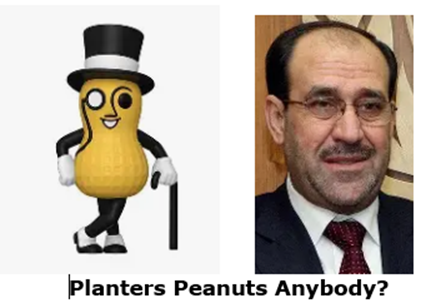
This peanut head guy Nori al-Maliki is desperate for power. If he should get into power again as the prime minister we are in for a long wait for the RV. Note in today’s Newsletter how he can get blocked and probably will. He owns almost all the news media stations in Iraq and so go figure why we are seeing such favorable headlines about him. But the average citizens don’t want him and showed it at the ballot box, then there are the Kurds who will have a large say in his nomination, if it is even true that he was nominated. This is itself may be more propaganda from his own news stations. Then there are the parliament members (MPs) who would have to ratify the selection and the majority already said they would deny him the position.
Oh boy, oh boy have I got news for you today! Buckle down, relax and let’s get to it. The proverbial ‘fireworks’ are about to begin in Iraq.
This week will be a pivotal week in Iraq. They are supposed to announce their candidate for president. As we know the new president then announces the nominee for prime minister that will then be tasks to form his cabinet (the news government).
We had news from Iraq that the Coordinate Framework intends to nominate Nori al-Maliki for prime minister. They want to push the announcement also to this week. However, there is going to be a catch from Kurdistan and I don’t think the Kurds are going to be so easy in letting Maliki have a third term based on his disastrous prior two terms. So, basically the Kurds are now saying not so fast…..
😊 Oh there is still hope this Maliki stuff is not yet a done deal in two important articles. In the first article titled “ZEBARI ON MALIKI’S NOMINATION AND THE PRESIDENTIAL ELECTION DATE: THE COMING DAYS ARE FULL OF SURPRISES” from Sunday’s news in this article we find that Hoshyar Zebari, a leader in the Kurdistan Democratic Party, said that nominating Nouri al-Maliki as a candidate for prime minister and setting a date for the session to elect the president of the republic “does not mean that the determination of the three presidencies and the formation of the government has been decided,” noting that the coming days are “full of surprises and twists.”
This last set of sentences above are very important. Pay attention!
😊 Then later yet another article follows titled “SUDANI’S CHANCES ARE IMPROVING AGAIN… NEW INFORMATION REVEALED BY MP AL-LUWAIZI”. In this bit of news we learn that MP Abdul Rahman Al-Luwaizi, from the Reconstruction and Development bloc, said that what is being circulated regarding an official concession or political marketing to hand over the premiership to the leader of the State of Law Coalition, Nouri Al-Maliki, is “untrue in word and deed,” stressing that the political reality indicates a different course in managing the nomination file. So what should we believe? We must stick to the facts about Maliki and keep asking what the hell are they thinking to even consider this idiot again to run the government. Heck more like “run-down” the government than run it.
I don’t know about you but when I read this these couple articles along with knowing how negative the Kurds are towards Maliki, this to me means they are going to exert maximum pressure to ensure Maliki is not the next prime minister. I have to keep going back to the thoughts of – what the hell are the Iraqi thinking of nominating Maliki in the first place? Have they really gone that far left. This is even more than just going to the far left, its ‘stupid’ and defies all common sense. It is like Joe Biden having a second term as the US president. It simply does not make any sense.
😊There is also yet another element that may block Maliki from becoming the next prime minister. Many overlook this element. Remember that Parliament also has to ratify the nominee when announced. So, in this next article titled “SHARP DISAGREEMENTS WITHIN THE HALBOUSI COALITION OVER THE VETO OF A THIRD TERM FOR MALIKI” we learn that parliament may not go along with Maliki for a third term and may use the power of veto on his nomination.
I quote from the article – “Informed sources revealed on Sunday the existence of deep disagreements within the leadership of the Halbousi Alliance due to what some have termed a “veto” on a third term for Nouri al-Maliki.” – “The source told Al-Maalouma that “important figures within the Halbousi Alliance were dissatisfied with the statement issued by the National Political Council, which implicitly vetoed a third term for Maliki, despite the support of the Alliance’s constituent forces for him as a candidate to form the next government.”
Just remember that the circus is not yet over until the fat lady sings….lol…lol..lol.. 😊
Now the surprise will be to see how the US president Donald Trump feels about this announcement of Nori al-Maliki as the next prime minister. Will he oppose it or is there something that we don’t know about. Is God going to use Maliki to wake up the Iraqi politicians as he did in the US using the Biden era? How bad could it get in the next four years? Will God let Iraq suffer for this time again? Will we have to wait another four (4) years and even what state will Iraq be in after four more years of Maliki?
There is not much more I can say about this recent announcement about Maliki the peanut head guy as the nominee. We can see today through the news from Iraq that the Coordination Framework fully intends to nominate him for prime minister. This is where they are going to make their huge mistake and expose their own corruption. God works in strange ways. Let’s just sit tight and watch the drama play out. Like you, I feel this will be a set back in our timing of the reinstatement if this does occur. We all know president Trump wants to move Iraq along while he can and he only has another three years in office as president. He wants the reinstatement as bad as we do.
The election drama continues….
Oh… but wait there is more drama playing out in parliament too from this election cycle. There is much more than just the prime minister nominee to worry about.
😊So, there is also yet another issue lingering that needs to be addressed for this election cycle. It is just as important as the Maliki drama, if not more important. Having an Iranian pacifier as a puppet prime minister, than also a rigged parliament to vote his way on bills is not good for Iraq. They need checks and balances in the government. If we read the article titled “US, IN CONTROL OF OIL DOLLARS, HEAPS PRESSURE ON IRAQ OVER IRANIAN INFLUENCE” we learn more.
In this recent article we learn that the US has threatened senior Iraqi politicians with sanctions targeting the Iraqi state — including potentially its critical supply of oil revenue sourced via the Federal Reserve Bank of New York — should Iran-backed armed groups be included in the next government, four sources told Reuters. This threat was given months before the election. However Iraq did not pay much attention to it.
The US stance was simple “No armed groups in new government”. Can it get any clearer? So, in the newly elected representatives in parliament are there any members of armed militia groups? Let’s explore both sides to this story today. Who is on the right side and who is wrong?
So, YES there is many Iranian militia faction members from the recent November election cycle elected into office to replace other members in the chamber of parliament. In fact there is 58 members total to be exact , plus one deputy head of parliament. The US views all of these new members as linked to Iran. The fear is they will influence Iraqi politics to extent to benefit Iran rather than the people of Iraq. “The American line was basically that they would suspend engagement with the new government should any of those 58 MPs be represented.” No remember that the US is absolutely not going to signoff on the reinstatement of the dinar unless there is a STABLE government in place. Do you think this is a stable government? I don’t care with what any of these other intel gurus are telling you. They are full of sh-t! Oh… their secret sources have been so accurate with their stupid lies of every day and every weekend RV scenarios. How can anyone even believe their crap any more. You have to be an idiot just like them to follow them.
But I am showing you today evidence and facts and trying to help you understand that there is much more to it to the US plans to shut down this Iranian influence. It gets complicated real fast but not really if you try to clarify it and understand it.
Remember the US has leverage over Iraq as they maintain control of over 100 billion dollars of Iraqi oil revenues in the banks in NYC. Oil is still mandated to be sold in US dollars even though we learned that the UN sanctions have been lifted since December 2022. So, I guess maintaining this leverage of not releasing these funds to Iraq was a good choice by the US? Can you imagine if the US were to cut of all dollars to Iraq? How would Iraq pay its bills as in the budget?
So, the Iraqi Coordination Framework stance is that Iraq is an independent state. a sovereign nation and so they can do as they please electing officials in their government. But as we find this stance is not actually a correct stance, says the US administration. It is not correct as there is Iran influence and this does not meet the requirement of “sovereignty” and “independence”. Sorry Iraq!!!! ☹
“The United States supports Iraqi sovereignty, and the sovereignty of every country in the region. That leaves absolutely no role for Iran-backed militias that pursue malign interests, cause sectarian division, and spread terrorism across the region,” With sovereignty means responsibility to serve the Iraqi people not the Iranian regime which desperately now needs Iraqi support. Remember too that all of this come on the heels of what is now going on in Iran as the current regime is about to break. This is maximum pressure from the US from all directions.
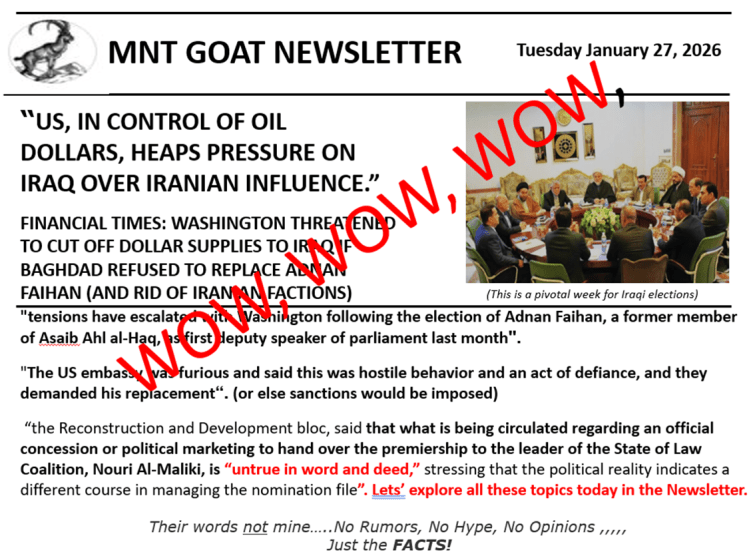
😊In the article titled “FINANCIAL TIMES: WASHINGTON THREATENED TO CUT OFF DOLLAR SUPPLIES TO IRAQ IF BAGHDAD REFUSED TO REPLACE ADNAN FAIHAN” we learn at the Financial Times reported on Friday that Washington is pressuring senior Iraqi politicians to form a government that is free from armed factions. There is one person especially they want out. His name is Adnan Faihan. He is a former member of the Asaib Ahl al-Haq, which has been designated by the Trump administration as a terrorist organization. Go figure?
I quote from the article – “tensions have escalated with Washington following the election of Adnan Faihan, a former member of Asaib Ahl al-Haq, as first deputy speaker of parliament last month.” According to the news, “The US embassy was furious and said this was hostile behavior and an act of defiance, and they demanded his replacement.” Can everyone see now where this is going and what it is going to lead to? How many more articles do we need to see to understand the US is NOT going to back down on elimination of these Iranian-backed militia members and politicians in the Iraqi government. It may be months before this government is formed correctly or it may happen sooner that we think depending on what Iraq decides to do.
Why does Iran need Iraq as its “puppet” state?
Iran’s stance is that it views Iraq as vital for keeping its economy afloat amid sanctions and long used Baghdad’s banking system to skirt the restrictions, US and Iraqi officials have said. Successive US administrations have sought to choke that dollar stream, placing sanctions on more than a dozen Iraqi banks in recent years in an effort to do so. But there is about to be sanctions like Iraq has never experienced before if they do not bend to these Iranian backed politicians. Washington has never yet curtailed the flow of dollars from the oil revenues of Iraq, sent via the Federal Reserve Bank of New York to the Central Bank of Iraq. As you might recall the US has had de facto control over Iraq’s oil revenue since it invaded the country in 2003.
So, all my readers should realize after learning of the complete news, not just one sided, that the drama of this election is far from over. These are pivotal weeks ahead. These coming weeks could either move our investment in the correct direction of sooner than later or it could push it to much, much later, like years away. I just have to be honest with everyone from the news we are getting from Iraq.
___________________________
What else do we know…..
😊In a recent article titled “BREAKING | SOURCES TO IRAQ OBSERVER: TRUMP’S ENVOY TO IRAQ, SAVAYA, HAS ALREADY ARRIVED IN BAGHDAD AND MET WITH AL-SUDANI AT A WORKING DINNER” we learned that the US President Donald Trump’s envoy to Iraq, Mark Savaya, has already arrived in Baghdad and met with Prime Minister Mohammed Shia al-Sudani for a working dinner on last Thursday evening. What do you think they mainly talked about? Conversation from sources told us it focused on combating the rampant corruption in the Iraqi state and drying up its sources. No official statement has yet been issued by the Iraqi government regarding the start of the visit and its agenda. I will try to give you today yet more of what I have learned so far since last Thursday.
😊Please take a peek at the article titled “WASHINGTON THREATENS BAGHDAD WITH THE “NUCLEAR OPTION” (in a matter of speaking): REPLACE FAYHAN AND DISARM THE FACTIONS IMMEDIATELY”. In it we learned that an Iraqi newspaper quoted informed sources stating that American officials, during their meeting with prominent Iraqi political leaders tasked with forming the next government in recent weeks, pushed for the presentation of a credible plan to disarm Iranian-backed armed groups quickly.
The news also quoted a source as saying that the coordinating framework, including the main militias backed by Tehran, offered to announce a phased disarmament plan over two years after the formation of the government, hoping that the issue would “lose momentum” before its implementation. However, the report said that Washington demanded immediate action not years away. We know that these Iranian-backed politicians will say one thing and do another. Nori al-Maliki’s last administration was full of saying what you wanted to hear and then he did what he wanted later. So, will the US be fooled again with their lies? Remember it was the US that had bad intelligence on Nori al-Maliki and supported his election at the second prime minister of Iraq in disregard to the election results and the winning political block to select the next prime minister. Remember Dr Ayad Allawi? He was interim prime minister of Iraq from 2004 to 2005 and then ran for the prime minister against Maliki in the 2006 election cycle. Allawi won the majority of votes and was selected by the majority political block as their nominee; however, the sleaze-bag Nori al-Maliki was seeded instead due to a technicality. This is when all the trouble began with Iraq right from this moment on and the corruption began. As we can prove he also blocked the reinstatement of 2013 with false accusations of Central Bank corruption. This is also when Dr Siani Shabibi was ousted as head of the CBI. Maliki served two terms and ended in 2014 as the prime minister. He had to be forcefully taken out of office as he refused to concede his office. He wanted another dictatorship and to be the next Saddam Hussien. He tried to use the ISIS invasion as his fear factor to do so. He is an opportunist and will step on anybody, kill anybody to gain control of Iraq again.
________________________________
😊 Lastly let’s look at more positive news for today in the article titled “BAGHDAD TODAY INVESTIGATES: IRAQ’S BUDGET HAS NO DEFICIT… REVEALING THE “FIGURES” THAT CITIZENS ARE NOT MEANT TO SEE – URGENT” I have said previously that Iraq has no deficit only stolen money. This article takes a hard look at the revenue streams. Why do some politicians keep looking at deficits and the glass is half empty when we can clearly see that there is more than enough revenues only they need to align good sound practices to collect these revenues and put them into the Federal coffers, thus not steal the funds.
But, in this regard, we must also take a hard look at the US and all the stolen money exposed by DOGE and since. Even with measures in place in the US the money flows into notorious hands if not audited and carefully managed. Iraq, as new as it is, is even more susceptible to these dangers of stolen money. But this will change as it is changing also in the US.
In another article they expose yet another reason why these hoards of cash are not in the banks that the CBI keeps telling us about in many articles of the past. It is titled “AN ECONOMIST SAYS BANKS’ MANIPULATION OF PROFITS IS EXACERBATING THE “HOARDING CRISIS” AND LIQUIDITY SHORTAGE.” Oh… so it this issue much more complicated than most believe? These practices we learn about today have led to a loss of confidence in the public banking sector, encouraging citizens to hoard their money at home and in businesses, away from the formal banking system
In the article we learn that economic expert Salam al-Zubaidi warned on Thursday of the repercussions of some state-owned banks altering the terms of agreements with depositors. I quote –“He emphasized that this ill-considered measure has resulted in reduced profits for citizens and discouraged them from depositing funds, exacerbating the phenomenon of hoarding and the country’s liquidity crisis.”
I quote from the article again – “There are numerous complaints from citizens regarding the reduced profits they receive when depositing their money, which contradicts the initial terms of the agreement with the bank.” and that “the main problem lies in the ill-conceived management decisions that unilaterally change previous contracts.”
I quote “these practices have led to a loss of confidence in the public banking sector, encouraging citizens to hoard their money at home and in businesses, away from the formal banking system.” He pointed out that this “hoarding” poses a significant challenge to the Iraqi economy, as approximately 87% of the circulating cash (around 95 trillion dinars) remains outside the formal banking system. This phenomenon of hoarding money has caused a major liquidity crisis and negatively impacted banks’ ability to finance and lend, thus harming overall economic growth in the country.” Looks like yet another banking reform is needed….. will it ever end? ☹
____________________________________________
I am waiting for God to speak up about Iraq again through His prophets. We know that prophet Kim Clement already prophesized on two different occasions about the Iraqi dinar. Will God give us another one soon? We wait.
What will this new year bring?
More than ever, we need to tune into the prophets during this new year! This is said to be the great year of the breakthrough in many aspects. Many of these past prophecies have yet to be fulfilled. They are now being repeated time and time again in prophetic word. What does this mean. I am told this means they are very close to fulfillment. Let’s see what the new year brings. Remember God’s prophet Kim Clement told us the Iraqi dinar and the middle east would change drastically. Can you see it now when Iran falls?
God uses his prophets in time of trouble. If you don’t think this nation and the world is in trouble – THINK AGAIN! If you can discern the fake from the good prophets, you can tie into something wonderful to guide you. But be careful there are many charlatans out there and we have witnessed these many bastards already in the IQD RV intel standpoint. Prayer also helps as it lets God know you are affirming as a human being what he is doing. You are essentially saying THANK YOU and please continue! These prophecies give us hope and comfort to know some higher power is looking after us. I have tried to bring you what I believe are some of the legitimate prophets for clarity. I hope they are giving you encouragement to stay focused on the TRUTH.
We pray-
- Let it be a year of more EXPOSURE of corruption and just as important, ACCOUNTABLITY for those involved. God says JUSTICE will triumph.
- Let it bring a truly sovereign Iraq, United States and all other nations who embrace freedom, liberty and justice.
- Let it bring the great Wealth Transfer, with Happiness, Abundance and Prosperity.
______________________________

________________________________________
Their words not mine…..No Rumors, No Hype, No Opinions ,,,,,
Just the FACTS!
PRAYING WITH SINCERITY
Many may ask why their prayers are not being answered. Our new Shepard in Rome Pope Leo XIV has given us some direction.

You can purchase a nice pair of Rosary Beads here to pray:


These prophecies are more important now more than ever. They give us the strength, perseverance and hope that a better time is coming and that God’s Hand is at work behind the scenes. If you just take a second even to look around you at these past three election cycles, how can you deny that God is at work? Are you sleeping or what?
It is amazing and there is no other way that these events could have happened the way they turned out. But there is more to come, much, much more, I assure you! Now that God has his biblical David re-elected, we need to pay attention to what He does next.
NOTE: These prophecies just keep getting better and better, giving us HOPE of a brighter future. But the real reason why I listen to them is that we can actually see what God says He will do is taking place right in front of our noses. It is a confirmation to me that God is real and is still with us forever just as in biblical times.
Prophetic Words from prophet: Julie Green
“An Unprecedented Market Crash Is Coming”
Go to the 15:28 mark. From Jan 17th.

“A Plot To Kill The President”
Go to the 12:14 mark. From Jan 19th.
These are getting more and more URGENT and this one is a HEAVY word!
Who is the Great White Wolf?
God is revealing a new kind of Virus they are trying to release.
“A Shutdown Is Coming To The United States To Evict the Deep State Out Of Your Government”
Go to the 13:43 mark. From Jan 11th.
People, like you and me, are wondering why there is so much exposure of the corruption yet we hear very little justice being imposed upon them for these crimes. Who is going to jail we ask? Why is nothing being done with these people, we ask? Why are they still walking around free, we ask? Why are they still talking to the news media influencing public view with their corrupt nonsense, we ask?
So, in this prophecy today God reveals what is going to happen for justice to occur. He says justice is coming and shows us how will this happen. What has to happen first? In other past prophecies, if you recall, he also told us it was coming but today he makes it very clear what is about to happen to administer this justice…finally. I believe this is VERY NEAR!

“Martial Law Is Coming Shortly: Last Warning”
(I am going to remove this one after this Newsletter….)
Go to the 39:49 mark. From Jan 16th while giving morning prayers.
Please don’t miss this one! Everyone should be physically and mentally prepared for what is about to happen. This may mean shutting down the internet for a couple of days. This means no credit cards or social media. Do you have enough cash on hand, if needed? Keep your gas tanks filled and food stocks supplied.
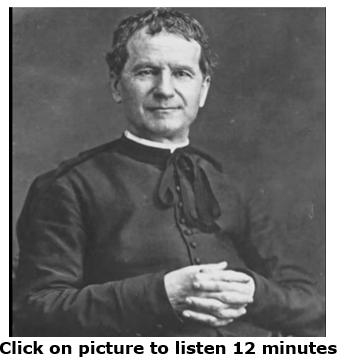
Fr. DON BOSCO EXPOSED THE DARK SECRET BEHIND ISLAM
— And the Truth the World Forgot about the so-called Muslim religion. Fr.Don Bosco, also known as John Bosco, was an Italian Catholic priest and educator, born on August 16, 1815. He founded the Salesian Society in 1859 to help disadvantaged youth, particularly boys, through education and community service. His teachings emphasized lovekindness, and the importance of education for young people, making him a beloved figure in Catholicism and a patron saint of youth. Don Bosco was canonized in 1934.
PRESIDENT TRUMP ANNOUNCES THE US IS PULLING OUT OF NATO, BUT WHY?
Do you want the true? Do you really want the Truth? Then pay close attention to what I am about to tell you. I will put this into simple terms for all to understand.
We must keep asking why. Why, why, why did Trump decide this move is in the best interest of the US? We must keep asking these vital questions and just don’t breeze over the headlines.
This Trump move is a drastic shift from the global elitist version of the world. I want everyone to remember what happened in Ukraine. NATO positioned warheads pointing at Russia in Ukraine. Really? Oh…. you didn’t know that?
After the end of the Second World War in 1945, during which the US and USSR had been allies, the USSR installed satellite governments in its occupied territories in Eastern Europe and North Korea by 1949, resulting in the political division of Europe (and Germany).
The US allies even had an early confrontation of the communists, as was the Korean War of 1950 to 1953, which ended in a stalemate. So, we must think reality and if the US would have made a major blunder invading Russia in 1945 when we couldn’t even win the Korean war.
The fall of the cold war in 1991 took negotiating, and lots of it, and one item decided on was never to position NATO forces in this buffer zone of any of the former USSR WWII territorial concessions, if the USSR, is to be broken apart. This means Russia liberating all of these countries on its border. Russia had been using these countries as its’ buffer zone to protect their homeland from foreign invasions. This had occurred for decades since the end of WWII. Afterall when you heard strategic proposals from popular generals like Patton and MacArther with their talk of invading Russia post WWII, what do you want Russia to think? So, this protective barrier had been going on for over decades into the early 1990’s. Remember the goal of the elitists is to control the ENTIRE WORLD and its resources and so Russia, is included as part of their conquest.
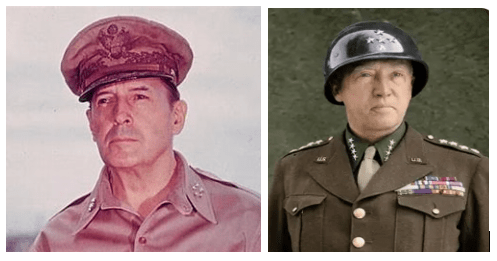
The globalist think tank developed a 20 year strategy for the new Millenium. It included invading Russia and silently building up forces along its borders to isolate it. This violation of the 1991 treaty by NATO was just the beginning. Russia had to respond.
This was the driving force for Russia going into Ukraine. You may hear so much other ‘humanitarian’ rhetoric by the crooked news media channels. They must get the public to support it any way possible, even with lies. These treaties ending the cold war in 1991 and were simply violated by NATO, or should I say the globalist.
During President Trump’s first term he convinced NATO to back out and they did. War between Russia and Ukraine was averted. Then Biden took over and allowed NATO into Ukraine along with the missiles. This was a direct violation of the treaty. Can you blame Russia for invading? Hey folks, I got news for you…. war is not pleasent and people die!
But what was Russia’s real goal? Was it to kick NATO out of Ukraine? Yes, but you didn’t hear much about these FACTS and TRUTHS in the news, did you? Biden also desperately was told not want to expose the rest of world to the other corruption that was going on in Ukraine (biological warfare research, child trafficking, etc.) and his administration hoped by beefing up the Ukraine forces they could signal Russia to back off. Remember that we heard in the news that a lot of the billions of US aid went to NATO to supply weaponry such as drones. What the hell was NATO doing in Ukraine? There was talk from the UN to vote on whether NATO should enter Ukraine and help the Ukrainian government push Russia out. I’d like to tell you folks; NATO was already in Ukraine at that time. So, this was all just a pack of lies to try to make it legal going forward.
Well… this in itself proves that this is really all about NATO involvement in Ukraine. Crooked NATO then also became the protector of these nefarious operations to which the Ukraine was being used for, mostly to hide its work from the rest of the world. Ukraine had become a secret, dark cesspool for the elitist at a platform to conduct their global agenda.
Also, as far as breaking away from NATO, we must think about what just happened in Greenland. The US was threatened with NATO retaliation if it attacked Greenland forcefully. The EU supported it. Really? The US, being one of NATOs largest contributors, and you are going to attack it? Can you now see the split and the slow progressive move of the US from supporting this globalist idea of controlling the planet and with it the US sovereignty too?
The US is slowly breaking away from this globalist idea of controlling the planet. But it takes guts and it take a president with guts to do it. The ‘Make America Great Again’ slogan has become the US mantra and making America wealthy again not making the elitist rich through their global empire. Even Iraq, under al-Sudani has taken up the slogan of ‘Making Iraq Great’. For Iraq this slogan means a lot. It means a breakaway from the globalist vision for Iraq and to a more sovereign approach to national unity. Is this why we have seen this massive reform movement under al-Sudani take hold during his four-year administration? But what will happen should he (like Trump) not get elected for a second consecutive term? Of course, the globalist do not like Al-Sudani’s policies and so they are attempting to put their puppet Nori al-Maliki back in again as prime minister to tear apart all the progress and hard work made so far, just as Biden had done to the US when he followed Trump’s first term. Can you see what is going on here?
You must make these connections and not just read the news but absorb it and remember it. Then connect the pieces of what is really going on in Iraq, in the US as well as in Ukraine. It is all a ‘silent war’, hiding the truth with lies and falsified misconceptions by the news media of what is really taking place. And what is taking place is a pull-away from the globalist conquest to establish their One World Government. Even as the prophets tell us this One World Government may happen some day in the distant future, but this not the time and God is not going to let the dark powers rush it. Also, we don’t even know if the One World Government of the future will be a dark government at that time. All we know is what we see today in the UN and the elitist move to enslave mankind now. The prophets also tell us that the US will be an isolationist and will break away entirely from this idea of a One World Alliance move and Europe.
US PRESIDENT TRUMP DELIVERS REMARKS AT THE WORLD ECONOMIC FORUM, DAVOS, SWITZERLAND
HANDCUFFS AND PRISON TIME COMING FOR MINNESOTA FRAUDSTERS
This is pandemic era fraud swept under the rug by the Biden administration. This was money that small businesses needed to survive and stay open. This was tax payer funds allocated to help them. So many never got the money or much less that they should as funds ran dry due to fraudsters.
THE U.S. HAS ONLY ONE SET OF FEDERAL LAWS
If you want to change the law you must go through the legislative process. STATES CAN NOT RANDOMLY DECIDE TO DISOBEY FEDERAL LAW, it would be a breakdown of an orderly society and chaos would prevail which we are seeing in sanctuary cities. States are not an “island” and are part of the United States of America. Any governor or mayor who apposes these Unites States should resign or be impeached and banned from politics.
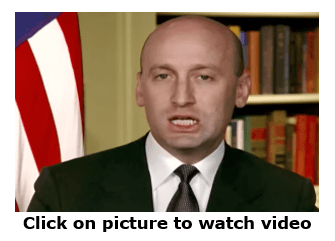
White House deputy chief of staff for policy Stephen Miller explains how federal law applies regarding Minnesota and illegal immigration. This mass migration scheme of the democrats is for votes and they only way they can stay in power. They are upset that Trump sees through the scheme and is shutting it down. Why not just have FREE elections and let the citizens decide. Yes, legal, bonified citizens voting because this is what the US Constitution says and the U.S. is a Constitutional Republic.
TRUMP’S NEW PLAN TO STOP THE ICE RIOTS

CLINTONS IGNORING SUBPOENA TO TESTIFY BEFORE CONGRESS
Are They Really In Trouble For Ignoring a Subpoena?

I have created a brand-new “Post RV Workshop” page in the blog. I included my own personal tips on investing post-RV and also organizing and protecting your estate. Here is the LINK. Going forward I will only post new and exciting information and opportunities here on the Latest Newsletter as they come along. Later I will transfer it to the ‘Post RV Workshop’ page in subsequent Newsletters for your future reference.
Just so you know I absolutely DO NOT adhere to high-risk investments where you can lose it all in a flash. Look at it this way – you are going to have all this money. Most of us investors waited decades for this RV to happen and so why would you even think about pissing is all away in some high-risk gamble of an investment. Yes, there are going to be scammers out there but let’s talk about legitimate investment opportunities only. These scammers can suck you dry and there is not a damned thing you can do about it. Go to a legitimate wealth manager associated with your bank. Let the licensed experts advise you. Please, please stay away from idiots like MarkZ, TNT Tony, Bruce on the Big Stupid Call, etc. , etc.
GOLD/SILVER RATIO: WHEN THIS RATIO SHIFTS, CRISIS FOLLOWS — AND IT’S HAPPENING AGAIN
What will it bring us this time?

Here are a few of the other topics covered:
* TRUMP FLOATS ZERO INCOME TAX PLAN STARTING WITH BIGGEST REFUNDS EVER
*HOW MUCH MONEY CAN YOU GIFT WITHOUT PAYING TAXES?
*SILVER VAULTS RUN DRY AS SHORTAGE TRIGGERS PANIC. Physical silver not available to meet demand.
*15 THINGS TO DO IF YOU GET RICH ALL OF A SUDDEN
*15 ASSETS THAT ARE MAKING PEOPLE RICH/RICHER
*HERE’S HOW TO MAKE YOUR ASSETS INVISIBLE FROM CREDITORS
*HOW TO LOOK PENNILESS IN THE PUBLIC RECORD
*5 STATES CUTTING PROPERTY TAXES TO ZERO. WILL YOUR STATE BE NEXT?
*TRUMP REVEALS WHEN AMERICANS MIGHT EXPECT TO GET A TARIFF RELIEF $2,000 CHECK

SUDANI’S CHANCES ARE IMPROVING AGAIN… NEW INFORMATION REVEALED BY MP AL-LUWAIZI
MP Abdul Rahman Al-Luwaizi, from the Reconstruction and Development bloc, said that what is being circulated regarding an official concession or political marketing to hand over the premiership to the leader of the State of Law Coalition, Nouri Al-Maliki, is “untrue in word and deed,” stressing that the political reality indicates a different course in managing the nomination file.
Al-Luwaizi explained in televised statements followed by “Jarida Platform” that what is currently happening is opening the way for the current Prime Minister, Muhammad Shia Al-Sudani, to give Nouri Al-Maliki the political opportunity to enter the race for the nomination, indicating that this option does not mean deciding the position in favor of Al-Maliki, but rather subjecting him to a test of his ability to form the government within the existing equations and balances.
He added that Maliki’s failure to form a government, if he is officially tasked with it, will reopen all political options, noting that Mohammed Shia al-Sudani’s chances may rise again strongly, based on considerations of internal balances and the magnitude of the challenges that any new tasked person may face.
Al-Luwaizi indicated that if the option of assigning Al-Maliki proceeds, the Reconstruction and Development bloc will have a “significant” ministerial share within the new government formation, explaining that the talk is about five sovereign or heavy service ministries.
He also pointed out that the political blocs that had previously objected to al-Sudani’s appointment and nomination for the premiership may receive modest ministerial shares compared to the supporting blocs, which reinforces the hypothesis of al-Sudani’s repositioning as a strong option in the next stage.
Al-Luwaizi concluded his remarks by emphasizing that the political scene is still open to several scenarios, and that the decision regarding the premiership will remain contingent on the candidate’s ability to overcome political complexities and form a government that enjoys broad consensus.
**************************************************************************************************
A MEETING AND DINNER BRINGS TOGETHER AL-SUDANI AND SAVAYA IN BAGHDAD
An informed source revealed on Thursday that Trump’s envoy, Mark Savva, arrived in Baghdad, where he was received by Prime Minister Mohammed Shia al-Sudani at his office.
The source told Video News Agency that al-Sudani and Savva held an official meeting and also dined together during the meeting, which took place at the Prime Minister’s office.
************************************************************************************************
BREAKING | SOURCES TO IRAQ OBSERVER: TRUMP’S ENVOY TO IRAQ, SAVAYA, HAS ALREADY ARRIVED IN BAGHDAD AND MET WITH AL-SUDANI AT A WORKING DINNER.
According to multiple sources, US President Donald Trump’s envoy to Iraq, Mark Savaya, has already arrived in Baghdad.
These sources, speaking to Iraq Observer, said Savaya met with Prime Minister Mohammed Shia al-Sudani for a working dinner on Thursday evening. The anticipated visit of the US envoy was preceded by a series of statements he made through a number of tweets on his official X account, focusing on combating the rampant corruption in the Iraqi state and drying up its sources.
In the past few days, Savaya has also posted a series of photos of his meetings with US President Trump, the Secretaries of War and the Treasury, and other US officials, along with comments about his intention to address a number of crises facing Iraq.
No official statement has yet been issued by the Iraqi government regarding the start of the visit and its agenda.
**********************************************************************************************
WASHINGTON THREATENS BAGHDAD WITH THE “NUCLEAR OPTION” (in a matter of speaking): REPLACE FAYHAN AND DISARM THE FACTIONS IMMEDIATELY.
The British newspaper “Financial Times” revealed that the United States has been pressuring senior Iraqi politicians in recent weeks to form a government that does not include representatives of armed groups supported by Iran, through threats that include economic measures, such as reducing the supply of dollars sent in cash in exchange for Iraq’s oil sales.
The newspaper quoted informed sources in a report translated by Shafaq News Agency, stating that American officials, during their meeting with prominent Iraqi political leaders tasked with forming the next government in recent weeks, pushed for the presentation of a credible plan to disarm Iranian-backed armed groups quickly.
The report quoted five sources familiar with the talks as saying that US officials threatened punitive measures if this did not happen. According to three sources, the threats included imposing economic measures, such as reducing the supply of dollars sent in cash in exchange for Iraqi oil sales.
According to the report, tensions with Washington escalated after the election last month of Adnan Faihan, a former member of Asaib Ahl al-Haq, who now leads its political wing, as first deputy speaker of parliament, in a country the report described as being seen as the last stronghold of Iranian influence in the Middle East.
The report quoted one of the sources as saying, “The American embassy completely lost its temper, told us that this was hostile and defiant behavior, and demanded that we replace him.”
The report noted that the coordinating framework that received the largest share of votes is leading the government formation process, and it includes members of several “militias” that the United States classifies as “terrorist” groups. It pointed out that although the fighters of these groups have become less visible now, they enjoy a strong presence in Iraq, while these groups have become part of the state’s security apparatus .
The report also considered Asaib Ahl al-Haq to be among the most influential of these groups, noting that Asaib is trying to reintroduce itself politically, and had a minister in the previous government. The report indicates that after Asaib Ahl al-Haq came in third in the election results, its political wing, like the wings of other factions, is trying to expand its presence within the government and state institutions, and to deepen the dialogue with Western capitals that are wary of dealing with a group classified by the United States as a terrorist organization.
The report noted that the administration of US President Donald Trump has not yet appointed an ambassador to Baghdad, as is the case in many world capitals that were considered pivotal to US foreign policy. Also, Mark Savaya, Trump’s nominee to serve as special envoy to Iraq, has not yet received congressional approval, while analysts say his influence is limited.
The report also stated that US forces withdrew completely from Iraqi territory under the control of the federal government a few days ago, but will remain in the Kurdistan region. The report quoted Renad Mansour, a researcher at the British think tank Chatham House, as saying that “Iraq has fallen off the radar of the United States more than at any time in recent decades, yet the Trump administration remains very influential, directly and indirectly, in how the government is formed.”
The report also quoted former US State Department official Victoria Taylor as saying that “the Trump administration’s policy toward Iraq is driven more by Iran than by the relationship with Iraq.”
The report also revealed that since Fayhan’s election to his new position, US officials have frozen all meetings with their allies who voted for him, and have issued a list of names of MPs they do not want to have in the government. In addition to demanding that Faihan be replaced from his position as First Deputy Speaker of Parliament, US officials are also calling for plans to be accelerated to disarm Shiite armed groups.
The report noted that Savaya had said in recent social media posts that the US Treasury Department would be reviewing transactions of Iraqi entities suspected of having financial links to “terrorist activities “.
According to three informed sources, Washington threatened to cut off dollar supplies to Iraq if Baghdad rejected American demands, a move one of these sources described as the “nuclear option “. The report explained that Iraq’s economy has long relied on a special arrangement reached after the US invasion of Iraq, whereby since 2003, Washington has been sending billions of dollars in cash shipments annually to Baghdad via monthly flights, funds originating from Iraqi oil sales, the proceeds of which are deposited into Iraq’s account at the US Federal Reserve.
The report stated that if Washington were to cut off these dollar supplies again, Iraqis fear instability and an economic crisis. The report quoted one of these sources as saying, “They told us that if we do not meet their demands, America will not be willing to help Iraq .”
According to the report, these threats, in addition to fears of possible military action by the United States and Israel, contributed to pushing Iraqi politicians to comply with some American demands.
The report also quoted five people familiar with the talks as saying that the Coordination Framework and Asaib Ahl al-Haq had expressed their willingness to replace Fayhan, with one of these sources saying that “it is better to compromise on this point than to compromise on another.”
According to the British report, the issue of disarmament remains the most sensitive issue, as the “militias” have long resisted pressure to disarm, considering that their weapons are still necessary to defend Iraq.
The report quoted a source as saying that the coordinating framework, including the main militias backed by Tehran, offered to announce a phased disarmament plan over two years after the formation of the government, hoping that the issue would “lose momentum” before its implementation. However, the report said that Washington demanded immediate action.
The report quoted Taylor as saying, “These demands are all in line with this administration’s goals,” adding, “Given Iran’s weakness and the militias’ fear of Trump and what he might do, why shouldn’t the United States try to exert maximum pressure?
**********************************************************************************************
o suppress the protests
FOLLOWING UN CONDEMNATION, THE US TREASURY TARGETS AN OIL FLEET PARALLEL TO THE IRANIAN REGIME.
The US Treasury Department announced on Friday (January 23, 2026) a new package of sanctions targeting what it described as the “parallel fleet” used by the Iranian regime to smuggle oil and finance its security apparatus and regional proxies, in response to what Washington considered a “brutal crackdown” against peaceful protesters and a complete internet blackout inside Iran.
A statement from the ministry, translated by Baghdad Today, said that the Office of Foreign Assets Control (OFAC) imposed sanctions on nine ships and a number of companies that own or operate them, after they were involved in transporting hundreds of millions of dollars’ worth of Iranian oil and petroleum products to foreign markets, indicating that these revenues are “the right of the Iranian people” but are used, according to the statement, to finance armed groups, weapons programs and security agencies instead of being directed to basic services.
US Treasury Secretary Scott Bessent said that “the Iranian regime is engaging in economic self-destruction, accelerated by President Trump’s maximum pressure campaign,” noting that Tehran’s decision to “support terrorists at the expense of its own people” has led to currency collapse and deteriorating living conditions. He emphasized that today’s sanctions target a “critical element” in financing repression inside Iran, and that the Treasury will continue to pursue the tens of millions of dollars that the regime “is stealing and attempting to smuggle through foreign banks.”
The statement noted that the new measure was issued pursuant to Executive Order 13902 concerning the oil and petrochemical sectors in Iran, and as a continuation of the sanctions campaign targeting Iranian oil exports in support of the second National Security Presidential Memorandum (NSPM-2) aimed at imposing “maximum economic pressure” on Tehran.
According to the Treasury Department, the sanctions targeted ships flying the flags of various countries, including the Seabird, AVON, AL DIAB II, CESARIA, LONGEVITY 7, EASTERN HERO, AQUA SPIRIT, CHIRON 5 and KEEL, as well as companies in the UAE, India, Oman, Seychelles, Marshall Islands, Panama and Liberia, as part of the network transporting Iranian oil to East Asia, Pakistan, Somalia and other countries since 2025.
The US Treasury confirmed that all assets and interests of the individuals, companies, and vessels subject to the sanctions are frozen within the United States or within US jurisdiction, and that dealing with them or providing services to them by Americans or through the US financial system is prohibited, while warning that individuals and financial institutions around the world may be subject to potential sanctions if they deal with the listed entities.
The statement noted that the goal of the sanctions “is not punishment in itself, but rather changing the behavior of the regime,” while pointing out that there are mechanisms to remove individuals and entities from the sanctions lists if legal criteria are met, and calling on those wishing to request removal to review the Office of Foreign Assets Control’s guidelines on removal procedures from the lists.
This escalation in sanctions comes after the adoption of a resolution at the UN Human Rights Council, which, by a majority of 22 votes, condemned the Iranian regime’s crackdown on peaceful protesters and called on Tehran to stop the excessive use of force, respect human rights and ensure accountability for violations.
***********************************************************************************************
$100 BILLION IN IRAQI SAVINGS REVEALED AT THE US FEDERAL RESERVE
Economic expert Duraid Al-Anzi said on Friday that Iraq should not have been exposed to any financial crisis or any form of financial distress, stressing that the concerned authorities did not adopt the proposed oil prices in the budgets, which led to the current financial situation.
Al-Anzi explained in a statement to Al-Furat News Agency that “Iraq has been objected to several times regarding not relying on high prices in budgets, and the necessity of not exceeding $65 per barrel in order to be able to save,” noting that “oil prices have changed a lot, but the competent authorities did not think about the future and did not adopt the proposed prices.”
He added that “Iraq is able to demand additional amounts from its savings held by the US Federal Reserve, as Iraq has savings in the US Federal Reserve exceeding $100 billion, which were transferred to JPMorgan,” explaining that “these funds belong to Iraq after 2003 and have accumulated, and the only beneficiary of them is JPMorgan, which gives simple interest rates, and it is not known whether they reach Iraq or not, and they have not been addressed, despite the amounts being doubled.”
****************************************************************************************
US, IN CONTROL OF OIL DOLLARS, HEAPS PRESSURE ON IRAQ OVER IRANIAN INFLUENCE
Washington has threatened senior Iraqi politicians with sanctions targeting the Iraqi state — including potentially its critical supply of oil revenue sourced via the Federal Reserve Bank of New York — should Iran-backed armed groups be included in the next government, four sources told Reuters.
The warning is the starkest example yet of US President Donald Trump’s campaign to curb Iran-linked groups’ influence in Iraq, which has long walked a tightrope between its two closest allies, Washington and Tehran.
The US warning was delivered repeatedly over the past two months by the US Charges d’Affaires in Baghdad, Joshua Harris, in conversations with Iraqi officials and influential Shi’ite leaders, including some heads of Iran-linked groups via intermediaries, according to three Iraqi officials and one source familiar with the matter who spoke to Reuters for this story.
Harris and the embassy did not respond to requests for comment. The sources requested anonymity to discuss private discussions. Since taking office a year ago, Trump has acted to weaken the Iranian government, including via its neighbor Iraq.
Iran views Iraq as vital for keeping its economy afloat amid sanctions and long used Baghdad’s banking system to skirt the restrictions, US and Iraqi officials have said. Successive US administrations have sought to choke that dollar stream, placingsanctions on more than a dozen Iraqi banks in recent years in an effort to do so.
But Washington has never curtailed the flow of dollars from the oil revenues of Iraq, a top OPEC producer, sent via the Federal Reserve Bank of New York to the Central Bank of Iraq.
The US has had de facto control over Iraq’s oil revenue since it invaded the country in 2003. Iraqi Prime Minister Mohammed Shia al-Sudani’s office, the Central Bank of Iraq and Iran’s mission at the United Nations did not respond to requests for comment.
“The United States supports Iraqi sovereignty, and the sovereignty of every country in the region. That leaves absolutely no role for Iran-backed militias that pursue malign interests, cause sectarian division, and spread terrorism across the region,” a US State Department spokesperson told Reuters, in response to a request for comment.
The spokesperson did not answer Reuters questions about the sanction threats.
Trump, who bombed Iran’s nuclear facilities in June, threatened to again intervene militarily in the country during protests last week.
No armed groups in new government
Among the senior politicians to whom Harris’ message was passed were Prime Minister al-Sudani, Shia politicians Ammar Hakim and Hadi Al Ameri, and Kurdish leader Masrour Barzani, three of the sources said.
The conversations with Harris started after Iraq held elections in November in which al-Sudani’s political bloc won the single-largest bloc of seats but in which Iran-backed militias also made gains, the sources said.
The message centered on 58 members of parliament views by the US views as linked to Iran, all the sources said.
“The American line was basically that they would suspend engagement with the new government should any of those 58 MPs be represented in cabinet,” one of the Iraqi officials said. The formation of a new cabinet could still be months away due to wrangling to build a majority.
When asked to elaborate “they said it meant they wouldn’t deal with that government and would suspend dollar transfers,” the official said.
The US has had de facto control over oil revenue dollars from Iraq, a top OPEC producer, since it invaded the country in 2003. Iran has long supported an array of armed factions in Iraq. In recent years, several have entered the political arena, standing for election and winning seats as they seek a slice of Iraq’s oil wealth.
***************************************************************************************************
FINANCIAL TIMES: WASHINGTON THREATENED TO CUT OFF DOLLAR SUPPLIES TO IRAQ IF BAGHDAD REFUSED TO REPLACE ADNAN FAIHAN
The Financial Times reported on Friday that Washington is pressuring senior Iraqi politicians to form a government that is free from armed factions.
A report in the newspaper, translated by the Mail, stated that “in tense meetings with senior Iraqi political leaders tasked with forming the next government, US officials have been pressing the Iraqis in recent weeks to present a ‘credible’ plan for the rapid disarmament of the factions.”
The newspaper added that they “threatened to take punitive measures if this did not happen, according to five people familiar with the talks, three of whom said the threats included economic measures such as limiting the flow of cash dollars allocated for Iraqi oil sales.”
She explained that “tensions have escalated with Washington following the election of Adnan Faihan, a former member of Asaib Ahl al-Haq, as first deputy speaker of parliament last month.”
According to the newspaper, one of the people familiar with the talks said, “The US embassy was furious and said this was hostile behavior and an act of defiance, and they demanded his replacement.”
Renad Mansour, director of the Iraq Initiative at Chatham House, told the newspaper, “Iraq is further from America’s attention than it has been for decades, yet the Trump administration has considerable influence, both directly and indirectly, in shaping the government .”
Victoria Taylor, who held a senior position at the State Department until last May, said: “The Trump administration’s policy toward Iraq is more directed by Iran than by its relationship with Iraq .”Informed sources reported that since Fayhan’s election, US officials have suspended all meetings with their allies who voted for him and issued a list of MPs they do not want in the government.
The newspaper noted that “Washington threatened to cut off dollar supplies to Iraq if Baghdad refused, according to three sources familiar with the negotiations, which one of them described as ‘the nuclear option ‘.”
******************************************************************************************************
MINISTER OF FINANCE MEETS WITH WORLD BANK DELEGATION
Iraq’s Minister of Finance met yesterday with the World Bank delegation for the Middle East and North Africa to discuss cooperation opportunities and economic reform in Iraq.
With a shared vision of:
-economic reform and expansion of major development programmes,
-Iraq’s visible commitment to streamlining banking procedures to create an attractive environment for investments,
-enhancing the role of the private sector to reduce imports, and
-maximizing non-oil revenues by automating tax and customs systems and
-enhancing public treasury resources
was at the center of the discussions.
Minister Mohammed highlighted the leading role of the private sector as a strategic objective in Iraq’s economic development to ensure the resilience of the Iraqi economy, alongside the importance of partnerships with international institutions to advance the national economic landscape.
The World Bank’s International Bank for Reconstruction and Development (IBRD)
and the International Development Association (IDA) have 23 projects in Iraq with a total commitment of $ 6.64 billion dollars including in areas such as infrastructure, health, and transport.
**************************************************************************************************
AN ECONOMIST SAYS BANKS’ MANIPULATION OF PROFITS IS EXACERBATING THE “HOARDING CRISIS” AND LIQUIDITY SHORTAGE.
Economic expert Salam al-Zubaidi warned on Thursday of the repercussions of some state-owned banks altering the terms of agreements with depositors. He emphasized that this ill-considered measure has resulted in reduced profits for citizens and discouraged them from depositing funds, exacerbating the phenomenon of hoarding and the country’s liquidity crisis.
Al-Zubaidi told Al-Maalouma, “There are numerous complaints from citizens regarding the reduced profits they receive when depositing their money, which contradicts the initial terms of the agreement with the bank.” He explained that “the main problem lies in the ill-conceived management decisions that unilaterally change previous contracts.”
He added that “these practices have led to a loss of confidence in the public banking sector, encouraging citizens to hoard their money at home and in businesses, away from the formal banking system.” He pointed out that this “hoarding” poses a significant challenge to the Iraqi economy, as approximately 87% of the circulating cash (around 95 trillion dinars) remains outside the formal banking system.
He explained that “the phenomenon of hoarding money has caused a major liquidity crisis and negatively impacted banks’ ability to finance and lend, thus harming overall economic growth in the country.” He called for “urgent measures to restore confidence in the banking system by adhering to existing agreements and ensuring transparency in financial transactions.”
***************************************************************************************************
PARLIAMENT WILL HOLD A SESSION NEXT WEEK TO ELECT THE PRESIDENT OF THE REPUBLIC.
(Mnt Goat: Which is now this week)
A parliamentary source revealed on Thursday the date of the session to elect the President of the Republic in the Iraqi Parliament, indicating that the date came after several meetings with the political blocs.
The source told Shafaq News Agency that “the Speaker of Parliament held meetings with the political blocs to convene a session to elect the President of the Republic within the specified constitutional timeframe.”
He added that “the session will be held either on Monday or Tuesday of next week, before the end of the constitutional deadline,” explaining that “before the session to elect the president of the republic, there will be a parliamentary session held on Sunday to discuss the security situation and securing the Iraqi borders, in the presence of the Ministers of Interior and Defense and the security leaders, and that the session will be private and closed.”
The Iraqi Parliament Presidency announced in the middle of this month the names of the candidates who met the legal requirements to run for the position of President of the Republic of Iraq, based on the provisions of Article (4) of the Law on the Provisions of Nomination for the Position No. (8) of 2012, and their number reached 15 candidates.
Later, the Federal Court ruled on the appeals of the candidates for the position, and reinstated 4 names as candidates for the position, bringing the final number to 19 candidates.
**********************************************************************************************
DATE OF AL-MALIKI’S APPOINTMENT TO FORM THE GOVERNMENT
(Here we go again! ☹ Another wasted 4 years of nothing….oh but maybe not……. )
MP Suzanne Al-Saad explained: “Next Tuesday will be the date for electing the President of the Republic within the House of Representatives.”
Al-Saad said in press statements: “Nouri al-Maliki will be tasked with forming the government next Tuesday after the election of the President of the Republic.”
Al-Saad explained: “Al-Maliki will be officially tasked with forming the government during the same session dedicated to electing the President of the Republic, if the constitutional procedures proceed as planned.”
**********************************************************************************************
ZEBARI ON MALIKI’S NOMINATION AND THE PRESIDENTIAL ELECTION DATE: THE COMING DAYS ARE FULL OF SURPRISES.
On Sunday, January 25, 2026, Hoshyar Zebari, a leader in the Kurdistan Democratic Party, said that nominating Nouri al-Maliki as a candidate for prime minister and setting a date for the session to elect the president of the republic “does not mean that the determination of the three presidencies and the formation of the government has been decided,” noting that the coming days are “full of surprises and twists.”
Zebari stated in a post followed by “Al-Jabal” that “the nomination of the majority of the leaders of the coordination framework for Maliki to head the government, and the convening of the parliament session on January 27 to elect the president of the republic, does not mean in Iraqi politics that the crisis, the determination of the three presidencies, and the formation of the government have been resolved.”
He added, “The coming days are full of surprises and twists, and double the effort is required.”
************************************************************************************************
Where does the money go?
BAGHDAD TODAY INVESTIGATES: IRAQ’S BUDGET HAS NO DEFICIT… REVEALING THE “FIGURES” THAT CITIZENS ARE NOT MEANT TO SEE – URGENT
(Mnt Goat: As I have said previously that Iraq has no deficit only stolen money. This article takes a hard look at the revenue streams.)
From the moment the new tax and fee decisions on seaports were announced, a wide wave of questions erupted among citizens and economic experts: Is the real goal to maximize non-oil revenues, or to strangle Iraq’s only seaport and push traders towards alternative ports in neighboring countries?
Behind this question lies a simpler and more sensitive hypothesis: Before talking about new taxes, where does the money collected daily from ports, border crossings, communications, electricity and other sectors actually go, money that is supposed to compensate for part of the state’s dependence on oil?
(Mnt Goat: The government also told us years ago that these fees could rival the oil revenues but ONLY if they can be controlled and put into the Federal coffers. This article is telling us there are enormous non-oil revenues streams but wher is all the money going? Certainly not in the Federal coffers.)
The figures that the citizen do not see in the budget
The Ministry of Finance’s data for 2024 indicates that Iraq’s total revenues during the first nine months amounted to about 114.3 trillion dinars, of which about 101.9 trillion dinars were from oil, compared to only about 12.4 trillion dinars in non-oil revenues, i.e., between 10-11% of total revenues, while the share of oil remained at around 89%.
If this path is approximated on the basis of a full year, the actual annual non-oil revenues are calculated to be around 16-17 trillion dinars, which is much less than what the budget tables assumed for the non-oil revenue sector, where the estimates and ambitions were much higher than reality, before the figures proved that the actual collection fell far short of the plan.
In contrast, the three-year budget projects annual spending exceeding 210 trillion dinars, with a planned deficit of around 63-64 trillion dinars. This means that any significant improvement in non-oil revenues could transform the fiscal deficit within a few years, if it were to shift from an uncontrollable “structural” deficit to one that could be managed through reforms rather than continuous borrowing.
The port is not zero… a revenue map within the maritime system
Iraqi ports are not merely gateways for containers and goods; they are a complex system involving dozens of entities, companies, and fees. On paper, this system is supposed to be a significant source of non-oil revenue, but reality raises more questions than it answers.
Direct and indirect revenues associated with the port include – but are not limited to – the following items:
Revenue of the water transport company.
Revenue of the land transport company related to the transport of containers and goods to and from the port.
Revenue of the container cleaning company.
Revenue of the Standardization, Quality Control, and Laboratory Testing Authority.
Revenue of dock handling companies.
Revenue from container storage fees at the docks, which many traders describe as “exorbitant.”
Revenue from half of the fines imposed on shipping companies.
Revenue from berthing and dock usage fees.
Revenue of the free zone.
Revenue from vehicle entry permits to the port. Revenue from
customs declarations.
Revenue from weighbridges (load scales).
Revenue from sonar and radiation scanning equipment.
Revenue from security and technical inspection of goods.
Revenue from electricity consumed by refrigerated trucks within the port.
Revenue from companies managing truck entry and the preemptive yard.
Revenue from handling and exporting special petroleum products.
Most importantly, the potential revenues from activating the international TIR system, which could make Iraq a regional transport hub and increase the volume of transit containers and related revenues to several times the current situation.
With this amount of fees and revenues, the question becomes legitimate: Why does the citizen feel that the state is “poor” whenever it needs to cover a deficit, while there is a sea of money within the port system alone, and no one knows where its entire flow is going?
From “maximizing revenues” to maximizing the burdens on the citizen
The government’s rhetoric often focuses on the phrase “maximizing non-oil revenues,” but implementation usually begins with the citizen’s pocket and ends with the politically easier sectors, such as:
-New taxes on imports.
-Additional fees at ports and harbors.
Taxes and fees on phone and internet cards.
-Various fees apply to transactions, permits, and official records.
The paradox is that the question is not posed as follows: Has the state really exhausted all possibilities of collecting revenues from outlets, ports, communications, electricity, state property, and internal taxes, before turning to new taxes that burden imports, trade, and market activity?
In the ports sector alone, complaints from traders and business owners are repeated, stating that:
-Customs and tax fees are rising without any clear justification for the service or the time required for the transaction.
-Storage, handling and fines costs make the port less competitive compared to neighboring ports.
–Part of what is paid does not actually reach the state treasury, but is leaked through intermediaries and unofficial fees.
With the new taxes being presented as a purely “financial” step, many are wondering: Are we facing a genuine attempt to build a sustainable non-oil revenue base, or are we facing hasty decisions that will drive investors and traders away from the Iraqi port and make them look for alternative outlets?
Is Iraq’s only sea outlet being choked off?
Part of the popular and political debate revolves around a sensitive hypothesis: Could the current fees and taxes turn the Iraqi port from an “opportunity” into a “burden,” effectively serving competing ports in neighboring countries?
A trader who sees the cost of a container at an Iraqi port is higher than at a nearby port will not question the state’s economic philosophy, but will simply choose the cheapest and safest route. Over time, the high fees become an incentive to avoid the national port, rather than a means of building sustainable revenue.
In this context, the following questions become urgent:
Has the impact of the new taxes on the volume of goods entering through the port been assessed over one or two years?
Is there a comparative study that shows how many containers were diverted to other ports due to the high costs at the Iraqi port?
-Were the contracts of the companies operating within the port – transportation, handling, storage, organization – reviewed before imposing any additional costs on the trader and the consumer?
If the answers are vague or absent, it means that the financial decision is being made in isolation from an integrated vision of maritime transport and foreign trade, which opens the door wide to doubts and accusations.
The bigger picture: The port is a model for the rest of the non-oil sectors.
The port is just one part of a larger picture. The same questions could be asked today about other sectors that are supposed to be revenue streams, not burdens on the budget:
Communications and Internet: a market worth billions of dollars annually, but the citizen does not know exactly how much the state collects in taxes, fees and privileges, and how much is lost due to the lack of transparency or weak negotiation with companies.
Electricity and billing: Millions of subscribers, government and private billing, technical losses and thefts, and a blurry final picture about: How much actually enters the state treasury as a result of all this?
Customs and land ports: Frequent complaints about customs evasion, fictitious invoices, and a large discrepancy between what is supposed to be collected according to the volume of imports, and what is actually recorded in official reports.
State property and real estate taxes: lands, properties and buildings that are rented or exploited in unclear ways, with the absence of a comprehensive survey that shows the amount that the state could gain if it only reorganized this file.
In all these sectors, one idea stands out: there are revenues already on the table, and what is needed is not the invention of new taxes, but rather a state that knows how to collect what is due to it and closes the loopholes for leakage and corruption.
How much could non-oil revenues add to the budget if they were seriously collected?
If the discussion moves from generalities to approximate figures, a rough picture can be drawn as follows:
Available figures indicate that actual non-oil revenues currently hover around 16-17 trillion dinars annually (taxes, fees, customs, various official levies).
Previous parliamentary and international estimates spoke of losses in ports and customs alone amounting to approximately USD 10-12 billion annually, or between 13-16 trillion dinars, due to evasion, corruption and partisan control over the crossings.
Accordingly, a realistic – not ideal – scenario for regulating ports and collecting revenues could push annual non-oil revenues to a level of 25-30 trillion dinars within a few years, meaning an increase of at least 10-15 trillion dinars over what is currently being collected, even before developing revenues from:
Telecommunications and internet companies.
-The civil aviation sector, airports and navigation fees.
-Municipal fees, electricity, water and waste.
-Direct and indirect taxes on income, profits and real estate.
Conversely, one economist points out that allowances and salaries for special grades consume approximately 2 trillion dinars annually, while the cost of basic salaries within these grades does not exceed 400 billion dinars. The remaining 1.6 trillion dinars goes towards allowances, privileges, and associated expenses. This means that eliminating the allowances and maintaining basic salaries could save the state approximately 1.6 trillion dinars annually from a single, clearly defined area of expenditure.
In practice, the equation can be simplified as follows:
Today approximately:
-Oil: More than 100 trillion dinars annually.
Non-oil: approximately 16-17 trillion dinars.
Under reasonable conditions within 3-5 years:
Non-oil revenues could approach 25-30 trillion dinars, an estimated increase of between 10-15 trillion dinars annually.
-With the addition of savings from the cancellation of special grade allocations (about 1.6 trillion dinars), the total potential improvement in the budget situation rises to about 16.6 – 21.6 trillion dinars annually between an increase in revenues and a reduction in spending.
This means that adding between 16.6 and 21.6 trillion dinars annually to the budget is not a numerical dream, but a realistic goal if the system of evasion and corruption in the ports and taxes is dismantled, the collection system is modernized and linked electronically, and unjustified privileges at the top of the spending pyramid are eliminated.
With the current fiscal deficit hovering around 63-64 trillion dinars annually, improving the budget by this amount (between 16.6-21.6 trillion dinars) could:
The theoretical deficit is reduced to approximately between 41 and 47 trillion dinars annually.
-It reduces the state’s need for internal and external borrowing.
-It creates a wider margin for financing investments instead of burning most of the budget on salaries, subsidies and high privileges.
What do we need to do to make the deficit disappear instead of remaining chronic?
Controlling the outlets and abolishing special grade allocations will boost the budget by 16.6-21.6 trillion dinars annually, but eliminating the deficit, which currently hovers around 63-64 trillion dinars, requires a broader package of three parallel fronts, without transferring the cost to the poor classes:
Further maximization of non-oil revenues: If reform is limited to the ports, non-oil revenues can be raised to 25-30 trillion dinars. However, with serious reform in the telecommunications sector, genuine taxes on large profits, and fees on luxury real estate and non-essential goods, this figure could theoretically be gradually pushed towards 35-40 trillion dinars, representing an additional 10 trillion dinars on top of the initial increase, without affecting people’s daily livelihoods.
Reducing waste in operational spending and fictitious projects.
Reviewing the top allocations file alone is not enough. If unnecessary operational spending (travel, committees, rent for unused government buildings, inflated service contracts, stalled projects) is gradually reduced by 10-15% of total operational spending, at least 10-15 trillion dinars can be freed up annually, without touching the salaries of low-income employees or social safety nets. The energy and gas sector must be reformed instead of being literally burned off.
Iraq still imports a portion of its fuel and energy needs, while flaring billions of cubic meters of associated gas annually. Converting this gas into electricity and domestic fuel production, reducing imports, and establishing genuine partnerships in the petrochemical sector could collectively save and add between 5 and 7 trillion dinars annually, whether in the form of additional revenue or reduced import costs.
If this package is combined with the previously discussed increase in non-oil revenues and the adjustment of special grade allocations, we will be faced with an overall improvement in the budget situation that could theoretically reach the following limits:
16.6 – 21.6 trillion dinars (outlets + special grades)
Plus 10 trillion dinars (further maximization of non-oil revenues)
Plus 10-15 trillion dinars (reducing waste in operational spending and fictitious projects)
Plus 5-7 trillion dinars (Energy and Gas Sector Reform)
This total ranges approximately between 41.6 and 53.6 trillion dinars annually, a figure very close to the current total deficit of 63-64 trillion dinars. This leaves a theoretical deficit of 10-20 trillion dinars that can be addressed with improved oil prices or a reprioritization of investment spending, instead of the “black” deficit that consumes every new year.
What needs to happen before any new tax is implemented?
From a regulatory and media perspective, the following questions should be posed to the government before proceeding with taxes and fees that burden the port and sensitive sectors:
-A detailed annual public statement of non-oil revenues.
How much revenue is collected from ports, border crossings, communications, electricity, taxes, and state property, how is it spent, and what is the size of the deficit and surplus?
-Clarifying the actual impact of the new taxes on trade and final costs for the importer and consumer, through published studies, not through general slogans. -Reviewing the contracts of companies operating within ports, outlets and service sectors before imposing any additional costs on citizens and merchants.
-Linking any new tax to a tangible success story, such as developing port infrastructure, speeding up clearance, reducing container dwell time, or expanding the application of the TIR system and transforming Iraq into a real transport hub.
Without these steps, the popular impression will remain the same: whenever the state is unable to control its real resources, the easiest way is to knock on the taxpayer’s door, instead of opening files on wasted revenues in ports and other sectors.
************************************************************************************************
OFFICIALLY, THE COORDINATION FRAMEWORK NOMINATES NOURI AL-MALIKI FOR PRIME MINISTER
The Coordination Framework officially announced on Saturday evening the nomination of Nouri Kamel al-Maliki for the position of Prime Minister, as the candidate of the “largest” parliamentary bloc.
The framework said in a statement received by Shafaq News Agency, “Based on our national responsibility, and keen to complete the constitutional entitlements within a context that preserves the stability of the country and strengthens the path of the state, the Coordination Framework held an expanded meeting of its leaders, in the office of Hadi al-Amiri, during which the political situation and the next stage were discussed.”
He added: “ After an in-depth and extensive discussion, the Coordination Framework decided by majority vote to nominate Nouri Kamel al-Maliki for the position of Prime Minister, as the candidate of the largest parliamentary bloc, based on his political and administrative experience, and his role in running the state.”
In his statement, he affirmed his “full commitment to the constitutional path and his keenness to work with all national forces to form a strong and effective government, capable of facing challenges, providing services, and protecting Iraq’s security and unity,” calling on “the House of Representatives to hold its session dedicated to electing the President of the Republic in accordance with the constitutional timelines.”
The Sunni National Political Council had called on the Shiite Coordination Framework to bear “historical responsibility” and adopt the principle of national acceptance in choosing presidential candidates, warning against recycling failed experiences that were linked to political, security and economic crises, the control of terrorist organizations and the displacement of millions of citizens, in reference to the nomination of Maliki.
Meanwhile, the “Azm” and “Hasm” coalitions announced that what was stated in the letter addressed to the framework does not express the opinion of all members of the council.
Nouri al-Maliki’s nomination for a third term as prime minister comes amid political division, given that his previous term ended in 2014 amid major political and security crises that coincided with ISIS’s invasion of large areas of the country.
The nomination raised reservations among Sunni leaders, as the head of the Progress Party, Mohammed al-Halbousi, warned in a post dated January 19, 2026, against a return to “painful lean days,” calling for consideration of “national acceptance,” in a reference widely understood as an objection to the return of al-Maliki.
In contrast, the State of Law Coalition asserted that al-Maliki’s nomination enjoys “consensus” and “national acceptance,” denying the existence of a political veto against his name, amid concerns about the difficulty of passing any candidate who does not enjoy broad political and social acceptance.
************************************************************************************************
SHARP DISAGREEMENTS WITHIN THE HALBOUSI COALITION OVER THE VETO OF A THIRD TERM FOR MALIKI
Informed sources revealed on Sunday the existence of deep disagreements within the leadership of the Halbousi Alliance due to what some have termed a “veto” on a third term for Nouri al-Maliki.
The source told Al-Maalouma that “important figures within the Halbousi Alliance were dissatisfied with the statement issued by the National Political Council, which implicitly vetoed a third term for Maliki, despite the support of the Alliance’s constituent forces for him as a candidate to form the next government.”
The source added that “these figures emphasized the necessity of dealing with the Alliance’s constituent forces and their choices according to clear principles, far removed from personal agendas,” noting that “what was stated in the statement represents only Halbousi’s opinion and not that of all the leaders of his alliance.”
The source pointed out that “this statement may lead to an escalation of disagreements within the alliance, as such decisions should be made through coordination and agreement, not unilaterally. This is what prompted the Azm and Hazm National Alliances to reject the statement, asserting that it was not issued in agreement with Mohammed Halbousi.”
***************************************************************************************************
THE SEAT OF POWER… WHEN GEOPOLITICS IMPOSES NOURI AL-MALIKI AS THE LAST RESORT TO DETER WASHINGTON
Iraq is going through a very complex political phase, in which constitutional entitlements are intertwined with regional and international pressures, in the absence of full consensus among the main political forces, and Baghdad’s attempt to maintain its political and security balance amidst accumulating internal crises.
Haider Salman, a researcher in Iraqi and international affairs, confirmed in his interview with “Baghdad Today” that “the Iraqi political scene is witnessing a complex situation of entanglement and lack of clarity. Despite the fact that the Sunni component’s entitlement to the presidency of the parliamentary system passed relatively smoothly, the file of the presidency of the republic is still stuck as a result of the continued disputes within the Kurdish house and the failure to reach an agreement so far.”
Salman added that “the Shiite system, which is responsible for choosing the head of government, seems more stable this time, as the data indicates that the position of Prime Minister will go to Nouri al-Maliki, in a precedent that is the first of its kind, as this entitlement is taking place without any significant complications, in light of Muqtada al-Sadr’s withdrawal from the political process.”
The researcher in Iraqi and international affairs continued, “Iraq today is in the heart of a regional and international storm, as a result of the intensifying competition between the Eastern and Western camps on its borders and within its territory. Iran – supported by major Eastern international powers, representing an advanced stage of the intersection of Chinese and Russian interests – faces escalating challenges due to the ongoing American threats, in addition to economic pressures and attempts to weaken it internally and externally.”
Salman pointed out that “the continued escalation in the Syrian arena raises serious concerns within Iraq due to its direct repercussions on the internal security situation, especially since most of the terrorist organizations that were active within Iraqi territory had infiltrated across the Syrian border,” noting that “external pressures on Iraq are increasing through attempts to impose dictates and interfere in its internal affairs, especially by the United States.”
The researcher concluded by saying that “Baghdad is trying to adopt a balanced policy based on calming the parties and avoiding direct clashes, and in light of its preoccupation with its internal political, economic and security crises, it seems unable to engage deeply in external axes, contenting itself with trying to maintain its fragile stability amidst raging regional conflicts.”
It is worth noting that Nouri al-Maliki served as Prime Minister for two consecutive terms between 2006 and 2014, a period that witnessed the peak of sectarian conflict, the rise of al-Qaeda, and later the emergence of ISIS, before his government ended amidst political and popular protests and significant internal and external pressures. Since then, al-Maliki has remained a key player within the Shia political establishment, leading the State of Law Coalition and later the Coordination Framework, while maintaining considerable parliamentary and political influence in the formation of successive governments.
The withdrawal of the Shiite nationalist leader Muqtada al-Sadr from the political process, along with the resignations of his parliamentary bloc and the rise of the Coordination Framework forces within Parliament, has redrawn the balance of power within the Shiite arena and opened the door for the return of traditional names to the forefront of nominations for the premiership, including Maliki, amidst fierce competition between regional projects to influence the shape of the next Iraqi government and its policies towards the files of Iran, America, Syria and the Gulf.
**************************************************************************************************
SAVAYA MET WITH THE FRAMEWORK LEADERS AND DELIVERED TRUMP’S MESSAGE TO THEM.
On Monday, Amer Al-Fayez, a leader in the Coordination Framework and head of the Tasmeem bloc, revealed that Trump’s envoy, Mark Savaya, met with the framework’s leaders individually, noting that he delivered clear messages to them rejecting the Trump administration’s refusal to grant any high-ranking position in the government and parliament to figures affiliated with one of the Iraqi factions.
The winner said, in a statement followed by Al-Masalla, that “the envoy of the American president, Mark Savaya, conveyed a message written in English as a representative of Trump, which included the American government’s disapproval of the presence of armed factions or the like, and therefore its rejection of one of them assuming the position of deputy speaker of the House of Representatives.”
He added that Savaya “conveyed this message to some of the framework leaders individually, meeting with each one separately and explaining its contents to them over the past two days before he left.”
The winner explained that the coordination framework confirmed that “this matter is not within their (the Americans’) rights, as we are a fully sovereign and independent state, and this is an internal matter,” noting that “the message included an objection to the deputy speaker of parliament being from the factions.”
The head of the parliamentary design bloc warned that “the coordination framework will form a delegation or send a counter-message to inquire about the reason for the objection, given that the position of Deputy Speaker of Parliament is a civilian position.”
The winner suggested that “the Asa’ib Ahl al-Haq movement may not participate in the next government due to regional developments, and not out of a desire to move towards the opposition,” denying that Iraq had received “any official threat from Washington regarding cutting off the dollar.”
*************************************************************************************************
Their words not mine…..No Rumors, No Hype, No Opinions ,,,,,
Just the FACTS!
Disclaimer: All information in this newsletter is not intended for investment decisions / purposes. Mnt Goat is not a financial analyst, planner, banker, attorney or associated in any role with giving out professional investment advice.
Auf Wiedersehen
Much love to ya all,
Mnt Goat
 LATEST MNT GOAT NEWSLETTER
You must be logged in to post a comment.