

Disclaimer: All information in this newsletter is not intended for investment decisions / purposes. Mnt Goat is not a financial analyst, planner, banker, attorney or associated in any role with giving out professional investment advice.
ABOUT THE NEWSLETTER:

January 6, 2026 Mnt Goat News Brief
Guten Tag everyone:
Bringing you more news. There is going to be a battle whether it be military fighting or economic pressure, but the Iranian militia will NOT stay in Iraq and control Iraq. – TRUMP
GIVE A GIFT TO MNT GOAT
I decided to allow everyone to give a Free-will GIFT to Mnt Goat on PayPal if you so desire. Here is the link below. Please show your appreciation for all the hard work I do.

I recommend $15-$20 dollars a month or whatever you can afford. Do you realize I write up to eight (8) Newsletters every month. This is like a second job to me. The only way I know that people are reading and appreciating all the FACTUAL news I bring is through their appreciation. If I do not receive equal appreciation for all the hard work I do, I will simply end the Newsletter and save myself endless hours at the computer. You do want to get paid for your job, don’t you? What makes my job any different? Tell me….. I am tired of this RV saga just as you are. We are now down to addressing the Iranian militia in Iraq. This is a very good thing and had to happen sooner or later. The RV will not happen as long as Iraq is a proxy state of Iran.
Let’s all try to chip in!

____________________________________
Psalm 37:4
“Delight yourself in the Lord; And He will give you the desires of your heart.”
STATUS OF THE RV
I sincerely wish everyone a Happy New Year 2026.
I need to say that if my blog followers do not yet see what is going on with all the corruption and its connection to the reset taking place in our world now after seeing the Venezuela capture this past week to the RV, I can’t help you. All I can do is bring the news and try to comment on it to connect the pieces for you. The rest is up to you to want to accept reality or some made up garbage from some idiot calling himself an intel guru or even the crooked news media or bias politicians who simply hate Trump because he is breaking apart their corrupt empire.
Why would the U.S. give approval for the reinstatement when there are Iranian backed militia walking the streets in Iraq with their weapons slung. What assurances does this give to future investors in Iraq? You and I see it and don’t you think the Trump administration sees it too. Iran backs proxy forces in Lebanon, Iraq and Yemen.
But here is the million dollar question- What will happen should Iran fall, which is highly likely to happen very soon. Please see article titled “IRAN: THE COUNTRY GRAPPLES WITH UNREST THAT HAS GONE ON FOR NEARLY A WEEK AND HAS LEFT SEVERAL DEAD”
There is an article that reviews what MIGHT happen but we have to remember we are not under the Biden or Obama era administrations. I think the auther is still thinking in the old terms. The current Trump administration is now making plans for an alternative government, should Iran fall. See article titled “THE FALL OF IRAN COULD CHANGE EVERYTHING”.
How does this effect the reinstatement of the Iraqi dinar?
The fall of Iran would be a major step, and I mean major, positive step for Iraq, as we must ask ourselves what would happen to the Iranian militia then stationed in Iraq? Remember in one of my recent past Newsletters I stated that there had to be some event within Iran to force these militia back to Iran out of necessity to control the population there should a civil war break out. A civil war in Iran could be that trigger. If they decide to stay then who would they be loyal to? Remember that the U.S. already designated four terrorist groups that infiltrated the militia in Iraq. Two of these groups refused to capitulate.
Trump’s envoy to Iraq Mark Savaya is due to Iraq soon and he will advise the Iraqi government of his plan for Iraq. I believe president Trump is waiting for the three major leaders to first take their seats in the government before sending Savaya. Please see the article in the recent news titled: “Your time is up.”- “AFTER OPENING IN 2026 WITH A DECLARATION OF ALL-OUT WAR: HOW WILL SAVAYA TURN THE TABLES ON EVERYONE AND CARRY OUT ITS THREAT?” I believe the people of Iraq are not that dumb and realize the U.S. is there to help continue the progress of al-Sudani’s first term in office. Part of that work is the reinstatement and the change over of the currency. In speaking to my CBI contact over the weekend she has said her committee is still waiting for the direction to begin the swap out of the currency. She told me it was planned for the last week in December but was stalled due to political reasons. My personal belief is that it will not occur until this Iranian issue is resolved. The Eighteen items of Savaya’s list do not all have to be completed in harmony to make Iraq a heaven on earth…lol..lol.. Do you get my point. There is a point where the U.S. wants a true national sovereign state of Iraq and not a puppet state of Iran. All the corruption must also end that goes along with this issue.
So where is Iraq in their election cycle?
So far, the new Parliament is seated meaning the speaker is chosen along with his three deputies. Two sessions have already been held. They are now waiting for the new president to be elected. The new president will then announce the new prime minister. This all should take place soon since the clock is ticking on their constitutional deadlines for these events. Who will be the next prime minister? If you read the article titled “”A SECOND TERM THROUGH THE GATEWAY OF STABILITY”: THE STATE OF LAW COALITION SUPPORTS RENEWING CONFIDENCE IN AL-SUDANI FOR “THE BENEFIT OF IRAQ” – URGENT”
On Monday (January 5, 2026), MP Jassim Al-Alawi, from the State of Law Coalition, affirmed his support for renewing Prime Minister Mohammed Shia Al-Sudani’s term for a second term, stressing that this choice stems from the supreme interest of Iraq and the preservation of political and service stability. Al-Alawi told Baghdad Today that “the stage that Iraq is going through requires the continuation of the current governmental approach, especially in light of the relative security stability achieved and the improvement in some service and economic files,” indicating that “Al-Sudani is a successful man with great experience and an electoral mandate, and he has proven during his current term a clear ability to manage the state and deal with complex challenges.”
What Else Is In The News?
So, here we go again. The CBI already predicted when the ASYCUDA system is fully implemented that it would cause a spike in the dollar sales again. So, again the dollar has risen against the dinar gradually over the past few days in local markets, reaching 145,000 dinars today, for every 100 dollars. Some panic and say it may reach 150,000 dinars. Again it is speculation not reality. What is it that they don’t understand? Maybe they just don’t listen to FACTS.
So, in today’s news we read about this predicted spike again and the panic happening once again when it did happen. Don’t they read the news? Don’t they listen to the CBI? Of course, right out of the gates, these economists are claiming once again the CBI has to devalue the dinar. Oh boy…. Oh boy! It’s all hype and speculation once again and remember what happened last time when they implemented the first wave of ASYCUDA. The economists rang alarm bells and many panicked in the market. But what happened in the long-run? The dinar bounced back at 1305 below the “official” rate of 1320 and actually revalued on its own. Of course, this is still all under the program rate and not yet on FOREX. But this was a good sign and will most likely happen again and it is hopeful ASYCUDA will produce massive revenues for Iraq. Oh does customs and tariff revenue ring a bell for you under the Trump administration with the U.S. revenues? Will the dinar bounce back even better than the first wave? Please see the article titled “IDENTIFYING THE MAIN REASON FOR THE RISE OF THE DOLLAR IN IRAQ”. I quote from the article – “Financial expert Mahmoud Dagher confirmed on Sunday that customs duties are behind the rise of the dollar in local markets in Baghdad and in Erbil, the capital of the Kurdistan Region. Dagher, who also served as a former director at the Central Bank of Iraq, told ShafaqNews Agency that “the application of the pre-transfer customs duty is behind the rise of the dollar against the dinar in local markets.”
“He added that “traders are required to bring the customs declaration (customs statement) from the ASYCUDA system before a bank transfer can be made to them, and therefore they resort to the market to obtain dollars.”
Now let’s look at what the prime ministers financial advisor has to say about all this in the article titled “SALEH’S APPEARANCE: THE FLUCTUATIONS IN THE PARALLEL MARKET ARE TEMPORARY AND DO NOT AFFECT THE STABILITY OF LIVING STANDARDS.” The economic advisor to the Prime Minister, Mazhar Muhammad Saleh, confirmed on Monday that the fluctuation in global oil prices is not directly related to the volatility of the parallel exchange market in Iraq, explaining that the monetary policy based on a fixed exchange rate supported by reserves exceeding $100 billion provides a strong stability umbrella for foreign currency.
Saleh told Al-Furat News Agency that “the limited fluctuations in the parallel market represent temporary and ineffective reactions that came in response to the launch of the latest fiscal discipline package, which included decisions to re-examine the paths of public spending and enhance the efficiency of revenues, especially through expanding and controlling tax and customs bases.”
😊 Next we witness pressure to get the oil and gas law passed in the article titled “ ATRUSHI: THE OIL AND GAS LAW MUST BE PASSED AS SOON AS POSSIBLE.”
The second deputy speaker of the Iraqi parliament, Farhad Atrushi, “he stressed that in order to solve the financial problems and implement federalism, the oil and gas law must be passed as soon as possible.” We all know that this law is one of the five mandates by the U.S. and so here it is again.
😊 Next we see announcements about the progress of accession to the WTO. Of course, this article and article like it in the recent past baffle me. Didn’t they tell us in the news that Iraq had met all the requirements. Even the necessary laws that were required were passed in the last session of parliament prior to ending it for the election. Please see article titled “IRAQ’S ACCESSION TO THE WORLD TRADE ORGANIZATION: THE UNITED NATIONS CONFIRMS TANGIBLE PROGRESS.” “Joining the World Trade Organization is witnessing clear progress, according to the United Nations International Trade Centre, with the completion of key technical and regulatory stages at both the local and international levels.” Okay so these were completed months ago and so where is Iraq’s accession then? What is the hold up? We can clearly see that when they post articles like this in the news they are simply reminding speculators that the full accession is coming and on the horizon. Is the WTO waiting for the new rate of the Iraqi dinar upon the reinstatement? Remember why would the WTO not want a rate of the dinar that backs it full suitcase of assets? Iraq must be able to sustain its rate once it is on FOREX.
Lastly, we see more evidence that the Iranian proxy politicians do not want the RV to happen in this article titled “PARLIAMENT WILL HOST OFFICIALS FROM THE CENTRAL BANK AND THE INTEGRITY COMMISSION NEXT WEEK.” “Within the framework of activating the oversight role”. My CBI contact informed me they are going to try once again to oust Ali al-Alaq from his position heading up the Central Bank. If you recall last time, they claimed he was temporary and beyond his time in this role as a temporary. They will also try to tear apart the work he has accomplished and, like the democrats in U.S. politics, concentrate on nick-picking small issues rather than seeing the big picture of what is really going on and supporting all the good work. Do they really even know the entire plan to RV. It’s in the White Paper. They will work to undermine all the good that the CBI has already accomplished. They will bash for the sake of bashing. They want stagnation not progress.
What will this new year bring?
More than ever, we need to tune into the prophets during this new year! This is said to be the great year of the breakthrough in many aspects. Many of these past prophecies have yet to come to reality. They are now being repeated time and time again, which we are told means they are very close. Let’s see what the new year brings. God uses his prophets in time of trouble. If you don’t think this nation and the world is in trouble – THINK AGAIN! If you can discern the fake from the good prophets, you can tie into something wonderful to guide you. Prayer too helps as it lets God know you are affirming as a human being what he is doing. You are essentially saying THANK YOU and please continue! This gives us hope and comfort to know some higher power is looking after us. I have tried to bring you what I believe are some of the legitimate prophets for clarity. I hope they are giving you encouragement to stay focused on the TRUTH of cleaning up the corruption and moving ahead with this investment in the Iraqi dinar as well as many other returns of the fortunes taken from us over decades of corruption. In today’s news I encourage everyone to go listen to Julie Green’s latest prophetic words in the Prophecy Section of the Newsletter. WOW!
We pray-
- Let it be a year of more EXPOSURE of corruption and just as important, ACCOUNTABLITY for those involved. God says JUSTICE will triumph.
- Let it bring a truly sovereign Iraq, United States and all other nations who embrace freedom, liberty and justice.
- Let it bring the great Wealth Transfer, with Happiness, Abundance and Prosperity.
______________________________

________________________________________
Their words not mine…..No Rumors, No Hype, No Opinions ,,,,,
Just the FACTS!
PRAYING WITH SINCERITY
Many may ask why their prayers are not being answered. Our new Shepard in Rome Pope Leo XIV has given us some direction.

You can purchase a nice pair of Rosary Beads here to pray:


These prophecies are more important now more than ever. They give us the strength, perseverance and hope that a better time is coming and that God’s Hand is at work behind the scenes. If you just take a second even to look around you at these past three election cycles, how can you deny that God is at work? Are you sleeping or what?
It is amazing and there is no other way that these events could have happened the way they turned out. But there is more to come, much, much more, I assure you! Now that God has his biblical David re-elected, we need to pay attention to what He does next.
NOTE: These prophecies just keep getting better and better, giving us HOPE of a brighter future. But the real reason why I listen to them is that we can actually see what God says He will do is taking place right in front of our noses. It is a confirmation to me that God is real and is still with us forever just as in biblical times. Again twice in the same week almost, God has talked about Gold and Silver and how it’s value will rise. Are you ready?
Prophetic Words from prophet: Julie Green
“More Deaths Are Coming”
Please begin at the 5:21 mark on video, prophecy starts at 14:27, but if I were you I would listen carefully to her prologue too. The prophecy is from Dec 27th.
This is a VERY STRONG prophetic word today. Remember that God has already told the prophets that in 2026 he is going to turn up the exposure and that justice is coming in ways that we couldn’t imagine.
This one blew my mind! WOW!
PROPHECIES FULFILLED—ANTI AMERICAN
We will have to face the radical Muslim communities situated in America sooner or later, but we will have to do something about them. Why not sooner. They have infiltrated America through lack of immigration law enforcement. More evidence that the leaders of these communities want more than to live free and raise families. They want control and power to instill Sharia law. Anyone who apposed it must die. This is their teaching. This is as radical as it gets.

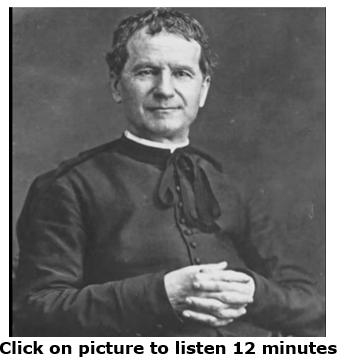
DOM BOSCO EXPOSED THE DARK SECRET BEHIND ISLAM
— And the Truth the World Forgot about the so-called Muslim religion.
Dom Bosco, also known as John Bosco, was an Italian Catholic priest and educator, born on August 16, 1815. He founded the Salesian Society in 1859 to help disadvantaged
youth, particularly boys, through education and community service. His teachings
emphasized love, kindness, and the importance of education for young people, making
him a beloved figure in Catholicism and a patron saint of youth. Don Bosco was
canonized in 1934.
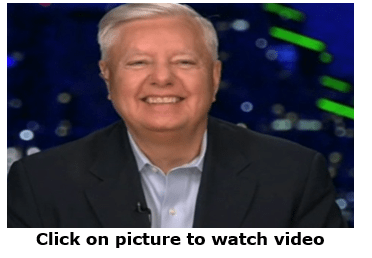
VENEZUELA, IRAN, AND CUBA: WHAT NEXT?
Folks, this is prophecies being fulfilled. I know it is sudden but what did God tell us many times about 2026? Is the Iraqi dinar RV next too once Iran is taken down? Remember those two prophecies about the dinar by Kim Clement a decade ago? Is 2026 also the time for this to occur?
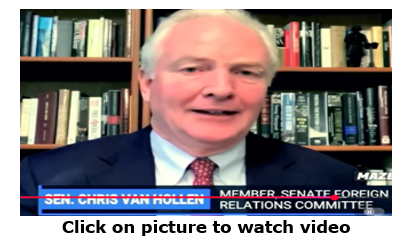
EMBARRASSING DEMOCRATS HUMILIATED AFTER BEGGING TO RELEASE MADURO
Why is it the what is wrong suddenly becomes right in the eyes of democrats? Oh.. but remember it was not so long ago they too agreed with the conservative party that is was wrong. Is it Trump hatred syndrome all over again?
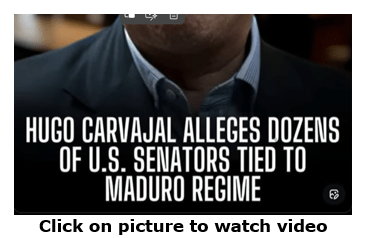
WHY WOULD DEMOCRATS BE SO AGAINST STOPPING THE VENEZUELAN DRUG CARTEL?
If you notice every time Trump does something to clean up the corruption the democrats are found out to be in the middle of it somehow. Now we also see the kickbacks from Venezuela to clean out their prisons and send the illegals here. But wait, there is much, much more….. Please you have to watch this one!
WHY THE WEST FELL FOR THE PALESTINIAN LIE
THE SMARTMATIC VOTING MACHINE FRAUD FOR 2020 ELECTIONS: REAL OR JUST A FIGMENT OF YOUR IMAGINATION (says Democrats)?
You be the judge, but let’s first look at the FACTS. Is Venezuela involved? Are democrat senators getting kickbacks to Venezuela to change U.S. elections? What the democrats did is put all the focus on Russian Collusion hoax while this was going on in Venezuela with the voting machines right in front of our noses.
Maine Governor: JANET MILLS FACILITATED THE SOMALI FRAUD SCHEME
Please focus in on what is said in this video. This corruption is wide spread among almost all democrat-run states. You can see how they funnel money around for various purposes.

SAUDI LEADER “NO ONE IS PREPARED FOR WHAT’S ABOUT TO HAPPEN IN IRAN…”
ANTI-ISLAM PROTESTS CONTINUE IN IRAN. Regime change is coming…
LOOK WHAT GOD IS DOING TO PUNISH IRAN. IT IS TIME TO END THIS TERRORIST MOVEMENT ALTOGETHER.
Freedom is finally coming full circle for the Iranian people and Iraqis too. They desperately want out of this Iranian Islamic dictatorship regime. I honestly did not think it would happen this quick but here we are. Do you see now why the Iranian backed militia within Iraq do not really anymore have a choice but to throw down their weapons and either leave Iraq or pledge allegiance to the state. There is no big brother Iran or funding to back them up their puppet state within Iraq anymore.
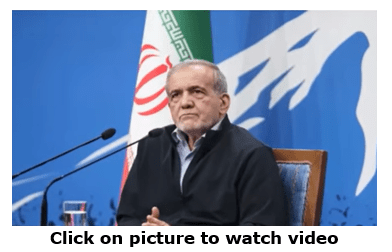
“DEATH TO THE DICTATOR”: Mass Protests Sweep Iran as Currency Reaches Historic Collapse
God’s hand at work. The prophets told us this was coming and now it is here – “regime change”. Will we finally have peace in the middle east? Will the next generation ask what the word ‘terrorism’ even means?

I have created a brand-new “Post RV Workshop” page in the blog. I included my own personal tips on investing post-RV and also organizing and protecting your estate. Here is the LINK. Going forward I will only post new and exciting information and opportunities here on the Latest Newsletter as they come along. Later I will transfer it to the ‘Post RV Workshop’ page in subsequent Newsletters for your future reference.
Just so you know I absolutely DO NOT adhere to high-risk investments where you can lose it all in a flash. Look at it this way – you are going to have all this money. Most of us investors waited decades for this RV to happen and so why would you even think about pissing is all away in some high-risk gamble of an investment. Yes, there are going to be scammers out there but let’s talk about legitimate investment opportunities only. These scammers can suck you dry and there is not a damned thing you can do about it. Go to a legitimate wealth manager associated with your bank. Let the licensed experts advise you. Please, please stay away from idiots like MarkZ, TNT Tony, Bruce on the Big Stupid Call, etc. , etc.
TRUMP FLOATS ZERO INCOME TAX PLAN STARTING WITH BIGGEST REFUNDS EVER
The Trump administration is slowly rewriting the entire federal tax code.
Give it time as the country will finally realize that with the right-offs half the country does not pay income tax anyhow. It makes common sense that if you keep adding exceptions and eliminate taxes in the tax code, they why even have an annual filing process? Yes, we can see what is happening. A slow methodical breakdown and then replacement of how revenue is to be collected for the federal government in the near future. But these changes will have to get through congress and congress must remain within the conservative power base.

HOW MUCH MONEY CAN YOU GIFT WITHOUT PAYING TAXES?

TRUMP REVEALS WHEN AMERICANS MIGHT EXPECT TO GET A TARIFF RELIEF $2,000 CHECK


THE FALL OF IRAN COULD CHANGE EVERYTHING
Regime Change Would Transform the Middle East—But Would It be for the Better Or For the Worst (wait and see).
WHAT MAY HAPPEN IF IRAN’S REGIME FALLS FROM POWER?
As Iranian protests reportedly turn violent, the Islamic Republic faces its greatest crisis since its founding more than 46 years ago. While previous protests involved elites or smaller segments of society, the current unrest is spreading across Iranian society, including traditionally supportive elements. Even Islamic Revolutionary Guard Corps veterans suffer the consequence of runaway inflation and the Iranian rial’s hemorrhaging value. The closure of the Tehran Bazaar is often the harbinger of government collapse if not revolution. It is increasingly likely that Supreme Leader Ali Khamenei’s legacy will be the collapse of the Islamic Republic. If the Iranian public has its say, his son Mojtaba will also hang.
The Fall of Iran: What Happens Next?
The reverberations of the Islamic Republic’s collapse will reshape the region.
The likelihood of a smooth succession in Iran is slight. There is no centralized leadership to the current protest movement, and as the collapse of the Georgetown conference demonstrated, the diaspora opposition leaders and groups are more polarized than ever.
Rather than build bridges, Crown Prince Reza Pahlavi’s team has chosen instead the slash-and-burn tactics and exaggerated claims of credit preferred by groups like the Mojahedin-e Khalq. The 50,000 registered regime defectors Pahlavi claimed just six months ago appear little more than a fevered dream; Iranians are on the street, but there is no indication that they are doing so at Pahlavi’s direction.
Still, even Syria-like chaos will neuter Iran’s ability to threaten the region. Traditionally, when the Iranian regime is under threat, its security forces retreat from the periphery toward Tehran; they do not lash out at the region if it means leaving core interests exposed.
Who Wins?
The primary beneficiaries of regime collapse will, in the short term, be both Iraq and the Gulf Arab states.
The Islamic Republic has, since the U.S.-led ouster of Iraqi President Saddam Hussein’s regime, repeatedly impinged on Iraqi sovereignty. Secretary of State Colin Powell’s State Department and George W. Bush-era National Security Council official Zalmay Khalilzad naively believed Iranian promises that it would take a hands-off approach to post-war Iraq; by the time they were willing to acknowledge they were wrong, it was too late. A deliberate see-no-evil approach marked President Barack Obama’s subsequent willingness to withdraw from Iraq and engage Iran diplomatically.
More Winners and Losers
While the Islamic Revolutionary Guard Corps will remain a potent force based simply on the resources they have stolen and squirreled away, regime collapse will lead to a ticking clock on the willingness of Iraqis to listen to them. Immediate losers will be Hadi al-Amiri’s Badr Corps, Qais al-Khazali’s Asa’ib Ahl al-Haq, and Nouri al-Maliki’s ambition to return to the premiership, as well as Patriotic Union of Kurdistan leaders Bafil and Qubad Talabani’s leverage of the Islamic Republic against their Kurdish rivals. Rumors of Iraqi Hashd al-Shaabi involvement in countering Iranian protesters will cause generational antagonism among Iranians toward their Iraqi Shi’ite co-religionists.
The Gulf Arab states may benefit in the short term, but could quickly lose some of their relevance. In 1981, the Gulf Cooperation Council (GCC) was formed to coordinate policy and defense among the frontline Gulf emirates, sultanates, and monarchies: Kuwait, Saudi Arabia, Bahrain, Qatar, the United Arab Emirates, and Oman. The GCC consistently underperformed. Even 45 years later, their militaries lack interoperability. Internal antagonism toward Qatar for its sponsorship of Sunni extremist groups and, more recently, the Saudi-Emirati rivalry has ensured that dysfunction rather than solidarity characterizes any effort to stake common positions.
The Gulf Arab states may benefit in the short term, but could quickly lose some of their relevance.
The Islamic Republic’s collapse might exacerbate GCC divisions, especially if Riyadh and Abu Dhabi take their rivalry, already playing out in Sudan and Yemen, into Iran, with both Gulf states funding and arming different proxies. With the threat of the Islamic Republic’s “export of revolution” removed, there will be little reason for the GCC to continue to exist. Its six members will end the pretense of unity. Qatar will solidify its ties with Turkey, and the United Arab Emirates-Saudi Arabia rivalry could even lead to military skirmishes. Absent the threat of Iranian irredentism, Bahrain will thrive; while it lacks oil, it will be even better positioned to be the Singapore of the Persian Gulf.
The United Arab Emirates will also benefit in the short term. It has long served as a repository for no-questions-asked investment. But, should Iran collapse, then it could expect billions of dollars to pour into the country as regime officials desperately seek to protect their stolen assets.
Such financial flows will likely draw international attention that could spark a longer-term diplomatic crisis between Abu Dhabi and Washington.
Should civil war erupt in Iran—and its likelihood is high—then the Arab Gulf states must also be prepared for hundreds of thousands, if not millions, of Iranian refugees. The first wave will be upper- and middle-class Iranians who can afford apartments in Sharjah, if not posh hotels in Dubai. With time, however, more working-class and rural Iranians will begin to flee by dhow and speed boat across the Persian Gulf, perhaps overwhelming the Emirates and its Gulf neighbors.
Oman is typical: Rather than plan for Iran’s fall, Muscat prefers wishful thinking that diplomacy can resolve any internal disputes before violence erupts.
Within Washington, there may be too much optimism that the Islamic Republic’s collapse will resolve the Houthis’ fight. Such a belief misunderstands the Houthis: while the Islamic Revolutionary Guard Corps co-opted the group, it did not create it.
Indeed, the Houthis have intellectual and political roots in Yemen’s Imamate that predate Iran’s 1979 Islamic Revolution. While southern Yemen rejects the Houthis, they do have a constituency in northern Yemen, which is one reason why the U.S.-backed Presidential Leadership Council has failed to end the Houthi scourge.
Within Washington, there may be too much optimism that the Islamic Republic’s collapse will resolve the Houthis’ fight.
Hezbollah might also survive in some form. Israel defeated Hezbollah’s military, but it is harder to uproot its ideology. A recent research trip to Lebanon confirmed that Hezbollah did not surrender, but rather internalized the lesson that they must revert to their pre-2000 covert cell structure. Perhaps they will no longer wield drones and missiles, but plastique and AK-47s can be equally dangerous in the hands of experienced users.
Many in Israel expect they can renew the warm ties they enjoyed with Iran before the 1979 Islamic Revolution. This, too, is wishful thinking.
Many Iranians will resent Israel’s suspected association with the Mujahedin-e Khalq in subsequent years, as well as the tendency of some Israelis to support “South Azerbaijan” separatism. While Crown Prince Reza Pahlavi’s visit to Israel won cheers in Washington, Jerusalem, and among some diaspora Iranians, Israel’s subsequent bombing campaign against Iran offended many Iranian nationalists. Decades of propaganda also take their toll. Egyptians remain overwhelmingly anti-Israel decades after the Camp David Accords; it is unrealistic to believe that generations of Iranians fed anti-Israel conspiracies will switch sides overnight.
Perhaps the biggest long-term winner of the Islamic Republic’s collapse will be Turkey. Just as Qatar replaced Saudi Arabia as a financier for Islamic extremism, Turkey has transformed itself into an ideological engine that seeks to export its own brand of Islamist extremism with an aggressiveness akin to 1980s-era Iran. President Recep Tayyip Erdoğan will see Khamenei’s collapse not as a warning about his own future, but rather as an opportunity to expand Turkey’s own revolutionary export and terror sponsorship.
What will emerge is not a more peaceful Middle East, but simply a change in the flavor of the extremism most threatening to regional security and U.S. interests.
A Time of Change in Iran? Chaos or Crisis?
Regime change in Iran will be welcome. The devil we know is not always better than the devil we do not. But, any tendency on the part of the White House and Washington think tanks to see Iran’s collapse as a “Hail Mahdi” pass to security and a peaceful Middle East will be embarrassingly naïve.
****************************************************************************************************
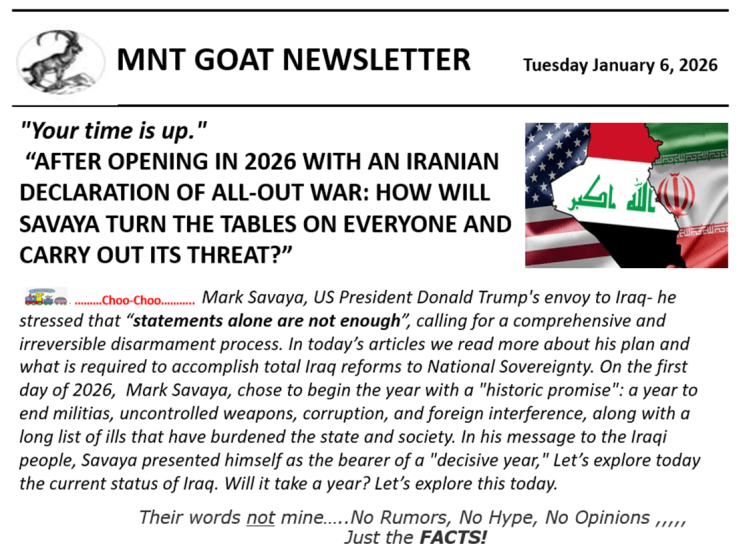
“Your time is up.”
AFTER OPENING IN 2026 WITH A DECLARATION OF ALL-OUT WAR: HOW WILL SAVAYA TURN THE TABLES ON EVERYONE AND CARRY OUT ITS THREAT?
On the first day of 2026, US President Donald Trump’s envoy to Iraq, Mark Savaya, chose to begin the year with a “historic promise”: a year to end militias, uncontrolled weapons, corruption, and foreign interference, along with a long list of ills that have burdened the state and society. In his message to the Iraqi people, Savaya presented himself as the bearer of a “decisive year,” pledging to work to make 2026 the year that would end instability, the plundering of resources, poor services, smuggling, unemployment, militias, money laundering, fraudulent contracts, poverty, foreign interference, embezzlement, inequality, corruption, circumvention of the law, and injustice.
This “long list” has been transformed in political and media discourse into “18 crucial issues” that Savaya said would be among the priorities of his mission in Iraq during the new year, in a speech laden with messages of deterrence such as: “Your time is over, and the time of Iraq and the Iraqis has begun.” But as soon as the wave of flashy headlines subsided, a simpler and more pressing question emerged: Can 18 chronic Iraqi problems truly be resolved in 12 months, even by an envoy with exceptional influence in the White House?
(Mnt Goat: Savaya just needs to convince the Iraqi government of these things he wants to accomplish in 2026. Do we investors in the dinar have to wait for the RV to get all of these items fixed? Of course not, if you read the list I have highlighted some items that we know must be accomplished and are already known issues they have been working on for years already.)
The 18 files in Savaya’s speech: A map of a state’s crisis
Based on what Savaya’s letter contained and statements surrounding it, the 18 files he placed under the title “Year of Decision” can be summarized as follows:
- Political and security instability.
- Plundering the country’s wealth.
- Poor services (electricity, water, health, education).
- Uncontrolled weapons outside the control of the state.
- Smuggling (oil, goods, currency) across ports and borders.
- Unemployment, especially among young people.
- Militias linked to external powers or operating outside the logic of the state.
- Money laundering through banks, money exchange companies, and economic fronts.
- Political and civic ignorance as an environment for manipulating sectarian and populist discourse.
- Internal tensions between blocs, components, and governorates.
- Fake contracts and paper projects in various sectors.
- Poverty and the associated widening social gap.
- Foreign interference in decision-making and sovereign matters.
- Direct embezzlement of public funds.
- Inequality in the distribution of wealth and opportunities between regions and groups.
- Corruption as a general umbrella for all financial and political networks.
- Circumventing the law and using it as a shield to protect the powerful.
- The injustice inflicted on the ordinary citizen and the segments of victims and the marginalized.
On paper, this list looks more like a “state crisis map” than a one-year program. It touches on almost everything that has accumulated since 2003 in terms of political, economic, and security problems, and puts them all together under the heading “2026.”
An envoy outside the diplomatic school: From “the cannabis king” to the man of Iraqi missions
Part of the controversy surrounding Savaya is not just about what he said in his New Year’s message, but about the nature of the man himself. The new envoy is not a career diplomat who graduated from the school of the US State Department, but a businessman of Iraqi Chaldean origin who made his fortune in the legal cannabis industry in Michigan, and is described by American press reports as one of the most prominent figures in this sector, and the “cannabis king” of Detroit.
(Mnt Goat: Oh… here we go again bashing someone because they are not part of the Washington establishment. Maybe they should stop and think about what they say. Maybe this is a very good thing, Savaya being a business man (like trump) in that we need fresh thinkers who can think out of the box and do what is right for America and Iraq and not just for the elite globalists.)
His political career is more closely linked to the world of election campaigns and Republican funding, as he emerged as one of Trump’s supporters in Michigan, before suddenly transforming from a controversial business figure into a special envoy handling one of the most complex files in the Middle East.
Numerous analyses have linked his appointment to the Trump administration’s desire to deal with Iraq through a “trusted man” outside the traditional diplomatic corps, who has direct access to the president and is able to move nimbly between the worlds of politics, business, and security, with a particular focus on three issues: Iranian influence, militias, and redrawing the terms of investment and energy in a country that possesses one of the world’s largest oil reserves.
In this sense, the New Year’s message is not merely a protocolary greeting, but rather the announcement of an American political and security program with a new executive channel, setting 2026 as a test year for Washington’s ability to reshape the rules of the game within Iraq.
The promises are ambitious… but the problem lies in the structure of the system, not in the texts.
From within Iraq, researcher and academic Ali al-Jubouri offered a more cautious analysis, focusing on the gap between rhetoric and actual capability. Al-Jubouri told Baghdad Today, “The promises attributed to US President Donald Trump’s envoy to Iraq, Mark Savva, regarding 2026 being the year to end uncontrolled weapons, militias, corruption, and foreign interference, fall within the realm of ambitious political discourse. However, they clash with a highly complex Iraqi reality that makes their full realization extremely difficult without fundamental changes.”
He adds that “the problem of loose weapons is not just a security issue, but rather the result of political, economic and social accumulations that have extended for years, where some armed factions have become part of the equation of political and economic influence, and have extensions inside and outside state institutions, which makes dismantling or limiting them a complex internal sovereign decision, and not just the result of an external pledge or pressure.”
Al-Jubouri links the issue of militias to the broader map of conflict in the region, stressing that “the issue of militias is directly linked to regional and international balances, and any talk about ending them or restricting weapons to the state requires a unified and undivided Iraqi political will, and broad internal consensus that precedes any field action, in addition to reducing reliance on external axes in national decision-making.”
Then he moves on to the second point in Savaya’s speech: corruption. According to Al-Jubouri, “Corruption in Iraq is structural, not circumstantial, as it has infiltrated the joints of the state through networks of interests that transcend parties. Eliminating corruption cannot be achieved with temporary slogans, but rather requires deep administrative and legal reform, a genuine activation of accountability, and protection of oversight institutions from political pressures.”
As for foreign interventions, he says that “Iraq is still an arena for the intersection of regional and international interests, and that reducing these interventions depends on the state’s ability to strengthen its economic sovereignty, unify its foreign policy, and build balanced relations based on interests, not alignments.”
Al-Jabouri concludes his reading with a warning against turning 2026 into a “year of miracles”: “The year 2026 may witness partial steps or relative improvement if a genuine national will is available, but portraying it as a decisive year for the end of all these thorny issues seems closer to political promises and slogans than to a program that can be implemented on the ground unless the internal rules of the game change radically.”
With this description, Savaya’s discourse transforms from a “promise of decisive action” into a point of reference: where does what can actually be accomplished begin, and where does the ability of any foreign envoy end when his questions touch upon the structure of the regime itself?
Uncontrolled weapons and militias: The issue that tests the credibility of the slogan
If Savaya has indeed compiled 18 issues into one basket, the first thing Iraqi forces and the public will hold him accountable for is the file of militias and uncontrolled weapons. This file, in particular, is not only related to the security chaos, but also to the position of these factions within the state, their entanglement with the shadow economy, and their network of alliances stretching from Tehran to Damascus and Beirut.
Much of the American approach to Iraq in recent years has placed these Iranian-linked armed groups at the center of attention, linking any effort to reorganize the American presence to Baghdad’s ability to control these factions or reintegrate parts of them into state institutions according to new rules.
But this is precisely where the limits of the “year of decision” become apparent. Militias are no longer merely armed groups operating outside the law; some possess political representation, economic fronts, a presence in parliament and the government, and enjoy a social base in certain provinces. Any “direct” attempt to end this influence within a single year effectively means a redistribution of power within the Iraqi system, not simply the implementation of a series of security measures. This type of transformation cannot be managed with a congratulatory message, but rather through profound internal compromises that have yet to materialize.
Structural corruption and the parallel economy: When Savaya’s list intersects with the spoils network
Another part of Savaya’s list relates to corruption, money laundering, plundering of resources, fictitious contracts, embezzlement, and poor services. These are not mere labels, but rather the features of a system that has been formed over more than two decades, linking public funds with partisan quotas and turning contracts and projects into tools for personal gain, as revealed by Iraqi oversight and media reports on ports, border crossings, oil contracts, and reconstruction deals.
When al-Jubouri says that corruption is “structural,” he implicitly means that dismantling it requires reshaping the relationship between the state, political parties, and the economy, not merely pursuing a few individuals or opening dozens of files in the media. Here, too, the power of a foreign envoy, regardless of their relationship with the White House, appears limited without an internal decision that redefines the very structure of the political system, or at least establishes new “red lines” to protect what remains of the state from organized plunder.
Foreign interventions and the limits of Washington’s power
Savaya’s list also includes “external interference” and “internal tensions,” as if the envoy is trying to encompass everything regional actors have been accused of in Iraq over the past years. But the irony is that Washington itself is one of the most important external players on the Iraqi scene; the presence of American forces, the network of alliances, and the role of international financial institutions all make the United States part of the equation of intervention, not merely an external observer.
Here a twofold question arises: To what extent can the Trump administration reduce the influence of its regional rivals in Iraq, foremost among them Iran, without itself being seen as a party exercising parallel interference? And to what extent does Baghdad have a real margin to say “no” to any of the competing axes, if its economic sovereignty is not strengthened and the levels of dependence in the energy, finance and arms files are not reduced?
2026: A year of testing for the insider before it becomes a year of testing for Savaya.
Savaya’s message about “the end of the era of corruption and militias” gave a segment of the public a glimmer of hope and provided the media with ready-made material for sensational headlines. However, it simultaneously raised expectations to a level that would be difficult for any political actor, whether domestic or foreign, to fully meet within a single year.
If we start from Ali al-Jubouri’s reading, the fundamental question becomes not: Can Savaya finish 18 files in 2026? Rather: Does the Iraqi political system have the readiness to open these files from their roots?
Without a relatively unified political will, internal compromises that redefine the role of weapons, and genuine strengthening of oversight and judicial institutions, the US envoy’s message will remain more of a “statement of intent” than a binding roadmap. The year 2026 could become a transitional year, testing the limits of both Washington and Baghdad simultaneously: the former in terms of its willingness to use pressure and incentives, and the latter in terms of its readiness to relinquish part of the network of interests forged after 2003.
Between Savaya’s statement, “Your time is up,” directed at “those who have wreaked havoc in Iraq,” and al-Jubouri’s warning that changing the rules of the game requires more than mere rhetoric, Iraq stands on the threshold of a year that could mark the beginning of a different path, or simply another link in the chain of postponed promises. The difference will be decided, as always, internally before externally.
***********************************************************************************************
IRAN: THE COUNTRY GRAPPLES WITH UNREST THAT HAS GONE ON FOR NEARLY A WEEK AND HAS LEFT SEVERAL DEAD
(Will the radical Muslim, terrorist, clerical government capitulate. We need this regime change.)
Responding to Trump’s comments, top Iranian official Ali Larijani warned that US interference in domestic Iranian issues would amount to a destabilization of the entire Middle East. Iran backs proxy forces in Lebanon, Iraq and Yemen.
And Iran earlier warns that ‘all US bases and forces in the entire region’ would become ‘legitimate targets’ if Washington intervenes in internal protests.
Tehran issued the stark threat after the US President said America was ‘locked and loaded and ready to go’ if Iranian authorities killed peaceful demonstrators during nationwide protests over soaring living costs.
Mohammad Bagher Ghalibaf, Secretary of Iran’s Supreme National Security Council, accused foreign intelligence agencies of attempting to hijack legitimate protests and turn them into violent unrest.
‘The devil’s cry was raised because the efforts of armed field agents of the intelligence services to turn the legitimate protests of the bazaars and guilds into violent and armed urban battles failed,’ he said in an X post. He added that Iran had repeatedly defeated enemies ‘far more experienced’ throughout history and insisted the country did not equate protesters with foreign mercenaries, saying: ‘We embrace our beloved children.’
But Mr Ghalibaf issued a direct warning to Washington, saying the ‘disrespectful President of the United States’ should understand that any American ‘adventure’ would make all US centres and forces across the region ‘legitimate targets’.
He also stressed that Iranians are ‘always united and determined to act against any aggressor.
***************************************************************************************
IDENTIFYING THE MAIN REASON FOR THE RISE OF THE DOLLAR IN IRAQ
Financial expert Mahmoud Dagher confirmed on Sunday that customs duties are behind the rise of the dollar in local markets in Baghdad and in Erbil, the capital of the Kurdistan Region.
Dagher, who also served as a former director at the Central Bank of Iraq, told Shafaq News Agency that “the application of the pre-transfer customs duty is behind the rise of the dollar against the dinar in local markets.”
He added that “traders are required to bring the customs declaration (customs statement) from the ASYCUDA system before a bank transfer can be made to them, and therefore they resort to the market to obtain dollars.”
The dollar has risen against the dinar gradually over the past few days in local markets, reaching 145,000 dinars today, for every 100 dollars.
**************************************************************************************
AFTER SAVAYA’S MESSAGE… WILL 2026 OPEN A NEW CHAPTER FOR IRAQ?
Political analyst Ghazi Faisal commented on the recent message from Mark Savaya, the envoy of US President Donald Trump, to the Iraqi people, in which he called for the beginning of a new era based on respect for the constitution, building an independent state that is not subject to Iranian hegemony, and confronting political and financial corruption, the plundering of wealth, and the failure to develop industry, agriculture, and services.
Faisal said in a statement followed by “Al-Sa’a” that “the American message, despite continuing within the policy of containment, carried a different language that reflects the need for comprehensive radical reforms that restore the true sovereignty of the Iraqi people and allow them to confront poverty, backwardness, unemployment and economic chaos.”
He explained that “these imbalances did not arise spontaneously, but rather came as a result of an Iranian strategic dominance over Iraq, in which the Iraqi economy, security and society were exploited to pay the price for Iran’s internal crises.”
Regarding the possibility of the United States imposing a new equation that would make the Iraqi state the sole entity monopolizing weapons and decision-making, he pointed out that “the central challenge lies in correcting the course of a political system that began in 2003, which violated the constitution and produced parties that failed to build a modern state and an open economy.”
He stressed that “Iran has succeeded in creating more than 34 armed factions linked to the Revolutionary Guard, using Iraq as an arena for its regional influence at the expense of the country’s security and stability.”
He added that “the American message was directed directly to the Iraqi people in an attempt to reshape political legitimacy outside the traditional frameworks,” considering that “the current crisis is a deep legitimacy crisis, and that the Iraqi parliament has often become a formal facade, while the constitution stipulates that the people are the source of sovereignty.”
Faisal concluded by saying: “The year 2026 holds the potential for transformation, if a new national leadership and a clear strategic vision are available, capable of rebuilding a modern state based on democracy, a free economy, and stability, benefiting from Iraq’s wealth, estimated at more than $15 trillion, while moving away from the corrupt rentier system and engaging in a new regional project based on peace and sustainable development.”
************************************************************************************************
ATRUSHI: THE OIL AND GAS LAW MUST BE PASSED AS SOON AS POSSIBLE.
The second deputy speaker of the Iraqi parliament, Farhad Atrushi, indicated that so far more than 40 people have nominated themselves for the position of president of the republic, but the two parties, the Democratic Party and the Patriotic Union, do not have a candidate. He stressed that in order to solve the financial problems and implement federalism, the oil and gas law must be passed as soon as possible. At the same time, regarding the parliamentary committees, he said: The committees are formed temporarily.
On Sunday, January 4, 2026, during his participation in the “Today’s Talk” program on Kurdistan24, Atroushi said: In Iraq, the parliament is the center of the political process and the center for making important decisions, so maintaining the position of Deputy Speaker of Parliament for the Kurds is very important.
He added: “Today the new parliament held its first session, during which I submitted a proposal that the parliament’s presidency should have special legislative authority for the next four years, in order to have clarity in the implementation of laws and the identification of important laws. They also welcomed the proposal.” He also said: “In the next session, we will decide on the general outlines of the parliament’s policy and form a special committee.”
He continued: “The oil and gas law must be issued in order to implement fiscal federalism, because a large part of Iraq’s revenues are provided through oil and gas, and without implementing the law and the constitution, no problem will ever be solved, and the constitution must be the arbiter.”
He added, “So far, more than 40 people have nominated themselves for the presidency, and we expect that number to increase tomorrow, but neither of the two main parties has yet put forward a candidate for the position.” He also stressed that the Kurds must be united on the issue of the presidency and have a single position.
He went on to say: “Tomorrow we will form a committee to lay some foundations and monitor the distribution of parliamentary committees,” and said: The distribution of parliamentary committees should be temporary only to carry out the work of parliament until the new government is formed.
************************************************************************************************
SALEH’S APPEARANCE: THE FLUCTUATIONS IN THE PARALLEL MARKET ARE TEMPORARY AND DO NOT AFFECT THE STABILITY OF LIVING STANDARDS.
The economic advisor to the Prime Minister, Mazhar Muhammad Saleh, confirmed on Monday that the fluctuation in global oil prices is not directly related to the volatility of the parallel exchange market in Iraq, explaining that the monetary policy based on a fixed exchange rate supported by reserves exceeding $100 billion provides a strong stability umbrella for foreign currency.
Saleh told Al-Furat News Agency that “the limited fluctuations in the parallel market represent temporary and ineffective reactions that came in response to the launch of the latest fiscal discipline package, which included decisions to re-examine the paths of public spending and enhance the efficiency of revenues, especially through expanding and controlling tax and customs bases.”
He added that “these movements are a natural behavior for markets when they receive new signals from fiscal policy, as supply and demand forces tend to test these signals and adapt to them in stages, before returning to more stable paths that are in harmony with economic and financial fundamentals.”
He pointed out that “the current fluctuations in the parallel market do not reflect a structural imbalance in the exchange market, but rather a temporary adaptation phase with regulatory tools aimed at enhancing financial and monetary stability in the medium term.”
Saleh pointed out that “the limited movements observed in the parallel market do not affect the stability of the general price range, which has maintained a low inflation rate of about 2.5% annually, which reflects the effectiveness of the macroeconomic policy mix.”
He explained that stability is due to the convergence of three main policies:
Monetary policy: A fixed official exchange rate for the Iraqi dinar at 1320 dinars to the dollar. Fiscal policy: Broad support amounting to about 13% of GDP, limits the transmission of price shocks to living standards.
Trade policy: Price defense through the subsidized food basket and the modern market system (hypermarkets), which absorbs the noise generated by the parallel market and turns it into stable white noise.
Saleh concluded by saying that “the parallel market no longer has a significant impact on daily life, after its effect became detached from income and consumption levels and its impact shifted mainly to the asset sector, which is not directly related to the stability of living or social peace.”
****************************************************************************************************
IRAQ’S ACCESSION TO THE WORLD TRADE ORGANIZATION: THE UNITED NATIONS CONFIRMS TANGIBLE PROGRESS.
Joining the World Trade Organization is witnessing clear progress, according to the United Nations International Trade Centre, with the completion of key technical and regulatory stages at both the local and international levels.
The International Trade Centre, a United Nations agency, confirmed that Iraq has made clear progress in its steps towards joining the organization.
Eric Bochot, the director of the International Trade Centre’s programs in Iraq, affiliated with the United Nations, said : “The process of Iraq’s accession to the World Trade Organization is still ongoing, and has seen progress in several important stages at both the national and international levels.”
Bushot added that this progress includes the establishment and reactivation of the Iraq Working Group at the World Trade Organization, the revival of national coordination mechanisms, technical reviews of trade-related legislation, communication with member states of the organization, as well as preparatory work related to market access and regulatory harmonization.
The UN official stressed that what has been accomplished so far reflects a continued commitment to aligning the Iraqi trade system with multilateral rules, although additional steps are still required.
For his part, economist Nabil Al-Tamimi said that the government and the Ministry of Trade are working hard to join the World Trade Organization.
Al-Tamimi added that “joining requires several procedures, including legislative and legal amendments, in order for Iraq to meet the conditions for joining this organization, noting that the legislative process in Iraq may be slow for several reasons.”
***********************************************************************************************
“A SECOND TERM THROUGH THE GATEWAY OF STABILITY”: THE STATE OF LAW COALITION SUPPORTS RENEWING CONFIDENCE IN AL-SUDANI FOR “THE BENEFIT OF IRAQ” – URGENT
On Monday (January 5, 2026), MP Jassim Al-Alawi, from the State of Law Coalition, affirmed his support for renewing Prime Minister Mohammed Shia Al-Sudani’s term for a second term, stressing that this choice stems from the supreme interest of Iraq and the preservation of political and service stability.
Al-Alawi told Baghdad Today that “the stage that Iraq is going through requires the continuation of the current governmental approach, especially in light of the relative security stability achieved and the improvement in some service and economic files,” indicating that “Al-Sudani is a successful man with great experience and an electoral mandate, and he has proven during his current term a clear ability to manage the state and deal with complex challenges.”
He added that “renewing confidence in the Prime Minister for a second term will contribute to completing the strategic projects launched by the government, and will prevent disrupting the political scene by entering into conflicts or uncalculated changes,” stressing that “the State of Law believes that the interest of Iraq takes precedence over any political or partisan considerations.”
Al-Alawi pointed out that “political forces are required today to prioritize the language of understanding and stability, and to support any governmental path that aims to strengthen sovereignty and improve the standard of living of citizens,” noting that “political stability is the real gateway to addressing outstanding issues and building a state of institutions.”
This statement comes at a time of political activity surrounding the next phase and constitutional and electoral requirements, with names and potential figures circulating as possible candidates to lead the next government. Mohammed Shia al-Sudani is considered one of the leading candidates to continue as prime minister, given what some political factions deem the “stable performance” of his government compared to previous administrations.
*********************************************************************************************
PARLIAMENT WILL HOST OFFICIALS FROM THE CENTRAL BANK AND THE INTEGRITY COMMISSION NEXT WEEK.
“Within the framework of activating the oversight role”
The Parliament Presidency set next week, Monday (January 5, 2026), as the date for hosting a number of officials from the Financial Control Bureau, the Integrity Commission, the Central Bank and other federal institutions within the framework of activating the oversight role.
The media department of the House of Representatives stated in a statement received by Network 964 that the parliament “held its second session of the sixth electoral term of the first legislative year, the first legislative chapter, today, Monday, under the chairmanship of Hebat Al-Halbousi, Speaker of the Council, and in the presence of 229 deputies.”
He added that “the Speaker of the Council emphasized at the beginning of the session the need to adhere to the provisions of the House of Representatives’ internal regulations, as they are in effect and were voted on in the previous session.”
He pointed out that “President Hebat Al-Halbousi stressed the importance of expediting the formation of parliamentary committees, and giving a deadline of 7 days for parliamentary blocs to submit their proposals to the Presidency of the Council regarding the development of a plan to distribute members among the parliamentary committees according to the internal regulations of the Council, stressing the importance of activating the Parliamentary Conduct Committee to preserve the status of Iraq and the House of Representatives in terms of oversight and legislation.”
He added that “the Speaker of the Council noted that the time for holding the Council sessions has been permanently fixed at 11 am, in agreement with the heads of the parliamentary blocs, in addition to proceeding with other controls and instructions that enhance the management of the legislative institution in the best way.”
He explained that “the session emphasized the discussion by the members of the council of the organizational matters that the council follows in managing its sessions and parliamentary committees in order to address some of the previous obstacles to enhance the role of the House of Representatives in oversight and legislation, in addition to stressing the need to prioritize the enactment of important laws.”
Regarding candidacy for the presidency, he explained that “the Speaker of the Council noted that 44 applications for candidacy have been received so far, and the extension of time was due to the New Year holiday, indicating that the nomination period closes today, Monday, at the end of official working hours.”
He concluded by saying that “Al-Halbousi mentioned that the House of Representatives will host next week officials from the Financial Control Bureau, the Integrity Commission, the Federal Service Council, the provincial councils, the Central Bank, the head of the Martyrs Foundation, and the head of the Retirement Authority.”
Their words not mine…..No Rumors, No Hype, No Opinions ,,,,,
Just the FACTS!
Disclaimer: All information in this newsletter is not intended for investment decisions / purposes. Mnt Goat is not a financial analyst, planner, banker, attorney or associated in any role with giving out professional investment advice.
Auf Wiedersehen
Much love to ya all,
Mnt Goat
 LATEST MNT GOAT NEWSLETTER
You must be logged in to post a comment.