



Disclaimer: All information in this newsletter is not intended for investment decisions / purposes. Mnt Goat is not a financial analyst, planner, banker, attorney or associated in any role with giving out professional investment advice.
ABOUT THE NEWSLETTER:

January 1, 2026 Mnt Goat News Brief
Guten Tag everyone:
Bringing you more news. There is going to be a battle whether it be military fighting or economic pressure, but the Iranian militia will NOT stay in Iraq and control Iraq.
GIVE A GIFT TO MNT GOAT
I decided to allow everyone to give a Free-will GIFT to Mnt Goat on PayPal if you so desire. Here is the link below. Please show your appreciation for all the hard work I do.

I recommend $10-$15 dollars a month or whatever you can afford. Do you realize I write eight (8) Newsletters every month. This is like a second job to me. The only way I know that people are reading and appreciating all the FACTUAL news I bring is through their appreciation. If I do not receive equal appreciation for all the hard work I do, I will simply end the Newsletter and save myself endless hours at the computer. I am tired of this RV saga just as you are. We are now down to addressing the Iranian militia in Iraq. The RV will not happen as long as Iraq is a proxy state of Iran.
Let’s all try to chip in!

____________________________________
2 Corinthians 9:9
“He scattered abroad, he gave to the poor, His righteousness endures forever.”
STATUS OF THE RV

About your RV champagne. If I were you, I would drink your champagne to celebrate the new year. You can always get another bottle once we sort out this mess in Iraq between Washington and Iran.
I sincerely wish everyone a Happy New Year 2026.
What will this new year bring?
- Let it be a year of more EXPOSURE of corruption and just as important, ACCOUNTABLITY for those involved. God says JUSTICE will triumph.
- Let it bring a truly sovereign Iraq, United States and all other nations who embrace freedom, liberty and justice.
- Let it bring the great Wealth Transfer, with Happiness, Abundance and Prosperity.
In today’s prophecies by Julie Green I am amazed once again at what God is telling us to expect for 2026. Well…. to be honest, I am not surprised, just amazed, because I know God’s Hand is working in both the U.S., Iraq and in many other countries. We see the changes every day.
Julie tells us today that “The Great Exodus Wealth Transfer Is Coming”, a prophecy from Dec 27th. Click here for LINK to watch it. Yes, our RV is part of the transfer and there are still elements that do not want us to have it. If you go back to the great exodus from Egypt comparisons can be made to what we are now experiencing in modern times. It is almost weird in a sense. Many of the Israelites simply gave up hope and took up satanic-like worship instead of following God’s path to the promise land of Israel. They had to wonder around in the desert for 40 years before God gave them what was promised. We need to not give up and follow the path that God is laying out for us. Oh… it’s over twenty years already for our RV. I certainly hope God does not plan to make us wait forty years….lol.. lol.. lol.. Yes, there has been discouragement, and I can’t say it has ended. I can honestly say I too am discouraged at what is taking place in Iraq. But we must concentrate on what we want and not what we are seeing. We must focus and pray for it.
In fact, the entire middle east is going to change, just wait for it. Already we see Iran on the brink of a regime change. I thought I would never see this for years to come… but here it is now just as the God told the prophets it would.
Yesterday I had my call to Iraq, and so today I want to share what is going to happen in terms of our RV. As you may recall my contact in the CBI is on the committee responsible for orchestrating the Project to Delete the Zeros. I was told this project was supposed to kick off on Dec 29th and was stalled. This past weekend Iraq even aired videos about the swap out and the CBI was expected to update their official web site with explanations of the swap out and descriptions of the newer lower denominations.
☹In this article we find why the RV was stalled. It is titled “SOURCES CLOSE TO THE WHITE HOUSE: TRUMP’S ENVOY NOW HAS A CLEAR PLAN FOR THE PRIORITIES OF DIALOGUE WITH THE NEW IRAQI GOVERNMENT.” It this news we find out that a number of Iraqi Shiite factions announced their willingness to relinquish their weapons and place their arms and personnel under the authority of the central security forces in Baghdad. This was all wonderful news for us. But here is the bad news à However, the process is not yet complete, due to the refusal of at least two factions and several Shiite elements to accept the new reality and not lay down their arms.
I know, I know this is a disappointment and I too share it along with you. I was told we can expect an article in the news from the CBI soon on this topic of postponement.
We all know that Iraq needs STABILITY and SECURITY. Iraq seemingly has had the highest levels 2025 of both since 2003. We read many articles on this as evidence. We did not witness any bombings and Iraq kept out of the Israeli vs Iran conflict too. We witnessed the reforms and then articles telling us Iraq was ready to move to the next stage of which was the last remaining steps of full globalization and partnerships with many countries around the world.
However, don’t be too disappointed that things are stalled as I am hearing from the CBI that this all may still work out and has to work out somehow. Iraq is ready for this next move to international status and Iran is certainly now going to prevent it. Does this mean the CBI will go ahead even in the midst of these militias and Iranian influence. No, I did not say this. These Iranian influences must first be squashed and neutralized. You may ask what is holding up the RV this time. So, lets review and get into even more details.
☹We learned that a few of the militia factions residing in Iraq refused to lay down their arms when mandates came from the U.S. to do so. To make the situation even worst the Iranian militia members were on the ballot in many provinces and won their elections. Where the elections rigged? It would not surprise me. They were recently sworn in to parliament, again in disregard to U.S. objections. There is a very good article today on the militia’s response to these U.S. mandates concerning them and what the U.S. might do next if they do not cooperate. It is titled “TRUMP’S FORTUNE TELLER PROMISES IRAQIS “DAYS THEY HAVE NEVER SEEN BEFORE,” AND THE FACTIONS RESPOND FROM PARLIAMENT: “WELCOME TO DEATH!”. Please go read it …. If this is not satanic, I don’t know what is!
As the Iraqi parliament held its first session, electing a deputy speaker affiliated with the factions, Washington was simultaneously outlining an unprecedented punitive strategy. Yes, they boldly really did this in defiance of the U.S. and Iraqi’s own constitution. Former Trump advisor Gabriel Souma, described as an “expert on the inner workings of the White House and Trump’s policies, “went so far as to warn of a potential moment when Iraqis might find themselves buying the equivalent of one dollar for “five bags” of Iraqi dinars.” Yes, it’s not going to be pretty for Iraq.
So here is the problem as it evolves. Post election we find there is yet even more Iranian militia men appointed into the Iraqi parliament in disregard to their constitutional requirements for any member. There is also the mandate by the US government to have none in the government. Between this catastrophic scenario and a parliament, where a member of Kataib Hezbollah declared his “loyalty to the Popular Mobilization Forces” (thus Iran and not to Iraq) vowed to pass the PMF law despite Washington’s opposition. Do you remember this law from months ago? Let’s review it.
The U.S. pressured the existing parliament at that time, not to take up this law to a vote. At this time, it was shelved. The tension relaxed. So now these militias, after the election, have strongly infiltrated the parliament as a result of the November election and hope to pressure parliament to take up this bill again and pass it, thus making these militia legal throughout Iraq. This new bill would also fund these organizations. This would solidify the Iraq as a proxy state of Iranian just as Iran has done to Lebanon and Syria and just when Iran so desperately needs the funds. Keep in the back of your mind that the U.S. just recently declared these militias as terrorist organizations and are now on the global terrorist list.
So, Iraq appears to be heading toward a difficult test: an economy beholden to the dollar and a legislative body openly defying American demands. Do you think the U.S. is going to allow the dinar to be reinstated under these conditions? Just asking……
Gabriel Souma, a political commentator but not merely a political commentator; has long been presented as a professor of international law and an expert on Middle Eastern affairs. He has spoken on this subject matter of the militia in Iraq and what the US might do next. Today he speaks today in such definitive terms about “unprecedented measures” that Iraq will face if Mark Savaya fails to implement Trump’s demands in Baghdad, he is reflecting the prevailing mood within the president’s inner circle much more than offering a cold, academic analysis. This may become reality soon.
I guess our Christmas dream did not happen on the original targeted plan of the CBI. Remember that the GOI always seems to be playing catch-up to the CBI. We must continue to pray. Miracles do happen every day and so this saga with Iran is not yet over. If you go to my Political Section today in the Newsletter you can access many videos on just what is really happening in Iran right now. It is not a pretty situation and most likely a regime change is coming VERY SOON. This news is filtered by the mainstream channels and is not broadcasted much in the US, if at all.
We must ask how this will change the dynamics and attitudes of the Iranian militia within Iraq, if Iran should fall. This could be devastating for these militias and they very well could just collapse overnight and decide to cooperate with the US mandate. Once the militia are neutralized, there is less chance of terrorist repercussions from them if parliament then decides to pass a law banning foreigners from participating in the Iraqi government, then make it retroactive. This would cause the parliamentary elections to be re-run in many of the provinces. There must be stricter laws regarding who can serve in the parliament. It is much to loose and this is part of the current problem.
☹Please reference the recent article titled “MP: THE CURRENT PARLIAMENT WILL ENACT IMPORTANT LAWS, MOST NOTABLY THE ONE CONCERNING THE POPULAR MOBILIZATION FORCES”. MP Hassan Shaker confirmed on Thursday that the upcoming period will witness the passage of a number of important laws within the Council of Representatives, foremost among them the Popular Mobilization Forces (PMF) Law, noting that these laws represent a top priority for the new parliament.
This does not look good for relations between Washington vs Iraq. Who will win in the final analysis? This was one of those WOW! moments for me when I read it.
But as I said this could all change drastically and very fast in the next month or so. Also remember we are not yet out of the proverbial ‘doghouse’ until the budget is passed and they open it to spend it. The Oil and Gas law is also another constitutional issue that needs to be fulfilled. There is a promise this will also be taken up quickly by the new parliament. The CBI can still execute the needed currency reforms prior to the budget opening, and so I am told there is still a high likelihood they will move ahead with removing the zeros and then a restatement but only if these Iranian issues can stabilize.
😊Knowing all this let me explain that Trump’s envoy is due to Iraq soon and he already outlines expectations from the Whitehouse in his letter to Iraq prior to his visit. Take a look at the article titled “TRUMP’S ENVOY BEGINS 2026 WITH A STRONG MESSAGE TO THOSE WHO “WROUGHT HAVOC IN IRAQ”: YOUR TIME IS UP. HE OUTLINED A LIST OF 18 OBJECTIVES.”
Mark Savaya, US President Donald Trump’s envoy to Iraq, sent a congratulatory message to the Iraqi people on the occasion of welcoming the year 2026. In his message, he expressed his hope that 2026 will be the year of the end of instability, the plundering of the country’s wealth, poor services, uncontrolled weapons, smuggling, unemployment, militias, money laundering, corruption, poverty, foreign interference, and all other manifestations of injustice and circumvention of the law.
Here is what I call the Savaya manifesto for Iraq from the Whitehouse:
He added that this message is directed “to those who have spread corruption in the land of Iraq,” stressing that “your time is over and the time of Iraq and the Iraqis has begun,” and emphasizing that Iraq will remain a flag raised high and a source of pride for all its people.
Savaya concluded his message by saying, “We are still at the beginning.
_____________________________
So, now let’s engage the articles further and see how they play out in what I have just told you. This is their words not mine, No rumors, No hype and No opinions. Just the FACTS!
Another recent article titled “PARLIAMENTARY DIVISION PRECEDES SWEARING-IN SESSION; VOTE ON PARLIAMENTARY SPEAKER ENTERS A PHASE OF CONTROVERSY.” A parliamentary source revealed on Monday that there is a clear division within the Iraqi parliament, ahead of the swearing-in session, regarding the election of the parliament’s leadership. Oh boy, oh boy this one is really going against the US Whitehouse and the Iraqi constitution. Pay attention to what just happened….
The source told Shafaq News Agency that “a number of MPs from political blocs, especially within the coordination framework, do not intend to abide by the directives of the heads of blocs and parties regarding voting on the candidates for Speaker of Parliament and his deputies, which threatens an undisciplined vote during the session.”
See article titled “THE HOUSE OF REPRESENTATIVES ELECTS HEBAT AL-HALBOUSI AS ITS SPEAKER.” The voting process to elect the Speaker of the House of Representatives has concluded yesterday, Monday. Halbousi is an Iranian filtered in by the militia. He is a member of the Iranian Kud forces. Just so you know. Do you see the conflict here? The problem here?
So, in Iraq we are seeing the same kind of rigging of elections and the placement of officials in office to influence the direction of the country to a deep-rooted Iranian proxy. We witnessed this too in the U.S. and so obvious now in the Mamdani election results as mayor of NYC. They want our countries! This fake façade of democracy is being exposed and will continue. Remember that a country cannot survive on a democratic form of government. The U.S. along with Iraq are constitutional republics not democracies. They rely on democratic principles only to elect governing bodies and its procedures. These bodies must abide by the constitution not whatever the people want or these elected officials want. They don’t get to decide, get it? We only need to go so far as to see Ihan Omar and Rashid Talib as examples and how they think about mass immigration and how they represent their districts. They really do not understand how it all should work.
Here is the most important part of what we see taking place today:
The fate of a country in a constitutional republic has already been decided by its founding fathers, and for a very good reason. They use history lessons learned from the past. They learned that straight, full-blown democracies don’t work and never have. These so-called democracies only lead to social communism Marxism, which always leads to dictatorships and a concentration of all the power in the hands of a few at the very top. Since they have power at the top, a concentration of wealth flows in the same direction. Thus, the people do not have access to the top unless they are just as corrupt and fight for it. Folks, it’s proven human nature. There is no such thing as a utopian, perfect society.
So you are only fooling yourself and doing yourself a great injustice if you think democracy is the answer to all our political problems. Just see what is now going on in Iraq as a very good example. They have stepped away from the 2005 founding constitution for their new republic. Just look at how Iran is able to so easily manipulate them because of it. They has massive voter fraud in this last election. Did the news media even cover it? Will they stand firm to their constitution? The Trump administration is about to give them a lesson!
This is because of the ‘vunerability’ of a purist democracy as it is subject to lies, manipulation and fraud to get in power and stay in power. They tell the people only what they want to hear. They involve emotions and fear. There are no checks and balances. Whatever the majority wants they get.
But who decides these issues and who manipulates the people’s vote to give the essence of a fair election. The end result is exactly the opposite of what the people actually aspired and thought they were going to get when they kept hearing the term ‘democracy’ from the candidates. I can’t even list over the last hundreds of years how this has proven true in so many countries. They always resort to these same tactics to gain power.
We see the democrats today always shouting about our democracy in jeopardy. Really? But really, if they did care, which they don’t, they would be shouting instead about the real abuses of our Constitutional Republic. And don’t get me wrong in that there are also still many republican rhinos too that are either ignorant, as to how our should actually government work, or they know and have another agenda in mind.
😊I would encourage everyone to please read the recent article titled “9 ECONOMIC BENEFITS OF STATE-CONTROLLED WEAPONS – EXPERT AL-HASHEMI (AND THESE BENEFITS CAN INCREASE)” What is so important about this news? Even I did not realize all the important factors involved and the effect these Iranian militias had on holding back the economy. Seems every aspect was impacted. One item that really struck me was and I quote – “Restoring Iraqi sovereignty by eliminating loose weapons will yield significant economic gains, freeing Iraq from the grip of uncontrolled arms dealers and elevating its standing among truly sovereign nations.” I kind of already knew this but it was so nice to see it in writing and coming from Iraq. I can see that Iraq is now growing up. This is exactly what we needed to see regarding the neutralization of these foreign militias.
I don’t want to paint a picture that is too rosy yet. As we learned a number of Iraqi Shiite factions announced their willingness to relinquish their weapons and place their arms and personnel under the authority of the central security forces in Baghdad. However, the process is not yet complete, due to the refusal of at least two factions and several Shiite elements to accept the new reality. Yes, we are not yet out of the proverbial doghouse yet! ☹ I believe the trip in early January 2026 by Mark Savaya will solidify the end to the militias in Iraq as we know them today.
😊 You might also want to read the recent article titled “THE DREAM OF REVOLUTIONARY CHANGE IN IRAQ (About the PMF)” while we are on this subject matter. This is going to be much more than a dream but a reality soon.
If you are unsure of the election process, please go read the recent article titled “MONDAY’S PARLIAMENT: THE “KEY” TO THE THREE PRESIDENCIES AND THE GATEWAY TO DRAWING THE MAP OF POWER IN IRAQ”. Remember that this is not our first rodeo for the elections. But for you newbies, this explains the next steps now that the speaker is assigned.
What I liked about it is we are seeing the mantra changing and changing rapidly about the elimination of the loose weapons of the groups of militias in Iraq. This new mantra is now spreading and politicians alike are also beginning to realize there is much more benefit to gain from a new era occurring in Iraq if it is to realize its greatness in the middle east. I especially liked the part of the heading that read “From a crisis economy to a planning economy”. Also remember this is all getting the “Trump Touch”. Folks this is finally all coming together for Iraq; however, my contact warned me that there is still the new prime minister to be announced and government formed. Yesterday the new speaker of parliament was sworn in and now he has to swear in the new members of parliament. I can’t imagine Iraq without al-Sudani for the next four (4) years. Can you? Will they make it to the target of early January for an RV? I doubt it, but then again when Iraq really, really wants things to move along it does. I also firmly believe that they will need to pass the Oil and Gas law in the new parliament. Like I said before I do not believe this will stop the reinstatement but would help to have it done. My take on all this is to get it all done, while they have a nice level of stability before yet another crisis sets in…. lol… lol… lol…
With the elimination of the loose weapons of the groups and their economic offices, the phenomenon of dollar smuggling, money laundering, and support for sanctioned entities and countries will end, and the Central Bank of Iraq and the government will be able to restrict and reduce these operations to the lowest level, thus preserving national wealth from being lost.
Any incoming prime minister must realize that the success of his government depends on getting rid of loose armed groups and not allowing them to roam with their weapons around his government ministries.
Yes, sometimes our choo-choo train is moving down the tracks, picking up momentum, then slowing down, then moving again. There are also stops along the way, some we want and some we don’t. But the path is clear and the train will arrive at the end of the tracks, which is FOREX. 😊
Lastly while on this topic, the article titled “TRUMP IS TURNING THE MIDDLE EAST EQUATION UPSIDE DOWN: IRAQ FROM A BATTLEFIELD TO THE GATEWAY TO AN AMERICAN CONTRACTING EMPIRE.” This news gives us a very rational picture of what the new Trump foreign policy towards Iraq is today. Does it surprise you, after all he was a business man. Maybe Trump is just the person we needed in the Whitehouse to get this RV moving along?
I quote from the article – A New map for Iraq. “The image of American policy in the Middle East is no longer confined to scenes of tanks, military bases, and airstrikes. It is increasingly being shaped in the halls of investment conferences, through massive arms deals, and by cross-border economic memoranda of understanding. This shift, which has deepened during the current term of US President Donald Trump, is not only evident in the rhetoric of the White House and the reports of research centers, but is also reflected in the way American politicians speak about their country’s role in the region, particularly in Iraq.”
In a statement to Baghdad Today, Naaman Abu Issa, a member of the US Democratic Party, put this shift in a direct way, saying that US policy in the Middle East has witnessed “a clear shift during President Trump’s term,” noting that the focus is now on economic and commercial interests more than direct diplomatic or military intervention. Is this democrat admitting a Trump success? Oh… WOW! 😊
_____________________________
What else is in the news?
Meanwhile in the midst of all this Iranian drama taking place the rest of the world is still moving ahead with Iraq and this give me hope and almost certainty that all will work out with this Iranian influence, as radical Islamic influence will most likely be gone or lessened when the currency regime falls. These Iraqi militias may have no choice but to surrender their arms.
Where do they stand in the election cycle? The House of Representatives announced on Wednesday the conditions for candidacy for the position of President of the Republic. Remember that it is the newly elected president that will announce the new prime minister.
😊 Next, we find that the reforms continue in Iraq in spite of the political drama in article titled “LAUNCHING THE 2026–2028 SECURITIES STRATEGY TO TRANSFORM IRAQ INTO A REGIONAL FINANCIAL CENTER”. On Monday, the head of the Securities Commission, Faisal Al-Haimas, announced the imminent launch of the commission’s strategy for the years 2026–2028, in a move aimed at transforming the Iraqi stock market into a leading regional financial center. He stressed that this strategy is in line with the government’s directions towards economic reform and revitalizing the financial sector, indicating that the Authority will work to implement its phases according to well-studied timetables and in cooperation with local and international partners in order to ensure a qualitative leap in the performance of the Iraqi financial market.
Can you already see where I am going to go with this news? I will give you a hint…’securities strategy’. What direct implications can this strategy have on the Iraqi dinar? Remember these ‘Pillars of Financial Reform”? Here is the stock market again. What is traded on the Iraqi Stock Exchange (ISX)? Is it just the ISX trading? Of course, it could mean the Iraqi dinar is traded once again on the currency exchanges with the big boys. Could this also be part of this new strategy?
On Monday, the head of the Securities Commission, Faisal Al-Haimas, announced the imminent launch of the commission’s strategy for the years 2026–2028, in a move aimed at transforming the Iraqi stock market into a leading regional financial center.
Al-Humeis explained in a statement today that the new strategy is based on comprehensive digital transformation, diversifying investment tools, deepening liquidity, attracting foreign investments, in addition to enhancing transparency and protecting investors’ rights. So, tell me how are they going to attract foreign investments with a currency rate of 1320? Seems to me if they could they would not need this strategy, now, would they? Investors would be pouring in already. But they are not and so why? Today in one of our articles we learn about nine (9) economic benefits of state-controlled weapons by expert al-Hashemi. He seems to emphasize that investors are more prone to invest in stable and secure countries not countries where an incident could set off a barrage of gun fire or explosives at any time. So again, we see that peace and stability are needed in Iraq and maybe this ‘lack of’ is what has also hindered the investment flow for many of these projects in the first place.
He stressed that “this new securities strategy is in line with the government’s directions towards economic reform and revitalizing the financial sector, indicating that the Authority will work to implement its phases according to well-studied timetables and in cooperation with local and international partners in order to ensure a qualitative leap in the performance of the Iraqi financial market.” Oh… here we have a plan again with timetables? I just want to add that along the way, at some time they will have to pull the trigger on the reinstatement project and get it done for any real revitalization of the financial sector to be successful. Who are they kidding? Of course, they are kidding no one and actually came out in recent months and outlined the entire plan for us all to see. It states first the removal of the zeros which leads to a revaluation and then a new peg and reinstatement. Enough said….
😊There is yet another article that I thought was an amazing bold move of a thought process. Its title is “CALLS TO REMOVE OIL FROM THE BUDGET: A BOLD REFORM PATH OR A GAMBLE THAT COULD UNDERMINE IRAQ’S FINANCIAL STABILITY?” I quote from the article The phrase“oil belongs to the people”has been transformed from a constitutional text that is supposed to establish economic justice and sustainable development, into a slogan that is invoked during crises without actually being reflected in the structure of the Iraqi economy. So, after decades of almost complete dependence on oil revenues, questions are mounting about the viability of a model budget void of oil revenues.” Can it actually be done?
As the 2026-2028 upcoming budget discussions approach, the debate resurfaces regarding the meaning of public ownership of oil, the limits of its use, and the possibility of moving towards a diversified economy that reduces dependence on a single resource of revenue that has proven to be as much a source of danger as a source of funding.
Can Iraq really remove oil revenues totally as a source of revenue to fund the budget? I will try to answer this question. Iraq with all its current resources can do this if they really, really wanted it, really came together and worked together, all in the same direction. Can you imagine the wealth of these excess oil revenues being placed in Sovereign Funds that could grow beyond our imagination. But we as investors do not need this level of wealth to get the dinar reinstated. In fact, to get the IQD back to online trading is part of the recipe of removing oil from the budget. It is all in the plan, so I am told by my CBI contact.
So, I need everyone to remember the two ways you can think. We can have our minds positive (half-full) or negative (thinking on the side of half-empty). Remember what Iraq as like just four years ago and this should give you a really good understanding that they are going to move ahead and not backwards, regardless of Iran. Yes, there may be a short, temporary ‘adjustment’ due to these crooked elections just held in November and it may be felt, but we must look at the big picture and know that all of this will be fixed somehow and I am sure of it. The RV will happen and we will be going to the bank shortly.
There is a prayer I pray each day. Let it be our 2026 prayer too to be Healthy, Wealthy and Wise. Being wise enough to know evil when you see it, wealthy enough to give to those in need, and of course healthy enough so you can enjoy our families from the abundance God gives us.
______________________________

________________________________________
Their words not mine…..No Rumors, No Hype, No Opinions ,,,,,
Just the FACTS!
PRAYING WITH SINCERITY
Many may ask why their prayers are not being answered. Our new Shepard in Rome Pope Leo XIV has given us some direction.

You can purchase a nice pair of Rosary Beads here to pray:


These prophecies are more important now more than ever. They give us the strength, perseverance and hope that a better time is coming and that God’s Hand is at work behind the scenes. If you just take a second even to look around you at these past three election cycles, how can you deny that God is at work? Are you sleeping or what?
It is amazing and there is no other way that these events could have happened the way they turned out. But there is more to come, much, much more, I assure you! Now that God has his biblical David re-elected, we need to pay attention to what He does next.
NOTE: These prophecies just keep getting better and better, giving us HOPE of a brighter future. But the real reason why I listen to them is that we can actually see what God says He will do is taking place right in front of our noses. It is a confirmation to me that God is real and is still with us forever just as in biblical times. Again twice in the same week almost, God has talked about Gold and Silver and how it’s value will rise. Are you ready?
Prophetic Words from prophet: Julie Green
“THE GOLD STANDARD IS COMING BACK TO THE UNITED STATES”
This is a MUST WATCH for all of us investors! WOW!
At 16:40 mark. From Dec 14th.
We already have seen the priority of the Trump administration on rare earth minerals and the efforts to secure them for industry in the U.S. Nigeria was just bombed for reasons they are not fully divulging to us yet. ISIS is Syria too is being dealt with again.
“More Judgements Are Coming In 2026 Against Your Enemies”
At 10:47 mark. From Dec 21st.
This prophecy is about things that are going to happen in the year 2026. In prior prophecies God also revealed some revelations about 2026 but this one is in much more detail. Here are a few of the revelations given today’s prophecy:
- Again, since Dec 14th, God talks about Silver and Gold. In this one God tells us something explosive will happen with Silver and Gold. Are we getting close, has this climb already begun?
- Something significant will happen to both the IRS and to the Federal Reserve.
- More corruption from the Democratic party and they will be worst off in 2026 than in 2025.
- The 2020 elections steal will be revealed to a greater degree.
- Sudden, shocking deaths are coming to some well-known people
- Some politicians will be found guilty of TREASON!
- The TRUTH about Ukraine will come out and something shocking will happen to Zelensky. In a previous prophecy God told us he will step down from the presidency.
- And much more….
PROPHECIES FULFILLED—ANTI AMERICAN
We will have to face the radical Muslim communities situated in America sooner or later, but we will have to do something about them. Why not sooner. They have infiltrated America through lack of immigration law enforcement. More evidence that the leaders of these communities want more than to live free and raise families. They want control and power to instill Sharia law. Anyone who apposed it must die. This is their teaching. This is as radical as it gets.

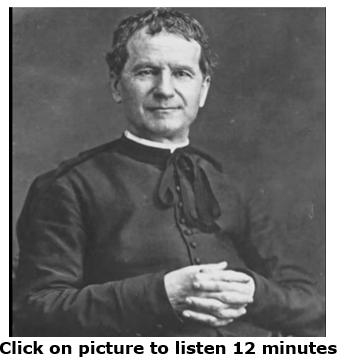
DOM BOSCO EXPOSED THE DARK SECRET BEHIND ISLAM
— And the Truth the World Forgot about the so-called Muslim religion.
Dom Bosco, also known as John Bosco, was an Italian Catholic priest and educator, born on August 16, 1815. He founded the Salesian Society in 1859 to help disadvantaged
youth, particularly boys, through education and community service. His teachings
emphasized love, kindness, and the importance of education for young people, making
him a beloved figure in Catholicism and a patron saint of youth. Don Bosco was
canonized in 1934.
ISLAMIC REVOLUTION BY MASS IMMIGRATION TO CONQUER THE WEST
And…they actually told the west they were going to do it too. The fusion of Marxism and Islamic.
I would not miss this one, if I were you!
Does this sound like a conspiracy to you? Now do you see why this flood of Muslims into the U.S., UK, Europe and other countries. Do you see why they also seeded politicians in high offices to support laws to protect themselves? In the U.S. we see this in Minnesota and Michigan. Look at the fraud and corruption!
Why did the Biden allow four years of massive, unchecked immigration into the US?
Why does the United Nations Agenda 2030 outline how to conduct this mass immigration and actually support it, push it and mandated it?
Do you see how they are using the climate change narrative (hoax) as a screen to justify and hide behind the real intent of almost anything the U.N. wants to do?
I am sorry folks as I know this is all a lot to take in and understand. There are many pieces to this Muslim takeover but we must understand it and connect the pieces to see the big picture and the long-term effects if we don’t stop it now. We will stop it sooner or later, better sooner than later. Fortunately for the U.S., it did not have yet another four years of democrat leadership in the Whitehouse or we would all be hosed and the United States would no longer exist.
Many of you might be saying now what does this have to do with the RV?
Well…. if you don’t know by now, I can’t help you. Just look at the mandate of the U.S. to get rid of the Iranian backed militia stationed in Iraq. Do you think they are going to allow the release of the reinstatement of the Iraqi dinar under these current conditions of the PMF strongholds? So, now we see these conditions deteriorating quickly, as God told us great changes are coming in 2026.
Conservative or Liberal Mark Levin is a constitutional lawyer, professor and past government employee. I would add he is a conservative, but he would rather be called just a patriot and lover of America.
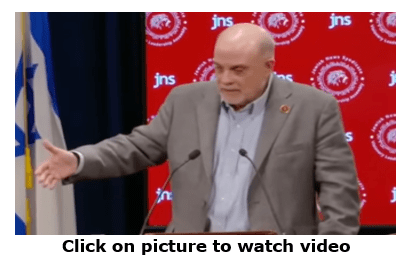
SAUDI LEADER “NO ONE IS PREPARED FOR WHAT’S ABOUT TO HAPPEN IN IRAN…”
ANTI-ISLAM PROTESTS CONTINUE IN IRAN. Regime change is coming…
LOOK WHAT GOD IS DOING TO PUNISH IRAN. IT IS TIME TO END THIS TERRORIST MOVEMENT ALTOGETHER.
Freedom is finally coming full circle for the Iranian people and Iraqis too. They desperately want out of this Iranian Islamic dictatorship regime. I honestly did not think it would happen this quick but here we are. Do you see now why the Iranian backed militia within Iraq do not really anymore have a choice but to throw down their weapons and either leave Iraq or pledge allegiance to the state. There is no big brother Iran or funding to back them up their puppet state within Iraq anymore.
“DEATH TO THE DICTATOR”: Mass Protests Sweep Iran as Currency Reaches Historic Collapse
God’s hand at work. The prophets told us this was coming and now it is here – “regime change”. Will we finally have peace in the middle east? Will the next generation ask what the word ‘terrorism’ even means?
10 EUROPEAN COUNTRIES FORCING MUSLIMS TO RETURN TO THEIR COUNTRIES OF ORIGIN
You know what…. it is probably a very good thing for them to go back anyhow. This stupid UN idea of mass migration and mixing the countries to a homogenous populations was all crazy right from the beginning. Was it done just to create chaos? The climate and culture in Europe is not suitable for them anyhow. Why don’t they try to fix their own countries instead of coming to developed countries and then trying to make them like the ones they left behind.
TECHNICALLY, ILHAN OMAR ISN’T EVEN INELIGIBLE TO BE IN CONGRESS
DOES THE FRAUD GO BEYOND MINNESOTA AND A PATTERN IN DEMOCRAT RUN DISTRICTS?
Ilhan Omar is connected closely to the fraud, even though she dismissed the allegations.
Listen carefully, if you think she is innocent. Should be she be removed from Congress. This is just a beginning, then we must look closely at her immigration status. Should be deported? Is she really a U.S. citizen even?

I have created a brand-new “Post RV Workshop” page in the blog. I included my own personal tips on investing post-RV and also organizing and protecting your estate. Here is the LINK. Going forward I will only post new and exciting information and opportunities here on the Latest Newsletter as they come along. Later I will transfer it to the ‘Post RV Workshop’ page in subsequent Newsletters for your future reference.
Just so you know I absolutely DO NOT adhere to high-risk investments where you can lose it all in a flash. Look at it this way – you are going to have all this money. Most of us investors waited decades for this RV to happen and so why would you even think about pissing is all away in some high-risk gamble of an investment. Yes, there are going to be scammers out there but let’s talk about legitimate investment opportunities only. These scammers can suck you dry and there is not a damned thing you can do about it. Go to a legitimate wealth manager associated with your bank. Let the licensed experts advise you. Please, please stay away from idiots like MarkZ, TNT Tony, Bruce on the Big Stupid Call, etc. , etc.
TRUMP FLOATS ZERO INCOME TAX PLAN STARTING WITH BIGGEST REFUNDS EVER
The Trump administration is slowly rewriting the entire federal tax code.
Give it time as the country will finally realize that with the right-offs half the country does not pay income tax anyhow. It makes common sense that if you keep adding exceptions and eliminate taxes in the tax code, they why even have an annual filing process? Yes, we can see what is happening. A slow methodical breakdown and then replacement of how revenue is to be collected for the federal government in the near future. But these changes will have to get through congress and congress must remain within the conservative power base.


SUDANESE: THE NEED TO RECONSIDER THE ECONOMIC SITUATION TO AVOID A FINANCIAL DEFICIT
– Prime Minister Mohammed Shia Al-Sudani explained on Thursday that supporting the industrial, agricultural, commercial and tourism sectors is the basis for improving the economic situation.
The Prime Minister’s Media Office stated in a statement seen by (Shafaqna Iraq) that “Prime Minister Mohammed Shia Al-Sudani met with a group of tribal sheikhs and dignitaries from Al-Dujail district in Salah Al-Din Governorate.” During the meeting, Al-Sudani stressed that “the districts of Balad and Dujail are among the districts that have made sacrifices in the past and present.” He pointed to the spirit of brotherhood that unites the sons of the Iraqi spectrum in the province.
Terrorism is being pursued in the caves
He explained that “the security services have the readiness, capability and efficiency. There is no foothold for terrorists in Iraq and they are being hunted down in caves, mountains and deserts.” The Prime Minister pointed to the role of the tribes in maintaining brotherhood and communication and addressing the remnants of terrorism and the resulting displacement.
He explained that “the victory over terrorism, sedition and hate speech was achieved by the people’s stand against the alien ideology.” He pointed out that “the district of Dujail has a special status because of the sacrifices it made and its honorable stand against the dictatorial regime, which makes it deserving of care and attention from the state.”
The government has focused on providing services in a manner befitting this country, its capabilities and status, and on working to alleviate the suffering of citizens and improve the economic and living conditions.
Al-Sudani added, “The government of services is not a slogan or a title, but rather a work methodology and a tireless movement from Basra to Mosul.”
He affirmed that a significant portion of the government program’s priorities had been achieved, while progress continued on development and service projects . Service projects were launched in the districts of Balad and Dujail, and work on others was being monitored, with directives issued to finalize procedures for new projects to begin implementation.
Sudanese: The need to reconsider the economic situation to avoid a financial deficit
He stressed the need to reconsider the economic situation to avoid a budget deficit in light of increased expenditures and stagnant revenues. He emphasized the importance of genuine reforms to overcome challenges and prevent Iraq from becoming solely dependent on oil, arguing that stimulating other sectors would generate revenue and address unemployment and job creation issues.
The Prime Minister stated that “there is a heavy legacy spanning four decades that squandered resources and consumed time in the adventures of wars and conflicts.”
He pointed out that “the government has worked during the past three years according to a clear vision and will, and with the support of national forces.
Expressing his confidence in the people’s ability to face challenges and move towards a country with a strong economy where citizens enjoy social justice and a decent life.
He emphasized at the end of his speech that implementing the government’s vision requires sustainable security and stability, which can be achieved through the community standing with the security services.
**********************************************************************************************
THE GLOBAL SMART CARD COMPANY ANNOUNCES THE LAUNCH OF A NEW INITIATIVE
The global smart card company (K) announced the launch of a new initiative aimed at supporting merchants and stimulating business growth, starting from January 1, 2026, where a commission rate of (0%) will be applied to the merchant for all electronic payment transactions.
The company stated in a statement received by Mail that “the initiative includes all payments made through point-of-sale (POS) devices and the SuperKey application, without any deductions or hidden commissions, ensuring that the merchant retains the full profits of each sale transaction. “
She added that “this step comes within its strategy to promote financial inclusion, encourage the shift towards electronic payment, and provide a more transparent and profitable business environment for merchants in various sectors. “
The statement continued, “The company announced that it will provide payment devices free of charge to merchants wishing to join the Key system, with the possibility of easily registering via the SuperKey application.” She emphasized that “2026 will be a year of real growth and clearer profits for traders, in a partnership based on trust and continued support.”
***********************************************************************************************
TRUMP IS TURNING THE MIDDLE EAST EQUATION UPSIDE DOWN: IRAQ FROM A BATTLEFIELD TO THE GATEWAY TO AN AMERICAN CONTRACTING EMPIRE.
New map
The image of American policy in the Middle East is no longer confined to scenes of tanks, military bases, and airstrikes. It is increasingly being shaped in the halls of investment conferences, through massive arms deals, and by cross-border economic memoranda of understanding. This shift, which has deepened during the current term of US President Donald Trump, is not only evident in the rhetoric of the White House and the reports of research centers, but is also reflected in the way American politicians speak about their country’s role in the region, particularly in Iraq.
In a statement to Baghdad Today, Naaman Abu Issa, a member of the US Democratic Party, put this shift in a direct way, saying that US policy in the Middle East has witnessed “a clear shift during President Trump’s term,” noting that the focus is now on economic and commercial interests more than direct diplomatic or military intervention.
Abu Issa adds, explaining that “the primary mission of the US president, embassies, and diplomats worldwide, particularly in the Middle East, is to open avenues for economic cooperation and secure contracts for American companies with various countries, including Iraq.” He emphasizes that this approach reflects “a strategic shift in Washington’s management of the region’s affairs.” At the heart of this assessment, Iraq stands out prominently. Abu Issa points out that Iraq “occupies a prominent position in this strategy, as a country of strategic importance to the United States and home to the largest US embassy in the world, reflecting Iraq’s pivotal role in Washington’s economic and trade policies.”
He further asserts that “American policy is no longer focused on military influence or direct intervention, but rather on strengthening economic ties and expanding investment opportunities, making Iraq an important partner within this vision.” These statements do not merely reflect a personal impression, but rather align with a comprehensive trajectory that can be traced through the current administration’s actions, from the Gulf deals to its approach to Iran and Syria, and including the Iraq file itself.
From “America First” to “Contracts First”
Since Trump’s inaugural address, where he introduced the “America First” slogan, it became clear that his foreign policy approach would undergo a restructuring based on reducing the direct costs of wars and maximizing the gains from trade and investment deals, while maintaining traditional pressure tactics such as sanctions and a limited military presence when necessary. This logic was evident early on in the focus on reducing direct involvement in protracted wars, alongside intensifying sanctions against adversaries, as seen in the “maximum pressure” policy against Iran, which reverted to using economic and financial tools as a primary means of managing conflict, rather than engaging in large-scale military confrontations.
But the most visible aspect of this shift was Trump’s frequent visits to the Gulf, where bilateral and multilateral summits became platforms for announcing unprecedented investment packages and arms deals in terms of scale and complexity. At these meetings, the enormous figures for these contracts were presented as a “job boost for the United States,” while simultaneously serving as a means to reshape the region’s political and security alliances through financial and investment channels, not just military ones.
In this scenario, weapons are no longer merely a security tool, but rather part of a “comprehensive deal” that intertwines energy, technology, and infrastructure companies with the defense industry. Many reports and studies have described this approach as a shift from “crisis management” diplomacy to “return maximization” diplomacy, where political and military leverage is used to open markets for American companies, while security protection is offered as part of a comprehensive trade package.
Iraq at the heart of transformation: from a battlefield to a platform for contracts
In this new context, Iraq, from Washington’s perspective, appears to be more than just a testing ground for security and counterterrorism policies. Beyond its geostrategic location between Iran, the Gulf, Turkey, and Syria, Iraq sits atop a vast reserve of oil and gas resources and requires decades of energy infrastructure development and reconstruction. This makes it, in Abu Issa’s words, “an important partner within this vision”—a partner whose role extends beyond simply training forces or exchanging information, encompassing contracts in the energy, electricity, communications, technology, and logistics sectors.
The presence of the world’s largest US embassy in Baghdad, in terms of size and security and diplomatic infrastructure, is no longer seen merely as a symbol of the occupation and its aftermath, but as a comprehensive platform for managing this economic and political transformation. The massive diplomatic complex, built on a vast area and considered the largest among US missions abroad, has also become a hub for commercial and investment activities, and a center of gravity for a network of US agencies and bodies dealing with energy, finance, and international companies and institutions connected to Iraq.
Numerous studies in recent years examining the “American strategy in Iraq” indicate that the administration tends to use financial and economic tools to manage its influence rather than expanding its direct military presence. Instead of sending more troops, Washington prefers to rely on tools such as targeted sanctions, monitoring dollar flows, and linking the level of financial and economic cooperation to Baghdad’s distancing itself from the Iranian axis, in addition to trying to encourage American companies to participate in infrastructure and energy projects within Iraq.
In this context, Abu Issa’s statement about “opening up prospects for economic cooperation and securing contracts for American companies” is not a side note, but rather an expression of the essence of the role of embassies and envoys in the region, as the current administration sees it: contracts take priority, and then everything else comes after.
The Gulf as a model: Arms deals and investment are shaping a new doctrine
During Trump’s Gulf tour, this shift became most evident. Beyond the traditional political issues, from relations with Iran to maritime security, the most prominent headlines revolved around massive investment packages, arms deals, and long-term economic cooperation programs. In those sessions, press conferences no longer spoke solely of “alliances against terrorism,” but also of “investment opportunities,” “vision projects,” “economic zones,” and “trade corridors,” as if the region were being reshaped as much as a map of security and investment.
This pattern did not come out of nowhere. Since the signing of the “Abraham Accords” in 2020, which opened the door to the normalization of relations between Israel and several Arab countries under American auspices, the approach has appeared to be based on investing in calming tensions to create paths of economic, trade, tourism and technological cooperation, making the new political and military alliances carry on a network of intensive and long-term economic interests.
What is new in the current stage is that this logic is no longer limited to the Arab-Israeli normalization file, but has extended to the form of the relationship with countries such as Saudi Arabia, Qatar, the UAE, Iraq and post-war Syria, where easing sanctions or providing security support is linked to the possibility of opening wide doors for American companies in the fields of energy, reconstruction, technology, transportation and logistics.
The “profit and loss” logic: How does Washington view Iraq?
Looking at Iraq from the perspective of this transformation, it can be said that its position in American calculations is governed by three overlapping levels:
1.The first level is strategic security, linked to the Iranian issue, the Syrian borders, and the balance of power with Turkey and the Gulf states. Here, Iraq remains a vital arena for any policy of exerting pressure on Tehran, whether through monitoring the activities of armed factions or by tracking the flow of funds, oil, and gas.
2.The second level is that of economic opportunities, where Iraq appears as a promising market for American companies in the fields of conventional energy and associated gas, electricity grid interconnection, and the construction of ports, roads, and railways, in addition to the banking and digital sectors. At this level, the role of the embassy and American economic missions becomes translating political and security influence into tangible contracts, as Abu Issa hints in his talk of “securing contracts for American companies with countries, including Iraq.”
3.The third level is that of balancing with adversaries and competitors, primarily China, Russia, and Iran, who are also moving to fill the investment and energy gaps. Every major deal in Iraq—whether in oil, gas, or infrastructure—becomes, in this context, part of a broader game between Washington, Beijing, Moscow, and Tehran, making the economy an extension of the power struggle rather than a substitute for it.
Under this roof, one can read about many of the files that have preoccupied Baghdad in recent years, from negotiations with major oil companies, to regional electricity interconnection projects, to repeated attempts to link Iraqi banking and financial reforms to the conditions of the US Treasury and the Federal Reserve.
Embassies as “business centers”: When diplomacy becomes a commercial arm
What Nauman Abu Issa says about the mission of “the president, embassies, and diplomats” is not far removed from the practical reality of the work of American missions in the region in recent years. Since the Obama administration, through Trump, and up to the present stage, the network of commercial attaché offices and investment promotion teams within embassies has been strengthened, and a large part of their activity has become directed towards opening doors for American companies and investors, facilitating access to local and regional contracts, and coordinating the participation of these companies in major infrastructure projects and national “vision” plans in the Gulf, and reconstruction projects in post-war countries.
In Baghdad, the importance of this role is amplified by the size of the embassy and the complexity of the Iraqi landscape. The presence of so many agencies, programs, and offices within the diplomatic compound, from defense and foreign affairs to the treasury and the U.S. Agency for International Development, among others, means that every major economic file—in energy, infrastructure, or banking—passes, in one way or another, through channels connected to the embassy, or at least is subject to its political, security, and financial evaluation.
This does not necessarily mean that diplomacy has been completely transformed into a “commercial arm,” but it is certainly now measured, in a considerable part, by the number of contracts that are opened up for American companies, and the amount of economic influence that can be established in the long term.
Between economics and weapons: Is the era of military intervention over?
Despite this clear focus on economics and arms deals, it cannot be said that the United States has abandoned its hard power tools in the region. The massive arms deals with the Gulf states confirm that economics and arms go hand in hand, and that security is still used as an “incubator” for these deals, not their antithesis.
The policy of putting pressure on Iran also relies on a combination of economic sanctions, military threats, and leveraging the network of American bases in Iraq, the Gulf, the Red Sea, and the Eastern Mediterranean, within a discourse that balances the language of “we do not want a new war” and “we will not allow the rules of the nuclear and regional game to be changed.”
In this context, the shift from “war to economy” appears to be more of a reordering of priorities than a complete break with the past. The current administration does not want long and costly ground wars like those in Iraq and Afghanistan, but it does not hesitate to use sanctions, financial pressure, and the threat of force to ensure a more favorable environment for the flow of American deals, contracts, and businesses.
What does this mean for Iraq?
For Iraq, this shift raises more complex questions than it provides easy answers. The fact that securing contracts for American companies in a country like Iraq has become, as Abu Issa describes it, the “primary mission” of American diplomacy means that Baghdad faces both an opportunity and a risk.
The opportunity lies in the potential to attract investments, transfer technology, and enter into partnerships that can help modernize the deteriorating infrastructure and the strained energy sector, and open up new markets and job opportunities.
But the risk lies in these same contracts becoming new instruments of influence, used to reshape the economic and political balances within the country, and to link Baghdad’s strategic decisions to long-term financial and investment interests, at a time when the state is still struggling to consolidate its sovereignty over its security, military and economic decisions.
Between these two extremes, it seems that the most important question facing the Iraqi decision-maker today is not only: How do we deal with an American administration that is redefining its role in the region? But also: How can this shift from “war to economy” be turned into a national interest, rather than a new form of dependency?
If the embassies, as Naaman Abu Issa says, came “to open up prospects for economic cooperation and secure contracts for American companies,” then Iraq is invited to ask the opposite question: What contracts does it want? And on what basis does it want these partnerships to be built, so that the strategic shift in Washington does not turn into just a new chapter in a long story, in which the form of American influence and its tools changed, while the essence of the imbalance in Iraq’s relationship with the world remained the same.
********************************************************************************************************
9 ECONOMIC BENEFITS OF STATE-CONTROLLED WEAPONS – EXPERT AL-HASHEMI (AND THESE BENEFITS CAN INCREASE)
“From a crisis economy to a planning economy”
Economic expert Ziad Al-Hashemi said that the Iraqi state will achieve significant economic gains by getting rid of loose weapons, explaining that this step will raise Iraq’s status and place it among countries with true sovereignty. He added that countries will give greater value to the Iraqi government after it gets rid of loose weapons and will deal with it with greater confidence. Iraq will have a pivotal role through which it can enter into strategic alliances and new economic partnerships. Al-Hashemi also stressed that the Iraqi economy will transform from a crisis economy to a planned economy through comprehensive development plans, and he listed 9 benefits, saying that they are subject to increase according to developments.
Al-Hashemi’s Facebook post:
- Restoring Iraqi sovereignty by eliminating loose weapons will yield significant economic gains, freeing Iraq from the grip of uncontrolled arms dealers and elevating its standing among truly sovereign nations. One nation, one people, one army—this is the motto and objective that stable states strive for, uphold, and maintain. It is a fundamental condition that grants these nations the immunity and opportunity to strengthen their stability, sovereignty, and political, economic, and security standing.
- Countries will give greater value to the Iraqi government after it gets rid of loose weapons, and will deal with it with greater confidence. Iraq will have a greater pivotal role through which it can enter into strategic alliances and new economic partnerships, which were not possible to achieve with weapons in the hands of non-governmental groups!
- An Iraq without loose armed groups will transform the Iraqi economy from a crisis economy to a planned economy, as Iraq will be able to develop and implement comprehensive development plans away from the control and influence of those groups. This is a strategic goal that previous governments failed to achieve, one of the most important reasons being the presence of weapons outside the control of the state!
- Eliminating loose weapons outside the official armed forces will greatly reduce the costs of risks surrounding the Iraqi economy and will enhance the possibility of capital and investments entering Iraq.
- The private sector will find ample space and a promising market for work, expansion and production, and new projects and innovative ideas will enter that will enhance the emerging business sector and the services sector, which the Iraqi economy desperately needs.
- Furthermore, the government’s monopoly on weapons will strongly contribute to weakening corruption, which has been reinforced and spread by loose weapons throughout the past decades and up to the present day through the imposition of levies, commissions and sharing of contracts!
- Enforcing the law with only one weapon in the hands of the government will contribute to achieving civil peace and social justice, end the militarization of society, and open the door to ambition for new generations and the development of their skills to keep pace with developments in the labor market!
- Strategic projects such as the development road can see the light after getting rid of loose weapons, and this will contribute to attracting global industries and supply chains to benefit from this project and establish their projects and centers inside Iraq.
- With the elimination of the loose weapons of the groups and their economic offices, the phenomenon of dollar smuggling, money laundering, and support for sanctioned entities and countries will end, and the Central Bank of Iraq and the government will be able to restrict and reduce these operations to the lowest level, thus preserving national wealth from being lost.
- Oil and commercial smuggling operations and the exploitation of border crossings will decrease to the lowest level after getting rid of loose weapons, and trade will turn into a stable normal situation, which will allow it to be strengthened and the returns achieved for the government to be improved.
These are some of the gains, and there are certainly other gains that we did not have the space to mention, but in any case, Iraq will not see a glimmer of hope or a light without the presence of one official weapon, as the economy does not grow with the presence of loose guns, but rather it deteriorates silently!
When that is achieved, and the economy and Iraq are freed from the grip of loose weapons, then we can say that Iraq has truly begun to stand on its own two feet and walk on the right path, after many years of paralysis and ailments!
Therefore, any incoming prime minister must realize that the success of his government depends on getting rid of loose armed groups and not allowing them to roam with their weapons around his government ministries, as this is a recipe for the failure of his government and a grave danger to the future of Iraq and the fate of its people!
***********************************************************************************************
SUDANI: ENDING THE UN MISSION MEANS THAT IRAQI INSTITUTIONS HAVE DELIVERED THE BEST LEVELS OF PERFORMANCE.
Prime Minister Mohammed Shia al-Sudani expressed his gratitude on Saturday to the United Nations Assistance Mission for Iraq (UNAMI), stressing that the end of its work means that Iraqi institutions have provided the best levels of performance.
In a statement received by the Mail, the Sudanese office said, “Today, the Sudanese received the Special Representative of the Secretary-General of the United Nations, Mr. Mohammed Al-Hassan, on the occasion of the end of his duties in Iraq and the termination of the work of the United Nations Assistance Mission for Iraq/UNAMI.”
According to the statement, Al-Sudani expressed his “gratitude to Al-Hassan and to all those who worked in the mission, for the assistance they provided to Iraq in various fields throughout its duration, from the fall of the dictatorial regime until today.”
The Prime Minister affirmed, “The relationship between Iraq and the international organization will continue, as will the bilateral programs on which cooperation is taking place, and that ending the work of the UNAMI mission means that the Iraqi state institutions have been able to provide the best levels of performance in carrying out their constitutional and legal duties, in a step that enhances national sovereignty.”
For his part, Al-Hassan praised “what has been achieved in Iraq during the past years of the government’s work, and the important steps that contributed to reaching this day, noting the keenness to continue working with Iraq in various programs.”
*****************************************************************************************************
THE DREAM OF REVOLUTIONARY CHANGE IN IRAQ
(About the PMF)
(Mnt Goat: this article is about the Iranian backed militias in Iraq (PMF). If you want to learn more about their operations in Iraq or the detriment to Iraq, this is a good read)
If a referendum were held in Iraq today, we would find that many Iraqis support “radical solutions” that might come through a military coup or foreign military intervention, because there is a general feeling that it is difficult to change the negative conditions through the institutional and democratic mechanisms currently in place .
This mood, in fact, is what was behind the acceptance of radical transformations at various points in Iraqi history, at least since the coup of Bakr Sidqi in 1936, which is considered the first military coup in the entire Arab region .
With every coup or violent upheaval, emotions surge, many are optimistic, but the emotional fervor quickly fades, leaving behind a reality far worse and more complex than before. But will the Iraqi people ever learn? After every disaster, a large percentage of citizens tend to interpret the violent transformation as not being good, and that we need another “transition” that is good, rather than rejecting the idea of violent transformation, coups, and revolutions altogether .
Many have been waiting, at least since the beginning of this year which is nearing its end, for those crushing blows that the United States of America will direct at the militias in Iraq, as if the Iraqi militias were merely an isolated body, and not a network of forces, interests and influence, intertwined with security and military policies, in a way that makes it difficult to separate them from the body of the state itself .
What if America assassinated the “fifty names” list circulating on social media, and bombed militia camps and their weapons depots in one dark night? Would Iraq be okay the next morning ?!
Many reports confirm that the first reaction to such a hypothetical event will be chaos on various levels, not least in the security file, in addition to the disruption of the map of power and the balance of pressure between them, which will motivate adversaries to try to fill the void quickly, creating a new circle of conflicts .
Calm and stability will not be achieved quickly after this scenario, for many reasons, including that the authority of the state is incomplete, and that the ability to enforce the law in the street is clearly lacking, especially with the infiltration of many militia figures, or those loyal to the militias, into state institutions, outside the organizational structure of the militias themselves .
America, up to this point, is not concerned with withdrawing security powers from groups operating under the umbrella of the Popular Mobilization Forces, which are spread across areas north and west of Baghdad, and manage vast areas of the shared borders with Syria and Jordan, in cooperation with the army, the federal police, and the counter-terrorism service .
This deployment is not merely a routine distribution of units, but reflects a perception built since after 2015 of the Iraqi security doctrine, where factions are no longer just a supporting force, but a partner in security decision-making .
In the vicinity of the capital, specifically to its north and west, the Popular Mobilization Forces (PMF) control areas such as Tarmiya and Abu Ghraib, which have historically been gateways for security threats and are now under heavy security control by these factions. This presence effectively makes the PMF the de facto controller of security at Baghdad’s entrances and exits, an influence that extends beyond the military dimension to the political and strategic spheres .
In the west, specifically on the border strip with Syria and Jordan, the Popular Mobilization Forces not only perform the traditional border guard duties, but also dominate vast areas of the desert .
Although this deployment is carried out under the protocol of the Joint Operations Command, and in cooperation with the army, the federal police and the counter-terrorism service, the reality on the ground imposes a kind of “division of roles”; while the army and police hold the city centers and official ports, the Popular Mobilization Forces take on the task of holding the ground in the rugged and open areas, enjoying great operational independence .
The current approach to bringing about change in Iraq is to continue pressuring the militias and their political fronts to force them to implement change. The desired outcome may not be immediate, nor may it fulfill all the “revolutionary aspirations” of a large segment of Iraqis in their vision of change, but this is the picture as it appears today .
***********************************************************************************************
IRAN: SPECULATION GROWS ABOUT THE GOVERNMENT’S MOVE TOWARDS UNIFYING THE “EXCHANGE RATE”
(Mnt Goat: This article is all about Lessons Learned. Even the experts are sometimes fooled. I am bringing you this article today not because we are so much concerned about the Iranian currency, as my blog is all about the Iraqi dinar revaluation not the rial or toman. I believe in information and informing my readers of what is really going on and connecting the pieces for you so you can better understand and learn.
I wanted to share this article because it is an educational article on a discussion about two ways to set currency rates. We can see that Iran had multiple currency rates and maybe this was not such a good thing for their economy.
So, let’s look deeper into what a “unified currency rate” vs having “a multiple currency rate” is and the pros and cons of each. Read the article! If you remember just weeks ago (around Dec 1st) one of the Iraqi economists suggested that the solution to the recent rise of the dollar was to have a multiple exchange rate system. Really? If you read this article today, you can clearly see why the CBI is stayed away from such a solution. The CBI has a solution and it’s a massive revaluation of normalization of the dinar and the shift to a new basket of currencies and back to FOREX. That is their plan. The CBI already told us many times already that the monetary reserves and the gold can back up the economy and is a safety net for a major crisis (i.e. Covid era) not minor clinches. Just so you know Iraq has only one (1) official exchange rate. The black market rate is not official and is part of the problem and not sanctioned by the CBI as the free market rate is in Iran. So, in Iran they have what they call a “free market” rate but it is really a legalized black-market rate full of corruption and it allows it to occur. Sad, isn’t it? We can see the impact corruption has on a currency just be studying Iran. For Iraq, the CBI “official rate” is a suppressed rate, a temporary rate, a benchmark, until they can get their act together and normalize the dinar. The CBI made any trading of the dollar outside of the “official rate” illegal. That is the difference between the Iranian free market and the Iraqi black market.
Also remember that when this economist made this suggestion of multiple rates for Iraq it was another knee-jerk reaction to what was really going on to a warped sense of the market. The sudden, temporary spike in the dollar was from the implementation of the SKODA part of ASYCUDA system with limited products for a trial run. It was the first time it was turned on with these custom fees for a limited number of products. The CBI fully expected the spike and knew it was temporary. The CBI did not fall into this trap of a knee-jerk reaction by devaluing the dinar. Many of these silly (and stupid) economists even compared the situation to the COVID years. Many articles flew out by all these economists telling of the danger of what was happening and some silly solutions. The issues never occurred and the rate slowly declined not back to 1310 but better even to 1305. The CBI kept the citizens informed and then articles come out about their independence in making these kind of decisions. They pretty much told these economists to “mind their own business” and to leave the financial management of the country to the experts. They also talked about how speculators could hurt a good economy and so the economists should stop speculating and deal in FACTS.)
The Central Bank of Iraq postponed on Monday the requirement for companies wishing to purchase dollars for importing goods to submit a prior customs declaration until January 2026, with the exception of four specific commodities for which the requirement remains mandatory. This postponement comes after the General Authority of Customs had previously announced that the procedure would be implemented starting Monday, December 1, 2025.
The General Authority of Customs announced the full implementation of the advance customs declaration system at the beginning of next year, to include all imported goods and merchandise.)
Article Begins:
While talk has returned to Iran about monetary policy reforms and the move towards unifying the exchange rate, a report issued by the Planning and Budget Organization shows that the policy of fixing the exchange rate has not only failed to curb inflation, but has also contributed to expanding the circle of rent-seeking and corruption and causing disruptions in production and exports.
In recent days, speculation has resurfaced regarding the initiation of serious reforms to Iran’s exchange rate policies and the government’s move towards adopting a unified exchange rate. While this news has not yet been officially confirmed, the evidence suggests that the continuation of the multiple exchange rate system, instead of curbing inflation and supporting the livelihoods of Iranian families, has become a source of rent-seeking, exacerbated corruption, and disrupted production and exports.
The newspaper “Donya-e-Eqtesad” reported that the Planning and Budget Organization confirmed in a concurrent report that the policy of fixing the exchange rate has not succeeded in controlling prices, but has instead turned into an obstacle to trade procedures in the country.
Some policymakers argue that current conditions do not permit a unified exchange rate, while others believe that multiple exchange rates have failed to curb inflation or support low-income households, instead becoming a mechanism for rent-seeking. Furthermore, global experience shows that economies adopting multiple exchange rate systems are often plagued by high inflation, without any tangible positive impact on their economic performance.
The profit generated by the gap between the official exchange rate (28,500 tomans) and the free market rate (around 132,000 tomans) undoubtedly has beneficiaries who will not easily allow the government to eliminate it. The defense of the multiple exchange rate system by some members of parliament comes at a time when analytical reports from research centers confirm that the preferential currency allocation has failed to control the prices of basic goods.
In the supporting documents for the 2026 budget bill, the Planning and Budget Organization addressed monetary policy and the multiple exchange rate system, outlining its position on the matter. These documents indicated that the monetary policy adopted in Iran, including the preferential exchange rate, the Hall 1 exchange rate, and the Hall 2 exchange rate, has failed to effectively curb the inflationary effects stemming from the high unofficial exchange rate. The documents further stated that achieving economic stability and controlling inflation through monetary policy should focus on achieving sustainable stability in the free exchange market, as fixing preferential exchange rates is an artificial and unrealistic approach.
The report added that the policy of fixing the official exchange rate has become a costly burden on the national economy, particularly on producers and exporters. These costs include weakened exports, increased demand for imports, hindered repatriation of foreign currency earnings from exports, exacerbated capital flight, weakened domestic production, widespread corruption and rent-seeking, and, most importantly, rampant smuggling.
According to some recent studies, the primary reason for the growth in liquidity is attributed to budget deficits and government financial imbalances. In practice, the government is forced to compensate for the budget deficit by printing money and increasing liquidity, which ultimately leads to fluctuations in the exchange rate and higher inflation rates.
Article Ends
*************************************************************************************************
THE EXCHANGE RATE IN IRAQ IS THE FIRST VICTIM OF THE IMPLEMENTATION OF THE “ASYCUDA” CUSTOMS AUDIT SYSTEM.
With the start of the implementation of the European audit system “ASYCUDA” in Iraq, the exchange rate of the dollar rose within the parallel market, which economists considered a normal matter in the first stage of implementation. Since the beginning of December, Iraqi markets have witnessed a gradual rise in the exchange rate of the dollar in the parallel market, reaching 1430 dinars after a period of stability in which the dollar reached less than 1390 dinars.
This continuous increase coincides with the entry into full implementation of the European audit system “SKODA” at customs ports, a system that relies on digital tracking and linking customs data with banks, which reduces reduced invoices and non-conforming documents.
Skoda advanced connectivity system
Skoda represents a digital inspection system developed in Europe, a transition from a customs model based on the traditional document to a system that links customs data with banks and ports. Once the system is operational, it is no longer possible to pass goods based on low-value invoices or non-conforming documents. The system fixes the true price of goods according to international databases, matches certificates of origin with transfer movements, and prevents any transaction in which financing transparency is not available.
Economic experts believe that this transitional phase, although a step towards greater transparency and discipline, naturally generates temporary pressures on the market and raises the actual demand for the dollar, especially with the increasing talk about the possibility of tightening banking compliance rules related to foreign transfers.
Dollar exchange rate rise
Financial and banking expert Mahmoud Dagher said that the rise in the dollar exchange rate in the parallel market came after the announcement of the implementation of the ASYCUDA customs system starting from December 1st.
He explained that the current application includes only four goods, namely gold and jewelry, mobile phones, cars and refrigeration equipment, and that the mechanism will be extended to include all goods at the beginning of 2026.
Dagher added that the government may face challenges in implementing the system within the border crossings in northern Iraq, as they do not rely on Skoda, which will hinder the ability of traders there to conduct financial transfers officially, making the market watchful for any reactions that may come during the next stage.
He added that this system created a “temporary duplication” of fees between the old and new systems, which led to additional pressure on the market and short-term effects on the exchange rate.
On the other hand, economic researcher Ali Awad believes that the recent rise in the dollar exchange rate is a natural result of the transitional phase the country is going through with the full implementation of the European customs audit system “Skoda”.
He explained that the market is undergoing a comprehensive restructuring of import costs, which usually leads to a temporary increase in demand for the dollar before prices stabilize at new levels that demonstrate the ability of institutions to manage the transition and secure official channels that comply with the requirements of the new system.
Awad added that there are serious concerns being raised today about possible attempts to sabotage the program.
He pointed out that previous experiences have shown the ability of some influential parties to disrupt customs reform efforts and to thwart similar systems by circumventing procedures or hindering their implementation.
***************************************************************************************************
THE SUDANESE MAN SPEAKS ABOUT A SECOND TERM, ARMS CONTROL, AND AMERICA’S DEALINGS WITH IRAN.
Consider prime minister Mohammed Shia Al-SudaniOn Saturday, he stated that a second term is not a personal ambition but rather the completion of a project. He also pointed out that the agreement to restrict weapons to the state was not the result of a statement from a country or envoy, and revealed that he had advised the American side to deal respectfully with…Iran and to refrain from threats and intimidation.
He said Sudanese In an interview with Al Mayadeen Channel” The citizen expects the result of his participation in the elections to be a change in the level of services, the standard of living and the economy, the imposition of security and stability in the country and the strengthening of his pivotal role.”
He added, “The voter turnout is evidence of the level of satisfaction and confidence in the government’s executive performance, and these reasons motivated citizens to participate widely in the elections,” considering that “our foreign relations are based on self-interest.” Iraq” The Iraqi people are a priority for us, and the sovereignty of the country, its territorial integrity, and the safety of its people are non-negotiable; we will fight for them.”
Al-Sudani noted, “Our relationship with all our Arab brothers is based on a single, consistent standard, without any discrimination. We cherish our deep Arab ties, and our interests with them are commensurate with their engagement with us.” He added, “Our position towards our brothers in Iraq is unwavering.” Lebanon the support and assistance we provided at every stage is part of our duty and an appreciation for their resistance to the treacherous aggression.
He continued, “We have begun the process of opening an office in Lebanon to follow up on Iraq’s contribution to its reconstruction, and this reflects the will and desire of all Iraqis,” noting that “our relationship with Syria, it is ongoing based on a shared strategic interest, and we maintain communication. We have formed a bilateral security coordination committee, which is still operating.
He emphasized that “our relationship with the Islamic Republic of Iran is built on solid foundations, and we share religious, cultural, and social commonalities, in addition to a stance…”Iran “We are with them in the war against ISIS,” he added, “I have not sensed any kind of dictates, interference, or influence from Iran in Iraq’s affairs, and our bilateral relations are on a positive path.”
Regarding relations with US Al-Sudani said, “It has a special status; it is a strategic partner of Iraq and contributed to the downfall of the dictatorial regime and helped us confront ISIS through International coalition. He added, “We worked on organizing the relationship with the United States, both in the security and economic spheres, given the companies and technology they possess, so that Iraq could benefit from their experience.”
He revealed prime minister US administration officials have announced their acceptance of holding a dialogue with the Iranian side in Baghdad especially during the visit of the American envoy Tom Barrack“To Syria and Iraq,” he added, “We advised the American side to deal respectfully with Iran and to refrain from threats and intimidation because negotiations require trust and cannot be conducted under military aggression. Iran has agreed to conduct serious negotiations without dictates or threats, based on trust, and this is a logical viewpoint.”
Regarding the next government, al-Sudani said, “The majority of the forces within the Coordination Framework are keen to form a strong government capable of facing future challenges.” He added, “We are still at a standstill, unable to resolve the selection of the prime minister. Therefore, we presented an initiative to break the deadlock, as a key bloc within the Coordination Framework.” He
also said, “The basis of our initiative is consensus on the selection of the prime minister, establishing clear criteria to facilitate the selection process and the appointment of the person tasked with forming the government. This individual must have the people’s trust, possess successful executive experience, and have a program to address the challenges.”
He also stated that “the agreement to restrict weapons to the state is not the result of a statement from a country, an envoy, or a request, but rather it is part of our government program and one of the upcoming entitlements. All national parties agree on addressing this issue, and within days our armed forces will take control of the Ain base.”Lion“The second term is entirely, and the second phase relates to the Silk Road base,” he stressed, adding that “the second term is not a personal ambition, but rather a readiness to take responsibility and complete a project we started.”
**********************************************************************************************
CALLS TO REMOVE OIL FROM THE BUDGET: A BOLD REFORM PATH OR A GAMBLE THAT COULD UNDERMINE IRAQ’S FINANCIAL STABILITY?
The phrase “oil belongs to the people” has been transformed from a constitutional text that is supposed to establish economic justice and sustainable development, into a slogan that is invoked during crises without actually being reflected in the structure of the Iraqi economy.
After decades of almost complete dependence on oil revenues, questions are mounting about the viability of this model, especially in light of the disruption of productive sectors, the decline of agriculture and industry, and the continued fragility of the budget in the face of fluctuations in oil prices.
As the next year and the upcoming budget discussions approach, the debate resurfaces regarding the meaning of public ownership of oil, the limits of its use, and the possibility of moving towards a diversified economy that reduces dependence on a single resource that has proven to be as much a source of danger as a source of funding.
Experts believe that continuing to link the general budget to oil revenues deepens the structural imbalances in the Iraqi economy and keeps the state hostage to the fluctuations of global markets. They warn that this approach has contributed to weakening the productive sectors, especially industry and agriculture, and has transformed the economy into a rentier model that lacks sustainability. The absence of a clear economic identity and the fluctuation of financial policies have contributed to the mismanagement of public capital, which calls for a review of the philosophy of preparing future budgets and a move towards diversifying sources of income and strengthening non-oil revenues to ensure long-term financial stability.
For his part, economist Abdul Rahman Al-Sheikhli explained that the phrase “oil is the property of the people” in the Iraqi constitution does not mean total dependence on oil revenues to finance the general budget, but rather indicates the people’s ownership of this wealth and the need to manage it in a way that achieves economic sustainability and preserves the rights of future generations.
Sheikhly told Iraq Observer that “the monarchical governments in Iraq did not include oil revenues in the general budget, but rather allocated them for emergencies,” emphasizing that “this approach was more disciplined compared to the financial policies adopted at present.” He added that “Articles 111 and 11 of the Iraqi Constitution clearly stipulate that oil belongs to the people, which means that the general budget must be directed towards relying on non-oil revenues, and oil should not be the primary source for covering operational expenses.”
Al-Sheikhli pointed out that “oil has turned into a liability to the Iraqi economy at the present stage, as a result of the almost complete dependence on it, which has caused a large number of production plants to stop, and the decline of the agricultural sector, on which Iraq was mainly dependent in securing its needs.”
He emphasized that “this dependence has created a fragile economy and stifled production, contributing to the weakening of genuine development opportunities,” calling for “the revitalization of the industrial and agricultural sectors as sustainable sources of national income.” Al-Shaykhli stressed “the necessity for next year’s budget to include a reduction in dependence on oil, limiting it to no more than 49 percent of total revenues, thus ensuring the diversification of income sources and mitigating the risks associated with oil price volatility.” Article (111) of the Constitution of the Republic of Iraq of the year (2005) in force states that “Oil and gas are the property of the Iraqi people in all regions and governorates.”
According to experts, this text is consistent with public international law, which considers natural resources to be the property of the people, not the property of parties or the authorities, and that the state is only a tool for management, distribution, and development.
This is what was emphasized by the resolutions of the United Nations, including its resolution No. (1803) of 14/12/1962 entitled “Permanent Sovereignty over Natural Resources”, which stressed the need to exercise the right of peoples and nations to permanent sovereignty over their wealth and natural resources in accordance with the interest of their national development and the welfare of the people of the state concerned.
***********************************************************************************************
10 THINGS THE CENTRAL BANK OF IRAQ (CBI) SAID ABOUT THE IRAQI DINAR (IQD) IN 2025
28th December 2025 in Iraq Banking & Finance News
1. February 19: CBI’s Dollar Distribution System Among World’s Most Monitored
Following meetings with the US Treasury and Federal Reserve in Dubai, the CBI reported recognition of Iraq’s US dollar distribution system as one of the most monitored and controlled globally, effectively limiting manipulation and illicit dollar outflows. The bank emphasized significant transformation in international transfers aligning with global banking standards.
The CBI urged reliance on official channels for updates and warned against misinformation.
2. February 27: Cash Transactions will Gradually Decline
Ali Mohsen Al-Allaq, Governor of the Central Bank of Iraq (CBI), highlighted significant progress in digital payments, citing an increase in ATMs and e-wallets, which helped boost financial inclusion to 40% from 20% in just two years, supported by CBI initiatives.
He noted that Iraqi banks are undergoing major transformations, adopting internationally accredited financial systems to enhance cross-currency transactions and banking operations. Looking ahead, he envisioned banks shifting from traditional entities to smart digital platforms, issuing digital financial identities to facilitate seamless transactions.
3. May 8: Dinars to Dollars — Official List of Approved Banks
The Central Bank of Iraq (CBI) has announced that pilgrims can purchase dollars through designated banks and companies in Baghdad and other provinces.
4. September 4: CBI Launches Inter-Wallet Money Transfers
The Central Bank announced the launch of inter-wallet money transfer services, enabling individuals and businesses to conduct financial transactions with greater speed and flexibility. The CBI said this development marks a qualitative step in enhancing financial inclusion, supporting digital transformation, facilitating the movement of funds, and strengthening the business sector.
5. November 19: CBI Clarifies Role of Investment Department
The Central Bank issued a statement outlining the role of its Investment Department in supporting exchange rate stability. The department’s objectives focus on maintaining confidence in the dinar.
6. November 21: CBI Issues Detailed Instructions for Exchanging Dinars
The Central Bank issued comprehensive instructions setting out criteria for trading and replacing banknotes, including standards for fit and unfit currency, procedures for damaged notes, and mechanisms for counting and sorting.
7. November 24: CBI Firmly Denies Any Plans to Change Exchange Rate
The Central Bank rejected rumours of a possible exchange rate modification, calling such speculation aimed at disrupting markets and undermining economic stability. The bank confirmed there is no intention whatsoever to amend the exchange rate of the Iraqi dinar.
8. December 2: Digital Dinar Under Development; Exchange Rate Not a Fiscal Tool
Governor Ali Mohsen Al-Alaq stated that the digital dinar project is under implementation, but requires time and robust infrastructure before launch. He stressed that the exchange rate should not be used as a tool to address structural fiscal gaps, warning that a devaluation of the dinar would harm low-income groups and erode confidence in the currency.
9. December 17: Currency Supply Reduced by 5.5%
The CBI reported a 5.5 percent decline in currency issued during the third quarter of 2025, falling to 99,681 billion Iraqi dinars from 104,127 billion Iraqi dinars in the same period of 2024.
10. December 18: Inflation Drops to Historic Lows
The Central Bank of Iraq (CBI) reported that Iraq’s inflation rate fell to -0.8 percent in the third quarter of 2025, down from 3.5 percent in the same period of 2024
**************************************************************************************************
GOVERNMENT DIRECTIVES TO UPDATE CUSTOMS PROCEDURES AND IMPLEMENT ASYCUDA AT ALL PORTS OF ENTRY
The head of the Border Ports Authority, Lieutenant General Omar Adnan Al-Waili, stressed on Saturday the importance of successfully implementing governance and sustaining development and modernization projects, which will contribute to facilitating trade and improving procedures at border crossings.
A statement from the Border Ports Authority said, “Al-Waili chaired an emergency meeting that included the directors of the border ports and customs centers, in the presence of the Director General of the General Authority of Customs, Thamer Qasim Dawood, the director of the ASYCUDA program in customs, in addition to a representative of the Federation of Chambers of Commerce.”
The statement explained that the meeting discussed the recommendations of the committee of Diwani Order No. (613) of 2025, especially regarding the new pricing, deduction of tax through the ASYCUDA system, as well as the application of the pre-customs declaration system to all goods entering the country starting from January 1, 2026.
He noted that the Director General of Customs provided a detailed explanation of the procedures that customs centers must implement directly, stressing the need to adhere to accuracy and responsibility, prevent any cases of manipulation, and work to maximize revenues.
The meeting also included a presentation by ASYCUDA Program Director Mohammed Mazen, during which he reviewed the mechanisms for implementing the advance customs declaration, instructions for financial transfers through approved banks, in addition to discussing the private sector’s observations regarding all the recommendations issued.
At the conclusion of the meeting, the head of the Border Ports Authority stressed the need to successfully implement governance and continue development and modernization processes at all border ports, in order to facilitate trade exchange procedures, achieve the public interest of the state, and meet the aspirations of citizens.
**********************************************************************************************
Monday’s Parliament: The “Key” To The Three Presidencies And The Gateway To Drawing The Map Of Power In Iraq
(As I post this article its Monday morning in Germany, the first phase of the appointing the three presidencies is done. See next article.)
All eyes will be on Monday (December 29, 2025) on a parliamentary session described as the most sensitive since the start of the recent political elections, not only because it will put the parliament in control of its presidency, but also because it represents an early gateway to determining the direction of the three presidencies, and an initial test of the blocs’ ability to produce a balanced settlement before moving on to more weighty issues related to the formation of the government, the cabinet, and the course of agreements within the state.
Why is tomorrow’s session crucial?
Rebin Salam, a member of the Kurdistan Democratic Party, said that tomorrow’s session is a historic and pivotal moment in the course of the political process in Iraq, both internally regarding the formation of the cabinet and in taking the first step to determine the three presidencies.
Salam explained in an exclusive interview with “Baghdad Today” that tomorrow’s session is the most complex compared to the rest of the political entitlements, because it is dedicated, according to the Iraqi constitution, to choosing the presidential body of the House of Representatives, and not just the Speaker of the House, indicating that the selection of this body is directly linked to the entitlements of the other components, and is not limited to the Sunni component.
Background to the session: A full presidential body, not just one position.
The sensitivity of the session is highlighted by the fact that it does not decide on a single position, but rather draws up a complete structure within the legislative institution through the election of the president and his two deputies, which makes it a pivotal point for subsequent paths, because the confirmation of the parliament’s presidency often reflects on the form of consensus regarding the other two sovereign positions in the state, and turns the vote into a political signal that goes beyond the parliament hall towards the entire map of power.
According to Salam, the complexity of the session is not due to the names alone, but rather to the fact that the “Presidency Body” is linked to the balances of the components, the arrangements of the blocs, and what it may open up to in terms of mutual demands when moving to the presidency of the Republic and the premiership, which makes any detail within Parliament counted within a broader basket of calculations.
The most prominent issue: First Deputy and Second Deputy
Salam pointed out that the main problem lies in choosing the first and second deputy speakers of the House of Representatives, as they constitute the most prominent obstacle in this entitlement, noting that the position of second deputy is currently occupied by Shakhwan Abdullah, who belongs to the Kurdistan Democratic Party, at a time when it is likely that the position of President of the Republic will be allocated to the Patriotic Union of Kurdistan, which adds more complexity to the scene.
In this context, the issue of the two deputies turns into a double balancing test: a balance within the parliament related to the distribution of influence within the presidency, and another balance related to what will become of the “basket of entitlements” at the state level, especially within the Kurdish house, with the likelihood of the presidency going to the Patriotic Union, in contrast to the Democratic Party’s adherence to its position within the parliament’s presidency.
Other blocs’ positions: Sensitivity to combining positions
Salam added that the distribution of these positions is also linked to the positions of other political blocs, including the Development and Reconstruction bloc, which does not tend to combine the premiership and the first deputy speaker of parliament within one political entity, which makes the consensus process more complicated and sensitive, because the dispute here is not about one position in isolation from others, but rather about the shape of the balance within the authority, and the limits of concentrating the decision in one entity.
What will the session reveal?
Salam concluded by saying that the outcomes of tomorrow’s session will reveal the features of the next stage and clearly define the political path for the other two sovereign positions in the state, namely the presidency and the second position in the Iraqi power pyramid, indicating that what will happen inside the parliament will not remain limited to electing the council’s leadership, but will turn into an indicator of the direction of future settlements, either the beginning of a smooth understanding process, or the beginning of a complication that extends to the rest of the entitlements.
**********************************************************************************************
THE HOUSE OF REPRESENTATIVES ELECTS HEBAT AL-HALBOUSI AS ITS SPEAKER.
The voting process to elect the Speaker of the House of Representatives has concluded.
The Media Department of the House of Representatives announced today, Monday, the end of the voting process to elect the Speaker of the House of Representatives.
The media office said in a statement received by Al-Furat News, “The voting process to elect the Speaker of Parliament ended a short while ago.”
The oldest member of parliament, MP Amer Al-Fayez, had announced earlier on Monday the start of voting to elect the Speaker of the House of Representatives, with the candidates for the position being:
1. MP Amer Abdul-Jabbar
2. MP Salem Al-Issawi
3. MP Hebat Al-Halbousi
****************************************************************************************
PARLIAMENTARY DIVISION PRECEDES SWEARING-IN SESSION; VOTE ON PARLIAMENTARY SPEAKER ENTERS A PHASE OF CONTROVERSY.
A parliamentary source revealed on Monday that there is a clear division within the Iraqi parliament, ahead of the swearing-in session, regarding the election of the parliament’s leadership.
The source told Shafaq News Agency that “a number of MPs from political blocs, especially within the coordination framework, do not intend to abide by the directives of the heads of blocs and parties regarding voting on the candidates for Speaker of Parliament and his deputies, which threatens an undisciplined vote during the session.”
He added that “the division is not limited to the House of Representatives, but also extends to the National Political Council and the Coordination Framework, where positions regarding the position of Speaker of Parliament are divided between a group that supports Hebat al-Halbousi, and another that supports Muthanna al-Samarrai.”
The source indicated that the disputes also extend to the position of First Deputy Speaker of Parliament, particularly within the coordination framework, as the following are competing for the position: Yasser Al-Maliki, candidate of the State of Law Coalition; Adnan Faihan, candidate of Asaib Ahl Al-Haq and current Governor of Babylon and winner in the elections; Mohsen Al-Mandalawi; and Ahmed Al-Asadi, candidate of the Reconstruction and Development Coalition and current Minister of Labor and Social Affairs.
He explained that “the competition for the position of second deputy speaker of parliament is limited to two candidates, namely Shakhwan Abdullah from the Kurdistan Democratic Party, and Ribwar Karim from the Position Bloc,” indicating that “the majority of the deputies of the political blocs tend to renew confidence in Shakhwan Abdullah to assume the position.”
The Iraqi parliament is scheduled to hold its first session on Monday, its sixth session, which includes two items on its agenda: the first is the swearing-in of the new members, and the second is the election of the Speaker of Parliament and his two deputies, according to a statement issued by the parliament’s media department.
The Presidency of the House of Representatives consists of a Speaker and two Deputy Speakers, who manage the legislative sessions and organize the work of the Council. According to the political traditions followed after 2003, the position of Speaker of Parliament is allocated to the Sunni component, the First Deputy Speaker to the Shiite component, and the Second Deputy Speaker to the Kurdish component.
***********************************************************************************************
LAUNCHING THE 2026–2028 SECURITIES STRATEGY TO TRANSFORM IRAQ INTO A REGIONAL FINANCIAL CENTER
On Monday, the head of the Securities Commission, Faisal Al-Haimas, announced the imminent launch of the commission’s strategy for the years 2026–2028, in a move aimed at transforming the Iraqi stock market into a leading regional financial center.
Al-Humeis explained in a statement today that the new strategy is based on comprehensive digital transformation, diversifying investment tools, deepening liquidity, attracting foreign investments, in addition to enhancing transparency and protecting investors’ rights.
He stressed that this strategy is in line with the government’s directions towards economic reform and revitalizing the financial sector, indicating that the Authority will work to implement its phases according to well-studied timetables and in cooperation with local and international partners in order to ensure a qualitative leap in the performance of the Iraqi financial market.
(😊 I certainly hope this strategy includes the reinstatement of the Iraq dinar.)
**********************************************************************************************
SOURCES CLOSE TO THE WHITE HOUSE: TRUMP’S ENVOY NOW HAS A CLEAR PLAN FOR THE PRIORITIES OF DIALOGUE WITH THE NEW IRAQI GOVERNMENT.
Sources close to the White House said that US President Donald Trump’s envoy to Iraq, Mark Savaya, will visit Baghdad and Erbil in the north of the country early next year, in his first visit since his appointment, explaining that Savaya now has a clear plan for the priorities of dialogue with officials of the central government in Baghdad and the Kurdistan Regional Government of Iraq.
Sources close to the White House explained that Savaya’s meeting with Trump at the president’s family resort in Florida focused particularly on the Trump administration’s demands of the Baghdad government, especially after a number of Iraqi Shiite factions announced their willingness to relinquish their weapons and place their arms and personnel under the authority of the central security forces in Baghdad. However, the process is not yet complete, due to the refusal of at least two factions and several Shiite elements to accept the new reality.
**********************************************************************************************
TEHRAN WELCOMES IRAQI MEDIATION FOR NEGOTIATIONS WITH WASHINGTON
Iran’s Foreign Ministry on Monday welcomed Iraqi mediation to revive bilateral negotiations between Tehran and Washington.
Iranian Foreign Ministry spokesman Ismail Baghaei said that Iraq’s interest and role in issues related to peace and stability in the region is appreciated, while stressing that launching any negotiation process between Iran and the United States requires a genuine commitment from the parties involved to the norms and etiquette of negotiation.
Baqai explained that “the concern of our friends in Iraq regarding regional stability, just as Iran is concerned about the stability of its surroundings, is something that deserves praise,” noting that Iraq, as a neighboring, Muslim, and friendly country, is keen to follow developments in the region.
In response to a question about Iraqi Prime Minister Mohammed Shia al-Sudani’s statements regarding seeking a bilateral meeting between Tehran and Washington in Baghdad, as well as media reports about new American attempts to open channels of negotiation with Iran, the Foreign Ministry spokesman said that Tehran “has always welcomed the good offices of countries in the region to help reduce tensions.”
Baqai stressed that the experiences witnessed in the region during the past five or six months have clearly shown that “starting any negotiation process requires the parties to adhere to the rules of negotiation,” emphasizing that “as long as these conditions are not available, talking about the formation of a realistic negotiation track remains inaccurate.”
He noted that Iran is “committed to diplomacy as a tool for defending national interests,” stressing that Tehran “will not hesitate to use this path whenever it sees it as an effective and worthwhile tool.”
Outgoing Iraqi Prime Minister Mohammed Shia al-Sudani confirmed on Saturday evening that there were “current” efforts to hold negotiations between America and Iran in the capital, Baghdad, during a televised interview with the Lebanese channel “Al-Mayadeen”.
************************************************************************************************
The upcoming arsenal of sanctions
TRUMP’S FORTUNE TELLER PROMISES IRAQIS “DAYS THEY HAVE NEVER SEEN BEFORE,” AND THE FACTIONS RESPOND FROM PARLIAMENT: “WELCOME TO DEATH!”
As the Iraqi parliament held its first session, electing a deputy speaker affiliated with the factions, Washington was simultaneously outlining an unprecedented punitive strategy. Former Trump advisor Gabriel Souma, described as an “expert on the inner workings of the White House and Trump’s policies,” went so far as to warn of a potential moment when Iraqis might find themselves buying the equivalent of one dollar for “five bags” of Iraqi dinars. Between this catastrophic scenario and a parliament where a member of Kataib Hezbollah declared his “loyalty to the Popular Mobilization Forces” and vowed to pass the PMF law despite Washington’s opposition, Iraq appears to be heading toward a difficult test: an economy beholden to the dollar and a legislative body openly defying American demands.
Gabriel Souma: The prophecy of sanctions and the potential “night of collapse”
Gabriel Souma is not merely a political commentator; he has long been presented as a professor of international law and an expert on Middle Eastern affairs. He served on President Donald Trump’s advisory team during the previous term and participated in sensitive discussions concerning the legality of US strikes in Iraq and Iran, as well as Washington’s financial and punitive policies in the region. When he speaks today in such definitive terms about “unprecedented measures” that Iraq will face if Mark Savaya fails to implement Trump’s demands in Baghdad, he is reflecting the prevailing mood within the president’s inner circle more than offering a cold, academic analysis.
When Souma says that Savaya “represents Trump 100%, and 99% is unacceptable,” he is outlining the limits of his mandate: a special envoy with no room to maneuver outside the rigid script, at a time when the White House is brandishing options ranging from strangling dollar channels through the Federal Reserve, to broader restrictions on the banking and energy sectors, culminating in a near-siege if Baghdad decides to fully align itself with the factions. This posturing is consistent with the general trajectory of Trump’s current strategy toward Iraq and Iran, which relies on escalating sanctions and financial pressure rather than large-scale military engagement, while using the threat of cutting aid and reconsidering oil waivers as a continuous bargaining chip.
In this context, the image of “Iraqis buying one dollar for five bags of Iraqi currency” is not so much a literal economic prediction as it is a crude metaphor for the possibility of an exchange rate spiral out of control and a collapse in purchasing power, if Washington decides to use its entire arsenal of financial pressure all at once against a country that depends almost entirely on the dollar to finance its trade and banking system.
Mark Savaya: Envoy of the tough deal between the White House and Baghdad
Mark Savaya himself is not a traditional diplomat. An Iraqi-American businessman of Chaldean descent, he rose from the retail and medical cannabis industries in Michigan to become Trump’s special envoy to Iraq in October 2015, a move widely interpreted as a shift by the president toward “deal-making diplomacy” rather than classical diplomatic hierarchy. His writings and public pronouncements reveal a clear inclination to use economic and financial tools to reshape the relationship with Baghdad: encouraging investment and infrastructure development on the one hand, and linking any concessions or exemptions to Iraq’s commitment to curbing the influence of Iran and its armed factions on the other.
From this perspective, Savaya becomes a dangerous link: if he succeeds in persuading Iraqi political forces—especially the Shia ones—to accept a “settlement” that subjects the factions to state authority and freezes any move to legally enshrine them as a parallel power, the specter of maximum sanctions may recede. However, if he fails, as Souma warns, the very mandate he carries from Trump could easily be transformed into an indictment against Baghdad before the American sanctions machine.
A parliament with a declared populist bias… when the logic of defiance prevails
In contrast, the factional forces are acting as if they are seizing a moment of power within the new parliament. The election of a first deputy speaker from one of the Shiite armed groups, classified by the US as an “Iranian-backed group,” has raised clear concerns in Western analyses, which saw this move as a message that the Baghdad legislature is leaning more towards the Popular Mobilization Forces camp, at a time when US pressure is mounting on the issue of the Popular Mobilization Forces and its laws.
At the heart of this mood comes the statement by MP Hussein Mounes, leader of the “Rights” movement, which is close to Kataib Hezbollah, who frankly declared that “Parliament is biased towards the Popular Mobilization Forces” (PMF), and that the PMF law will be passed this time despite American reservations. This is a reference to the law that Washington sought to obstruct in the previous parliamentary session through direct pressure on the Prime Minister and the leaders of influential Shiite blocs. Hussein Mounes himself is not an ordinary name; he has been presented for years as the political face of Kataib Hezbollah and a contender within the Shiite political establishment for the representation of a “resistance” that sees its full institutional integration within the state as a guarantee for the continuation of its armed-political project.
The most vehement pronouncements come from within other alliances close to the factions, where Badr Organization MP Abu Turab al-Tamimi declares, “We are not concerned with pressure. We are 90 MPs, and we don’t care about America or what it wants. If it threatens us with death, then so be it.” This rhetoric, with its defiant tone, expresses a firm conviction among a segment of the political class that any retreat on the issue of the Popular Mobilization Forces (PMF) would constitute a strategic concession to both Washington and Tehran, weakening these forces’ ability to assert their share in both the state and the economy.
The crowd control law: between Marco Rubio’s message and the new “pass promise”
The clash over the Popular Mobilization Forces (PMF) law is not new, but its current level is different. When the draft “Law on Service and Retirement for the Mujahideen of the Popular Mobilization Forces” was introduced in 2025, along with subsequent proposals to regulate the PMF, the issue became one of the most sensitive between Baghdad and Washington. Leaked US messages and phone calls revealed direct warnings from Secretary of State and National Security Advisor Marco Rubio to Prime Minister Mohammed Shia al-Sudani, stating that passing the law would be interpreted in Washington as “formally enshrining the influence of Iran and its factions” within the state structure, with the threat of sanctions targeting the energy and security sectors and potentially a review of military and financial aid.
Under this pressure, and with internal division even within the Shiite bloc regarding the timing and form of the law, the government withdrew the draft from the parliament’s agenda at the end of the summer of 2025, after weeks of postponed sessions and sharp disagreements, in a scene that looked like at least a tactical American victory, and a postponement of the final clash rather than a real settlement.
Today, when a member of parliament close to Kataib Hezbollah declares that parliament, given its current leanings, “will pass the Popular Mobilization Forces (PMF) law,” he is effectively pledging to reopen the same issue, but from a position of numerical strength within parliament and with political momentum stemming from the election of a new president and a shift in the balance of power within Shia alliances. This pledge is not interpreted in Washington as a technical legal dispute, but rather as a direct test of the seriousness of Trump and his team’s threats, just as it leaves his envoy, Savaya, a narrow margin for negotiation before these “pressure tactics” become a reality.
The potential dollar war: from the weapon of sanctions to the nightmare of the street
What Soma is threatening in terms of “unprecedented measures” does not come out of thin air. Over the past few months, Washington has sent more than one indication of its readiness to use the economic weapon gradually and extensively against Iraq: issuing warnings about mixing Iranian funds with the Iraqi financial cycle, talking about a series of escalating sanctions on factions, figures and banks under the umbrella of a new presidential memorandum, and threatening to restrict Iraq’s access to the dollar if it continues to harbor groups that Washington classifies as “terrorist organizations” or “arms of the Revolutionary Guard”.
In a worst-case scenario, one can imagine a package of measures beginning with tightening restrictions on the currency auction and correspondent banking transfers, moving through the inclusion of new Iraqi banks on sanctions lists, and culminating in reducing exemptions for importing gas and electricity from Iran, and perhaps even reopening the file on “partial sanctions” on specific sectors—a modified version of the 1990s experience, but with more precise and less publicized financial tools. In such a scenario, the image of “five bags of Iraqi dinars for one dollar” becomes an exaggerated expression of a possible reality: a sharp collapse in the value of the dinar, inflation that devours salaries, and a middle class that vanishes within a few months.
Conversely, the Popular Mobilization Forces and their allies are betting that Washington cannot go so far as to impose a complete blockade, because Iraq remains essential to global energy markets and regional stability, and any total collapse would create a vacuum that would be exploited by powers rivaling the United States, from Iran to China and Russia. However, this bet, while containing a degree of geopolitical realism, overlooks the fact that what the Trump administration is currently threatening are sanctions “broad enough to discipline Baghdad, without reaching the point of its complete collapse”—a level that alone would be sufficient to cause an unprecedented social and economic shock in a country that has barely emerged from the currency crises of recent years.
From the slogan “Welcome to death” to the question: Who pays the price?
In the end, the scene as it appears today looks like a race towards the brink. A Trump advisor is waving before the Iraqis the image of an economy collapsing overnight if the factions are not disarmed according to American conditions, a special envoy has a full mandate to conclude a harsh “deal” with Baghdad, a new parliament whose leaders boast that their “inclination is towards the Popular Mobilization Forces” and that they are ready to pass the Popular Mobilization Forces law defying Washington’s pressure, and a deputy sums up the mood with a speech: “We don’t care about America… If they threaten us with death, then welcome death.”
Amid these slogans and threats, the voice of the only party that has no real choice is absent: the Iraqi citizen who will wake up, in the worst-case scenario, to eroding salaries, collapsing purchasing power, a frozen labor market, a country caught between Washington and Tehran, and a parliament negotiating the future of weapons while the currency plummets.
The question that arises here is not only: Will Trump really dare to push Iraq to the brink of economic collapse if Parliament deliberately enshrines the Popular Mobilization Forces by force of law? But also: Do the “Popular Mobilization Forces” within the Parliament realize that their bet on challenging Washington to the end may make the slogan “Welcome to death” approach people’s daily lives, not as a choice of resistance, but as a reality of poverty, deprivation, and a dead end?
At a moment like this, it seems that Iraq is indeed standing on a sharp dividing line between the “dollar war” and the “war of laws,” where a single signature in the White House, or a single vote under the dome of Parliament, may determine the course that the coming years will take: a difficult and painful path of settlement, or an open path of confrontation, the price of which will be paid first and foremost by the Iraqi street.
************************************************************************************************
TRUMP’S ENVOY BEGINS 2026 WITH A STRONG MESSAGE TO THOSE WHO “WROUGHT HAVOC IN IRAQ”: YOUR TIME IS UP. HE OUTLINED A LIST OF 18 OBJECTIVES.
Mark Savaya, US President Donald Trump’s envoy to Iraq, sent a congratulatory message to the Iraqi people on the occasion of welcoming the year 2026, in which he expressed his wishes for peace, unity and renewed hope.
In his message, which he published in Arabic and English via his account on the X platform, Savaya said: “To the people of Iraq, as we welcome the year 2026, I extend to you my sincerest wishes for peace, unity, and renewed hope. Your strength and resilience are an inspiration to the world,” adding that “the new year will bring better opportunities, stability, and a brighter future for all Iraqis.”
The US envoy affirmed that work will continue with the government of the Republic of Iraq within the framework of the Iraqi constitution and law, in order to secure a bright future for Iraq and its people, expressing his hope that 2026 will be the year of the end of instability, the plundering of the country’s wealth, poor services, uncontrolled weapons, smuggling, unemployment, militias, money laundering, corruption, poverty, foreign interference, and all other manifestations of injustice and circumvention of the law.
He added that this message is directed “to those who have spread corruption in the land of Iraq,” stressing that “your time is over and the time of Iraq and the Iraqis has begun,” and emphasizing that Iraq will remain a flag raised high and a source of pride for all its people.
Savaya concluded his message by saying, “We are still at the beginning.
*************************************************************************************************
MP: THE CURRENT PARLIAMENT WILL ENACT IMPORTANT LAWS, MOST NOTABLY THE ONE CONCERNING THE POPULAR MOBILIZATION FORCES
MP Hassan Shaker confirmed on Thursday that the upcoming period will witness the passage of a number of important laws within the Council of Representatives, foremost among them the Popular Mobilization Forces (PMF) Law, noting that these laws represent a top priority for the new parliament.
Shaker told the Information Agency that “Parliament will work to pass laws that serve the segments of society that have made sacrifices, foremost among them the PMF and the security forces,” explaining that “enacting these laws will strengthen the rights of the fighters and grant them privileges commensurate with the magnitude of their sacrifices.”
He added that “the Council bears a great responsibility in completing these laws, along with other reform and service-oriented laws,” stressing that “their passage will constitute an important step in strengthening political and social stability.”
***************************************************************************************************************
Their words not mine…..No Rumors, No Hype, No Opinions ,,,,,
Just the FACTS!
Disclaimer: All information in this newsletter is not intended for investment decisions / purposes. Mnt Goat is not a financial analyst, planner, banker, attorney or associated in any role with giving out professional investment advice.
Auf Wiedersehen
Much love to ya all,
Mnt Goat
 LATEST MNT GOAT NEWSLETTER
You must be logged in to post a comment.