

Disclaimer: All information in this newsletter is not intended for investment decisions / purposes. Mnt Goat is not a financial analyst, planner, banker, attorney or associated in any role with giving out professional investment advice.
ABOUT THE NEWSLETTER:

November 20, 2025 Mnt Goat News Brief
Guten Tag everyone:
Bringing you more news. Oh boy…. have I got news for you!
GIVE A GIFT TO MNT GOAT
I decided to allow everyone to give a Free-will GIFT to Mnt Goat on PayPal if you so desire. Here is the link below. Please show your appreciation for all the hard work I do.

I recommend $10-$15 dollars a month or whatever you can afford. Do you realize I write eight (8) Newsletters every month. This is like a second job to me. The only way I know that people are reading and appreciating all the FACTUAL news I bring is through their appreciation. If I do not receive equal appreciation for all the hard work I do, I will simply end the Newsletter and save myself endless hours at the computer. I am tired of this RV saga just as you are. We are now down to the wire and the evidence is showing us the end is very near. I feel this would be a lousy time to end the Newsletter, but that is all up to you.
So, if you haven’t already shown your appreciation for October please reconsider.

Let’s all try to chip in!

____________________________________
2 Corinthians 9:9
As it is written, “He scattered abroad, he gave to the poor, His righteousness endures forever.”
More news….
THE OIL AND GAS LAW: KURDISH PRIORITIES IN THE IRAQI GOVERNMENT FORMATION NEGOTIATIONS.
Following the election results and the announcement of the number of seats won by the Kurdish blocs in the Iraqi parliament, attention is now focused on the Kurds’ objectives for the next phase and their future plans.
President Masoud Barzani called for the implementation and enactment of five key laws, most notably amending the election law, implementing Article 140 of the constitution, and enacting the long-stalled oil and gas law, which has been stalled for nearly two decades.
STATUS OF THE RV

________________________________________
No! There is no RV or Reinstatement of the Iraqi dinar yet. There are NO newer smaller category notes issued or pictures even shown to anyone yet by the CBI and that includes the 10, 50 categories or others. This is per my CBI contact.
Don’t let these intel gurus or internet idiots fool you with their hyped-up sites. They only want your clickity-clicks. We don’t need rumors or bank stories. We don’t need three letter agency lies. We have FACTS and so let the FACTS speak for themselves.
I also want to THANK YOU for their lovely and heart-felt comments especially from one of my loyal readers Joy Snyder and others too. It is nice to know I am appreciated for all the hard work I do to bring the TRUTH and UNDERSTANDING about this investment to you.
________________________________________
If I were you, I would keep the champagne in the frig. The show is not over until the fat lady at the circus sings….. lol.. lol.. 😊 It is mid-November and the CBI may still go ahead with removing the zeros in time for a January release. Oh… but remember it does not have to happen exactly on January 1st as there are thirty-one days in the month. They could also change the plan and remove the zeros in early January and release in late January. There are options.
Having said all this, I had a VERY interesting conversation with my CBI contact on my Wednesday call to Iraq. I will review the details with you later in the Newsletter. I tried and tried to get at least a closer date for us to look forward to and I did get one. WOW! But she always leaves a bit of uncertainty as she cannot tell the entire story yet. This is understandable and I don’t want to push our friendship too far and isolate her either. So, I take what I can get but I will say there were some subtle hints… hint,,, hint… 😊😊
I first want to address what some call “an overlooked report from Oliver Wyman” and it has come to the attention of many. I also talked about this in my Wednesday call to Iraq and so I will cover this with you now. I heard this news weeks ago, but I did not want to repeat rumors, as this report was just rumors but I have still not personally seen it and read it. It does appears to exist, as told by my CBO contact but its contents is questionable as being put out in the dinar community. I am not concerned about rumors just facts. To me it does however seem plausible except for the part about conducting removing the zeros also in January 2026. But like a said things could change. So, I wanted to talk about this too today.
I was told this removing the zeros would happen in early to late fall 2025. I will talk about more about this later in detail but for this Wyman report, could the CBI move it out? Yes, they could but have not yet told me. We are now in the period of the season of Fall and so we should expect this event any day now to be triggered until the CBI tells me otherwise. Again I think I have a better timeframe we should be looking for on removing the zeros but we will talk on this later in the Newsletter.
If all goes well with the swap out of the notes in Iraq, and inflation remains low in Iraq, we can expect the next stage of the plan to include the reinstatement back to FOREX sometime in January. Just so you know there is also a prophecy given by one of the well-known and trusted prophets of our day, Kim Clement. It also matches what I have been told. Could this be the season of “Fall” he refers to? There is just too much adding up that this may actually be our timeframe. If you listen to the introduction audio today, you will hear Kim Clement’s prophecy on this timeframe of Fall. There is another yet longer prophecy from him too on this subject of the fall but it is much longer. He uses the fall in many ways and its tricky. The fall means the season of ‘Fall’ but is also means the fall of the culprits by exposure and indictments for their past and present crimes against this U.S. and also the Iraqi and Iranian governments.
As investors trying to figure this out, we are speculating, it would also be a very good idea to include what the U.S. has been saying about the five (5) issues they are mandating on Iraq and told them this could hamper their progress to the global trading platforms for the dinar, if not addressed. We can’t get so hyped up that we forget about this news too, even though they are not pleasant news. What have we been reading in the news on these five issues? Yes, there has been articles almost on a weekly basis addressing one or more of these issues. Why do these same five issues keeping popping up in the news so much? DO YOU THINK MAYBE THEY ARE IMPORTANT too? Can the lack of attention to these issues postpone the RV again?
Please go reference my September 16th Newsletter on these issues for more detail. I am listing them again for you below. Even in today’s recent news four (4) of these issues are in the news. WOW!
- Reorganization of the Private banks in Iraq
- Expulsion of the PMF (Iran poxies)
- Passing the Oil and Gas Law (HCL)
- Parallel Black Market vs Official CBI rate of the dollar
- Collecting nearly 80% of the issued dinars back to the banks (horded stashes outside the banking system)
So, let’s take a look at these issues again today and see where they stand.
- Reorganization of the Private banks in Iraq: We have heard in the past that almost a dozen private banks has to conform to the new Banking Reform law and so about 5 became insolvent and gone. The new National Bank of the CBI was created.
You might want to read the article titled “THE NATIONAL BANK OF IRAQ ANNOUNCES THE COMPLETION OF ITS TRANSITION TO THE NEW GLOBAL STANDARD, SWIFT MX.”
- Expulsion of the PMF (Iranian proxies): For me this one is a sour grape among all the five issues.

In today’s news we hear about it again as it is reinforced that even the U.S. manipulation of the dollar may affect Iraq if this PMF issue is not addressed by the new government. In an effort to isolate Iran, the PMF according to the US, cannot continue to exist in Iraq. Iraq will not, as any cost, continue as a proxy funding Iran or have Iranian influence politics to a great extent. Sanctions to Iraq may return. This for us investors of course would be a disaster. This might be a holdup for the reinstatement while any new government figures out how to do this. Also remember many more Iranian politicians just got voted in to parliament during this last election. This one may be used to halt the process. This one is the liability we all hoped would not occur. Please take some time to read about the PMF and see how entrenched they really are in Iraq. Did we fight this 2003 war and lose American lives so Iran can then step in and control Iraq fro their own benefit to support terrorism?
But let’s think positive and move along as though Iraq will be SMART ENOUGH to take care of this issue to the satisfaction of the U.S.
A thorn in the ass of Iraq: Popular Mobilization Forces (PMF) LINK
You might want to read the recent news articles titled on this subject matter:
“AN AMERICAN INSTITUTE: WASHINGTON MAY USE THE DOLLAR TO DESTABILIZE THE NEXT BAGHDAD GOVERNMENT IF ITS CONDITIONS ARE NOT MET.”
“A US DELEGATION WILL VISIT BAGHDAD SOON, CARRYING MESSAGES FROM THE WHITE HOUSE.”
“FACTIONS “EXPAND” IN THE IRAQI PARLIAMENT AND IMPOSE A NEW EQUATION ON WASHINGTON”
- Passing the Oil and Gas Law (Hydrogen Carbon Law): Even though the Oil and Gas Law is not yet passed, there is friction coming from the Kurds to push the voting on the law in the next parliament session. Weren’t they the ones that held it back for so long and objected to it. So do they now have a solid law to pass that will work? Did the Kurds finally get what they wanted all along? Even though the next session is not until the new year, I don’t believe this one would stop the RV. There is just too much evidence of a favorable momentum in the direction to get this passed.
You might want to read the recent articles titled:
“THE OIL AND GAS LAW: KURDISH PRIORITIES IN THE IRAQI GOVERNMENT FORMATION NEGOTIATIONS.”
- Parallel Black Market vs Official CBI rate of the dollar: The CBI has said many times this is not a real issue for them where it stands today. There are also hints that this issue will soon fade when the dinar is traded openly and the country can trade using their trading partner’s currencies instead of the sole dollar. So I don’t worry about this issue anymore, as it is going to resolved onece we get the reinstatement.
- Collecting nearly 80% of the issued dinars back to the banks (horded stashes outside the banking system): So again in today’s news there is news about the necessity of getting these notes into the banking system. I do not believe this issue will also stop the process of the RV, as the process of removing the zeros in-country and later the exchange of our notes, will return the bulk of these stashes back to the banks. By the way in the process of these exchanges in-country and out of country, the circulatd dinar note count will be reduced by almost 2/3 allowing the path for the coming digital dinar.
You might want to read the articles titled:
“CENTRAL BANK OF IRAQ: NET CURRENCY IN CIRCULATION EXCEEDS 92 TRILLION DINARS IN ONE MONTH”
Anyhow here is what some say is that legitimate report by Oliver Wyman. I quote from it. We must be careful not to bring rumors unless you can justify them with FACTS.

We know from former CBI governor Dr. Sinan Shabibi that he along with the IMF are the architects of the monetary reform plan for Iraq. I have breifed you on this plan many times already. More than a decade ago he said that a major revaluation of the dinar (like what we are looking for) “is best suited to occur in the beginning of the fiscal year and would most likely also be coincided with a reinstatement to FOREX”.
You might want to take a look at the recent article titled “IRAQ IS ENTERING A PHASE OF DYNAMIC ECONOMIC GROWTH AND INVESTMENT OPPORTUNITIES”
Baghdad (IraqiNews.com) – The American financial consulting firm Oliver Wyman has released a new report affirming that Iraq is entering a phase of dynamic economic growth and investment opportunities. The optimistic outlook is credited to the comprehensive banking reforms spearheaded by the Central Bank of Iraq (CBI) with government backing.
(Mnt Goat: I believe this may be the report that is referenced in the rumor. However I have not yet read the report myself and can’t verify its contents.)
What else is in the news….
Meanwhile Iraq keeps moving ahead and we see yet more progress if we study the articles titled:
“IRAQ IS ENTERING A PHASE OF DYNAMIC ECONOMIC GROWTH AND INVESTMENT OPPORTUNITIES”
“GOVERNMENT ADVISOR: MEDIUM-TERM FINANCIAL PLAN TO ENSURE THE SUSTAINABILITY OF VITAL PROJECTS”
Mazhar Muhammad Saleh, the economic advisor to the Prime Minister, confirmed that the government is capable of managing the 2026 fiscal year even if the federal general budget law is not approved.
Did Iraq Just Give Us A Date?
I want to reference the article titled “IRAQ IS SET TO IMPLEMENT A NEW CURRENCY
MECHANISM ON DECEMBER 1, 2025” in today’s article section.
To fully analyze this article let’s first learn better what an ‘exchange rate arrangement’ is, as it will better help understand this article and as it applies to the Iraqi dinar. So, I will refer to a recent July 2025 article posted on the IMF website explaining it. Why did they post this in July of this year when this arrangement has been ongoing since 2003? An exchange rate “mechanism” is not a new exchange rate but a mechanism to determining the exchange rate of a currency. Get it? Are you listening Frank26? It can certainly lead to a new rate for the Iraqi dinar.
So here the IMF EXPLAINS IRAQ’S EXCHANGE RATE ARRANGEMENT in a 16th July 2025 in Iraq Banking & Finance News, Politics article by John Lee.
“The International Monetary Fund (IMF) has issued a brief explainer on Iraq’s exchange rate arrangement. As part of a follow-up to last week’s report on the state of the Iraqi economy, the IMF clarified as follows:
Exchange Rate Arrangement
“Iraq’s de jure and de facto exchange rate arrangements are classified as a conventional peg arrangement. The Central Bank Law gives the Board of the Central Bank of Iraq (CBI) the authority to formulate exchange rate policy.”
I have been telling everyone about this de jure and de facto exchange rate arrangement although I may have not called it that. We know today it is a sole peg to the U.S.Dollar. So, here is the clincher of today’s news. If Iraq is set to implement a new currency mechanism than it must vary from the de facto peg to the U.S. or it wouldn’t be a “new” mechanism, would it? This old mechanism has been in place for over 20 years. Yes, they are telling us they are finally moving all the way off the sanctions mode and going to the basket of currencies for a new peg, a new exchange rate arrangement. Have I not been telling everyone about this for over a decade? Now we are going to see it, but when?
Now remember this and this is really important. If they move to a basket of currencies for the new peg don’t you think the rate of the dinar will reflect a new rate based on the true assets but also on the other currencies of the basket. Each currency in the basket supports the others. This is how they will get the $3.22 -$4.25 historical rate they keep talking about. They are NOT going to FOREX with a 1320 rate. Get it! They are not lopping the dinar. Get it!
Oh….this is the juicy part of today’s news. They are telling us the exchange rate mechanism is due to change on December 1, 2025. Really? Yes, their words not mine. Remember this. I am not making up this news. Can this be true? This news fully supports what my CBI contact has been telling us and all these other recent articles on removing the zeros and moving to a new peg. Remember that for the past 20 years the CBI seldom talked about the new basket of currencies for the dinar. Just recently they have taken this turn and are talking more and more about it. Could this also be part of the educational process for the citizens?
So, I tried to get more information from my CBI contact to confirm this new article and all she would say is “it speaks for itself”.
Please go also take another peek again at the article written by Dr. Subhi Jabara again. It is titled “THE IRAQI DINAR WITHOUT ZEROS: THE CENTRAL BANK OF IRAQ LAUNCHES A HISTORIC REFORM.” It is found in the November 18th Newsletter again. Remember what it said and I quote–
“This ambitious project aims to rename the Iraqi dinar by removing three zeros from its nominal value to better reflect the country’s growing economic strength. This move, which has been the subject of rumors for years, is currently under active development, with comprehensive studies and simulations having been completed. According to the Governor, the process will be gradual and meticulously planned to ensure financial stability while unlocking the currency’s true potential. “
So we must conclude by connecting all the pieces of the news. This recent news is telling me they intend to begin the project to delete the zeros on December 1st. They will have a month complete this stage of the process.

So, again I have to ask you as a reader of this analysis- What do you think is happening? Are they going to move ahead this time with removing the zeros or not? Will the reinstatement follow? Will you be rich?
We must continue our prayers for the Iraqi people and the future of Iraq. Let God’s abundance and prosperity rein down upon that nation.
______________________________

________________________________________
Their words not mine…..No Rumors, No Hype, No Opinions ,,,,,
Just the FACTS!
PRAYING WITH SINCERITY
Many may ask why their prayers are not being answered. Our new Shepard in Rome Pope Leo XIV has given us some direction.

You can purchase a nice pair of Rosary Beads here to pray:

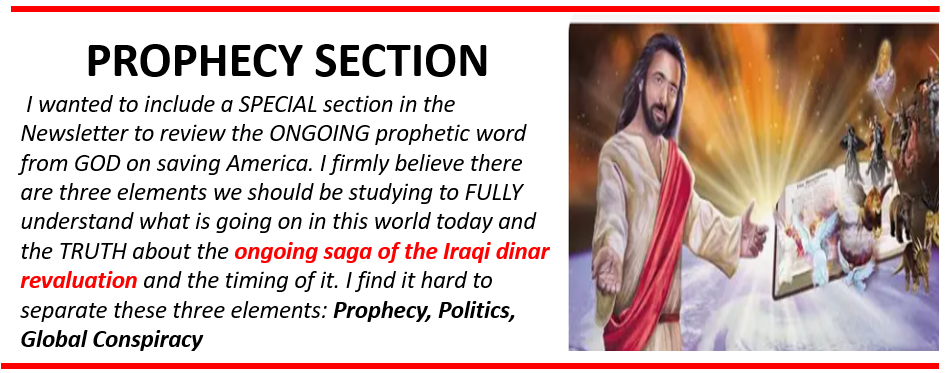

These prophecies are more important now more than ever. They give us the strength, perseverance and hope that a better time is coming and that God’s Hand is at work behind the scenes. If you just take a second even to look around you at these past three election cycles, how can you deny that God is at work? Are you sleeping or what?
It is amazing and there is no other way that these events could have happened the way they turned out. But there is more to come, much, much more, I assure you! Now that God has his biblical David re-elected, we need to pay attention to what He does next.
NOTE: These prophecies just keep getting better and better, giving us HOPE of a brighter future. But the real reason why I listen to them is that we can actually see what God says He will do is taking place right in front of our noses. It is a confirmation to me that God is real and is still with us forever just as in biblical times.
Prophetic Words from prophet: Julie Green
“MANY POLITICIANS WILL BE FORCED FROM THEIR POSITIONS”
You can start watching the video at the 12:37 mark. From Nov 16th

_________________________________________________________

SILVER VAULTS RUN DRY AS SHORTAGE TRIGGERS PANIC. Physical silver not available to meet demand.
Okay so why is there a shortage of silver all of a sudden? There is a shortage because many investors who invested in silver only on paper are now wanting the actual physical silver. The procedure of buying without taking possession has kept silver relatively lower over many decades than what it should be. Silver should be at about 1/3 the spot of GOLD. Gold just hit $4,000 an ounce and technically silver should follow at about $1,000 – 1,300 an ounce.
Just this week silver finally broke over $50 an ounce and so what did our prophets tell us would happen next. They said a sudden rise in silver would happen. Will it? It’s happening now. Now investors are demanding their silver and there is not enough to meet the demand. Yes, it’s kind of like a panic for silver.
It is key to the “RESET”.
Folks, this is not just precious metal dealers trying to sell you silver or gold. Listen carefully. What’s coming next? I am trying to help everyone that there is money to be made on other than currencies, such as in the dinar that we all sucked up in the past.

15 THINGS TO DO IF YOU GET RICH ALL OF A SUDDEN

15 ASSETS THAT ARE MAKING PEOPLE RICH/RICHER

HERE’S HOW TO MAKE YOUR ASSETS INVISIBLE FROM CREDITORS

HOW TO LOOK PENNILESS IN THE PUBLIC RECORD
Today we’re diving into why it’s crucial for real estate investors, stock investors, business owners, and wealth builders to appear “penniless” in the public record. Would you like to learn more about protecting your assets and minimizing taxes? Schedule a free consultation here 👉 https://aba.link/i93
How an LLC can actually work against you.
Don’t have your personal name or address in any public record.
Are offshore assets or accounts really protected?
Are vortex trusts a scam for tax protection?
Don’t misuse a legal entity and take it to extraordinary measures, it won’t work.
I really, really, really encourage everyone to watch this video and learn from it.
Now I know that many of you may have already researched getting a LLC or a Trust to protect your money against creditors and reveres law suits. But after watching this video today I feel you can learn even more and that there are some caveats that can really work to your benefit all depending upon the state you file your entity in. It’s just a matter of working with your attorney and help to guide them on what you want.
Basically, it all amounts to how much privacy a particular state is willing to give for a legal entity. Attorneys can research this for you but you have to find a good one willing to do it for you. What I am saying is you may think you are protected in a particular state and then find out later, when sued, that your records are not that protected from preying eyes after all.
Another key lesson I learned is it is much easier to use the entity instead of your own name and address from the very start and get it on the dead when you purchase a property or business, rather than have an attorney later try to fix it, after some damage is already done.
Listen carefully what these attorneys are saying….

5 STATES CUTTING PROPERTY TAXES TO ZERO

THE BOOMERANG EFFECT
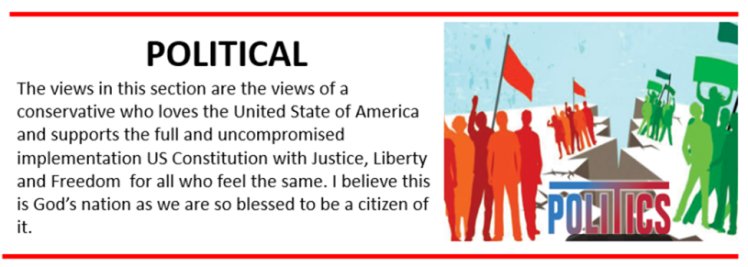
Many of us are just a bit sick and tired of hearing about Epstein and his files. But that does not mean they are going away. God is exposing these files for a purpose. These files are important and should be looked at carefully. Remember what God told our prophets – the wicked shall parish in their wicked ways. We can’t just burry our heads in the sand and say ‘move on’, which the democrats of course are going to say once the TRUTH comes out about what is in these files (about them). Do the democrats really want to see what is in them? Did they make a mistake in pressuring the republican held house to vote on exposing them? They are already sorry they pushed the issue so much. The corruption is already dribbling out. I can hardly wait to see all of it.
But in reality, did president Trump play a head game with them when he led them on for so long to delay opening these files, giving the impression that he might look bad if they were exposed. But this was only an impression as Trump set a trap for the democrat idiots and they walked right into it.
If you want the TRUTH in Trumps involvement with Epstein, I can tell it to you. I have done some research on this matter. Trump was researching the possibility of building hotels and a resort on the Epstein Islands. However, upon meeting Epstein and seeing what is actually going on in these islands, he backed off on his proposals. Next Trump reported to the FBI what was going on and this culminated in Epstein’s arrest and conviction. So, if anyone, Trump is actually the hero in this Epstein saga not a culprit. This is all FACTUAL, if you don’t believe me than research if for yourself. You owe it to yourself to learn.
Looking past the sex scandal that was going on, Epstein was also money laundering to offshore accounts billions of dollars for many politicians and government officials.
The questions we must ask for full transparency is –
Where did all this money come from?
Where did all this money go? Who was involved?
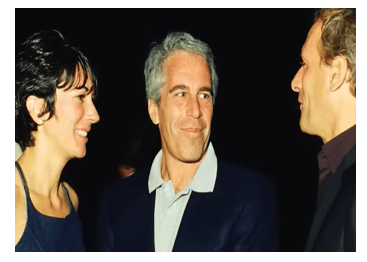
HAKEEM JEFFRIES EXPOSED IN MASSIVE EPSTEIN SCANDAL
Surprise, surprise, surprise! Yes, they were close friends. The democrats wanted the Epstein files exposed and so they are going to get it. What did Jeffries want from Epstein. Remember what Epstein did besides sex scandals. He was a money launder for the politicians. This is how they funneled their slush funds all this corrupt money for their schemes. Jeffries is right on top of the list.

WHAT’S GOING ON WITH HAKEEM JEFFRIES?

DEMOCRATS CALL FOR ‘INSURRECTION’ AGAINST THE TRUMP ADMINISTRATION: THIS IS ALMOST AN UNBELIEVABLE STUNT!
Here’s the proof of this statement. This is their words not mine or Hannity’s. These democrats are headed to a VERY dark place.
These corrupt democrats will try anything to stop the president and his agenda to clean out the corruption from our government. They are VERY desperate now. Did you think they were just going to roll over and let themselves be exposed and indicted? These recent statements by the democrats to the military members to insurrect and disobey direct orders is a sign that they know what is coming next – MARCIAL LAW. Trust me on this one. It is just a matter of time now before many of these democrats are arrested, rounded up and charged with their crimes. Like the list of illegal autopen pardons from the Biden, this recent batch of democrats just exposed themselves and now the DOJ knows who to go after and concentrate on. Why do they keep doing this? Are they stupid or what?
They are CALLING for a COUP!
This is mutiny and the crime is TREASON….just so you know.

WHAT IS PRESIDENT TRUMP REALLY TRYING TO DO WITH DOSE CUTS AND OTHER GOVERNMENT SPENDING?
A MUST watch for everyone concerned about the financial status of the United States and the mess it is in. How can it be fixed?
I think this video explains it very well and is common sense in terms for everyone to understand what is happening under the Trump administration. You may not like it if it impacts your pocket but what is the alternative?
If the U.S. does not get it’s financial matters in order, there will be no money for any programs including these freebie social entitlements too, get it? How stupid are these democrats to keep pressing for more and more entitlements. They are all just talk but do they really know what they are doing? Are they just wanting votes for control and power and willing to let the country go down the drain?
I don’t care how much you hate Trump, if not for him we would be doomed as no other presidents seem to have the convictions to help in the matter and take the hits for doing it. Trump simply is doing what is the right thing for America to save it from the globalist Marxist idiots.
Congressman Eric Burlison makes valid points in showingwhat the democrat party used to be in eliminating waste. How did it change so drastically? Oh… is it that the current democrat benefiting from the waste today so they want to keep it going?

WHY PRESIDENT TRUMP STOOD FIRM ON THE STOP-GAP BILL TO FUND THE GOVERNMENT PRESENTED BY CONGRESS.
The democrats wanted to have these kinds of discussions and so let’s have them. Let the TRUTH come out. Are they ready to hear it? Oh… here’s some TRUTH for ya.

THE TRUTH ABOUT ARGENTINA’S SO-CALLED ‘BAILOUT’
by John R. Lott Jr.,
Dems, media had their message, but what happened was actually a currency swap NOT A BAILOUT. It is something that is done all the time. Yes, this one was larger than most and much needed by Argentina.
Democrats keep claiming that Trump “gave away” $40 billion to Argentina, and many people are understandably upset. How, they ask, could the United States hand over money to a foreign country?
The problem is simple: the claim isn’t true. The U.S. didn’t give Argentina money. It entered into a currency swap – and the U.S. has actually earned a profit on the transaction.
Senate Minority Leader Chuck Schumer (D-NY) insists that “the administration is giving this money away to help Argentina’s hard-right president.” He argues, “If this administration has $20 billion to spare for a MAGA-friendly foreign government, how can they say we don’t have the money to lower health-care costs here at home?” Congressman Ro Khanna similarly warned, “It’s shameful that we gave $40 billion to Argentina instead of spending $9 billion to feed American families.”
Other Democrats, such as Senators Amy Klobuchar (D-MN) and Elizabeth Warren (D-MA), describe the transaction as Trump “sending” money to Argentina and even call it a “bailout.” Fifty-four Democratic House members lodged the same complaint.
News outlets, such as The Washington Post, pushed the claims with headlines like “The U.S. just bailed out Argentina.”
But the U.S. didn’t give Argentina anything. It conducted a currency swap: The U.S. provided dollars, and Argentina provided an equal value in Argentine pesos. Saying we sent money to Argentina ignores a crucial fact: Argentina sent money right back to us at the same time.
The first $20 billion swap occurred on Oct. 9, 2025, when the exchange rate was 1,418 pesos per dollar. The second $20 billion swap followed on Oct. 20 at an exchange rate of 1,495 pesos per dollar. By Nov. 12, the rate had moved back to 1,420 pesos per dollar. So, on average, the pesos we got in exchange for the dollars were worth more now than when we bought them. As a result, the U.S. now holds more than $41 billion in value from the original $40 billion, yielding an impressive 2.6% return in just one month.
That gain outperforms the 1.7% return the same funds would have earned in the S&P 500 over the same period.
Treasury Secretary Scott Bessent, who negotiated the arrangement, predicted this outcome. With decades of experience as a remarkably successful currency trader, Bessent recognized the opportunity for the U.S. to stabilize a key partner while making a profitable financial move. This week, he publicly confirmed the result: “The U.S. government made money.”
But the swap didn’t just help the United States. It also helped Argentina during a politically sensitive moment. As Bessent explained on MSNBC, “We used our financial balance sheet to stabilize the government, one of our great allies in Latin America, during an election.” The swap provided breathing room for Argentina’s financial system, helped calm market volatility, and supported the peso. That stabilization, in turn, improved the value of the pesos the U.S. now holds – exactly the outcome an experienced trader like Bessent would expect.
In the end, the arrangement accomplished two goals at once: The U.S. earned a profit, and it supported a democratic response to economic pressure. There was no handout, no bailout, and no giveaway. The U.S. simply exchanged assets that were initially equal value. It was a strategic financial transaction that benefited both countries – and made U.S. taxpayers some extra money.
So, knowing all this then why do the democrats keep calling this a “bailout” when it clearly is not. They are desperate. They have nothing else but to pick on president Trump’s foreign policies and fill the news media with lies. They just can’t let go of the Trump syndrome of hatred.

WAS TRUMP CRIMINALLY INVOLVED WITH JEFFERY EPSTEIN?
Here is more FACTUAL information everyone needs to hear to dispel the democrat lies about Trump and Epstein. Aren’t you sick a tired of all the democrat lies? As I write this Newsletter president Trump just announced that he wants full disclosure of all Epstein files. Does this sound like someone trying to hide something?
I am getting a bit sick and tired of the mainstream news media supporting this false narrative about Donald Trump and Epstein. How about you? When will they do their own research and get their own FACTS straight. Oh… they can’t be that dumb, can they? They must have done some digging and so all the lies are intentional lies not just mistakes, as they will claim later when caught in their lies. Shame, shame, shame on them. Where is the consequence and penalties for lying?

TIME TO TAKE DOWN JAMIE RASKIN AND “IT’S ABOUT TIME”.
It wasn’t that long ago when we saw headlines like ‘Who’s Being Protected?’: Jamie Raskin Demands Republicans back release of Epstein files. Really? Okay Rascal Raskin here you go, but are you prepared for what’s coming your way too. Top Democrat Raskin’s illegal Epstein leak causes mass firings.

SPEAKER MIKE JOHNSON DELIVERS REMARKS AFTER GOVERNMENT SHUTDOWN ENDS
Please, please everyone watch this. We need to know the TRUTH. Remember that I am a democrat and I am ashamed at what my party did to this country not just the shutdown but over the last four years of the Biden administration.

TRUMP SIGNS FUNDING BILL, ENDING GOVERNMENT SHUTDOWN

FETTERMAN IS ACTUALLY DOING IT…
Fetterman says his democrat party crossed the RED LINE with the demands in closing down the government. He says these people are lunatics. Watch, he is about to switch to the Republican party. The writing is on the wall in fact he many have done it already before I can finish this Newsletter.

ILHAN OMAR IMPLICATED IN $250,000,000 MILLION FRAUD RING.
Yipes! That a lot of mulla! Let’s see how she wiggles her way out of this one….


AN ECONOMIST SAYS US SANCTIONS ARE ON THEIR WAY OUT AND IRAQI BANKS ARE ENTERING A PHASE OF OPENNESS.
(Mnt Goat: not if Iraq does not deal with the PMF, the US is likely to impose some sort of sanctions of Iraq if the PMF is not handled correctly.)
Anticipated financial breakthrough
Economic expert Manar al-Obeidi affirmed that Iraq is moving towards greater banking openness, which will facilitate the flow of funds and create a more attractive environment for investors. He noted that the government has successfully addressed most of the financial issues with the United States, which will gradually reduce the impact of sanctions. Al-Obeidi emphasized the need to eliminate overlapping jurisdictions among institutions and grant investment authorities broader powers to ensure a clear plan that supports economic development.
Manar Al-Obaidi – an economic expert, in a dialogue with journalist Ali Qazan:
The Iraqi banking sector is moving towards greater openness to the world, away from the problems and difficulties that were occurring, and I believe that this will be positive in terms of investment and money transfers.
The significant overlap in powers between institutions is one of the biggest challenges facing investors. Therefore, this problem and overlap must be addressed, and broader powers must be granted to investment authorities in the governorate, and there must be a clear plan for investment in Iraq.
The Iraqi government has been able to resolve many of the financial issues with the American side. With the reforms that Iraq has undertaken to enhance transparency and prevent money laundering and smuggling, I expect that over time the impact of the American sanctions will largely disappear.
***********************************************************************************************
THE NATIONAL BANK OF IRAQ ANNOUNCES THE COMPLETION OF ITS TRANSITION TO THE NEW GLOBAL STANDARD, SWIFT MX.
(Mnt Goat: Can you remember what my CBI contact told me. That the CBI was going to use this new National Bank for yes, the collection of the stashes and hoards of cash. So, again they have yet another article (see below) about all the hoards of cash that needs to get into the banks. They need this cash to in the banks to roll out the digital dinar and to finance many of these 2026 projects rolled over from 2025. Coincidence both of these articles are in the exact same news stream?)
The National Bank of Iraq announced the completion of its transition to the new global standard SWIFT MX for financial messages, a step that marked a significant milestone in the bank’s technological infrastructure modernization and enhanced readiness for digital transformation.
The bank said in a statement, “The implementation of this transformation comes as part of the bank’s transition from the old MT standard to the MX ISO 20022 model, which is the most advanced, structured and data-rich framework in the global financial messaging sector. The transformation process was carried out across all operational channels with high efficiency and minimal downtime, reflecting the bank’s strong technical readiness, accurate planning, and commitment to providing its services without any significant interruption.”
He pointed out that “this transformation is an advanced step within the strategic roadmap of the National Bank of Iraq to modernize its systems, enhance its compatibility with global best practices, and provide an advanced digital banking experience for its individual and corporate clients.”
The statement quoted Aqeel Ezzedine, Chief Operating Officer and Deputy CEO of the National Bank of Iraq, as saying that “the smooth transition to the MX standard is the result of a robust system of governance, teamwork and careful planning, and represents an important step in modernizing the payments infrastructure and enhancing the reliability and security of banking operations.”
Hani Khalil, head of the transformation department at the National Bank of Iraq, said, according to the statement, that “the completion of this transformation embodies the bank’s commitment to keeping pace with the latest international standards in payment systems, and building a more transparent, integrated and high-quality financial data structure, which enhances customer experience and strengthens the bank’s position within the regional financial system.”
The MX standard enables a more accurate and richer exchange of information in financial messages, with substantial improvements in transaction tracking and identification of parties, supporting global trends towards greater efficiency and transparency in payments.
Since the new system came into effect, the bank has not recorded any significant problems, which confirms the success of the implementation process and the close coordination between the transformation, IT and operations teams, in addition to effective cooperation with partners and regulatory authorities.
***********************************************************************************************
IRAQ IS ENTERING A PHASE OF DYNAMIC ECONOMIC GROWTH AND INVESTMENT OPPORTUNITIES
Baghdad (IraqiNews.com) – The American financial consulting firm Oliver Wyman has released a new report affirming that Iraq is entering a phase of dynamic economic growth and investment opportunities. The optimistic outlook is credited to the comprehensive banking reforms spearheaded by the Central Bank of Iraq (CBI) with government backing.
The report highlights that the banking sector reform program, launched in April 2025, represents a fundamental shift toward building a more efficient and sustainable financial sector. This initiative is expected to stimulate investment, boost private sector development, and strengthen Iraq’s international financial integration.
According to Oliver Wyman, the commitment of all Iraqi banks to the reform program, which began in September 2025, will enable the CBI to evaluate their performance between 2026 and 2028 based on modern global financial, regulatory, and technological standards. The firm forecasts that the total size of the Iraqi banking sector will exceed $60 billion by 2035, with expected returns ranging between 15% and 20%. The report concludes that successfully addressing current challenges related to governance and reputation will transform the reforms into a unique investment opportunity within the Middle East and North Africa (MENA) region. (October 18, 2025)
***************************************************************************************************
GOVERNMENT ADVISOR: MEDIUM-TERM FINANCIAL PLAN TO ENSURE THE SUSTAINABILITY OF VITAL PROJECTS
Mazhar Muhammad Saleh, the economic advisor to the Prime Minister, confirmed that the government is capable of managing the 2026 fiscal year even if the federal general budget law is not approved, noting the possibility of working with the current Federal Financial Management Law No. 6 of 2019, as amended, with spending at a rate of 1/12 of the actual current expenditures that took place in 2025.
Saleh said in a statement to Al-Furat News: “It is important to adhere to high fiscal discipline without resorting to austerity, while taking into account low-income, poor and vulnerable groups, and working to diversify non-oil public revenues through reforming customs and tax policies, especially on large taxpayers, while ensuring fair and transparent governance.”
He explained that “the government is now seeking to create major investment partnerships with the national and foreign private sector to reduce pressure on public spending and achieve the implementation of income-generating and job-creating investment projects, with a focus on automating the economy and moving towards the digital age.”
Saleh stressed that “reforming the energy sector at all levels will boost government revenues as it is a leading sector for development within a coordinated policy for electronic government collection to ensure speed and accuracy of collection.”
The economic advisor concluded by emphasizing the need to “adopt a medium-term budget plan that ensures sustainable financing for vital projects, thereby achieving sustainable development and targeted growth in accordance with the National Development Plan 2024-2028 and Iraq Vision 2025.”
********************************************************************************************
NECHIRVAN BARZANI: THE CURRENT SITUATION IN IRAQ REQUIRES THE FORMATION OF A GOVERNMENT AS SOON AS POSSIBLE.
Kurdistan Region President Nechirvan Barzani affirmed that forming the next federal government “will not be difficult, but easier than ever before.”
In response to a question from Kurdistan24’s correspondent at the MEPS 2025 forum in Duhok, Iman Darbas, about how difficult it would be to form the new federal government, Nechirvan Barzani said: “I think it will not be difficult, and forming the new Iraqi government will be easier than ever.”
The regional president explained that the current situation in Iraq “requires the formation of a government as soon as possible.” He expressed his hope that the formation of the government would not take long and that it would assume its duties as soon as possible.
*********************************************************************************************
SUDANI SETS RENEWAL AS “FIRST GOAL”… AND THE FRAMEWORK SENDS “POSITIVE MESSAGES” REGARDING THE SECOND TERM
The Iraqi political scene is going through a pivotal stage as the winning forces in the elections begin entering into negotiations to form the new government, while the position of caretaker Prime Minister Mohammed Shia al-Sudani stands out, as he affirms his commitment to a second term as a political entitlement for the winning bloc and a path to completing his governmental project.
This comes in parallel with the coordination framework’s moves to establish the largest parliamentary bloc and begin dialogues with other blocs, amid assurances from various parties on the need to adhere to constitutional timelines and establish a clear and stable electoral law.
In this context, the caretaker Prime Minister, Mohammed Shia al-Sudani, said in a dialogue session at the Middle East Security and Peace Forum, organized by the American University in the Kurdistan Region, that “the issue of a second term for the government is not a personal ambition, but rather a well-deserved victory.”
Al-Sudani continued in his speech, which was followed by “Al-Alam Al-Jadeed”: “In every parliamentary election, the results were not the deciding factor in forming the government,” noting that “today the Reconstruction and Development Coalition is an essential part of the components of the coordination framework, and yesterday the framework met and decided to form the largest parliamentary bloc.”
The head of the Reconstruction and Development Coalition added, “The framework will begin dialogues with the other political blocs to establish constitutional entitlements and form presidencies, and this is the path we believe in.”
Regarding his taking over the position of Prime Minister for a second time, Al-Sudani said: “It is not a personal ambition as much as it is a readiness to bear responsibility, to complete the project that we started, the achievement that has been realized on the ground, and a well-deserved victory for the bloc that won first place in these elections, which is the Reconstruction and Development bloc, and also what we have of a project for the next stage.”
He pointed out that “all political forces are keen to adhere to the constitutional timelines for forming the government,” noting that “we support a stable election law, and it is not right to change the law in every election.”
For his part, Mashreq Al-Fariji, a member of the Reconstruction and Development Coalition and head of the “I Will Take My Right” movement, said in an interview followed by “Al-Alam Al-Jadeed” (November 18, 2025) that “understandings within the coordination framework are ongoing, and that joint dialogue sessions are what will shape the features of the next stage and the selection of the prime minister.”
Al-Fariji believes that “some political forces are speaking beyond their actual size,” noting that “the coalition remains cohesive despite the objections raised regarding the visits of the head of the Popular Mobilization Forces, Faleh al-Fayyad, who has extensive relationships with the coalition’s leaders.” He clarified that the political representation of the Ata’a Movement within the coalition is through Khalid Kabyan, not al-Fayyad, as the latter is not involved in direct political work.
He pointed out that “Al-Fayyad’s recent visits carry messages of calm and congratulations after the elections,” stressing that “talk of disagreements with Nouri al-Maliki has subsided in recent days, and the discourse has become calmer towards the formation of the government.”
Al-Fariji pointed out that “the request by some parties for Al-Sudani to attend the meetings as the Euphrates Current is unrealistic, given that the components of the framework are represented according to their political weights,” indicating that “Reconstruction and Development is still holding on to its only candidate for the premiership, which is Muhammad Shia Al-Sudani.”
He stressed that “the position of Prime Minister has regained its importance, and that there are attempts to return it to its previous state of weakness, which the coalition rejects,” noting that “there are positive messages within the framework regarding the second term of Al-Sudani.”
Al-Fariji stressed that “the majority within the framework will be the decisive factor in choosing the prime minister,” emphasizing that “the objection of one or two parties will not change the final decision, and in the end everyone will reach a consensus.”
He added that “there is rapid movement to form the new government, and the process will be completed before the second month, without any indication of the possibility of a blocking third emerging.”
The Sudanese list, “The Reconstruction and Development Coalition,” won 46 seats out of 329 seats in parliament. The “Progress” party, led by Mohammed al-Halbousi, came in second with 36 seats, followed by Nouri al-Maliki’s coalition with 29 seats, then the “Sadiqun” bloc, led by Qais al-Khazali, with 28 seats, while the Kurdistan Democratic Party, led by Masoud Barzani, came in fifth with 27 seats.
*********************************************************************************************
STUDIES CENTER: THE FRAMEWORK MAY ACHIEVE THE LARGEST BLOC TO FORM A GOVERNMENT WITHOUT SUDANESE. THE POLITICAL LANDSCAPE MAY DIFFER FROM THE RESULTS OF THE BALLOT BOXES.
(Mnt Goat: This article is just a ‘what if’ and is full of opinions and not FACTS of what is actually going on as it is very dynamic and changes daily. So be careful with headings like this. Be aware there are lots of weird articles about the election, some lies and propaganda.)
(Mnt Goat: How many more elections must we go through before we are done with this investment. Yes, we all should know the process by now after 5 elections.)
A report by the Washington Institute for Near East Policy indicated that despite Mohammed Shia al-Sudani’s victory in the elections, securing 46 seats (it was actually 52 seats the largest majority by any party), he will face significant challenges in forming a government. The report suggested that the Coordination Framework Coalition is likely to form the largest bloc, potentially sufficient to form a government without al-Sudani. This could reshape the political landscape in a direction entirely different from the election results. The report indicated that the government formation process will be slow, potentially taking 8 to 11 months, as has happened previously.
The results of the Iraqi parliamentary elections on November 11 were encouraging, including for relations with the United States. However, the bloc that came in first—the Reconstruction and Development Alliance led by current Prime Minister Mohammed Shia al-Sudani—won only 15% of the parliamentary seats (46 out of 329). Consequently, Iraq is likely to experience a long and tedious period of political bargaining before a new government is formed, similar to the delays that followed previous elections (eight months in 2010 and eleven months between 2021 and 2022).
The biggest winner last week was al-Sudani, whose coalition garnered 1.3 million votes out of nearly 11 million, surpassing the State of Law coalition by 370,000 votes. Al-Sudani’s strategy differed significantly from the 2021 elections, when his list won only two seats, yet he was ultimately promoted to prime minister with the support of the Coordination Framework. This year, al-Sudani campaigned on his domestic achievements, without clear backing from Tehran or its proxies.
The report suggests that despite al-Sudani’s success, the Coordination Framework may still control the largest bloc in parliament, almost enough to form a government.
Why did al-Sudani perform so well despite the criticism?
When al-Sudani began his first term, many Iraqis, fed up with corruption and the lack of services, believed he would be unable to deliver anything for the people. However, his performance over the past period seems to have resonated positively with the public, particularly with Sunni voters who turned out in large numbers on election day. This, coupled with the low Shiite turnout, appears to have helped him secure gains at the polls. Pre-election polls showed that 58% of Sunni and Shia Arabs trusted al-Sudani, the highest rating of any candidate. (Sadr garnered 62% but chose not to participate.) Sunnis also gave al-Sudani’s government relatively high marks for service delivery.
His most notable achievement was infrastructure projects in Baghdad. Polls indicated that his government was most associated with “roads and buildings,” while The Economist recently described the capital as a “thriving metropolis.”
Iraq’s regional standing also improved under al-Sudani. After pledging to work with Ankara to expel Kurdistan Workers’ Party (PKK) elements, Baghdad reopened the long-dormant Ceyhan oil pipeline between Iraqi Kurdistan and Turkey and signed an unprecedented water cooperation agreement with Ankara. Al-Sudani also bolstered Iraq’s efforts toward energy independence and improved relations with Arab neighbors and Washington, including his attendance last month at the Gaza ceasefire ceremony in Sharm el-Sheikh.
But critics of al-Sudani point out that he did virtually nothing to combat rampant corruption, instead reinforcing a sectarian power-sharing system that divides political and economic spoils based on identity rather than merit. Meanwhile, to finance a construction boom in Baghdad, he reportedly drastically cut funding to several provinces, while his preferred method for combating unemployment—which remained high—was to hire nearly a million new government employees, creating a massive budget deficit. He also faced heavy criticism for passing a law lowering the legal age of marriage to nine.
The next steps in forming a government:
During Iraq’s complex government formation process, the outgoing government remains in a caretaker capacity with very limited powers. This dysfunctional transition—which can last for a full year—is partly a natural consequence of multi-party parliamentary systems that require coalition-building (as in Germany and France). But it is also a product of specific provisions in the Iraqi constitution and the way politicians approach governance. The formal process appears simple at first glance. After the election results are certified, the president calls for the new parliament to convene within 15 days. In the first session, the speaker and two deputies must be elected by a simple majority. Parliament can then choose a new speaker (by a two-thirds majority) or extend the term of the current speaker. Then comes the most delicate step. Within 15 days of their selection, the president must task the largest bloc in parliament with forming a government. This year, the likely candidate is al-Sudani, although past maneuvers have ousted the frontrunner.
Iraq’s political system relies on the inclusion of as many parties as possible in government—rather than a clear majority and opposition model. The Shia are divided into numerous blocs vying for the premiership, forcing candidates to court the Kurds and Sunni Arabs. As a result, the government formation process becomes a game of “no final decision until every detail is settled,” even ministerial posts, delaying constitutional procedures for months, as happened with the 2010 and 2022 governments.
The report concludes that despite Sudani’s strong performance in the elections, he will face significant difficulty in forming a coalition capable of securing a second term. After supporting him in 2021, the coordinating framework now regrets its support and will not back his return.
(From the Washington Institute for Near East Policy)
**********************************************************************************************
IN A VIDEO, HALBOUSI, FAYYAD, AND ASADI ANNOUNCE THEIR SUPPORT FOR SUDANI FOR A SECOND TERM.
In a video, Halbousi, Fayyad, and Asadi (major Shia political figures in Iraq) announce their support for Sudani (A Shiite) for a second term. Remember that the prime minister is designated to be a Shiite. There is distribution of power designated in the Iraqi constitution of 2025 as follows from the three main tribes:
Prime Minister – Shiite
Speaker of Parliament– Sunni
President – Kurd
Click on picture to watch video
Three of the most prominent leaders of political alliances in Iraq have announced their clear support for renewing confidence in Prime Minister Mohammed Shia al-Sudani for a second term and tasking him with forming the new government.
(Mnt Goat: To me this is a clear message that Al-Sudani will most likely be given an opportunity to be prime minster for a second term. If I look at all the past prime ministers none even can compare in the smallest of ways to the successes of Al-Sudani and his work over the last four years. Why would they not want to give him another four years. He did make promises to favor the PMF and that is what that law was all about to pay these Iranian militias and give them benefits that should be reserved only for Iraqi citizens. Remember this was also the law the U.S. Trump administration said they better not do and so Iraq backed off on it. This is the only issue I know that can really hurt Al-Sudani but in the long-run it will also be his survival as they need the support of the U.S. and that is the survival I am talking about.)
Mohammed al-Halbousi, the head of the Progress Alliance and the country’s largest Sunni political leader, confirmed his support for al-Sudani to head the next government, noting that the current stage requires “the continuation of the approach of stability and strengthening trust between the components,” as he put it, in a video statement circulated by the media.
In the same context, Faleh al-Fayyad, head of the National Contract Alliance and one of the most prominent leaders of the Coordination Framework, stressed his support for renewing al-Sudani’s mandate, stressing that “the political and economic stability achieved during the past period requires building upon it,” considering that al-Sudani “possesses a clear vision for managing the state.”
As for the head of the Sumerians Alliance, Ahmed al-Asadi, he also announced his full support for assigning al-Sudani to form the new government, explaining that the next stage needs “an executive leadership that has proven its competence and ability
to manage sensitive files,” stressing that this approach enjoys broad consensus within the national forces.
***********************************************************************************************
FACTIONS “EXPAND” IN THE IRAQI PARLIAMENT AND IMPOSE A NEW EQUATION ON WASHINGTON
(Mnt Goat: I believe Sadar is not very good at politics. He should have let his sec vote and he probably would have taken the majority again like in the last election or at least came in second place. He then could have rolled over these votes to Al-Sudani ‘s party and Sudani would have been able to over come the Coordination Framework. They need to start to find ways to move the Coordination Framework out of the picture in the future or change its thinking. It is too pro-Iranian.)
The morning after the announcement of the Iraqi parliamentary election results, the political arena appeared poised for a different parliament, though the rules of the game hadn’t changed entirely. The most notable absence was that of the Sadrists, who boycotted the elections, leaving a void in the Shia community.
This void wasn’t filled by the civilian groups close to the October protests, whose presence had waned due to internal divisions and a sense of betrayal. Instead, a significant portion of this void flowed in a completely different direction: towards the armed factions, which emerged from the ballot boxes with their largest parliamentary representation since 2003.
The results announced by the commission painted a picture of a parliament with a total of 329 seats, in which the political arms of the armed factions occupy between sixty and seventy seats, led by the Sadiqun Movement affiliated with Asaib Ahl al-Haq with twenty-eight seats, followed by the Badr Organization with about twenty seats, in addition to smaller lists and blocs revolving around what is known as the “resistance factions.”
This parliamentary expansion was not just a numerical surprise to the opponents of these forces, but it immediately turned into a new internal equation that may confuse the calculations of Baghdad, Washington and Tehran alike.
Part of the explanation for this shift lies in the nature of the context in which the elections took place. The absence of the Sadrists, who in the 2021 elections represented a large Shiite popular base and a reservoir of protest and anger at the same time, left a segment of voters without a direct political address.
In contrast, the remaining civil movements that emerged from the October protests appeared unable to transform the previous street momentum into organized representation, after being subjected to security blows, organizational divisions, and partial settlements with the authorities, as those close to this movement say.
In this vacuum, other factors beyond Iraq’s borders accumulated. Political analyst Issam Hussein believes that what happened cannot be viewed as a passing shock, but rather as the culmination of a process that began years ago.
Hussein told Shafaq News Agency that the media played a crucial role in “exaggerating the symbolic presence” of the factions, through the discourse of “resistance and steadfastness,” but what made the numbers “very impressive,” as he described it, was the volatile region surrounding Iraq.
Hussein lists what he calls a series of psychological and political shocks to the Shiite and Arab street, from the Twelve Days War, to the assassination of the Secretary-General of the Lebanese Hezbollah, Hassan Nasrallah, to the Al-Aqsa flood in Gaza, the rise of armed organizations to power in Syria, and then the way the United States dealt with these issues.
According to his analysis, the Iraqi voter in this election cycle has shifted from seeking “services” to seeking “protection.” “The voter who, years ago, was swept up by slogans of a civil state and fighting corruption, today finds himself preferring to vote for those who possess weapons, combat experience, and organizational skills in the face of what he sees as an existential threat to the region. He voted for the factions as a reaction to regional upheavals rather than as an open mandate for them.”
The paradox that Hussein points out is that the long-standing American hostility towards the factions was not previously a factor in increasing their electoral standing as it has been now.
The assassination of the deputy head of the Popular Mobilization Forces, Abu Mahdi al-Muhandis, and the commander of the Iranian Quds Force, Qassem Soleimani, in early 2020, is remembered as a moment that could have generated a massive wave of popular sympathy for the factions, but it did not to a great extent, because the general mood at the time was more preoccupied with the October agenda and overthrowing the system from its roots.
Today, the scene is almost reversed, as the tough American rhetoric towards these forces has turned, in the eyes of a segment of the public, into further evidence of their “competence” to confront foreign influence.
However, the explanation for this rise is not limited to external factors alone. Within Iraq, these results translate into a potential redistribution of power within the ruling system. Political analyst Majash Mohammed describes what has happened as a “remarkable political shift” in the post-2003 trajectory.
Mohammed told Shafaq News Agency that the results reflect “a popular mood that rejects instability and desires representation for forces that have a clear organizational and popular presence,” noting that the factions that contested the elections are no longer just armed formations on the margins, but rather political and social networks rooted in governorates, cities and neighborhoods.
From his point of view, this victory will strengthen the presence of those forces within state institutions, and give them greater ability to influence the formation of the next government and set its priorities, especially in sovereign matters, foreign relations, and security and energy policies.
Within the same coordinating framework, Mohammed expects these figures to redistribute roles among its components, so that some centers of gravity gradually shift from the traditional parties to the wings most closely linked to the military arm.
All of this places the position of the current Prime Minister, Mohammed Shia al-Sudani, at the heart of the equation. The man who came to the premiership with the agreement of the factions and with an undeclared Iranian-American blessing, finds himself today facing stronger parliamentary partners who are more skeptical of his intentions, as the political opinion close to the framework suggests that al-Sudani’s chances of a second term are “weak”.
Mohammed explains that the factions view the last period of al-Sudani’s rule as a phase in which he distanced himself from their camp and moved closer to a regional positioning that leans towards Turkey, Qatar, and currents close to the Muslim Brotherhood. He tried to send signals to Washington that he does not fully endorse the factions’ support for his policies, and that he is ready to talk about controlling weapons. He also surrounded himself with an advisory team and networks within his office that do not look favorably upon the influence of these forces.
In the background, the United States stands watching this shift with a mixture of concern and cold calculation. The US State Department had previously warned Shafaq News Agency, days before the elections, that any expansion of armed factions within state institutions would be a “serious cause for concern,” emphasizing the need to restrict weapons to the state and to adhere to security and economic partnership agreements.
Those warnings seemed at the time to be more like preemptive messages, but today they are turning into a framework through which the new scene in Baghdad can be read.
In this context, the US Special Presidential Envoy to Iraq, Mark Savaya, has adopted a more direct tone in his recent statements. He reiterates that the Trump administration “will not accept” armed factions having “the upper hand” in the next government or controlling key aspects of sovereign decision-making, particularly in matters of security, energy, and foreign policy.
The implicit message is clear: there is no veto on these forces participating in the political process as long as they have been involved in it for years, but there are red lines relating to the level of their control and the structure of the relationship with Iran.
This balance between declared non-interference and undeclared veto is explained by former US State Department advisor David Phillips, who spoke to Shafaq News Agency, stressing that Washington is aware that coalition negotiations in Iraq “take a long time” and that it is prepared to give the process some time, as long as the Iraqis “negotiate in good faith.”
However, Phillips points out that the Trump administration is known for its quick resort to the “sanctions weapon” when it sees its strategic interests threatened, and that it may use the threat of this weapon to exert pressure at crucial moments of negotiation, while being careful to wait for the government formation process to end and see its outcomes before moving on to any decisive steps.
In contrast to this caution, Safwan Al-Amin, a senior fellow at the Atlantic Council in Washington, believes the whole process is heading towards “arduous” and lengthy negotiations to form a government.
Al-Amin told Shafaq News Agency that the armed factions have been an established part of the scene for years, and consider themselves to have an “acquired right” to power, and they will not easily accept being asked to back down or freeze their influence.
In contrast, the demands of the US administration seem clear regarding restricting weapons to the state and not allowing the emergence of a government subject to armed agendas, which creates a structural contradiction between two parties, both of which possess powerful tools of pressure, from the ability to obstruct in parliament to sanctions and economic and political pressure.
Between these four approaches, the Iraqi and the American, the picture of post-2025 Iraq appears more complex than the numbers alone suggest.
The rise of factions in parliament is not just an increase in the number of seats, but a test of the political system’s ability to adapt to the presence of armed forces at the heart of legislation and governance, a test of Baghdad’s relationship with both Washington and Tehran, and perhaps also of the limits of what remains of the dream of a civil state raised by the Tishreen squares years ago.
The new parliament, which lacked the banners of Sadr and the crowds of Tishreen, may turn into a stage for the first serious clash between the logic of “the state first” and the logic of “resistance first”.
Meanwhile, the Iraqi street remains facing a scene that is still taking shape, between a parliament in which armed factions are expanding, a future government that has not yet been born, a prime minister whose ground that brought him to power is gradually being pulled out from under his feet, and external allies who are watching from afar and adjusting their calculations, in a country where every election is accustomed to being the beginning of a new crisis, not its end.
**********************************************************************************************
A US DELEGATION WILL VISIT BAGHDAD SOON, CARRYING MESSAGES FROM THE WHITE HOUSE.
An Iraqi diplomatic source revealed on Wednesday that an American delegation is expected to visit Baghdad to deliver messages from the White House administration regarding Iraqi issues. The source told Shafaq News Agency that “a delegation including American political figures will visit Baghdad soon, carrying messages from Washington to all partners in the political process in Iraq . “
He added that “the anticipated American visit is a confirmation of Washington’s interest in what is happening in Iraq .”
The relationship between the United States and Iraq has been experiencing a diplomatic standstill since Donald Trump took office, with communication and meetings limited to the US Chargé d’Affaires in Baghdad, Steven Fagin, and a single phone call received by Prime Minister Mohammed Shia al-Sudani from Foreign Minister Marco Rubio.
However, last August a high-level American delegation visited the Iraqi capital, Baghdad, to discuss a number of issues with Iraqi officials.
According to an informed source who spoke to Shafaq News Agency at the time, the delegation discussed the issue of the American withdrawal from its main bases in Iraq and the repercussions of that, in addition to an economic file and another related to energy.
On October 19, US President Donald Trump decided to appoint Mark Savaya as special envoy to Iraq. Trump wrote on his platform “Truth Social,” as reported by Shafaq News Agency, that “Mark’s deep understanding of the relationship between Iraq and the United States, and his extensive connections in the region, will contribute to advancing the interests of the American people.”
Savaya, an American businessman of Iraqi (Chaldean/Assyrian) descent from Michigan, has risen to prominence in recent years through his support for Trump’s election campaign and his activities within Middle Eastern communities in the United States.
**********************************************************************************************
AN AMERICAN INSTITUTE: WASHINGTON MAY USE THE DOLLAR TO DESTABILIZE THE NEXT BAGHDAD GOVERNMENT IF ITS CONDITIONS ARE NOT MET.
The Middle East Institute revealed on Wednesday (November 19, 2025) that the US administration intends to use Iraq’s dollar-based oil revenue system as a direct pressure tactic against the next Iraqi government, potentially destabilizing it if it fails to implement the conditions related to the Popular Mobilization Forces.
The institute said, according to its translation for “Baghdad Today”, that the US Federal Reserve is still operating as the main financing system through which Iraqi oil revenues pass into dollars, indicating that “Washington is not only using this channel as a tool of pressure, but also as a weapon that can be employed to destabilize the next government in Baghdad if it does not comply with the American conditions.”
He explained that the current US policy towards Iraq is based on a combination of incentives and threats to urge Baghdad to adopt policies that are consistent with US interests, especially in the areas of combating terrorism and managing regional affairs, while being careful not to allow negative repercussions on the global energy market or on the interests of US companies operating inside Iraq.
He added that “the next government will face a more complex challenge in balancing these pressures, especially since the new parliament will have to deal with sensitive American conditions, most notably the legal status of the Popular Mobilization Forces and its financial footprint, which is the file where the threads of American and Iranian influence directly intersect.”
The Middle East Institute indicated that the power struggle between Washington and Tehran within Iraq will be “the most intense during the next phase,” based on the fact that Tehran relies heavily on Iraqi support, which constitutes a lifeline for its political system, as it put it.
**********************************************************************************************
CENTRAL BANK OF IRAQ: NET CURRENCY IN CIRCULATION EXCEEDS 92 TRILLION DINARS IN ONE MONTH
The Central Bank of Iraq revealed on Tuesday that the net currency in circulation amounted to more than 92 trillion dinars during September 2025. The bank stated in a statistic seen by Shafaq News Agency that the net currency in circulation amounted to 92.185 trillion dinars in September, down from 93.090 trillion dinars in August.
The bank added that the currency issued by it amounted to 99.681 trillion dinars, while the currency held by banks amounted to 7.496 trillion dinars.
(Mnt Goat: So, CBI what are you going to do about it? Seems you still have a massive liquidity problem…. ☹)
The bank indicated that the issued currency is the money that the state prints through the central bank for the purpose of circulation, and it includes banknotes of paper and metal denominations circulating outside the vaults of the central bank.
(Mnt Goat: This also includes the dinar we hold outside of Iraq as it is outside the vaults of the central bank. How are they going to retrieve these dinar to bring down the money supply to bring up the rate of the dinar. They will need to do this when going digital dinar project, which they want to kick into high gear but can’t until they retrieve all this cash. Get it? I don’t know about you but they are not going to get my dinar until they pay me handsomely for it… 😊 )
*************************************************************************************************
THE OIL AND GAS LAW: KURDISH PRIORITIES IN THE IRAQI GOVERNMENT FORMATION NEGOTIATIONS.
Following the election results and the announcement of the number of seats won by the Kurdish blocs in the Iraqi parliament, attention is now focused on the Kurds’ objectives for the next phase and their future plans.
President Masoud Barzani called for the implementation and enactment of five key laws, most notably amending the election law, implementing Article 140 of the constitution, and enacting the long-stalled oil and gas law, which has been stalled for nearly two decades. He
also reiterated his call for Kurdish political forces and parties to proceed with forming the new Kurdistan Regional Government.
In his address, Barzani stated that after 2003 and the fall of Saddam Hussein’s regime, a golden opportunity presented itself, and the political process was built upon three principles: balance, consensus, and equality. He added that in 2005, the country’s permanent constitution was ratified. Despite some shortcomings, it is considered one of the best constitutions in the region, promising a bright future. This constitution, he emphasized, must be respected as it will usher Iraq into a new era by regulating its relations with regional and international partners.
The passage of the oil and gas law is considered a solution to most of Kurdistan’s problems and a crucial step towards resolving outstanding financial issues and unifying oil policies between the federal government and the Kurdistan Region. Among these issues are the deep and persistent disagreements over energy resource management, which have prevented the law’s enactment. These disagreements have led to the l
aw’s failure to pass. The
unresolved problems between Baghdad and Erbil include issues such as the oil and gas contracts signed by Kurdistan, which have resulted in legal disputes between the Iraqi Ministry of Oil and the regional government. Meanwhile, former Patriotic Union of Kurdistan (PUK) MP Gharib Ahmed asserts that most of the outstanding problems between Baghdad and Erbil stem from the lack of an oil and gas law. Speaking to Al-Mada, he emphasized that “passing the law will contribute to resolving the most significant challenges, namely oil exports, the payment of employee salaries, and the economic problems that have plagued Kurdish citizens for years.”
He pointed out that “the disagreements between the federal government and the Kurdistan Regional Government have prevented the law’s passage and its submission by the federal cabinet for parliamentary approval.” The Kurdistan Region experienced a severe financial crisis as a result of the federal Ministry of Finance’s withholding of employee salaries, accusing the regional government of failing to remit non-oil revenues and of not fully delivering oil to the State Oil Marketing Organization (SOMO). Months ago, the federal government and the Kurdistan Regional Government reached a historic agreement that allowed the region to resume oil exports through the Turkish port of Ceyhan.
Although the federal government began disbursing salaries to employees in the region, delays persist, with Baghdad and Erbil exchanging accusations regarding who is responsible. Meanwhile , Sabah Hassan, a member of the Kurdistan Parliament from the Kurdistan Democratic Party (KDP), indicated that passing the oil and gas law is the solution to the problems between Baghdad and Erbil. In an interview with Al-Mada, Hassan stated, “The solution to the problems between Baghdad and Erbil, and the crisis that recurs monthly, is the passage of the oil and gas law in Parliament, which will guarantee everyone their rights.”
He added, “The salary problem has persisted for 10 years, and there is a deliberate effort by some political entities to create problems. The optimal solution to these recurring crises lies in passing the oil and gas law, as it will provide a comprehensive solution. All agreements between Baghdad and Erbil are temporary and are not adhered to by the federal government.”
He emphasized that “the oil and gas law is based on a constitutional provision and article, but some political blocs are shirking their responsibility to implement this article because it pertains to the Kurdistan Region, just as they have shirked their responsibility to implement Article 140 of the Iraqi Constitution.”
In Erbil, Deputy Prime Minister of the Kurdistan Region, Qubad Talabani, received a delegation from the US-Kurdistan Business Council, headed by its president, David Tvorey. The two sides discussed several issues of mutual interest.
The Deputy Prime Minister indicated that “we support the swift passage of the oil and gas law during the new session of the Iraqi Parliament, which will contribute to resolving the disputes between the region and Baghdad in accordance with the Constitution and the relevant powers, and in a manner that respects the special status of the Kurdistan Region.”
The oil and gas law is one of the most prominent outstanding issues, with disagreements resurfacing with each parliamentary session without reaching a final settlement that satisfies all parties. Regarding
the revitalization of the economy
, economic expert Salar Aziz believes that the oil and gas law can only be passed by prioritizing it in the negotiations to form the Iraqi government.
In an interview with Al-Mada, he explained, “This issue must be a top priority in negotiations between the Kurdish, Shia, and Sunni parties to ensure its passage during this session. This requires unity among the Kurdish parties on this matter, speaking as a unified voice, so they can form a force to be reckoned with.”
He added, “Passing the law will contribute to improving the region’s economy, ending the salary crisis, operating refineries and gas plants, and utilizing the untapped oil reserves in the region’s fields.
************************************************************************************************
IMF EXPLAINS IRAQ’S EXCHANGE RATE ARRANGEMENT
16th July 2025 in Iraq Banking & Finance News, Politics
By John Lee.
The International Monetary Fund (IMF) has issued a brief explainer on Iraq’s exchange rate arrangement. As part of a follow-up to last week’s report on the state of the Iraqi economy, the IMF clarified as follows:
“Exchange Rate Arrangement
“Iraq’s de jure and de facto exchange rate arrangements are classified as a conventional peg arrangement. The Central Bank Law gives the Board of the Central Bank of Iraq (CBI) the authority to formulate exchange rate policy.
“Effective February 8, 2023, the official exchange rate was set at ID 1,320 according to the closing prices of the daily bulletin of gold & main currencies published on the CBI website (www.cbi.iq).
“There has been a change to Iraq’s exchange system since the last Article IV Consultation. Iraq continues to avail itself of the transitional arrangements under Article XIV, Section 2 but no longer maintains any restrictions under this provision. Iraq does not maintain any current account exchange restrictions or MCPs [Managed Currency Pegs]. Starting January 2025, all international transactions have been routed through commercial banks via their correspondent banking relationships (CBRs).
“The Central Bank of Iraq (CBI) replenishes these balances weekly based on foreign exchange demand and conducts audits to ensure that the allocated funds are used in compliance with AML/CFT regulations. Private banks are also encouraged to broaden their CBR networks, particularly with non-U.S. financial institutions.”
*************************************************************************************************************
IRAQ IS SET TO IMPLEMENT A NEW CURRENCY
MECHANISM ON DECEMBER 1, 2025
Iraq is set to implement a new currency mechanism on December 1, 2025, which includes the introduction of a central bank digital currency (CBDC) and a redenomination plan.
This move aims to modernize Iraq’s financial system, enhance financial transparency, and reduce reliance on traditional fiat currencies. The CBDC will eventually replace physical banknotes, while the redenomination plan will simplify transactions and improve public confidence in the dinar’s value.
The Central Bank of Iraq has not specified the exact exchange procedures or deadlines, but a phased rollout is expected. This transition is part of broader global banking reforms and will require a strong technology foundation and public acceptance to ensure its success.
************************************************************************************************************
Their words not mine…..No Rumors, No Hype, No Opinions ,,,,,
Just the FACTS!
Disclaimer: All information in this newsletter is not intended for investment decisions / purposes. Mnt Goat is not a financial analyst, planner, banker, attorney or associated in any role with giving out professional investment advice.
Auf Wiedersehen
Much love to ya all,
Mnt Goat
 LATEST MNT GOAT NEWSLETTER
You must be logged in to post a comment.